
Last week, POD's first-year students headed uptown to the Cooper Hewitt Smithsonian Design Museum, one of New York's great design institutions tucked into Carnegie Mansion on Fifth Avenue. Students were there to see two exhibitions both circling a question that sits at the heart of what we study at POD: Does the human shape the object, or does the object shape the human?
This is a question that feels especially alive right now, as first-years begin their partnership with the MoMA Design Store, a collaboration that asks students to think seriously about what it means to bring a new object into the world.
Currently on exhibition at the Cooper Hewitt, Christopher Payne's Handcraft in Industry looks for answers on the factory floor, in the unglamorous and overlooked infrastructure of American manufacturing. Devon Turnbull's Art of Noise traces it across a century of sound-making objects, following how the experience of listening to music has changed across generations of industrial advancement and ever-evolving taste.
Handcraft in Industry by Christopher Payne
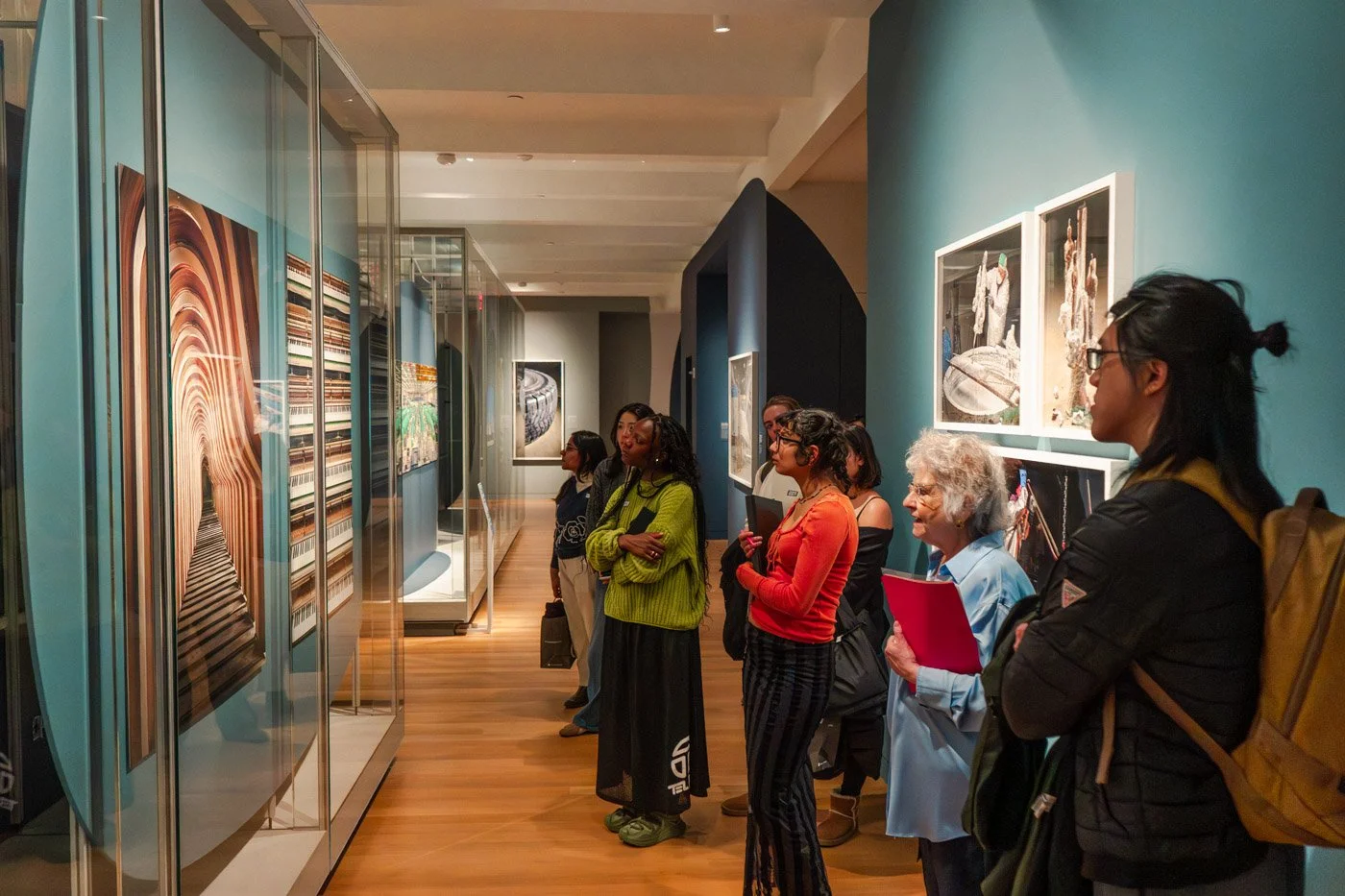
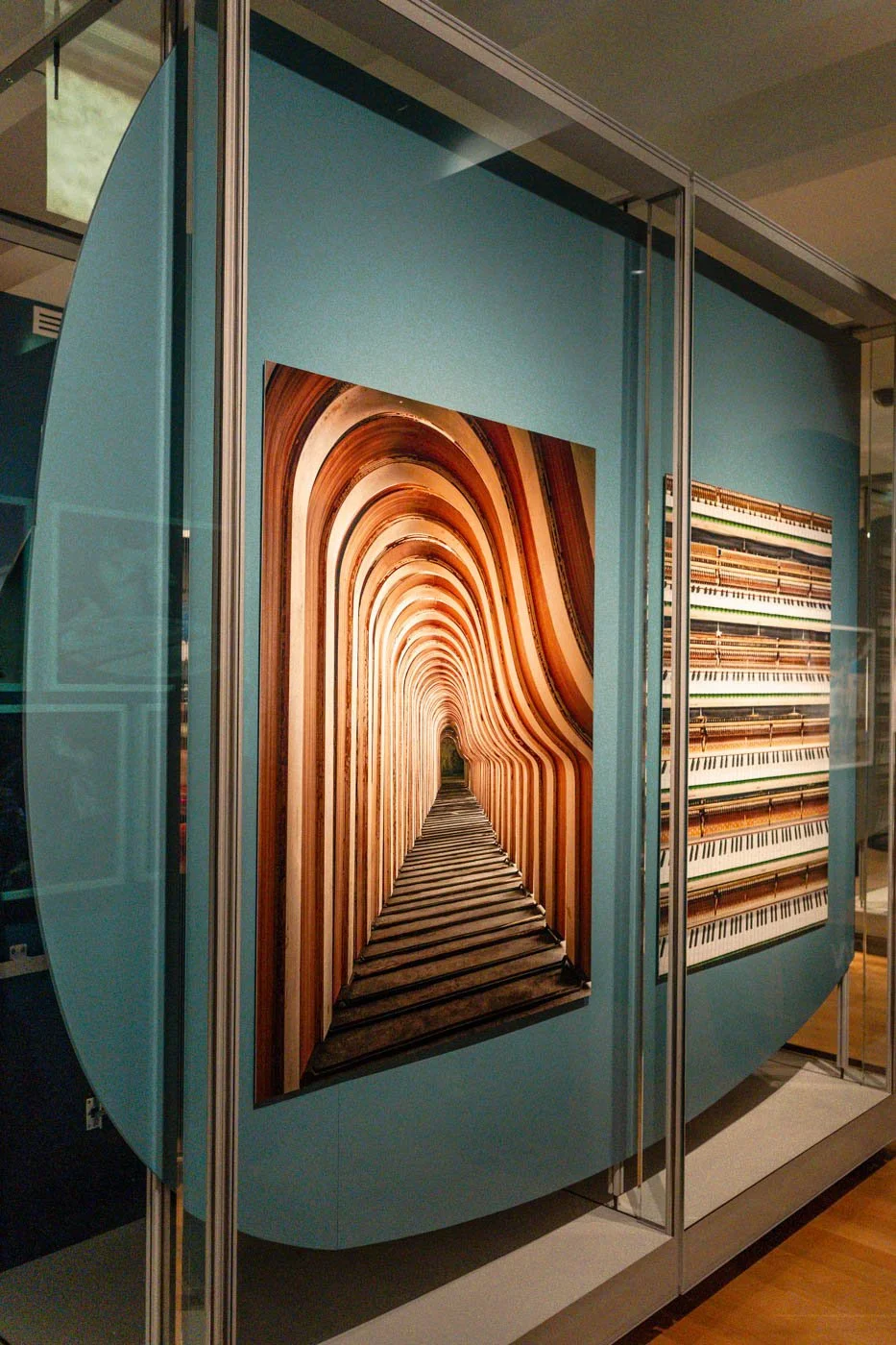
Walking up to the second floor of the museum, students were quickly drawn to Christopher Payne's larger-than-life photographs, crowding around his portrait of curved Steinway piano frames. From common household objects to aircraft engines, Payne's portraits offer glimpses into industrial manufacturing that most people never see and rarely think about. What unites each photograph is the level of fidelity and care Payne brings to all of it, whether he's juxtaposing an engineer against the scale of a jet engine, a man dwarfed inside an oversized tractor tire, or a sea of Peeps moving across an assembly line. The sharpness of each photograph and the consistent reverence for human touch in industrial processes makes these unconsidered, overlooked subjects feel significant, precise, and worthy of a second look.
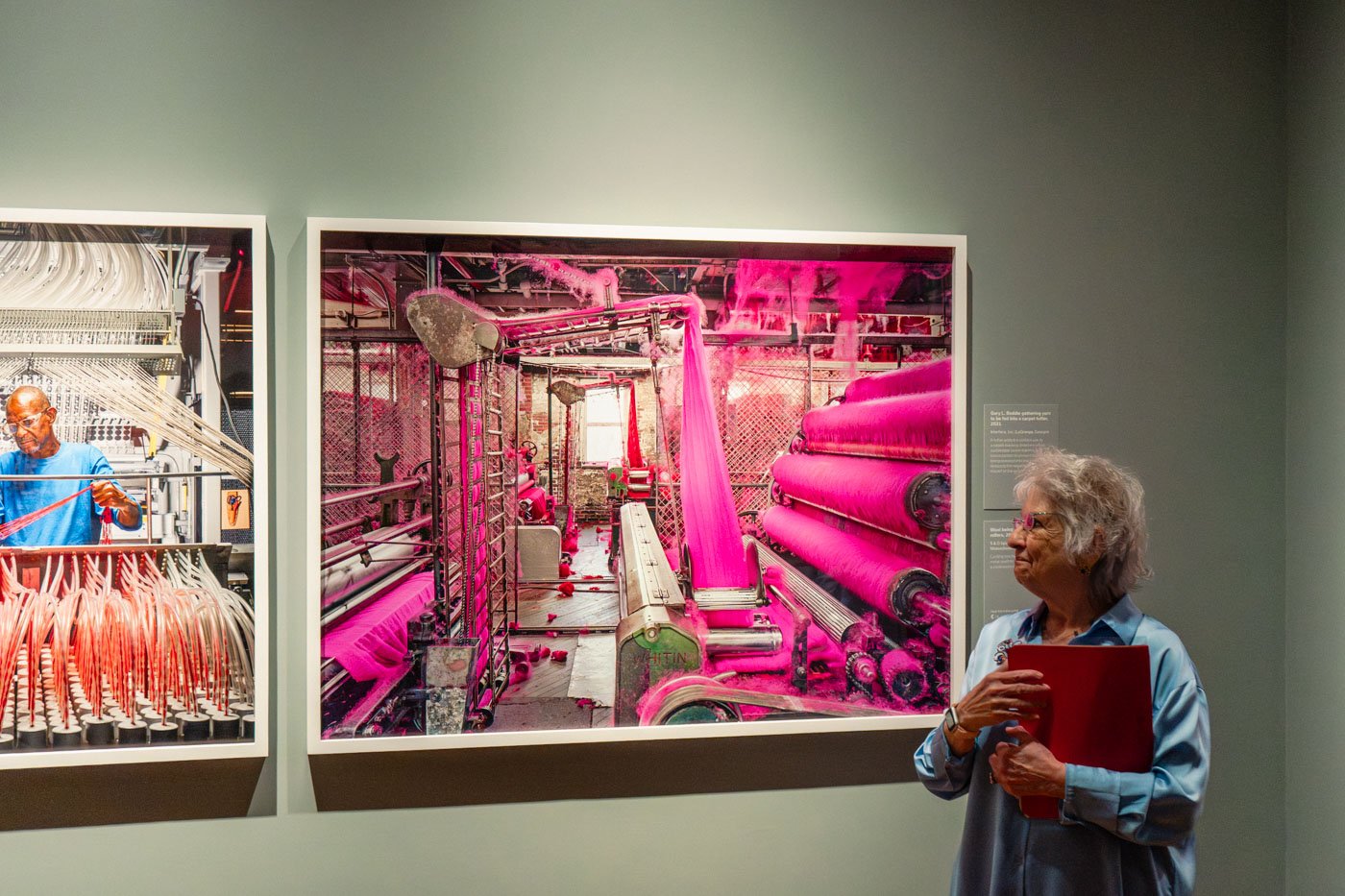
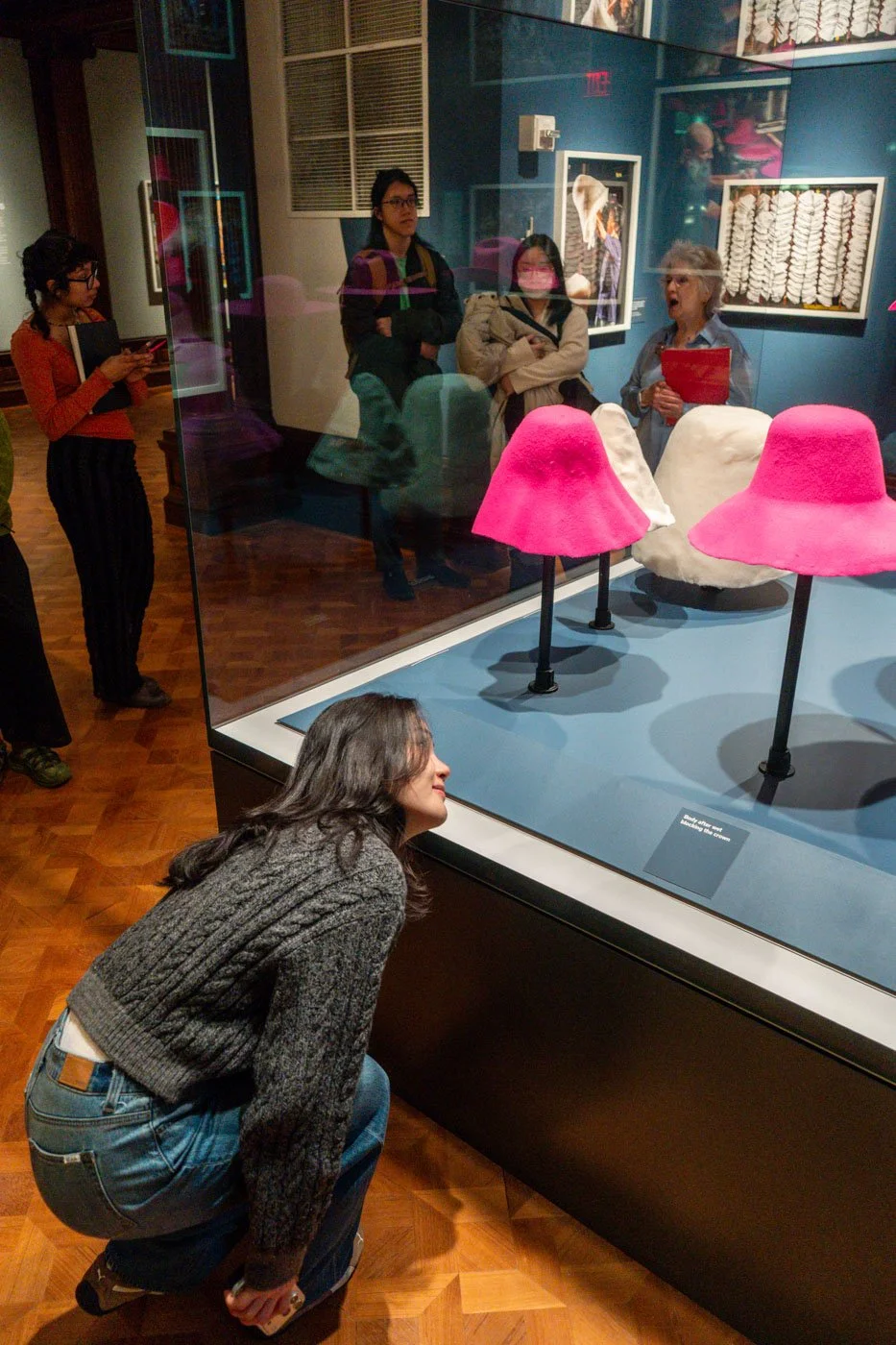
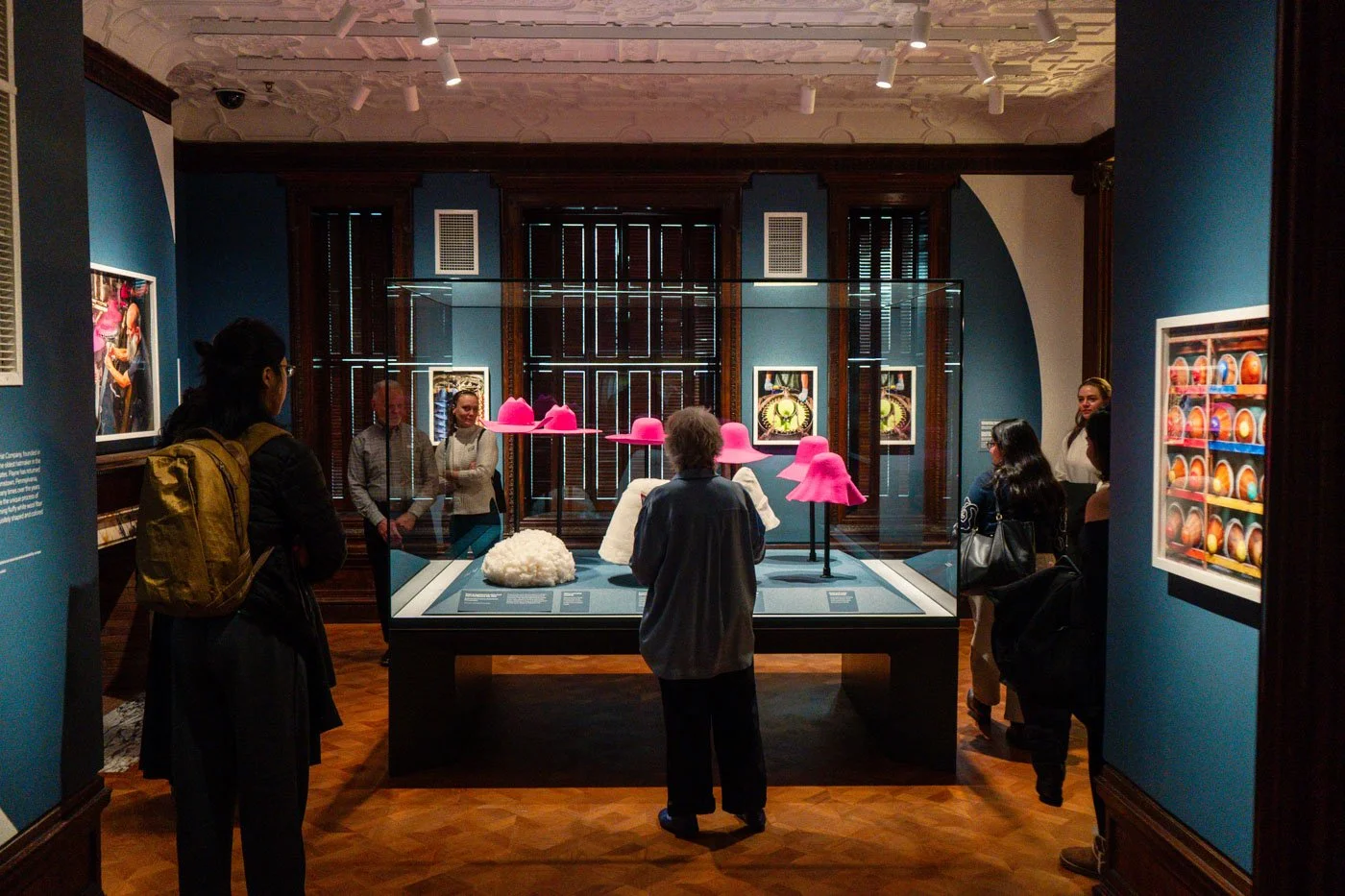
Of the many photographs on display, our tour guide Tamara was particularly fond of Payne's visit to the Bollman Hat Company in Pennsylvania. It's here that we see Payne's creative input directly woven into the process (pun intended), as he requests the generic wool to be dyed hot pink so each fiber stands out against the hard wood and metal surfaces of the factory machinery. The result is a photograph that feels less like industrial documentation and more like painting. Walking into the adjoining room afterward to find the finished hats displayed in that same hot pink made the whole thing click into place.
Art of Noise by Devon Turbull
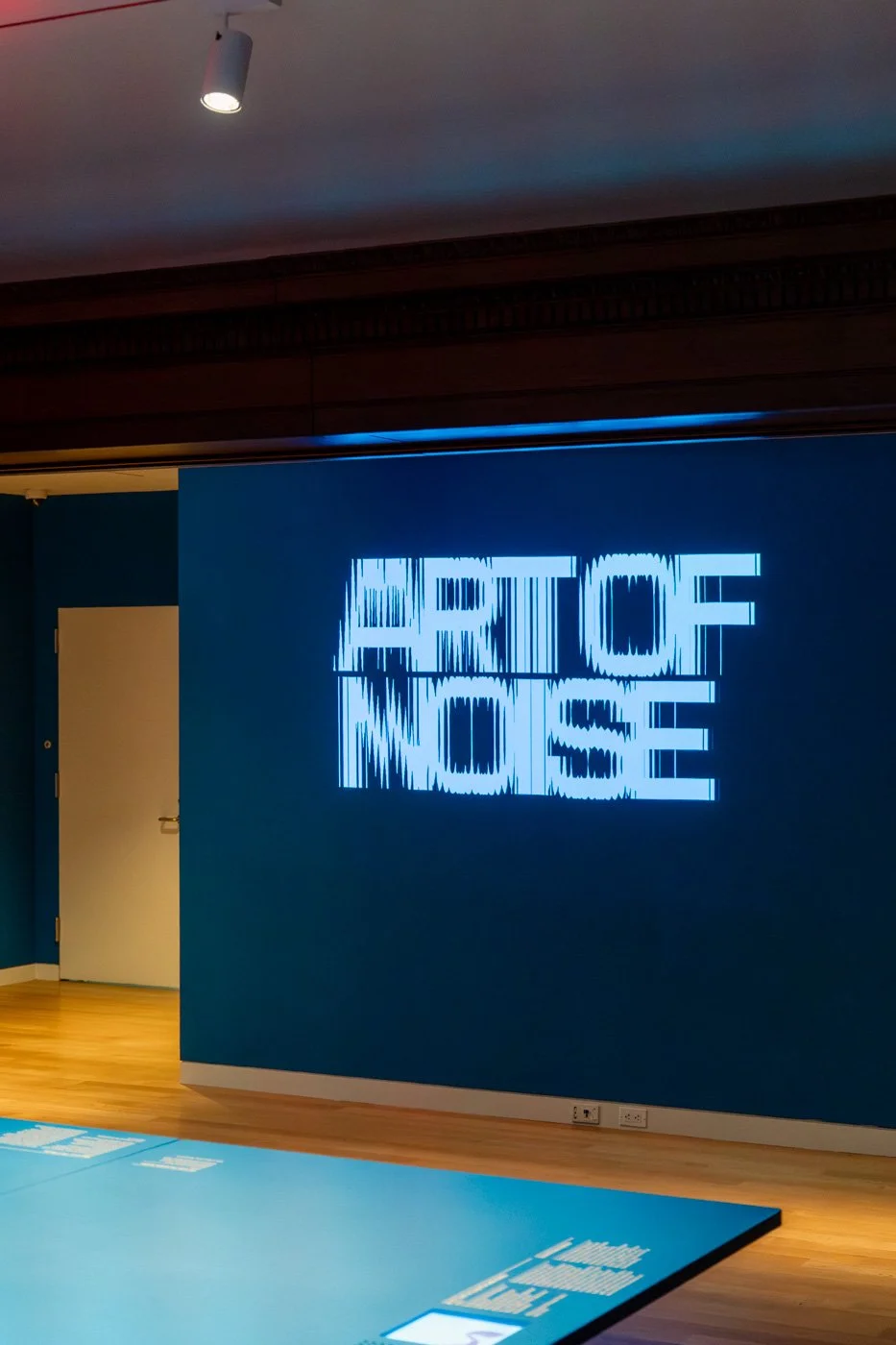
Moving one floor up in the old Carnegie mansion, Devon Turnbull's Art of Noise shifted the register entirely. Where Payne's work was about the factory floor, Turnbull's is about the living room, the bedroom, the concert hall — everywhere humans have sought out sound. The exhibition sprawls across a century of music and the objects that made it possible: early gramophones and resistor radios, the clunky exuberance of 1980s consumer electronics, the restrained minimalism of Braun, Sony, and Teenage Engineering, and eventually, yes, the Apple AirPods. Alongside the devices, album covers and band artwork from the 1960s through the 1980s line the walls, dense with graphic expression and attitude, a reminder of a time when the music asked something back from you before you even pressed play.
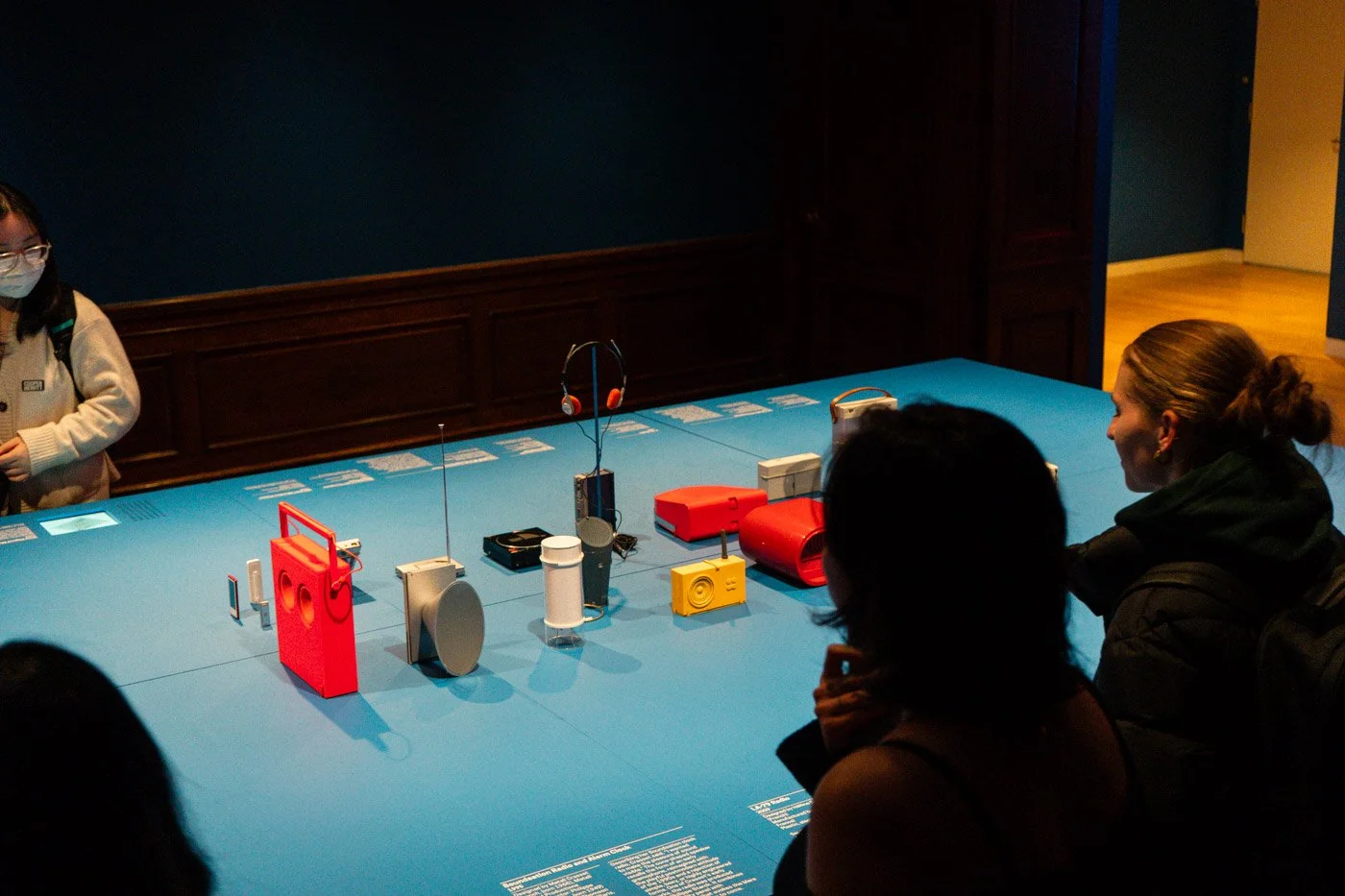
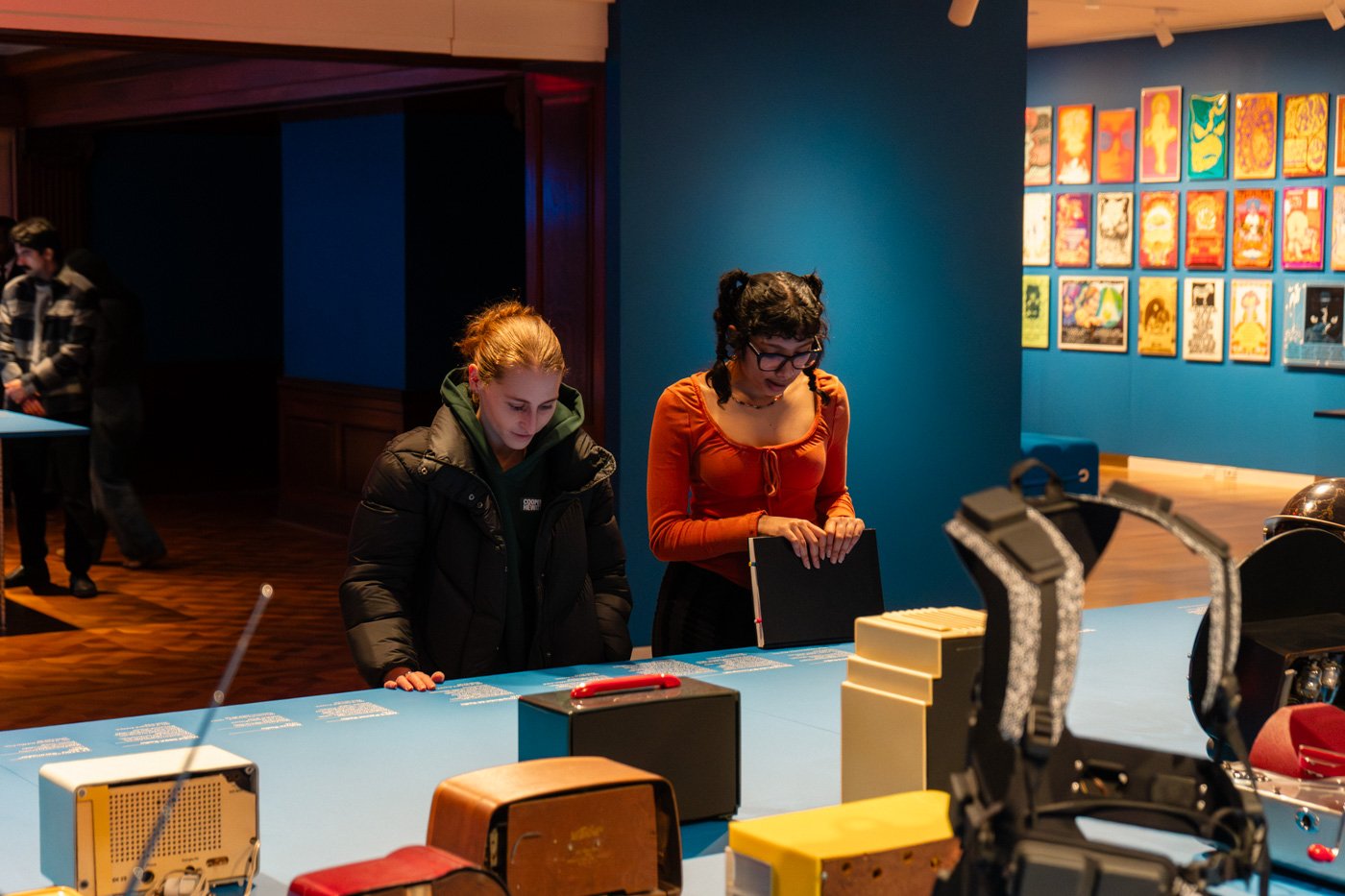
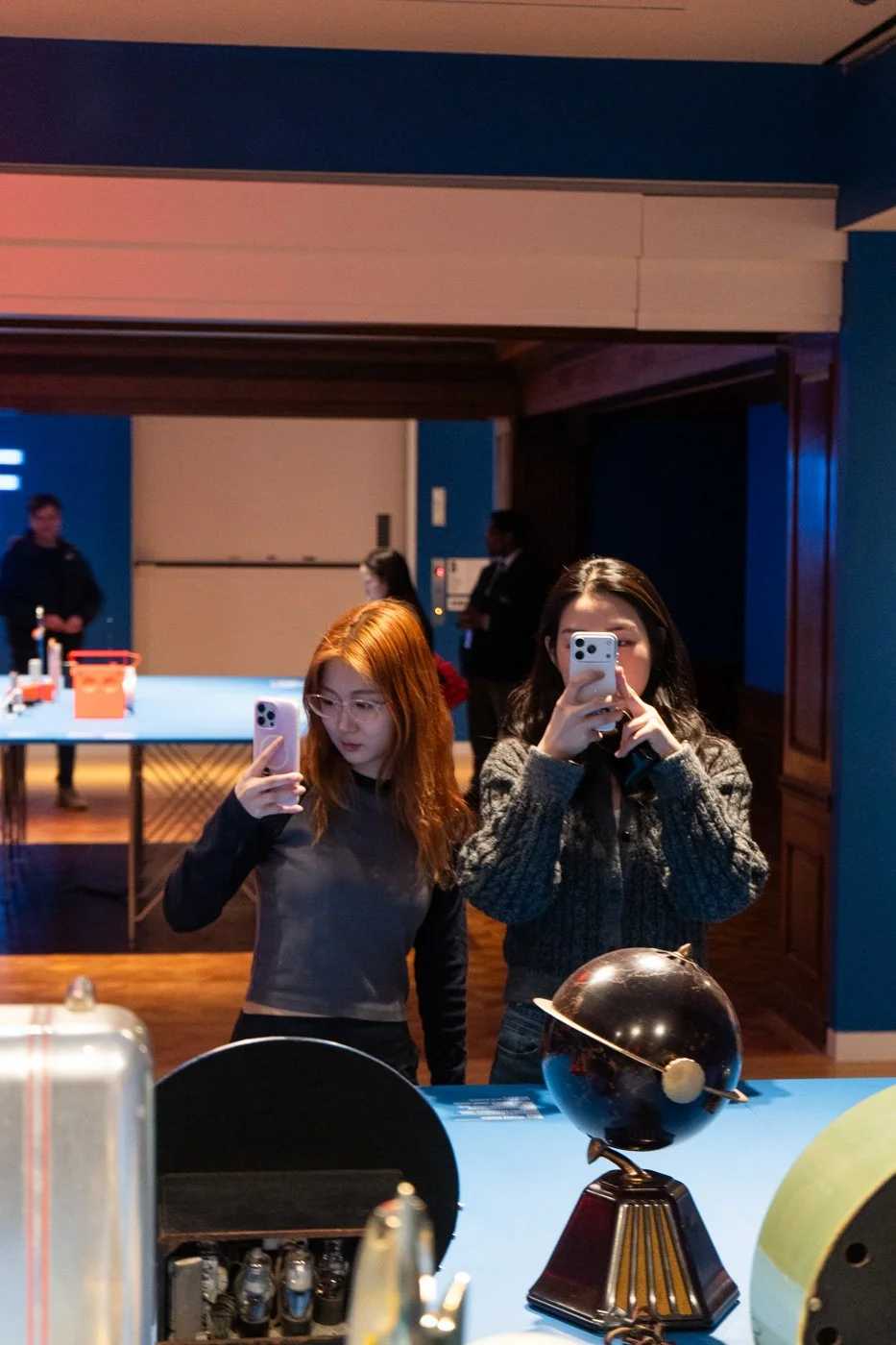
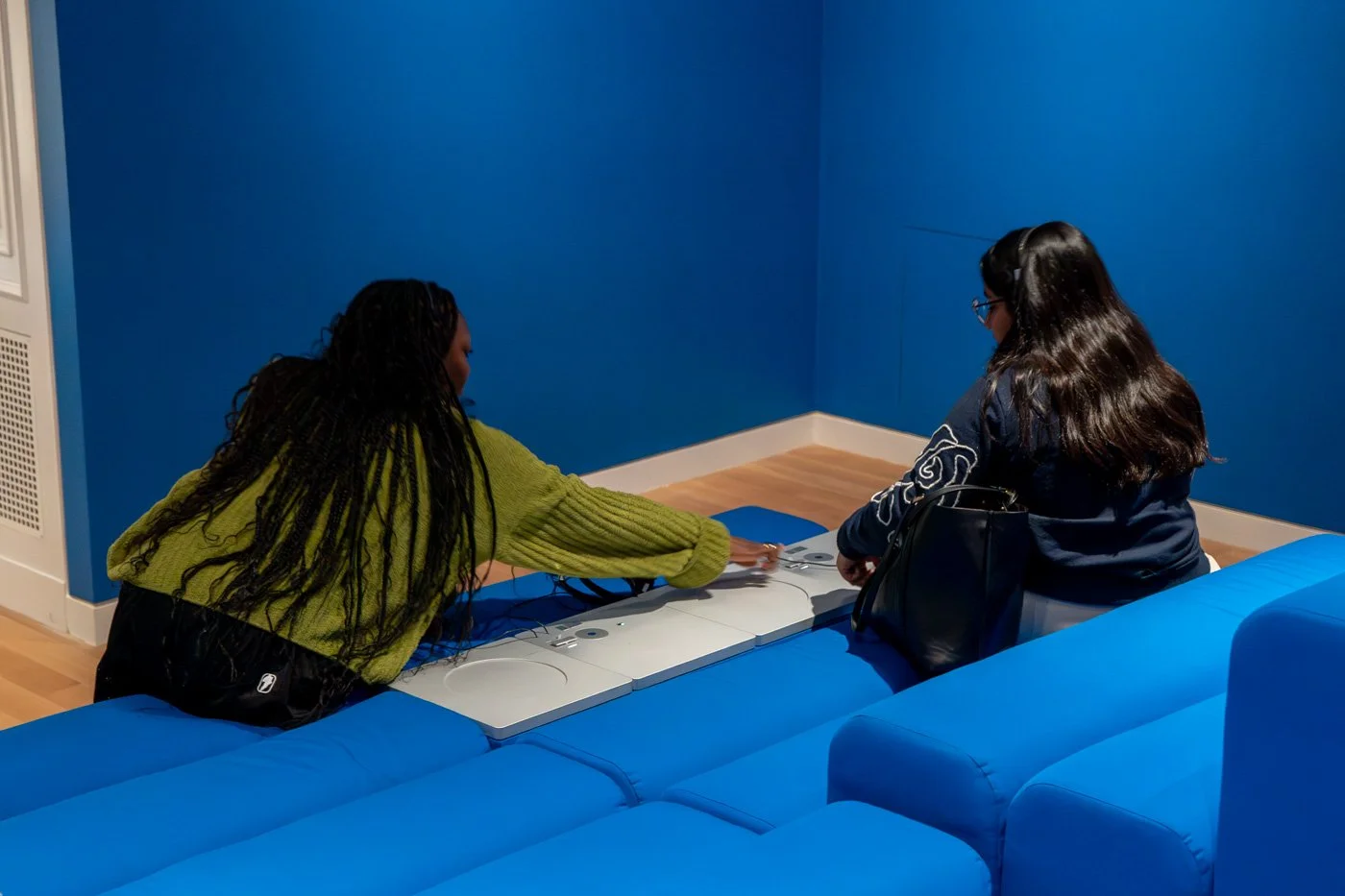
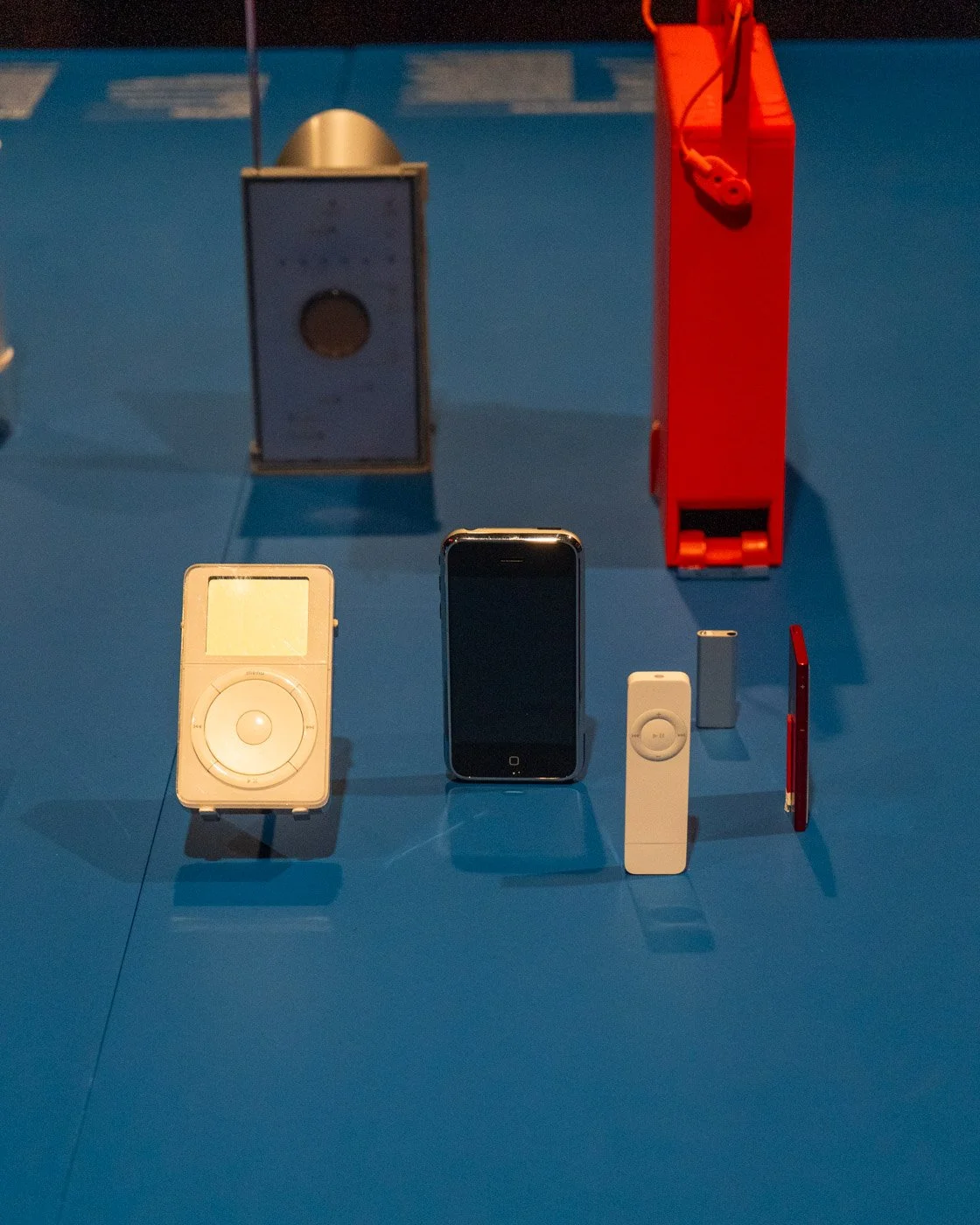
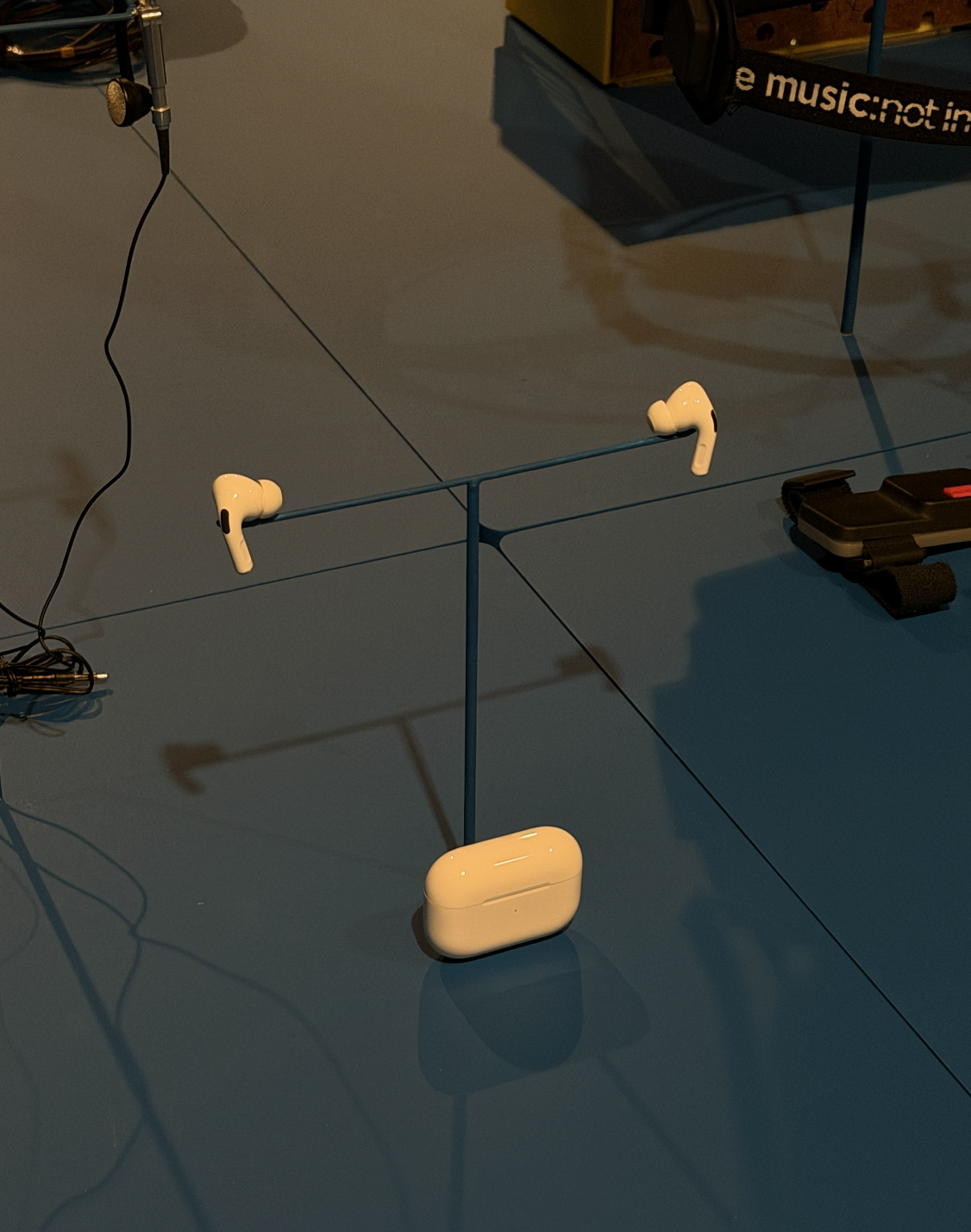
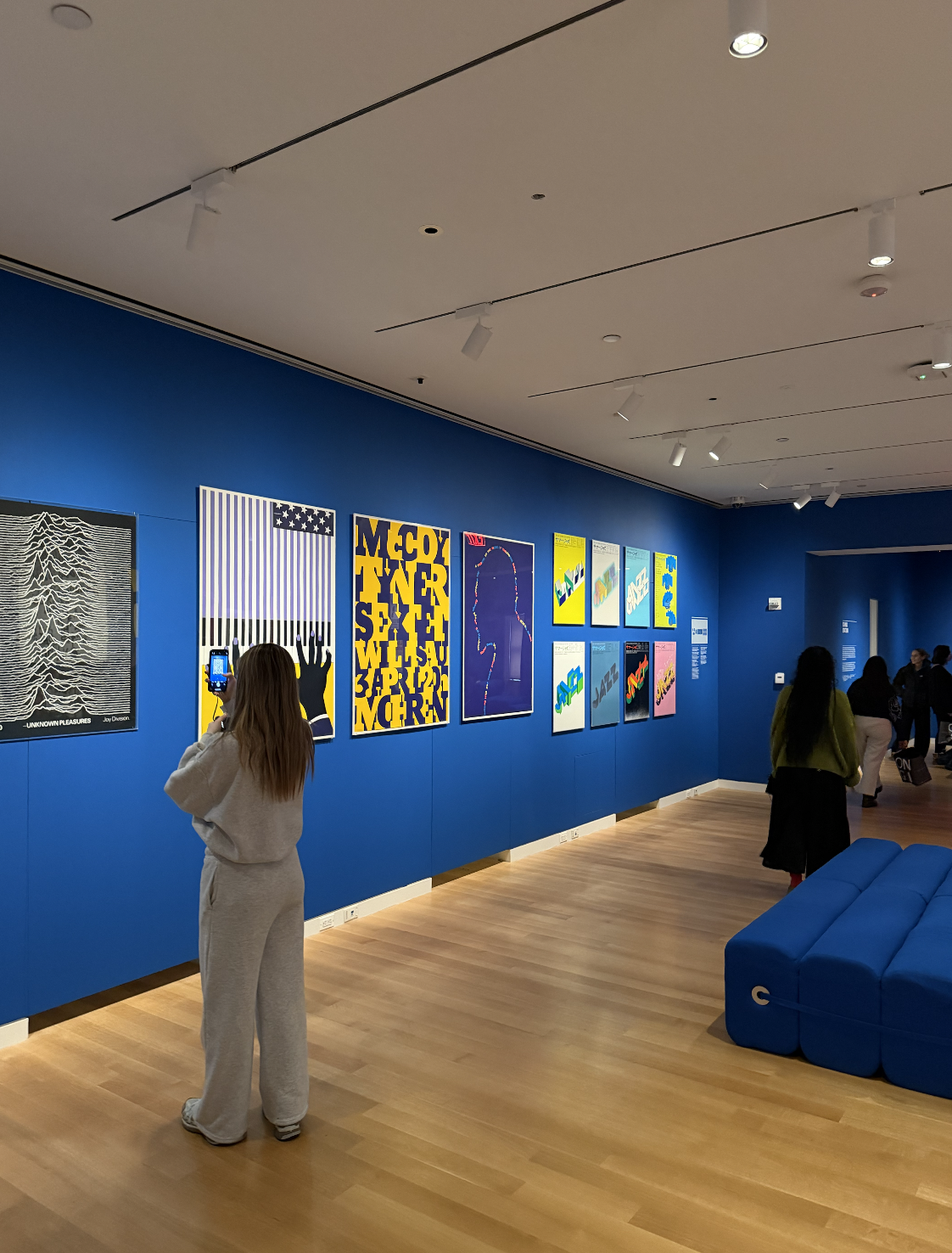
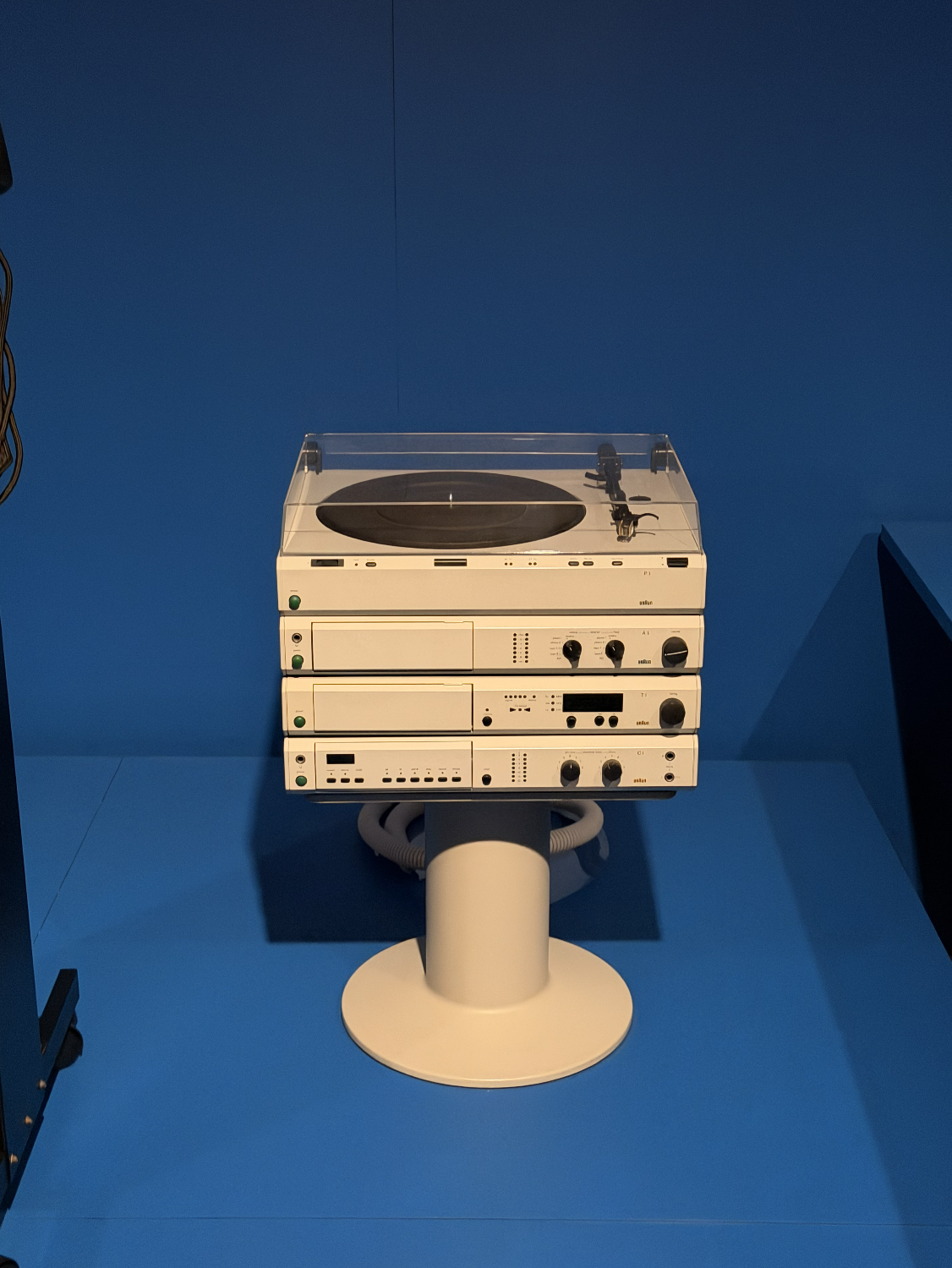
Taken together, what reads at first as a survey of aesthetic evolution starts to feel like something else: a story about how our relationship with sound has quietly changed. Early devices demanded presence. You had to learn them, negotiate with them, meet them on their own terms. Over time, as technology advanced and tastes shifted, that negotiation dissolved. The objects got smaller, simpler, and more invisible, absorbing decisions that once demanded the listener's participation. The gramophones and transistor radios didn't just look different from an AirPod. They asked something different of the people who used them. Turnbull's exhibition makes that shift feel gradual and inevitable, which is perhaps the one of the unsettling thing about it.
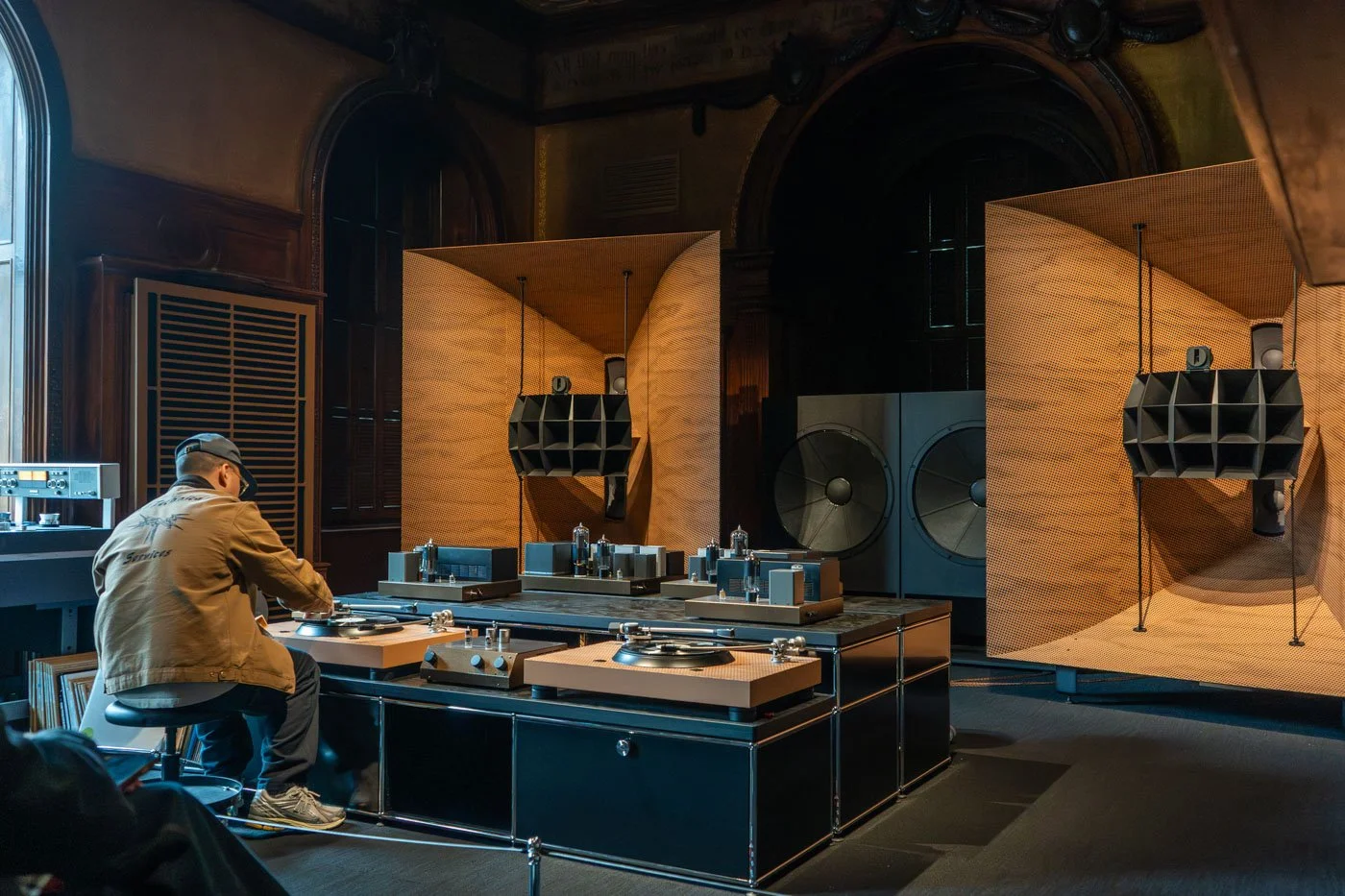
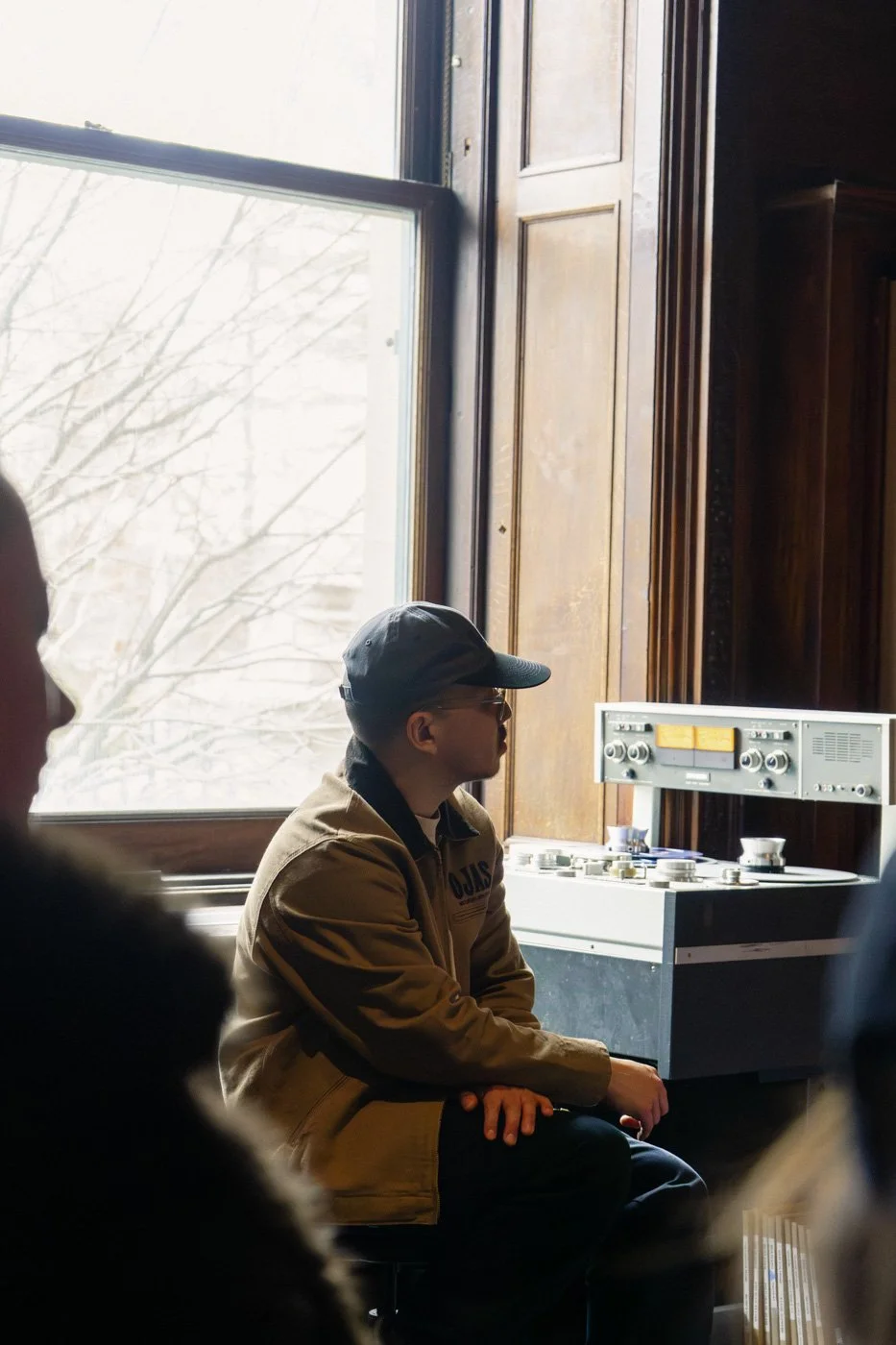
The last stop of the day brought first-years downstairs into Turnbull's Hifi Dream Room No. 3. Set in the former private library of Andrew Carnegie, the installation invited visitors to sink in and simply listen. A resident DJ had been spinning records throughout the afternoon on Turnbulls large hifi setup, and the room settled into something warm and unhurried. Among the records played that day were Jay Belrose and Josh Johnson's Easy Way Out, Gregory Uhlmann's Arpy, and Emahoy Tsege Mariam Gebru's Ballad of the Spirits. Heard through the oversized speakers and complex configuration of tube amplifiers, the music felt physical in a way streaming rarely does. It was a fitting end to Turnbull's exhibition, a quiet argument for slowing down, for engineering sound around the listening experience rather than the convenience we've come to expect.