

Student Projects
Products, Mobile Apps, Platforms, Thesis Work, and Design Thinking.
Applications are open! Deadline Jan. 15
〰️
Applications are open! Deadline Jan. 15 〰️
Featured Projects


Latest Projects

AuraWear & PulsePlay: Merging Emotion and Music for a Journey of Self-Discovery
AuraWear and its companion app, PulsePlay, form a cutting-edge system designed to deepen users' understanding of their identity and emotions. The two projects were created by Jiayuan (Wren) Wang for her thesis, The Me Within: Navigating Layers of Self which explores the duality of existence that spans physical and digital realms. AuraWear uses heart rate variability sensors to detect subtle emotional shifts, translating them into dynamic visual cues through lighting. Meanwhile, PulsePlay curates music playlists that align with the user's emotional state, guiding them through their emotional landscape. Together, this innovative integration of wearable technology and responsive musical feedback offers a unique path to self-discovery through the universal language of music.

The Love Note Exchange Debuts at Flatiron Plaza
Designed by students Emma Brigaud, Erica Fink, and Harsha Pillai, The Love Note Exchange—a public installation that invites passersby to collaborate on letters of love—made its opening debut at Flatiron Plaza.

Changing Climate: Elevating Women and Youth as Agents of Action
While climate change is a universal and one of the most concerning challenges of our generation, climate action is driving significant green investments and transformations in our era. But is climate change affecting everyone the same way? What perspectives are missing while deploying these climate solutions and initiatives?
Growing up surrounded by nature, Cyntia Abarca became a sustainability enthusiast from a young age. However, she was unaware of the potential links between achieving gender equality, addressing the climate agenda, and building a sustainable future. These missing links and questions led her to explore the connections between women and climate. Her thesis, Changing Climate: Elevating Women and Youth as Agents of Action, presents five design interventions to address climate issues from a gender perspective, aiming to catalyze action while achieving gender equality from different fronts.

Let's Talk Periods: Practicing Menstrual Confidence Through Conversations
Sama Srinivas' thesis, Let's Talk Periods: Practicing Menstrual Confidence Through Conversations, creates a variety of opportunities for menstruators and their communities to practice and build menstrual confidence through interventions such as literacy, humor, celebration, and love languages.
Choosing to Stay : Helping Communities Combat Climate Migration
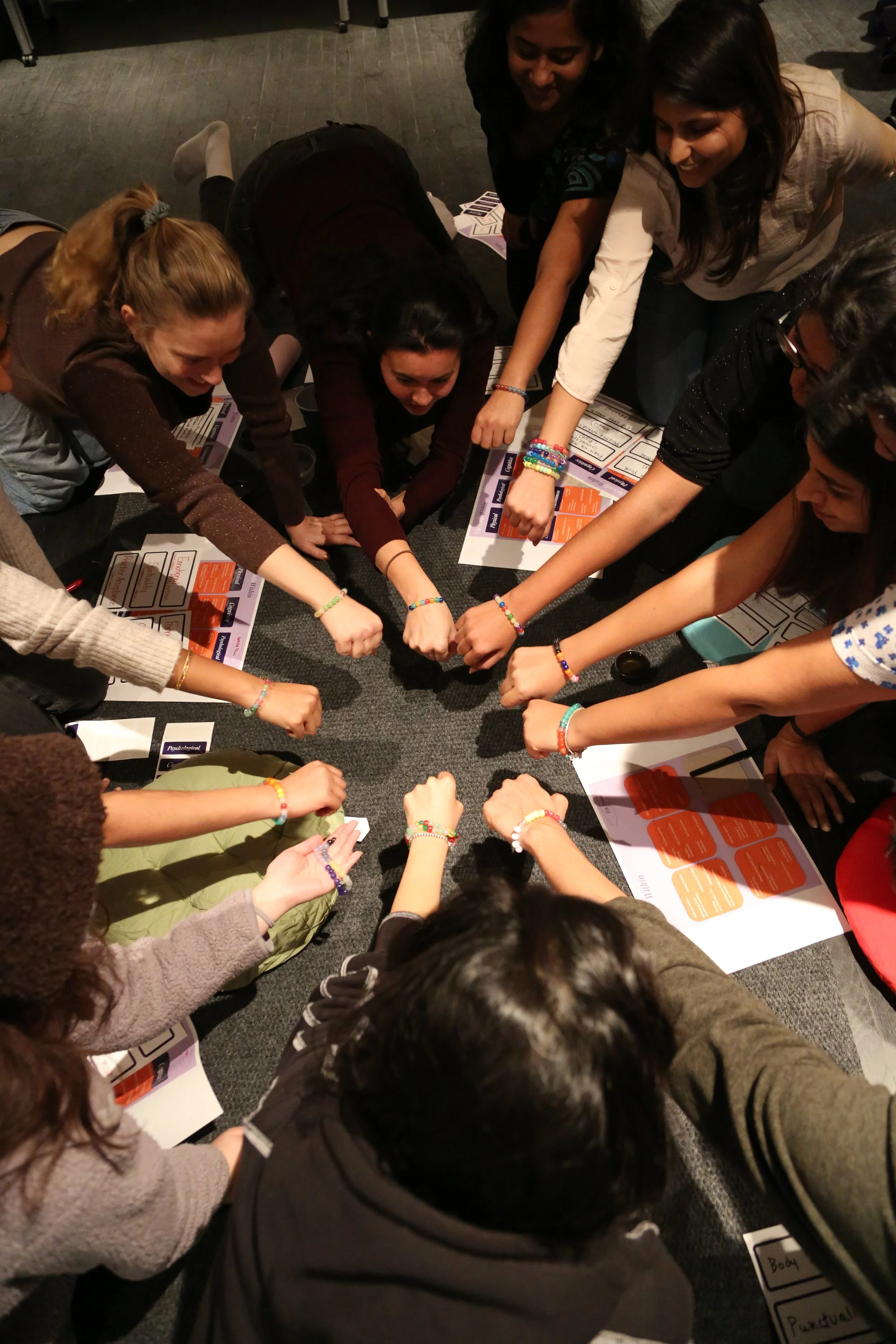
Rohitha Remala's thesis, Choosing to Stay: Helping Communities Combat Climate Migration, explores various design interventions catered to helping communities stay and rebuild their communities rather than having them migrate—by assisting them in reassessing the values in their native places. Her thesis focuses on how climate-induced slow violence (a term coined by Rob Nixon in 2011) acts as a psychosocial element of human well-being and focuses on deriving interventions for individuals, families, and communities, thereby providing a solution for a systemic issue through a system of designs.

Longing For Belonging: Rediscovering Community Through Third Places
Prerna Sharma’s thesis, Longing for Belonging: Rediscovering Community Through Third Places, looks into the ongoing epidemic of loneliness and how “Third Places” are an essential tool to help combat this issue. In today’s fast-paced urban world, amidst the chaos of daily routines and an ever-growing digital existence, there exists a yearning for connection and a sense of belonging. It is a longing that is innate to human beings, rooted in the essence of survival as a species—and yet, loneliness persists.

Democratizing Bharatnatyam: Investigating the Interplay Between Dance and AI
Yukti Arora's thesis, Democratizing Bharatnatyam: Investigating the Interplay Between Dance and AI, explores how Artificial Intelligence can bridge the gap in learning Bharatnatyam, a 2500-year-old Indian classical dance form, for today's dancers. Despite over twenty years of training under a renowned dancer since age four, Yukti felt a significant learning gap. Her survey of over 300 Bharatnatyam dancers, ages 18-45, spanning two countries, revealed that 97% shared similar learning gaps, with 92% discontinuing regular practice as they grew older due to various life commitments.
Driven by her background as a designer and inspired by AI's prowess in recognizing patterns, Yukti embarked on a journey to democratize Bharatnatyam. Collaborating with Bharatnatyam dancers and AI experts, she developed a suite of four AI-powered interventions—products, services, experiences, and platforms—to address this challenge and make Bharatnatyam more accessible to all.

Dreamscapes of Healing: Exploring Therapeutic Avenues for Nightmares
Rora Pan’s thesis, Dreamscapes of Healing: Exploring Therapeutic Avenues for Nightmares, explores therapeutic methods for addressing nightmares. It addresses a broad spectrum of challenges—catering to individuals seeking to manage their sleep experiences independently, as well as those seeking professional assistance, and targets both PTSD sufferers and the general population.

The Me Within: Navigating Layers of Self
Jiayuan (Wren) Wang's thesis, The Me Within: Navigating Layers of Self, explores the duality of existence that spans physical and digital realms. Inspired by the convergence of visible, tangible elements and invisible, private aspects of our identities, her research delves into the challenges and opportunities of expressing and understanding these complex layers. Wren’s thesis proposes innovative ways to bridge the gap between internal experiences and external perceptions, enabling a fuller expression of identity that encompasses both seen and unseen elements. This investigation challenges traditional notions of identity and raises crucial questions about the nature of self in modern society.

Foot Forward: Reshaping the Culture of Running and Consumption
Nigel Keen's thesis, Foot Forward: A Circular Approach for the Future of Running, centers around the issue of running shoe consumption and its climate impact. It aims to slow the rate of consumption by introducing repairability as an option for runners. Material innovations and technological advancements in 3D printing allow localized production of repairable and customized parts for running shoes. This creates a unique opportunity to fine-tune the running shoe to the individual for a better fit and improved performance.
Empowerment in Disguise: Supporting South Asian Immigrant Women Experiencing Violence in the US
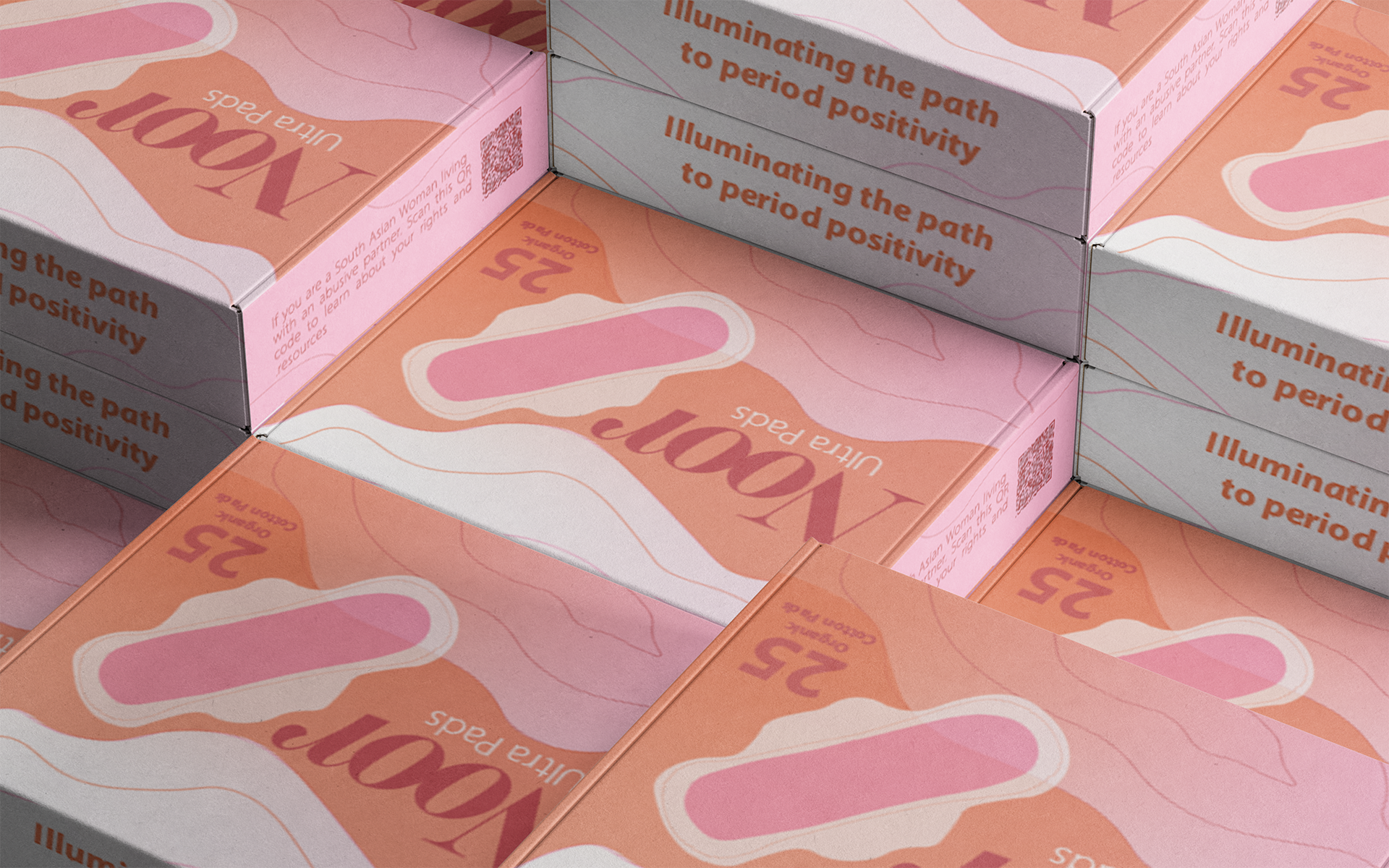
Ria John's thesis journey began with her volunteer work at a South Asian organization dedicated to assisting immigrant women as they adjusted to American culture. This role, which involved serving as a conversation buddy, allowed her to engage directly with these women, offering them support and companionship during their transition. It was during one of these sessions that Ria met a young Bengali woman who confided that she was living with an abusive partner.
The woman's poignant words, "I feel like I am stuck in a Kabar (tomb); I am of no value," profoundly impacted Ria. This expression of utter despair and entrapment catalyzed Ria's academic exploration, laying the groundwork for her thesis, Empowerment in Disguise: Supporting South Asian Immigrant Women Experiencing Violence in the US.
We Too Belong Here: Uniting and Strengthening South Indians Through Community Collaboration
Heba Jaleel’s thesis, We Too Belong Here: Uniting and Strengthening South Indians through Community Collaboration, tackles the issue of South Indian culture being overlooked and misrepresented within contemporary American society. In an increasingly diverse American landscape, the establishment and nurturing of a cohesive South Indian community holds immense significance. This thesis asserts the importance of South Indian representation in the United States and advocates for the creation of platforms and initiatives aimed at fostering community building and cultural preservation.

Horsing Around: Reconnecting Emerging Adults with Rough and Tumble Play
Brydon Yao's thesis, Horsing Around: Reconnecting Emerging Adults with Rough and Tumble Play, situates itself in the tension between growing up and acceptable forms of play. Mainstays of physical play during childhood, such as roughhousing, are great for stress mediation and resilience development. Yet, it is strongly discouraged as we grow up and face more stresses and adversities. The project interrogates the notion of juvenile physical play through a series of designs that set out to re-engage emerging adults with rough-and-tumble play.
Blooming: A playful, interactive device delivering serenity and enchantment
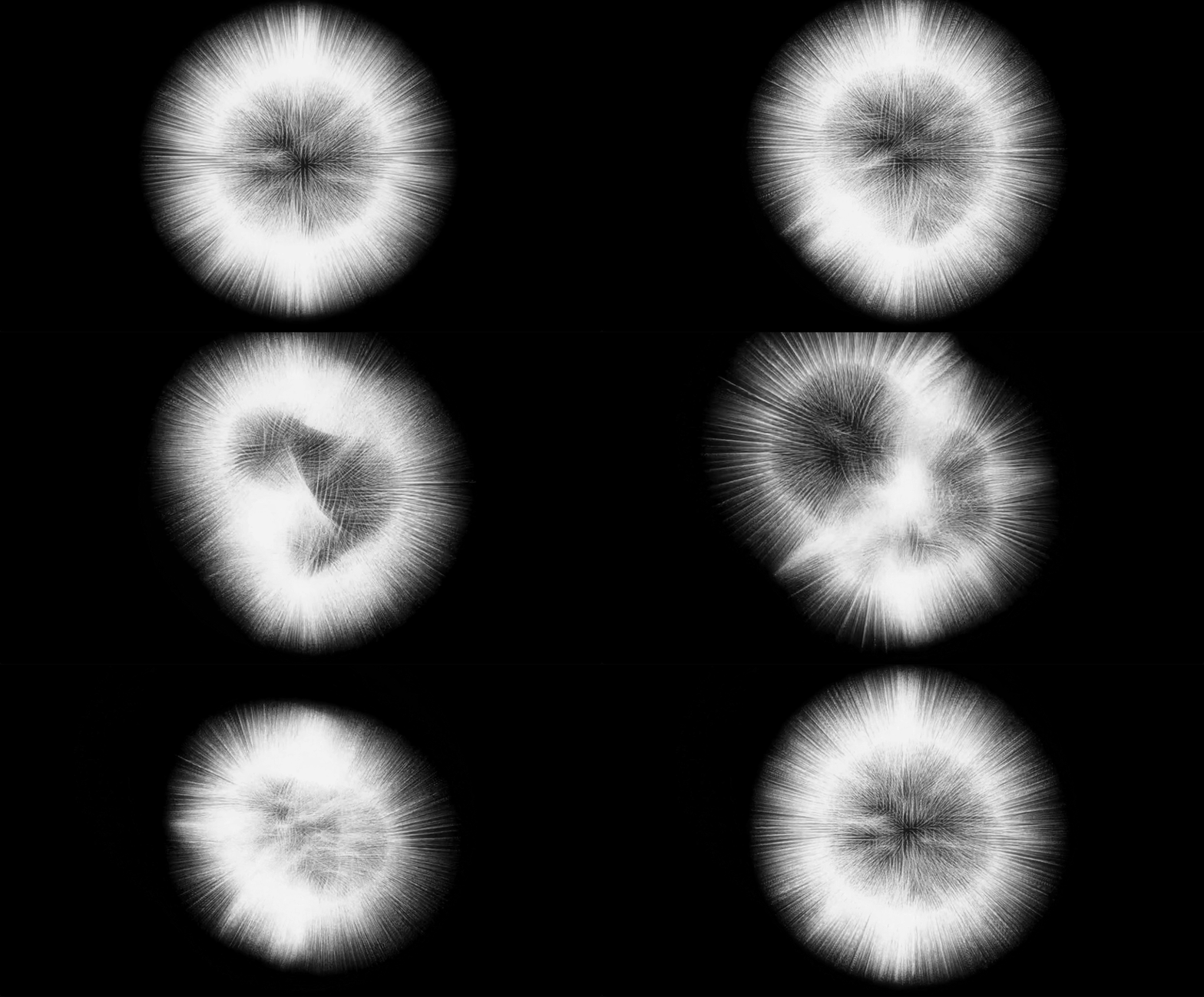
A playful, interactive device delivering serenity and enchantment designed by Ningfu Yang ’25.

Jellyfish: A Collection of Products Designed to Provide Support When You Need It Most
A diverse array of product concepts designed by Yuancong Jing ‘25 for our first-year course, Affirming Artifacts.

#UnPlugged: A Text-Fax Printer For Staying Connected to Your Loved Ones, Even When Offline
Harsha Pillai ’25 has experienced the feeling of digital overwhelm firsthand. Inspired by her own experience, she created #Unplugged, a text-to-fax printer designed to sit inconspicuously on your bookshelf, allowing you to stay unplugged while still receiving words of encouragement from a chosen support system.
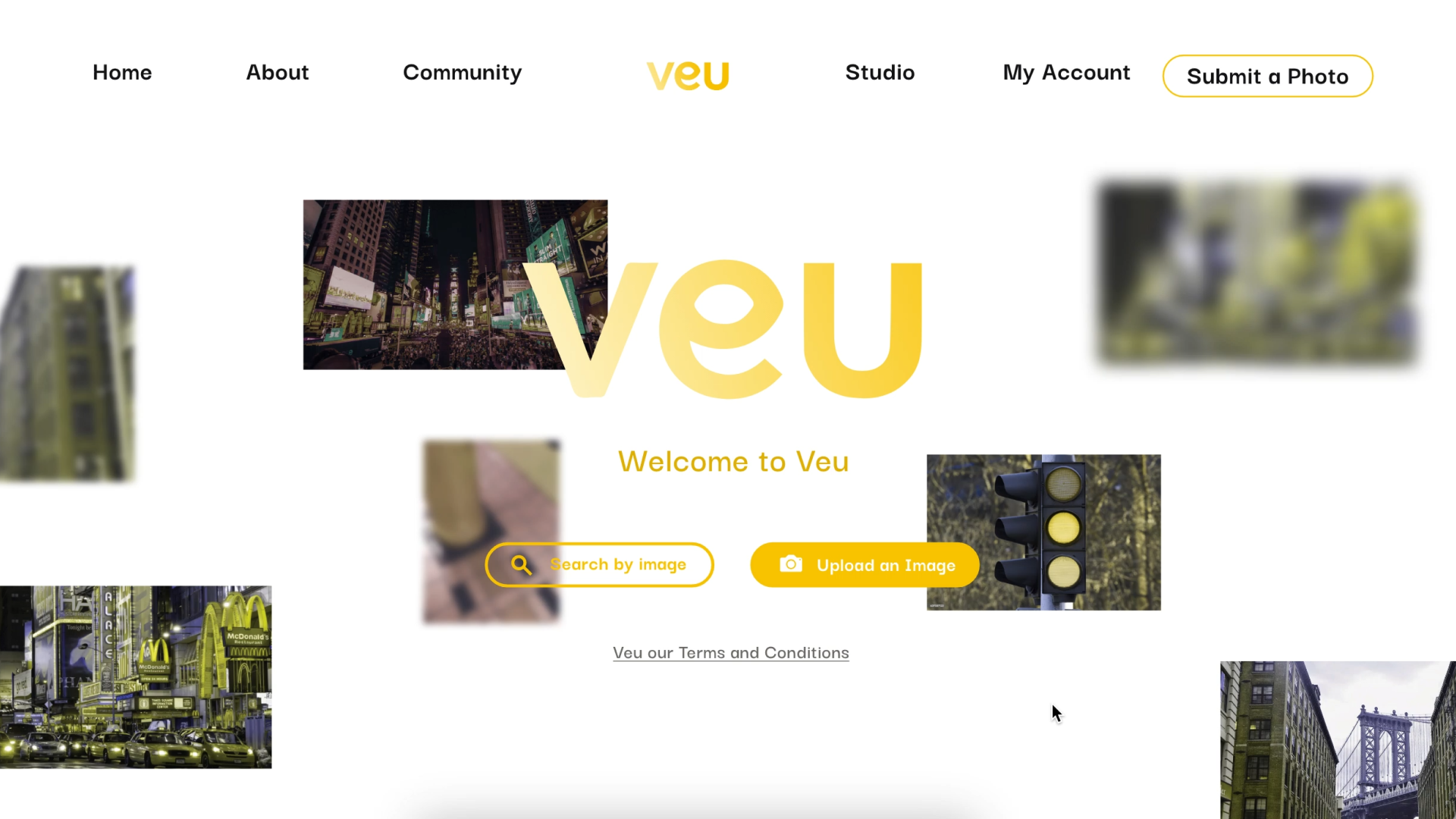
Veu: Viewing the World in Partial Color
An exploration into how we perceive color and sight, designed by Zai Thakoor ’25.

HairTunes: A Suite of Musical Combs to Spark Joy
HairTunes is an imaginative line of musical combs that subverts your expectations, creating a new yet practical multi-sensory morning ritual. As you style your hair, each comb makes unique sounds that inject excitement and vitality into your routine. Created as part of Xinyue Wu's thesis, Xinyue: Delight in the Everyday, HairTunes effortlessly reinvigorates the mundane act of combing and grooming.

Lipi: A Devanagari Keyboard for Typing in Hindi
Lipi is a speculative Devanagari keyboard that reimagines the typing experience beyond QWERTY. The project, which addresses the challenges of typing in Hindi, was created by Charvi Shrimali for her thesis, How India Looks: Localizing Design Tools for a Billion People.

Design for Disability Inclusion in Space: Wearable Anchoring in Microgravity
In his thesis, Beyond the Right Stuff: Designing for Disability Inclusion in Space, Corey McClelland designed Wearable Anchoring solutions for individuals with mobility disabilities in microgravity environments. Space exploration has traditionally excluded individuals with disabilities. With an increased focus on inclusive and universal design, Corey aims to ensure that everyone has the opportunity to participate in space exploration and research.