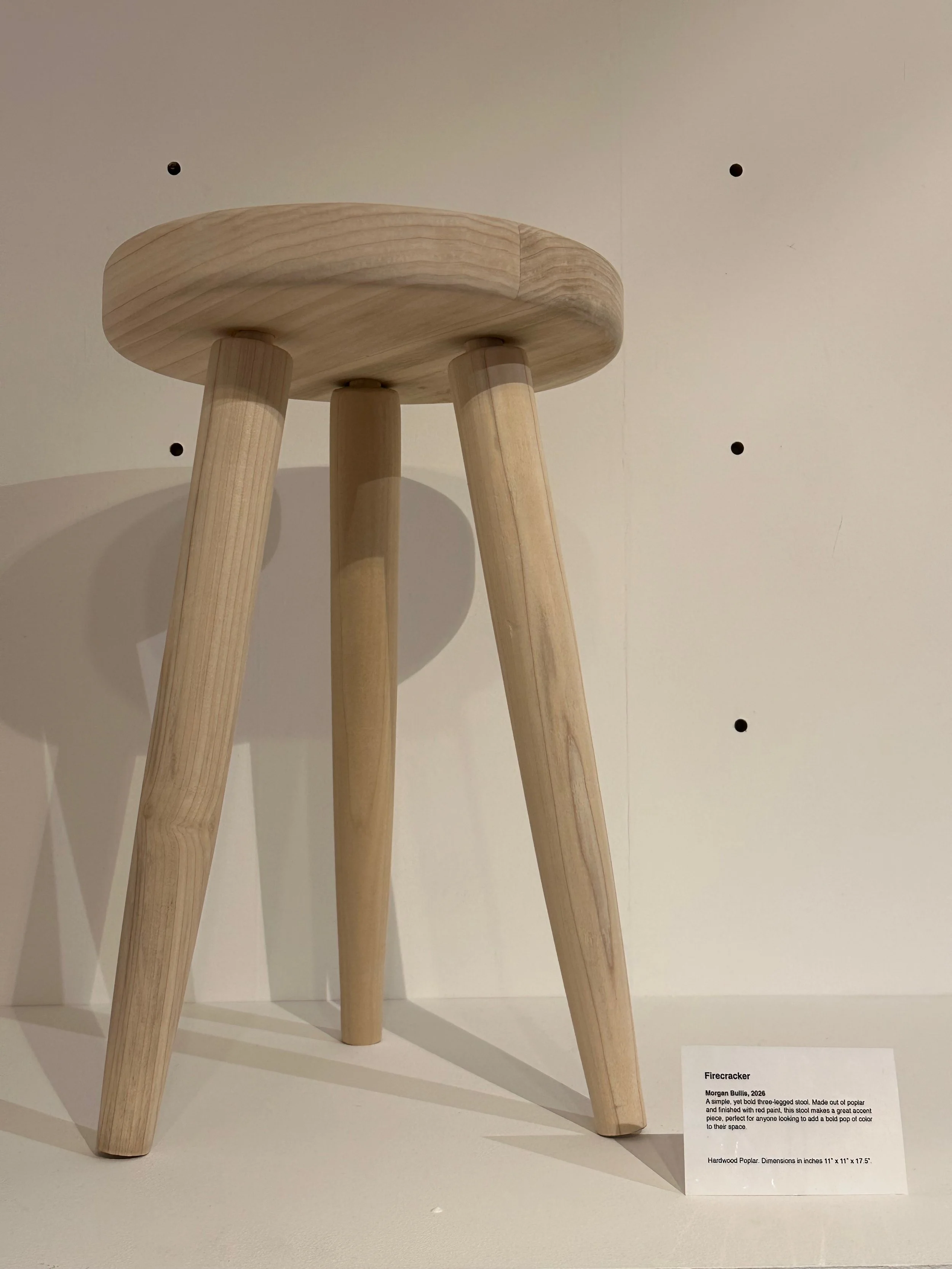
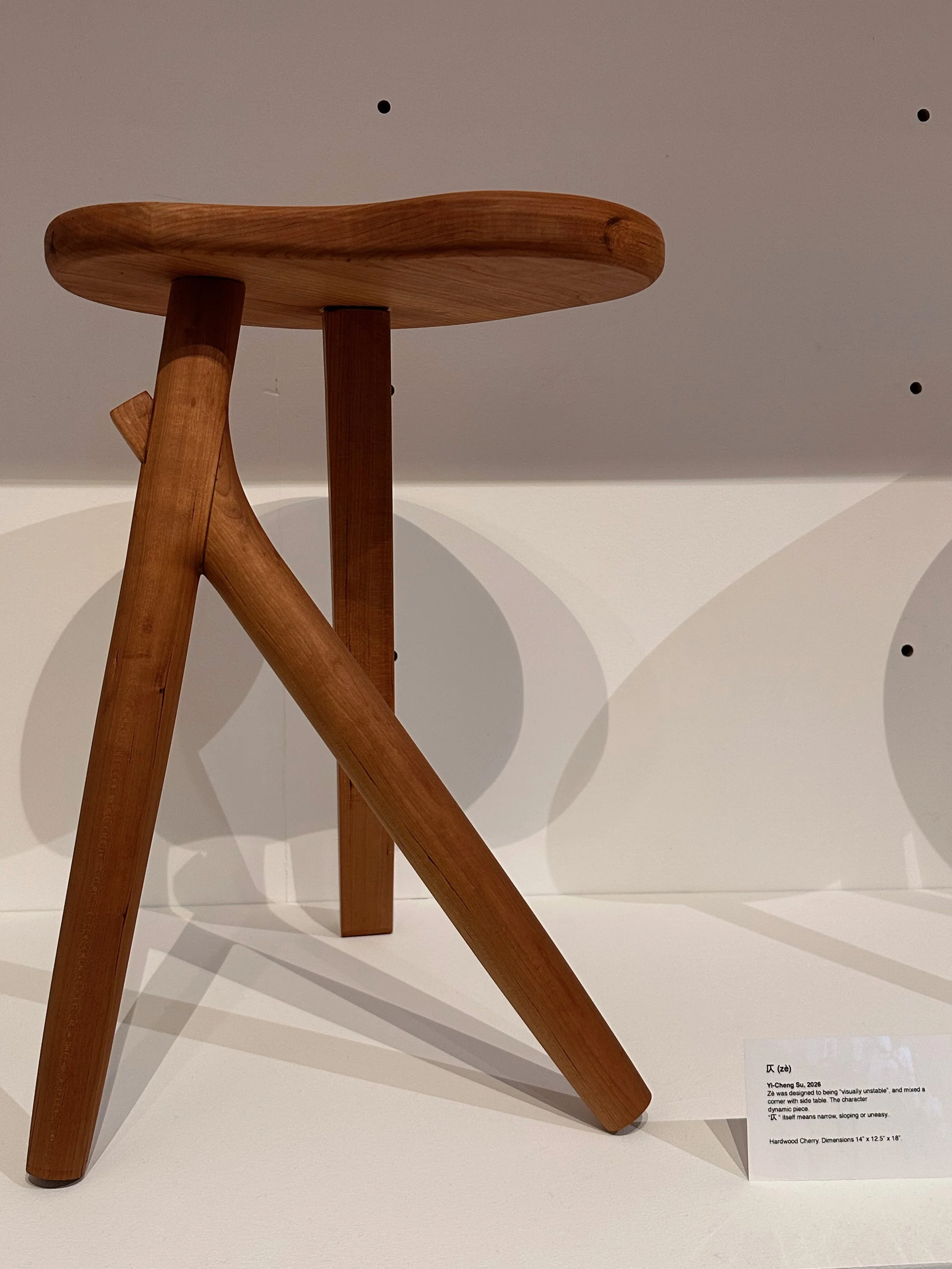
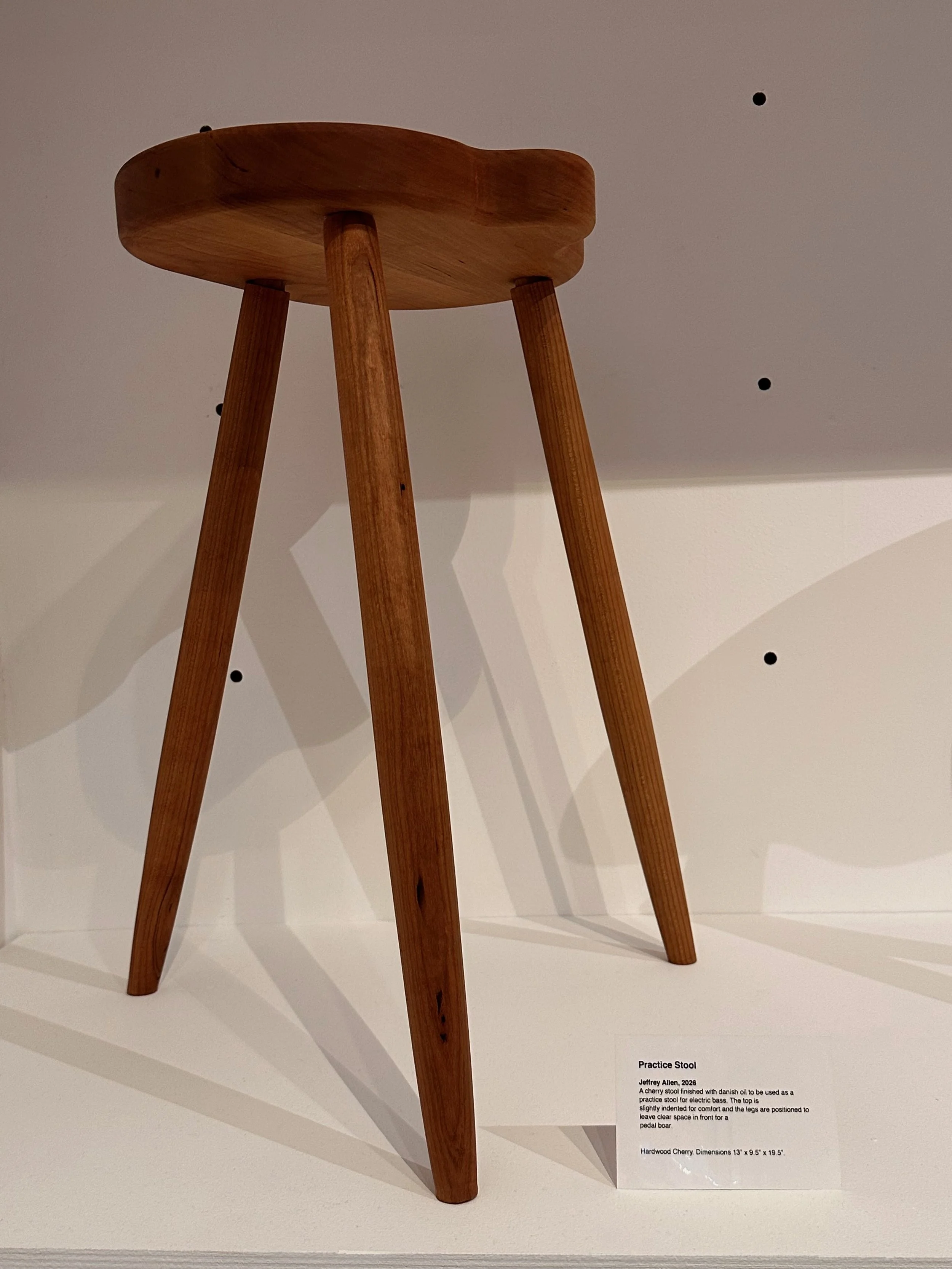
Last month, first year students got a taste of working in a wood shop outside of SVA. For their first project in 3D Product Design: Material and Process, students have been assigned to design and build a three-legged wooden stool. To help students further their woodworking skills and introduce them to new techniques for the project, instructors Shannon Jones and Becky Stern organized a wood turning workshop at Makeville Studio in Brooklyn, NY, where there are enough lathes for all the students to gain experience at the same time. Here, under the guidance of shop manager Jenna Goodman, students were taught how to use the lathe and learned how it can be of use in developing legs for their stool.
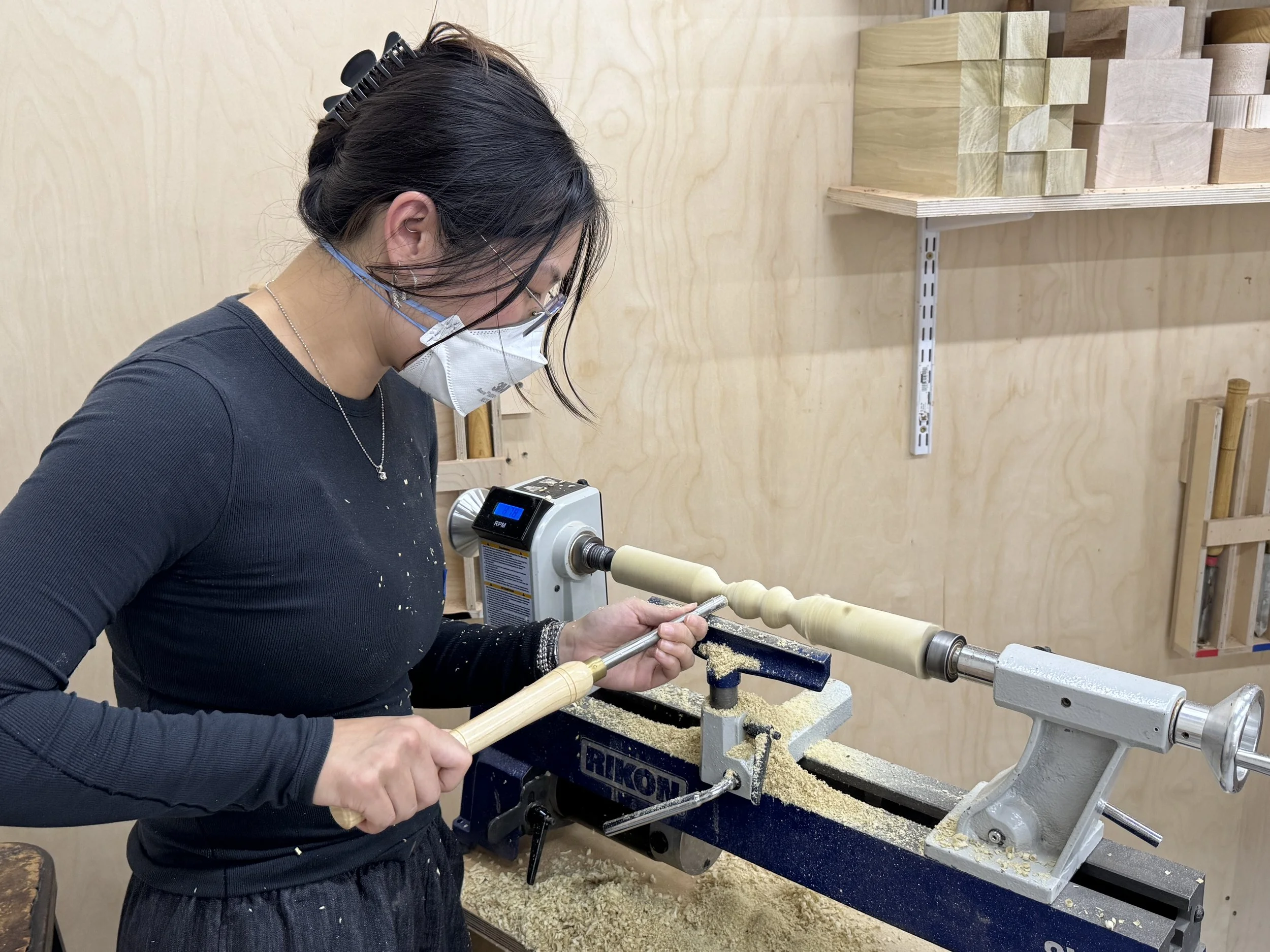
We sat down with Shannon Jones, course instructor and operations manager at SVA’s Visible Futures Lab, to get her insight on the workshop, stool project, and her goals for the course.
Morgan: For those who may not be familiar, tell us a little about turning. What is it and how can it contribute to the first-years projects?
Shannon: Woodturning is a process and craft in woodworking that involves shaping a piece of wood using hand held tools while the wooden part is mounted in a machine called a lathe. For the stool project, students were introduced to spindle turning – which refers to the style of turning where the grain of the wood is running parallel to the bed of the lathe. The lathe can also be used to turn bowls in a process called face plate turning.
In woodworking there are often a plethora of methods for machining or shaping the components you need. Now that the first-year students have had expert lathe instruction, they have the option to utilize the tool in the fabrication of their stool projects.
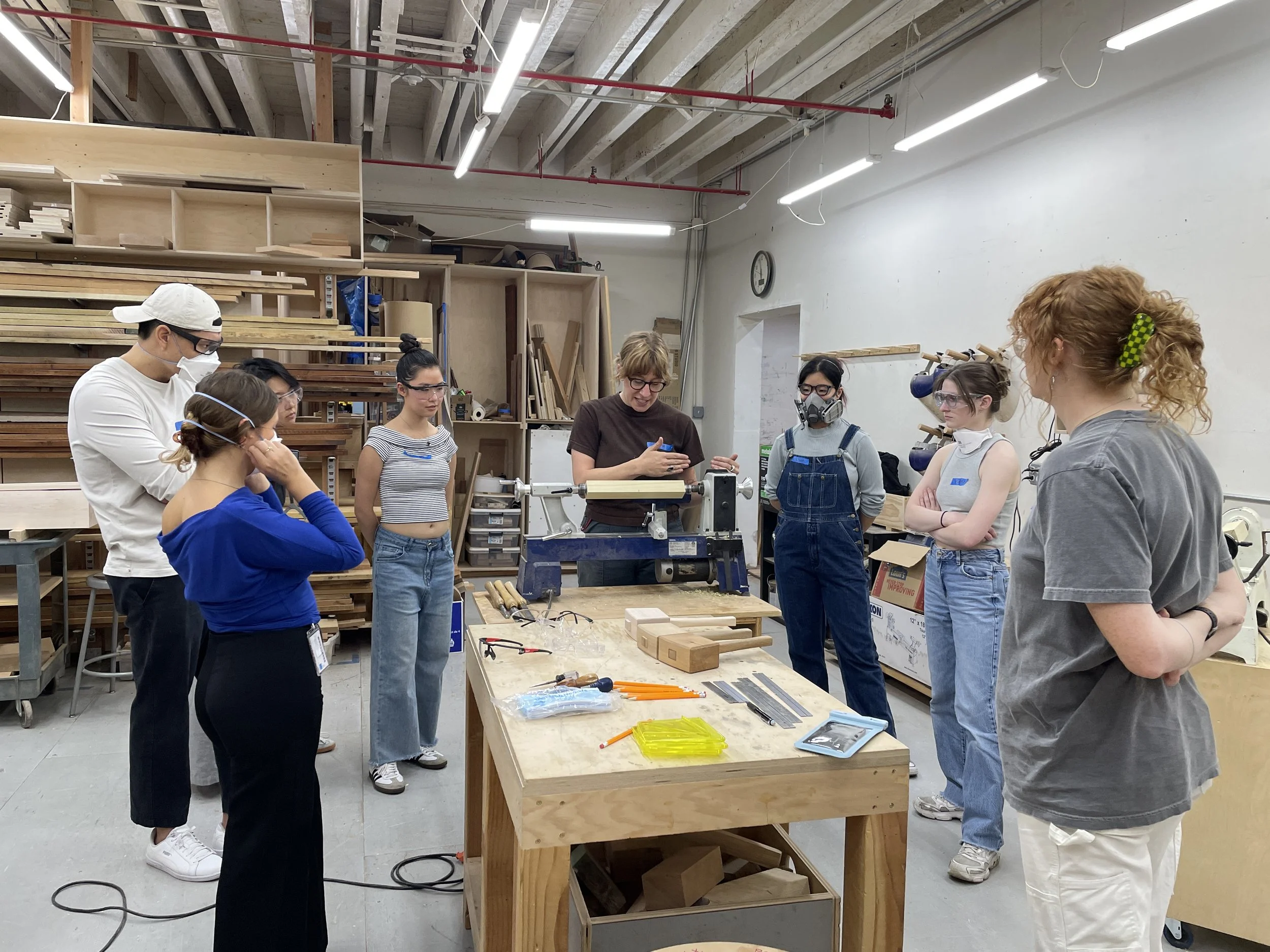
Jenna Goodman demonstrates how to set up the lathe.
Morgan: What is the benefit of introducing students to shops and studios outside of school?
Shannon: In my view, one of the greatest benefits of going to school at SVA is the access to the greater NYC community of designers, fabricators, shops, etc. As educators, we want students to graduate feeling fully prepared to start their careers outside of an academic setting. Introducing them to spaces outside of SVA and starting to build their professional contacts in the community is, in my opinion, a great way to do this. Makeville is a community woodshop where members can pay for shop access by the hour – it is a great place for independent designers to work on prototypes, create small products, etc.
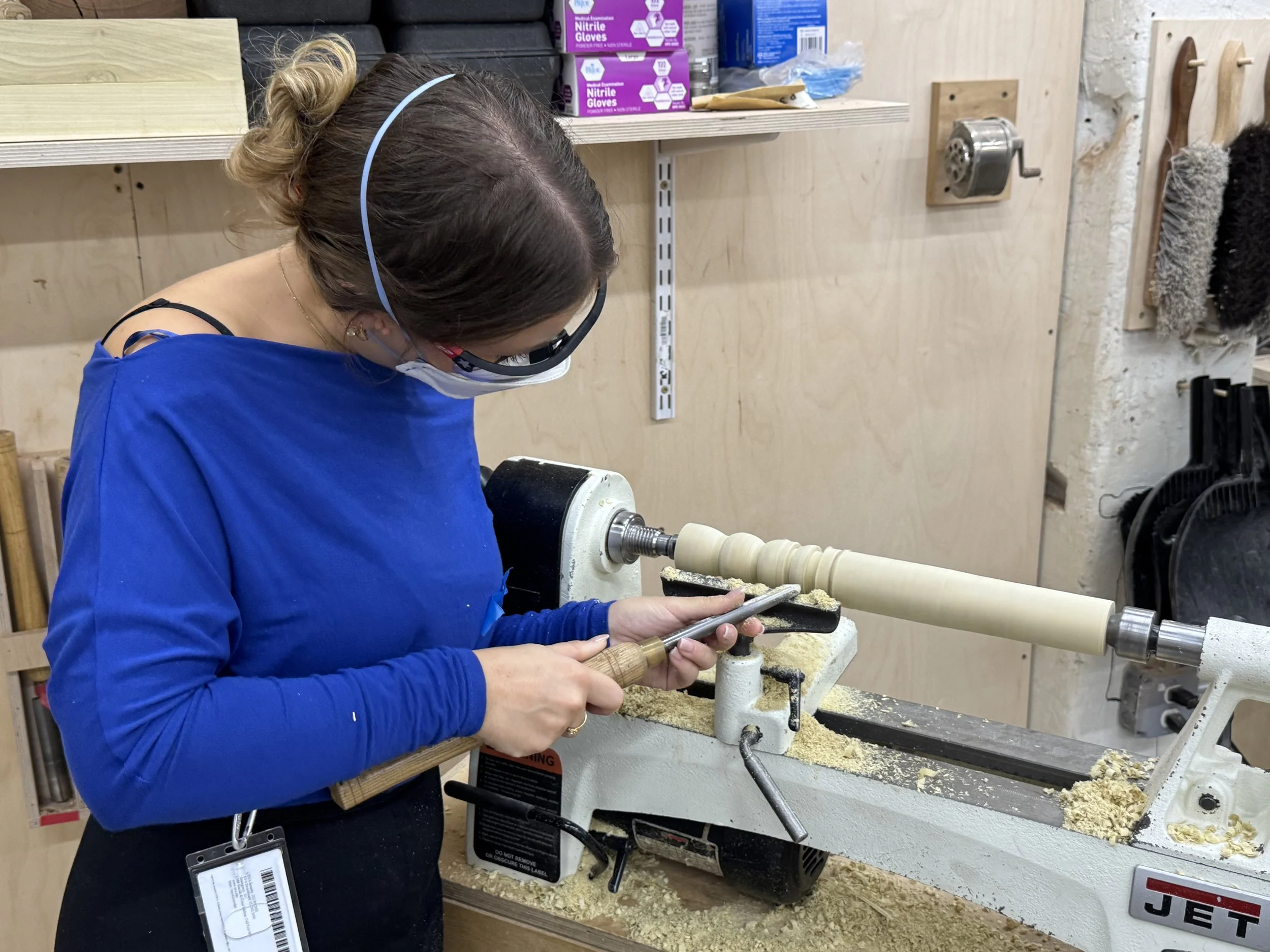
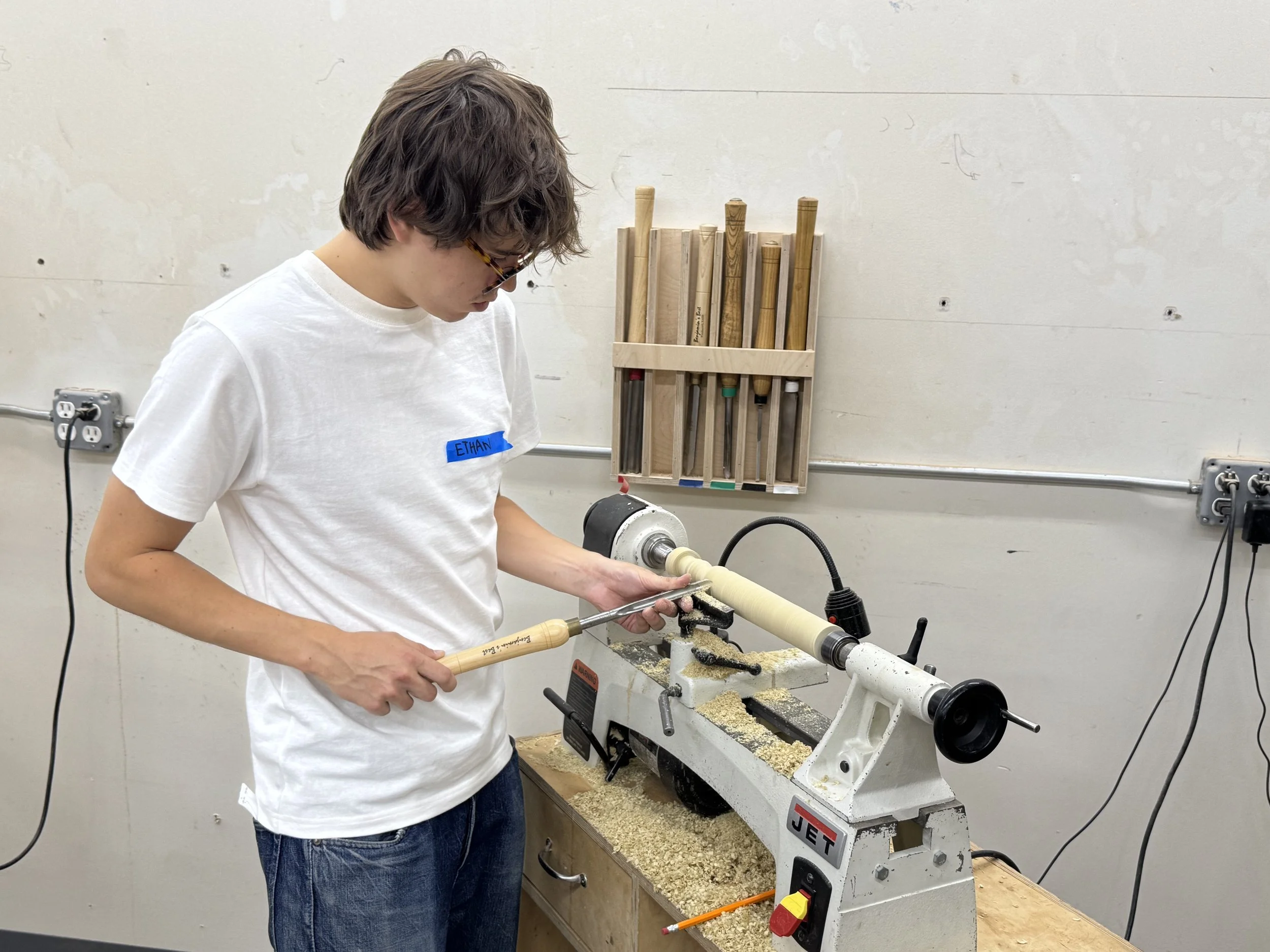
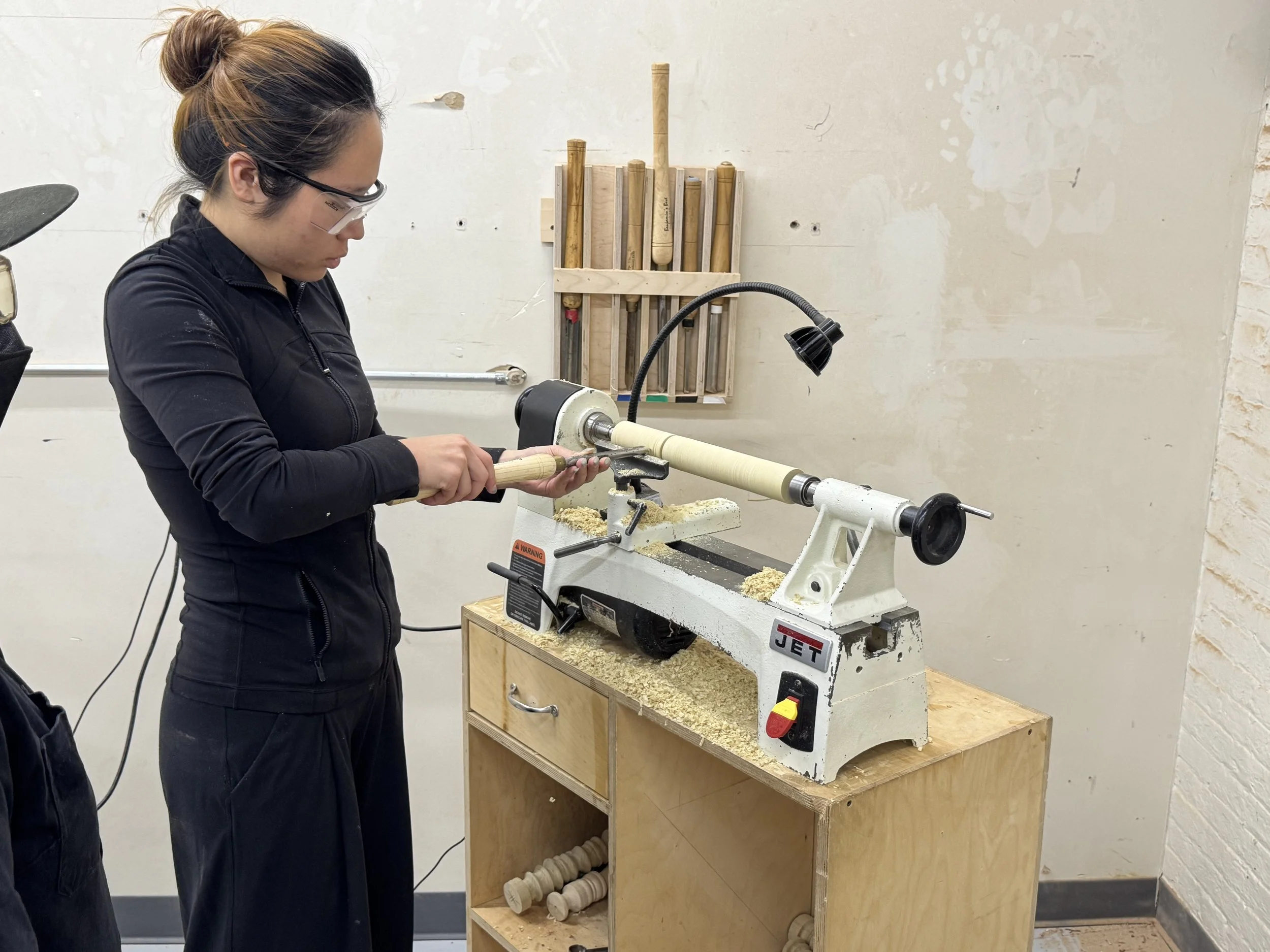
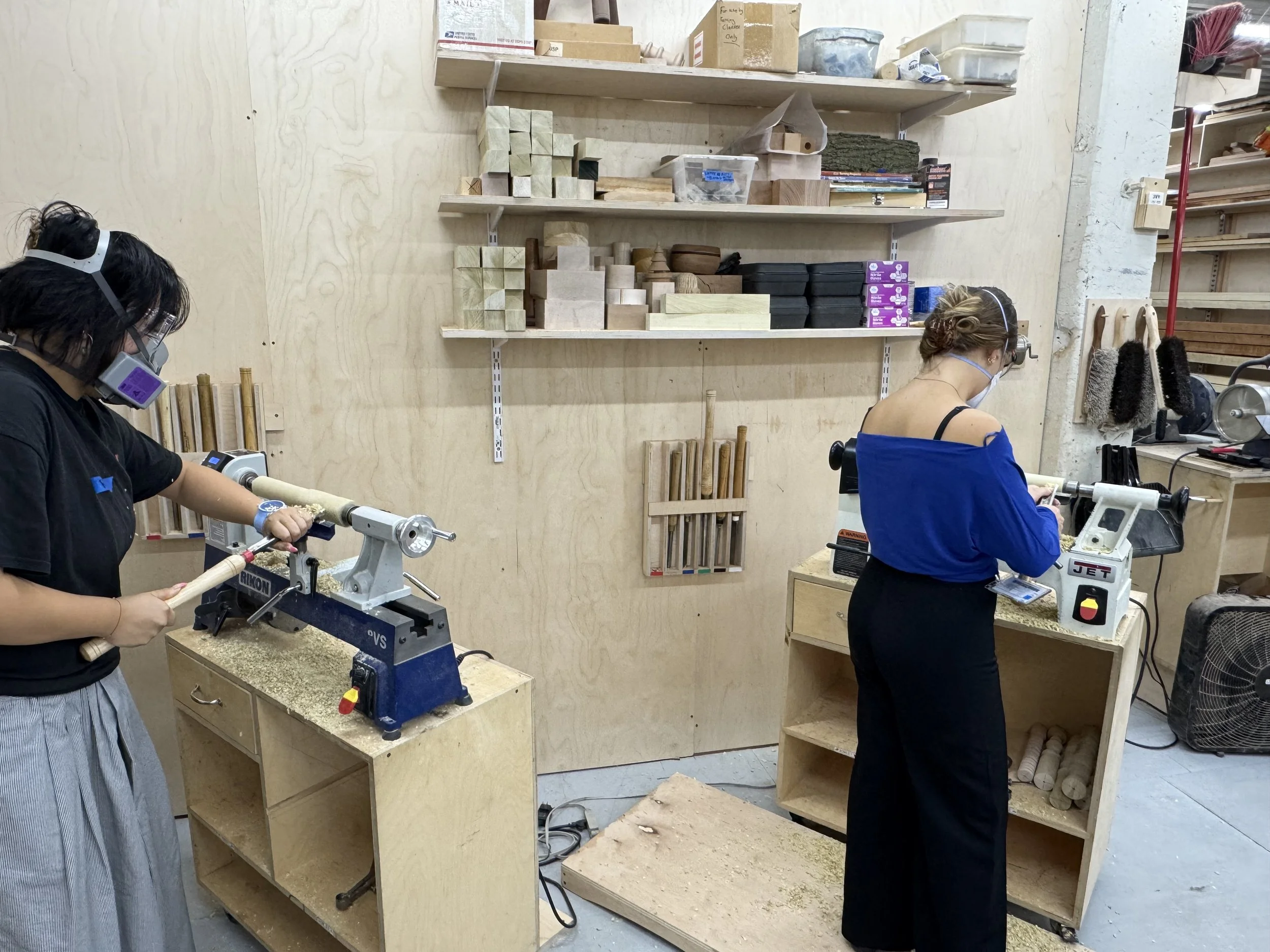
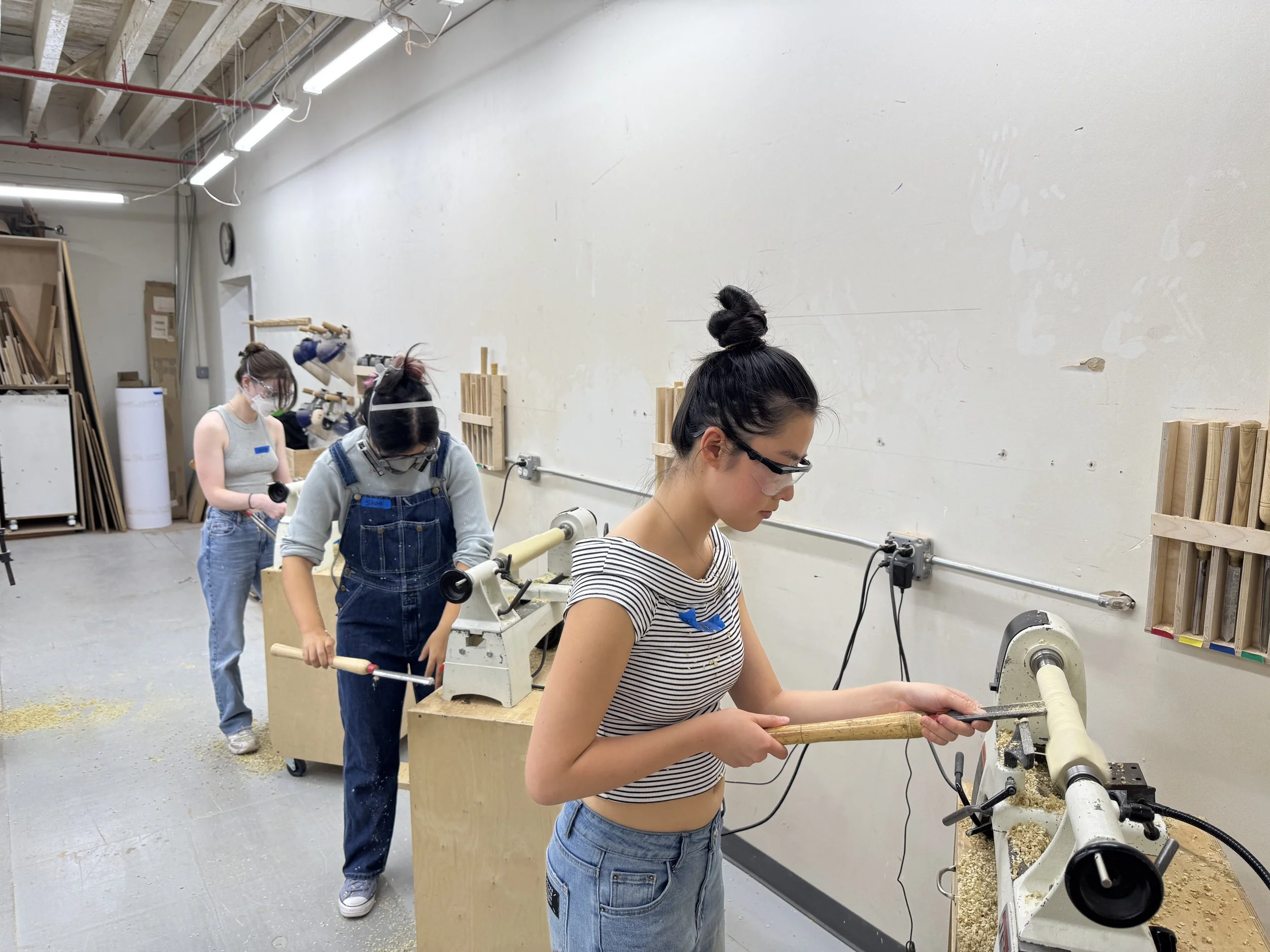
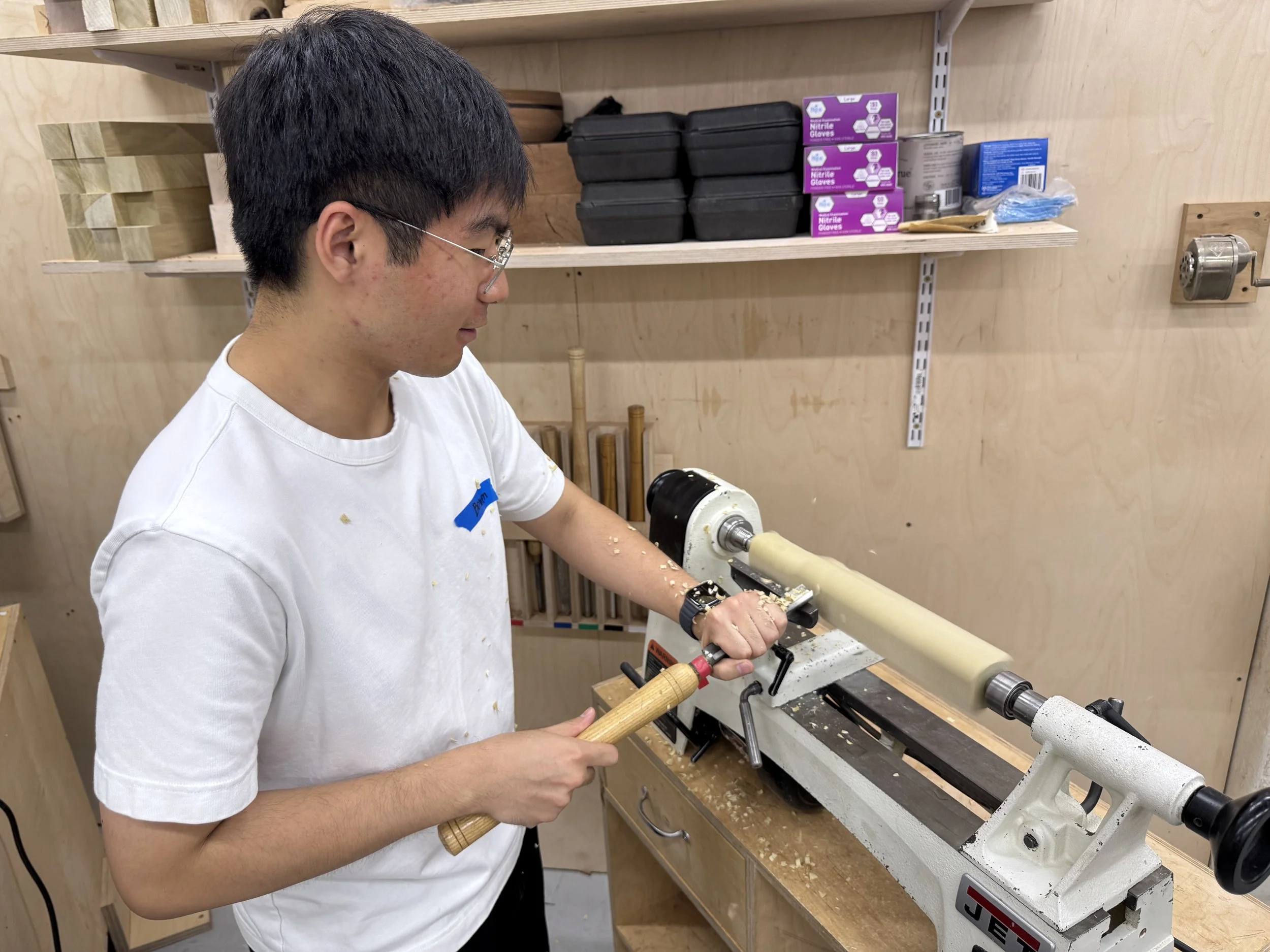
PoD students practice turning pieces of poplar.
Morgan: How did the workshop go overall? What exactly did students learn and how? Any triumphs, or maybe, mishaps?
Shannon: The workshop was fantastic! It was clear from the start that everyone was genuinely excited and curious to learn about turning – particularly in such a hands-on way. Jenna demonstrated how to prepare wood stock for turning, best practices for mounting the wood and setting up the machine, and proper tool and body positioning for the actual turning process. From there, everyone had the remaining time in the workshop to turn a sample piece. A lot of turning techniques can only be learned with experience and practice: a lot of it is by feel.
We were so impressed with everyone’s results! A number of students really went for it and created some complex forms. Fortunately there were no real mishaps. That’s one great thing about having co-faculty and a guest instructor, we had plenty of experienced folks supervising and ensuring everyone was set up to work safely.
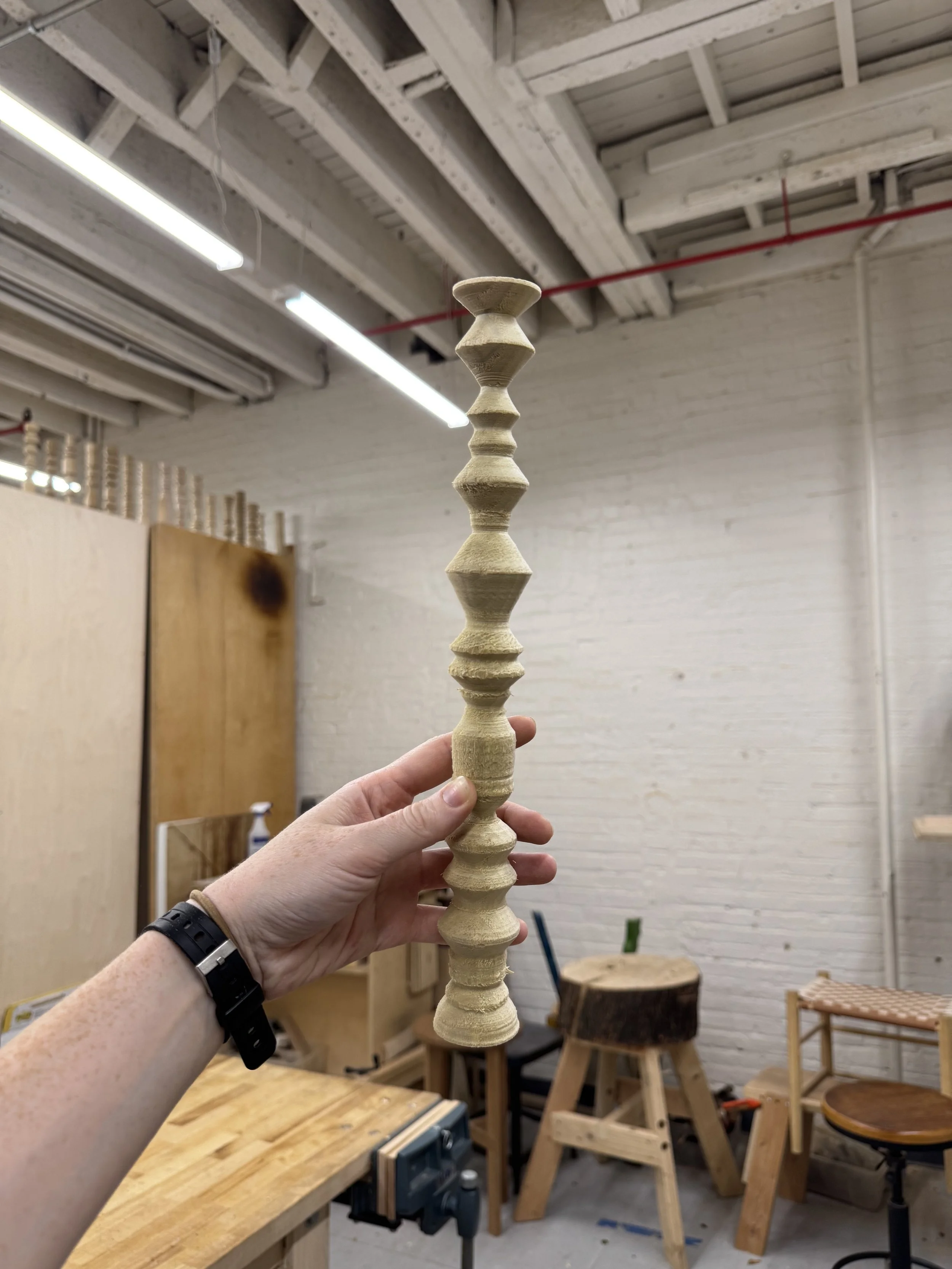
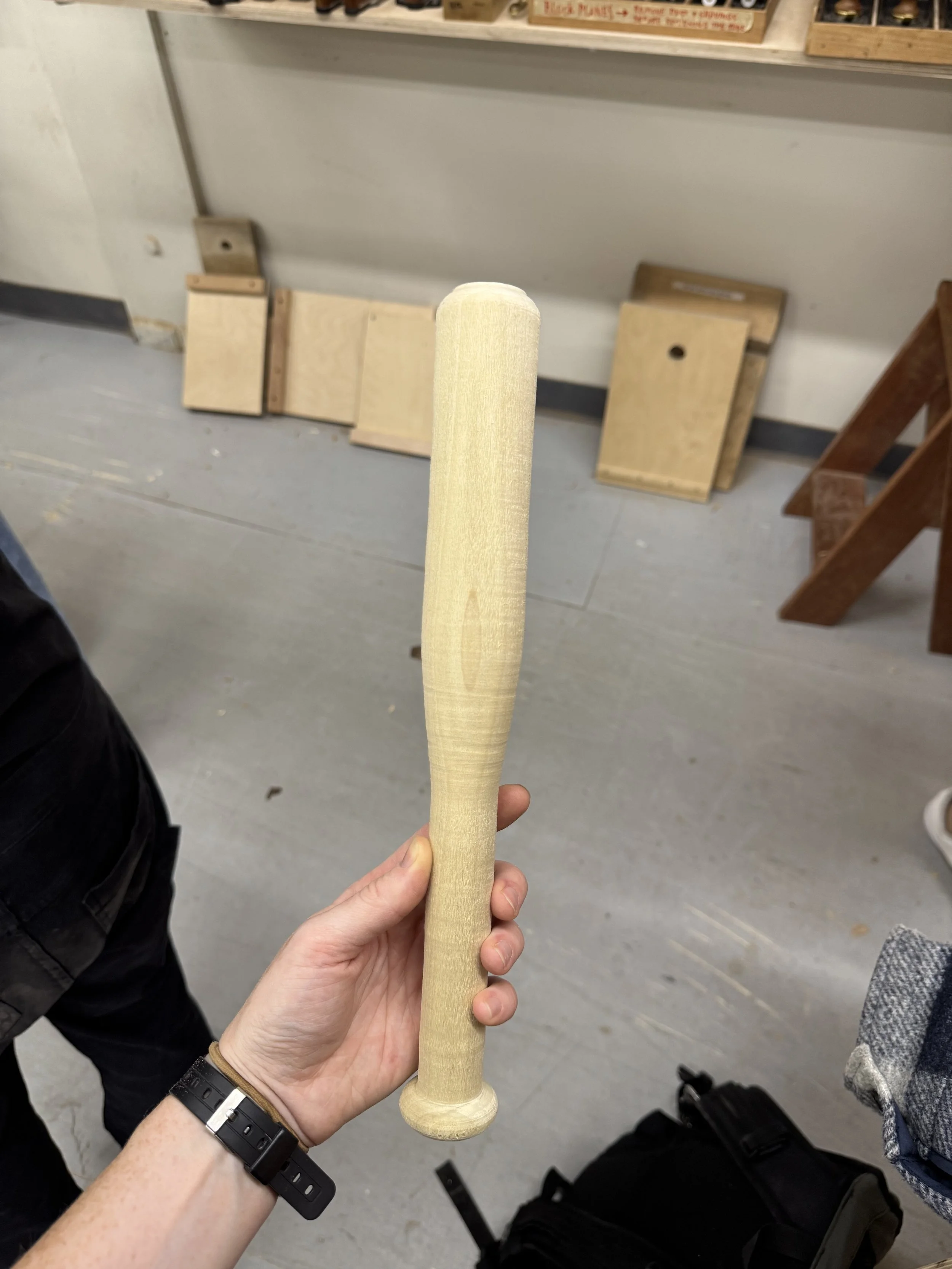
Final pieces from the workshop.
Morgan: The Products of Design program welcomes students from a variety of different backgrounds, not just product and industrial design. How do you manage teaching a course with students who have varying levels of expertise?
Shannon: I love working with students coming from different backgrounds. The bottom line of my teaching philosophy is to meet students where they are. If someone is brand new to working in the woodshop, I have the opportunity to make them feel safe, empowered, and establish good habits early on. For students with more experience, we get to refine their technique together and possibly explore more advanced processes. I also like to recruit the more experienced students to help their peers who are feeling less comfortable. When you have to explain (or teach) something to someone else, it only improves your own understanding and skill.
Morgan: What do you want students to get out of the 3D Product Design: Material and Process course?
Shannon: The best furniture/object/product designers, in my opinion, have a deep understanding of materiality and craft. My hope is that students advance their hands-on making skills across all of the processes that we introduce throughout the course. With that embodied knowledge, I hope that their future design work is informed by material reality and perhaps even inspired by it. My ulterior motive is of course to recruit more makers into a craft-centric design ethos. Build your own cabinets! Weld weird chairs! Even if students complete the course not with a burning desire to continue their woodworking or metalworking careers, but simply with a new found appreciation and respect for the craft community, I will be content.
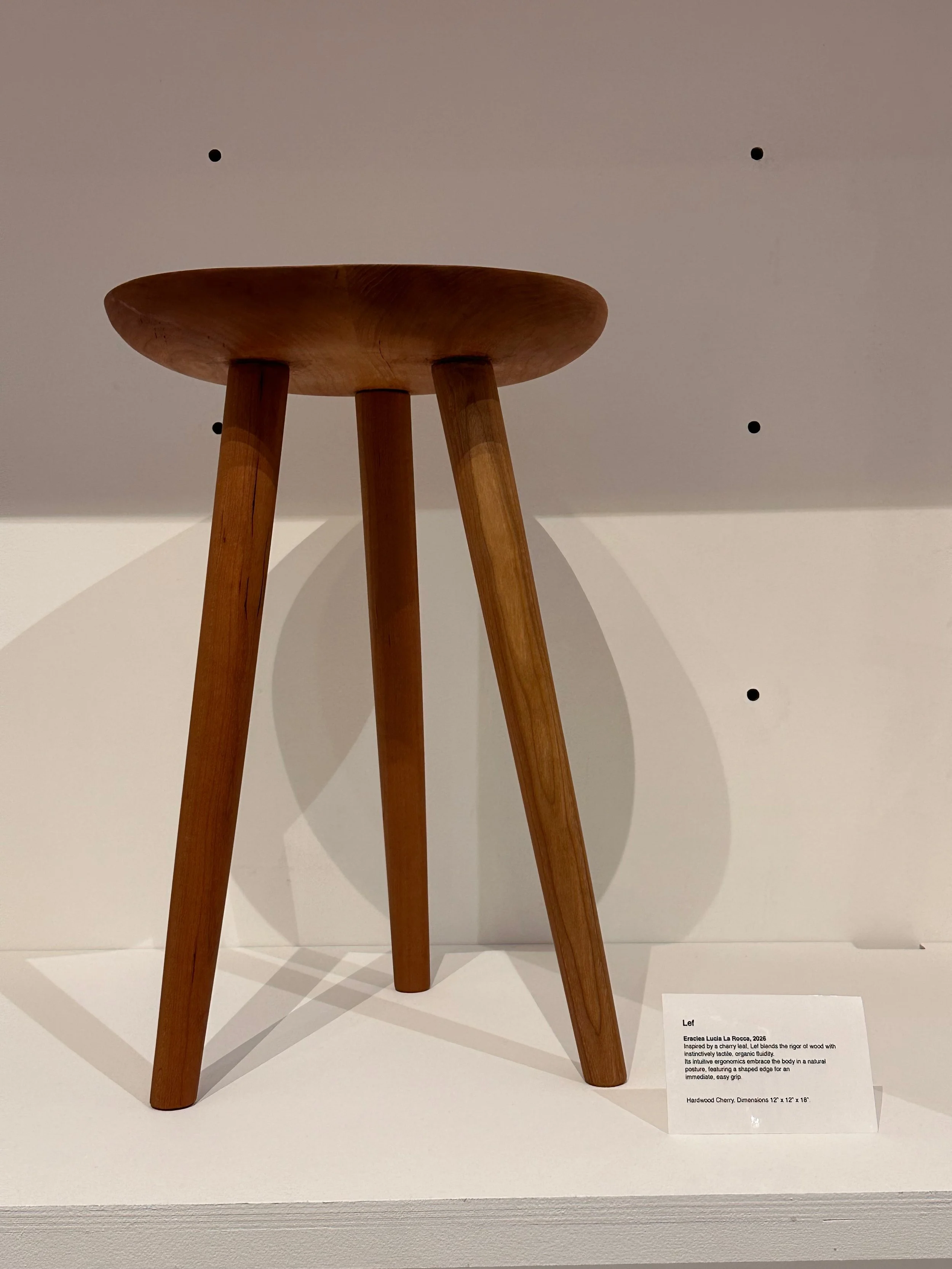
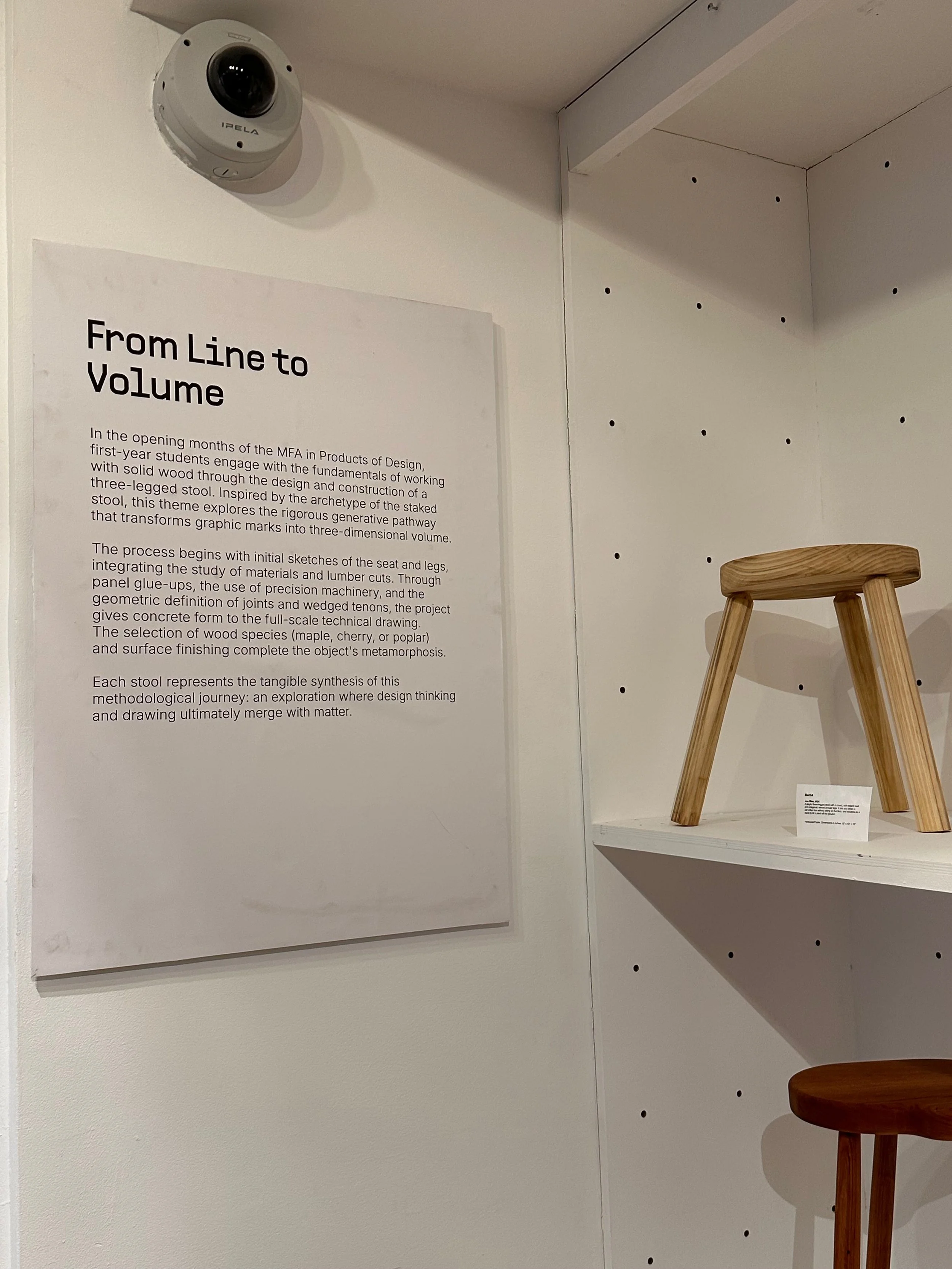
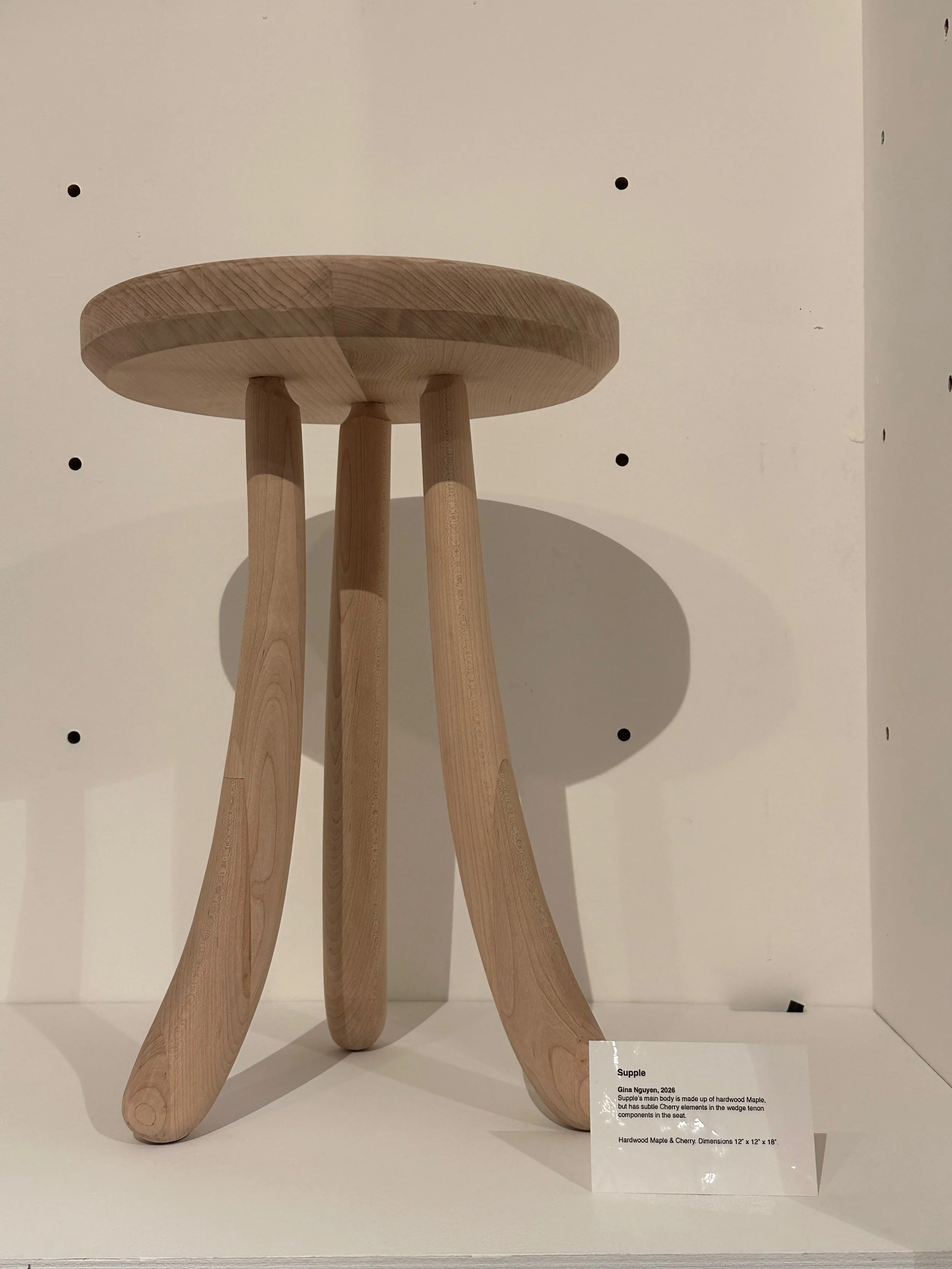
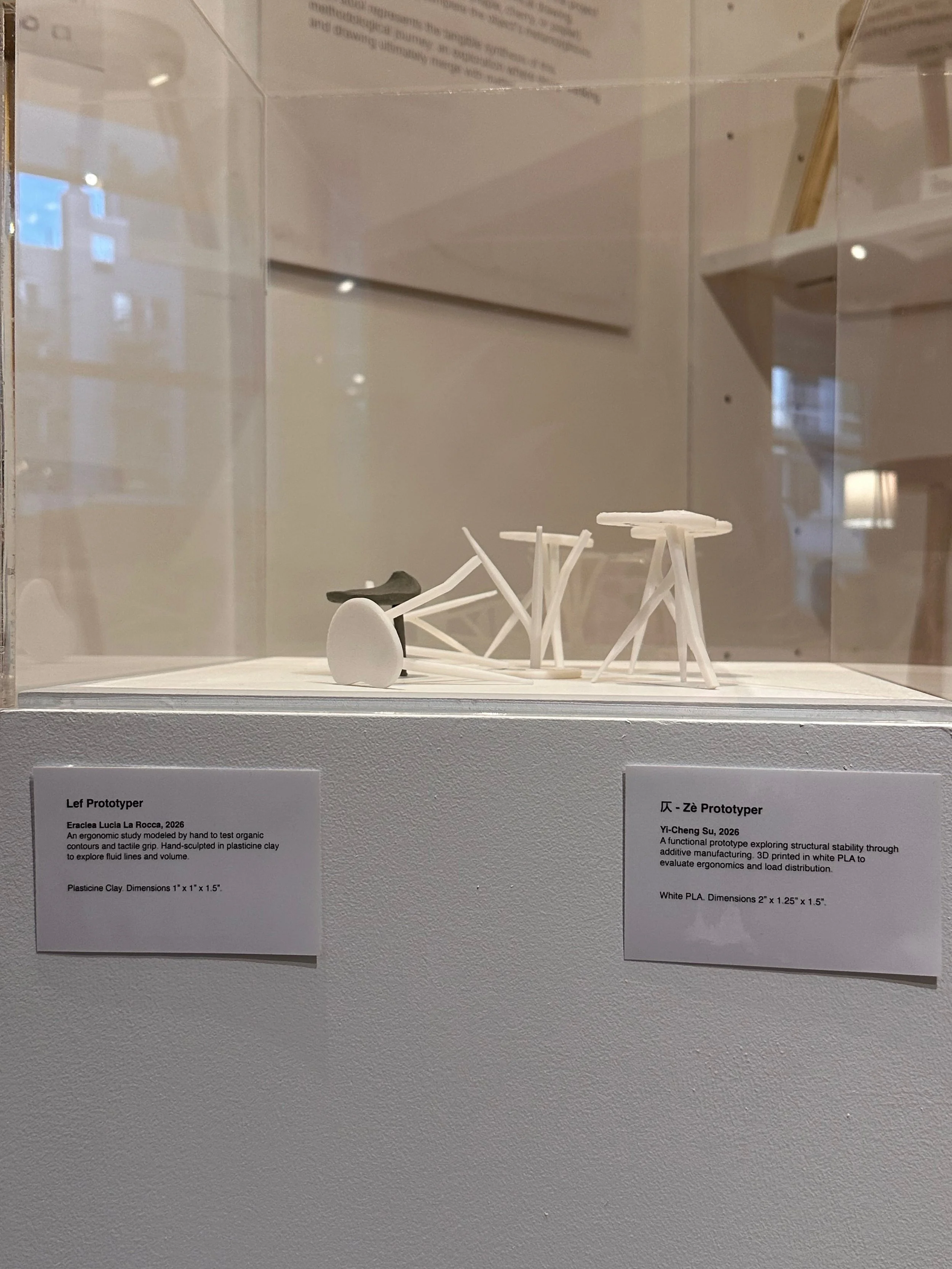
The first-year’s final stools are now on display in the Products of Design department gallery. See how students put what they learned into practice and read more on the gallery below:
From Line to Volume
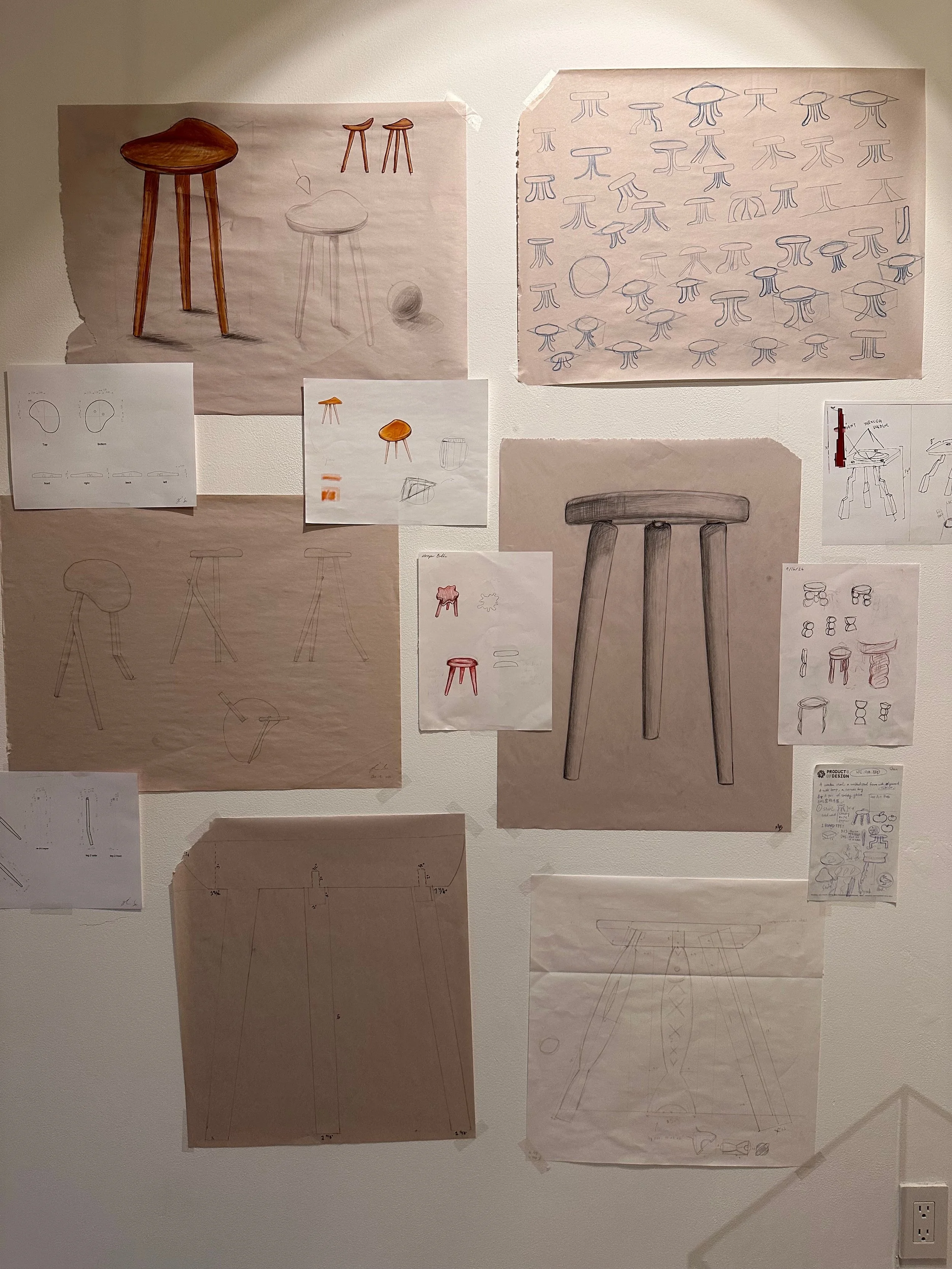
In the opening months of the MFA in Products of Design, students engage with the fundamentals of working with solid wood through the design and construction of a three-legged stool. Inspired by the archetype of the staked stool, this theme explores the rigorous generative pathway that transforms graphic marks into three-dimensional volume.
The process begins with initial sketches of the seat and legs, integrating the study of materials and lumber cuts. Through panel glue-ups, the use of precision machinery, and the geometric definition of joints and wedged tenons, the project gives concrete form to the full-scale technical drawing. The selection of wood species (maple, cherry, or poplar) and surface finishing complete the object's metamorphosis.
Each stool represents the tangible synthesis of this methodological journey: an exploration where design thinking and drawing ultimately merge with matter.