Stay up to date on department events, faculty news, and see snapshots of life at SVA Products of Design program in New York City.
Department Blog

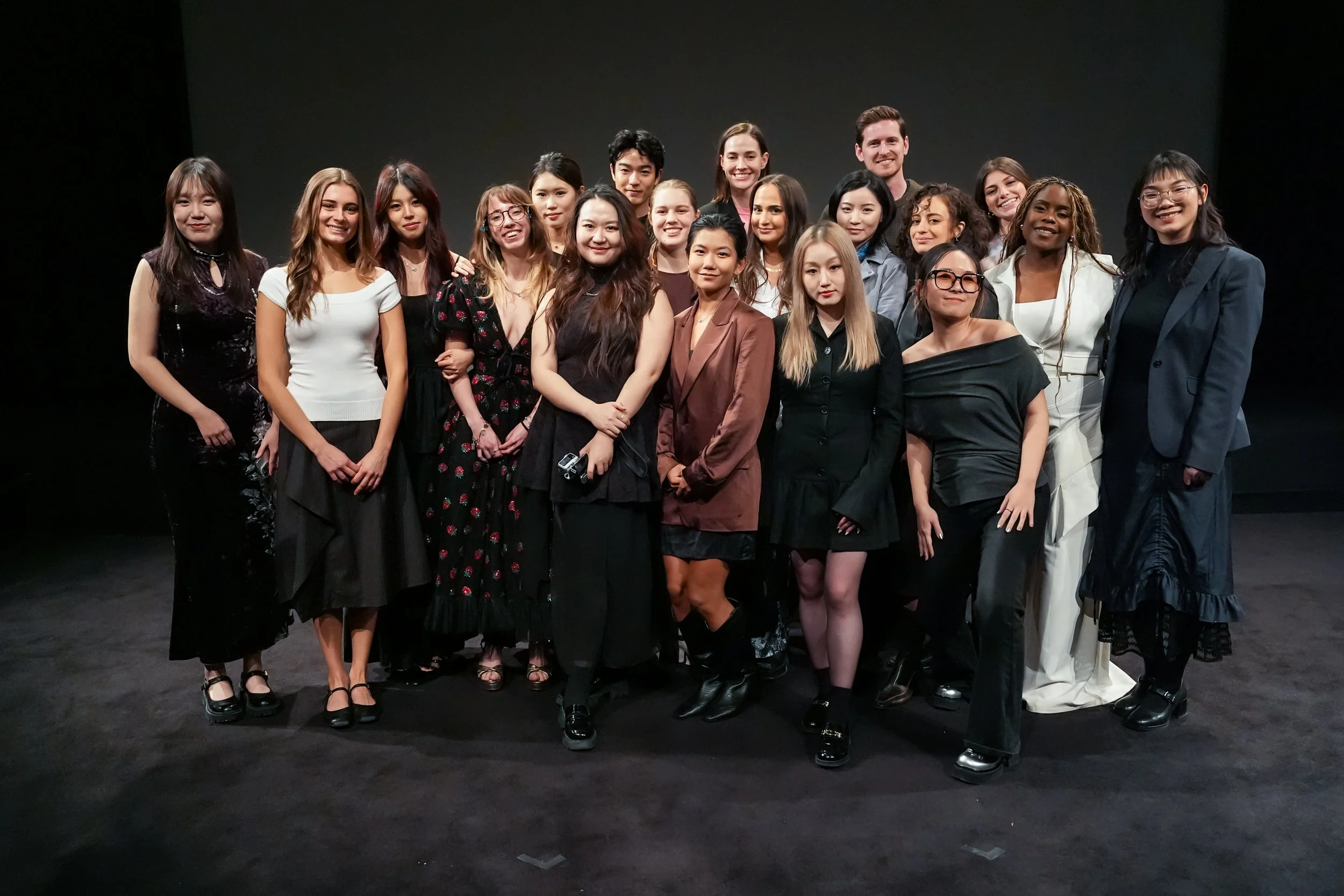
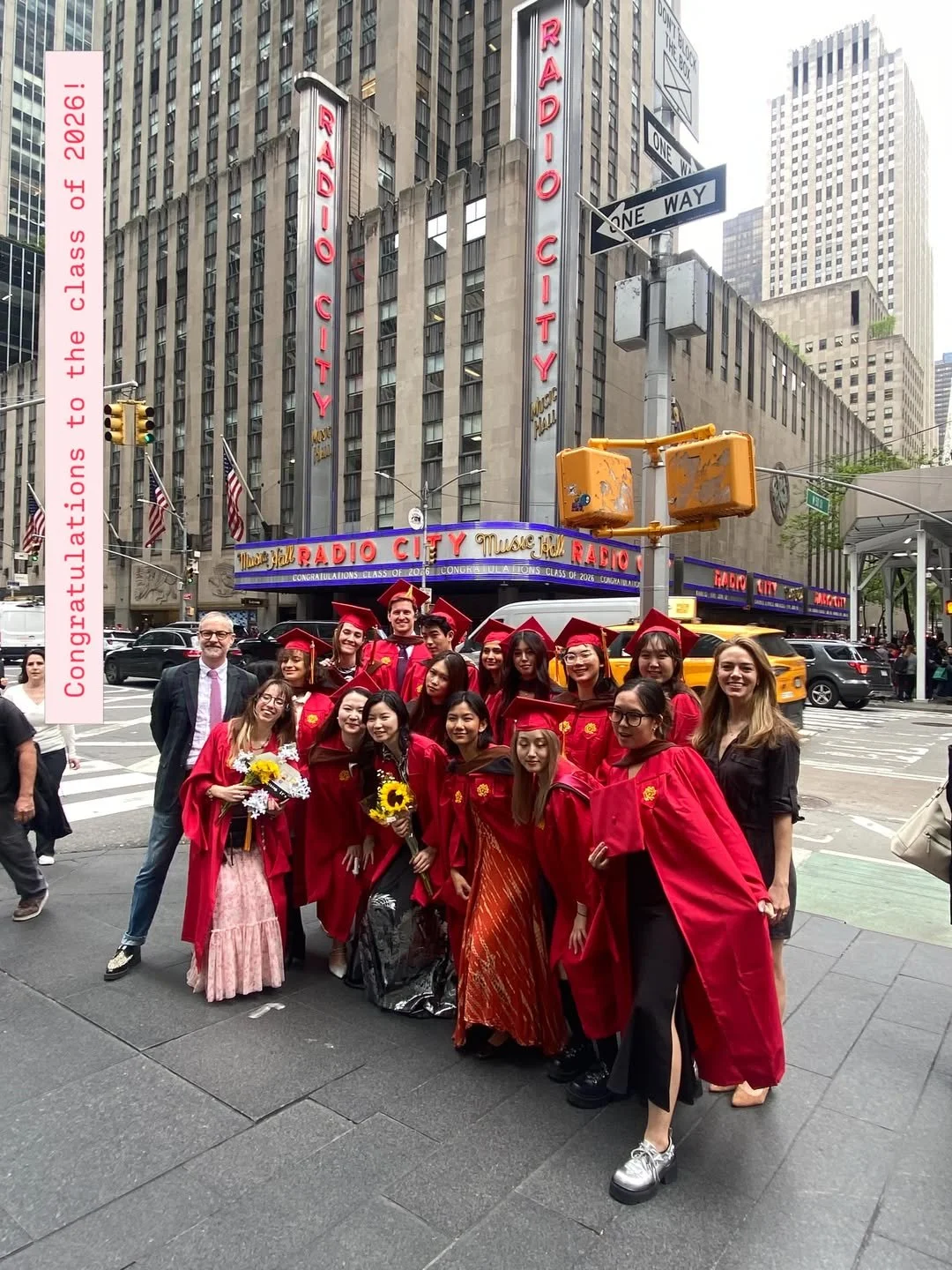
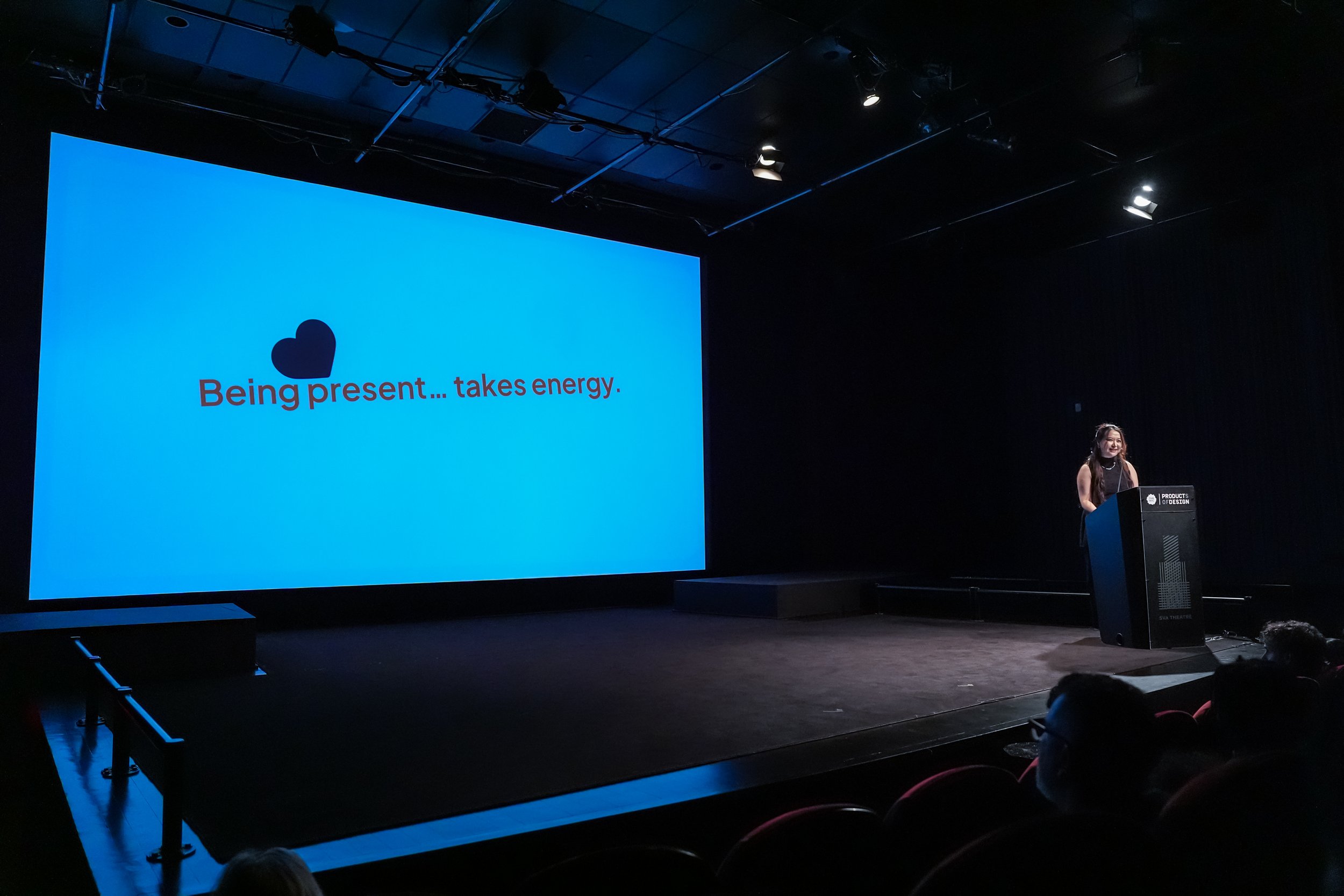
Enjoy a selection of photos from the Class of 2026 Thesis Showcase! On May 7th, the thirteenth cohort of MFA Products of Design graduates presented their final thesis projects onstage at the SVA Theatre in New York City. Friends, family, faculty, and industry professionals were in the audience as the graduates showed a wide variety of work, from personal investigations to expansive systems-level interventions.
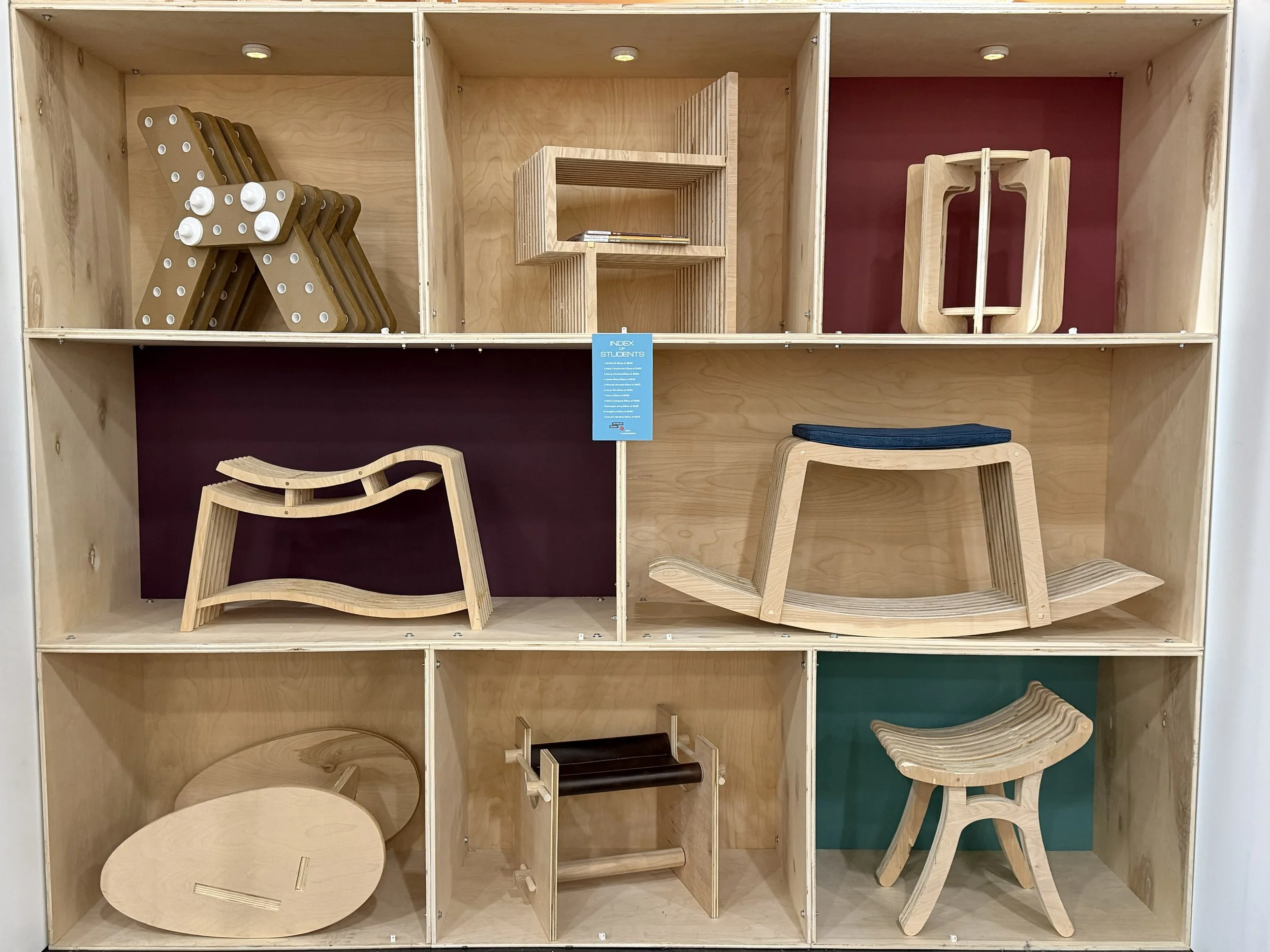
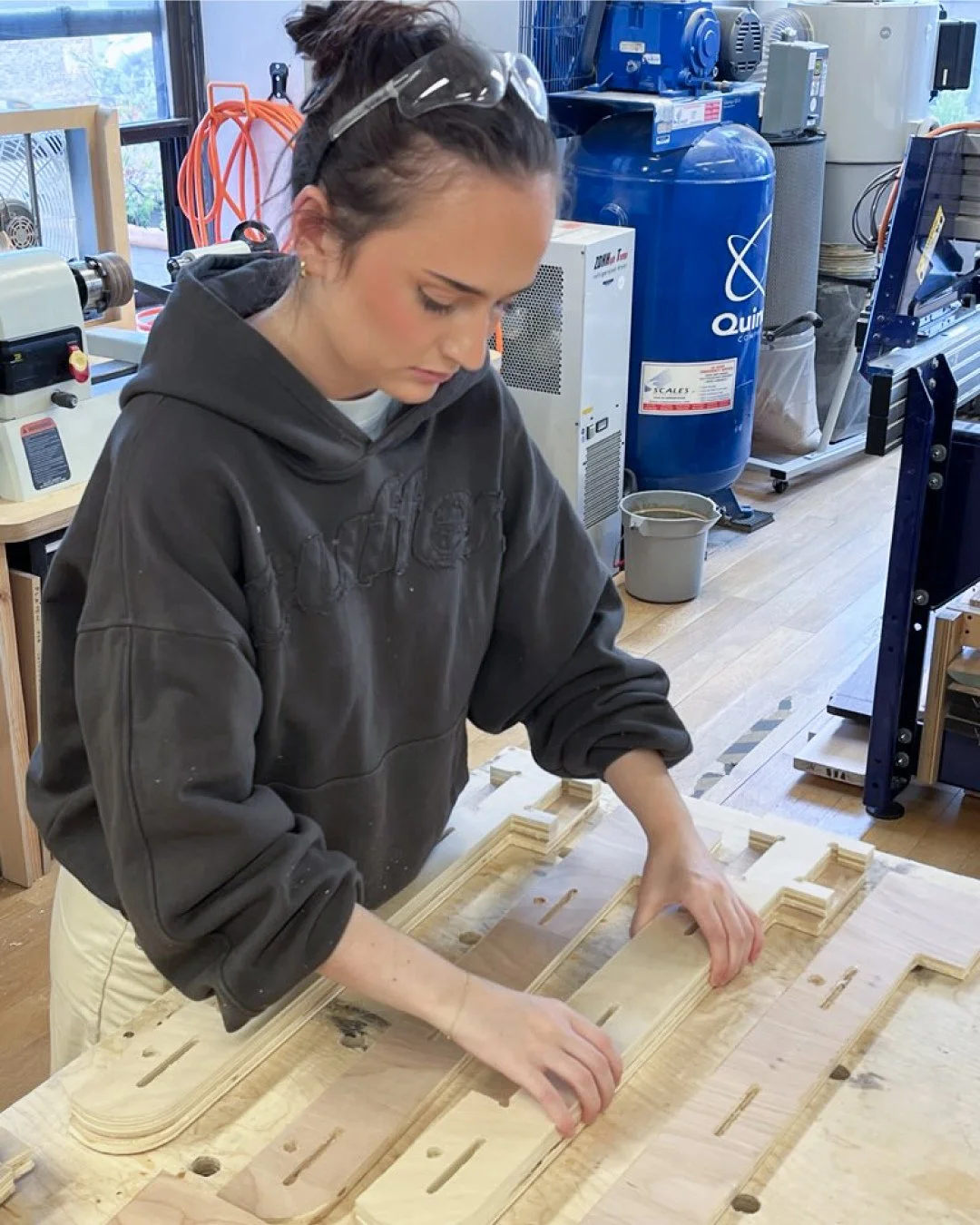
Sinclair Smith, Acting Chair of MFA Products of Design and Director of the VFL, has taught furniture design to students of the SVA BFA Interior Design : Built Environment. Select works from the course were presented at this year’s Wanted Design at ICFF adjacent to the MFA Products of Design “Lost Wax” exhibition.
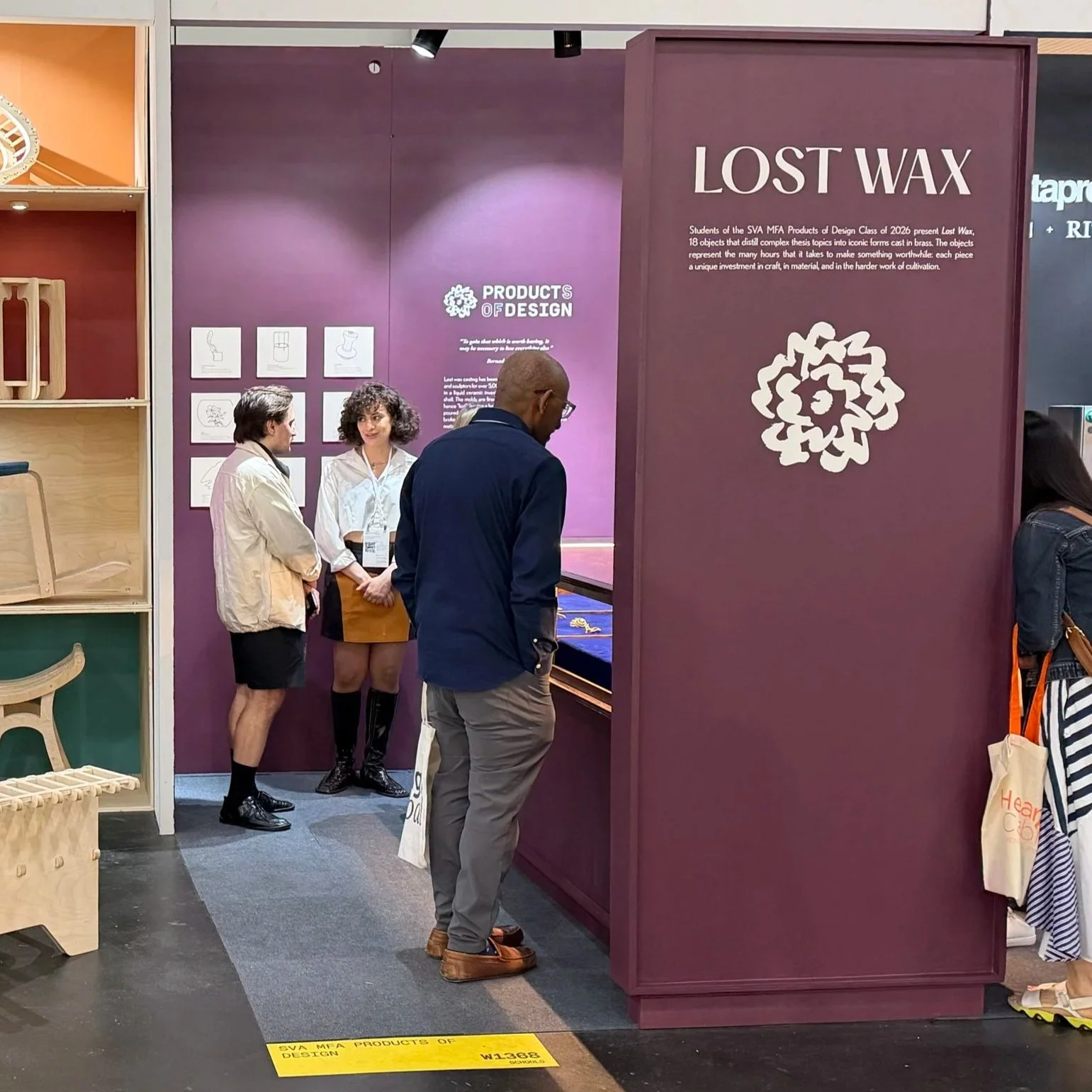
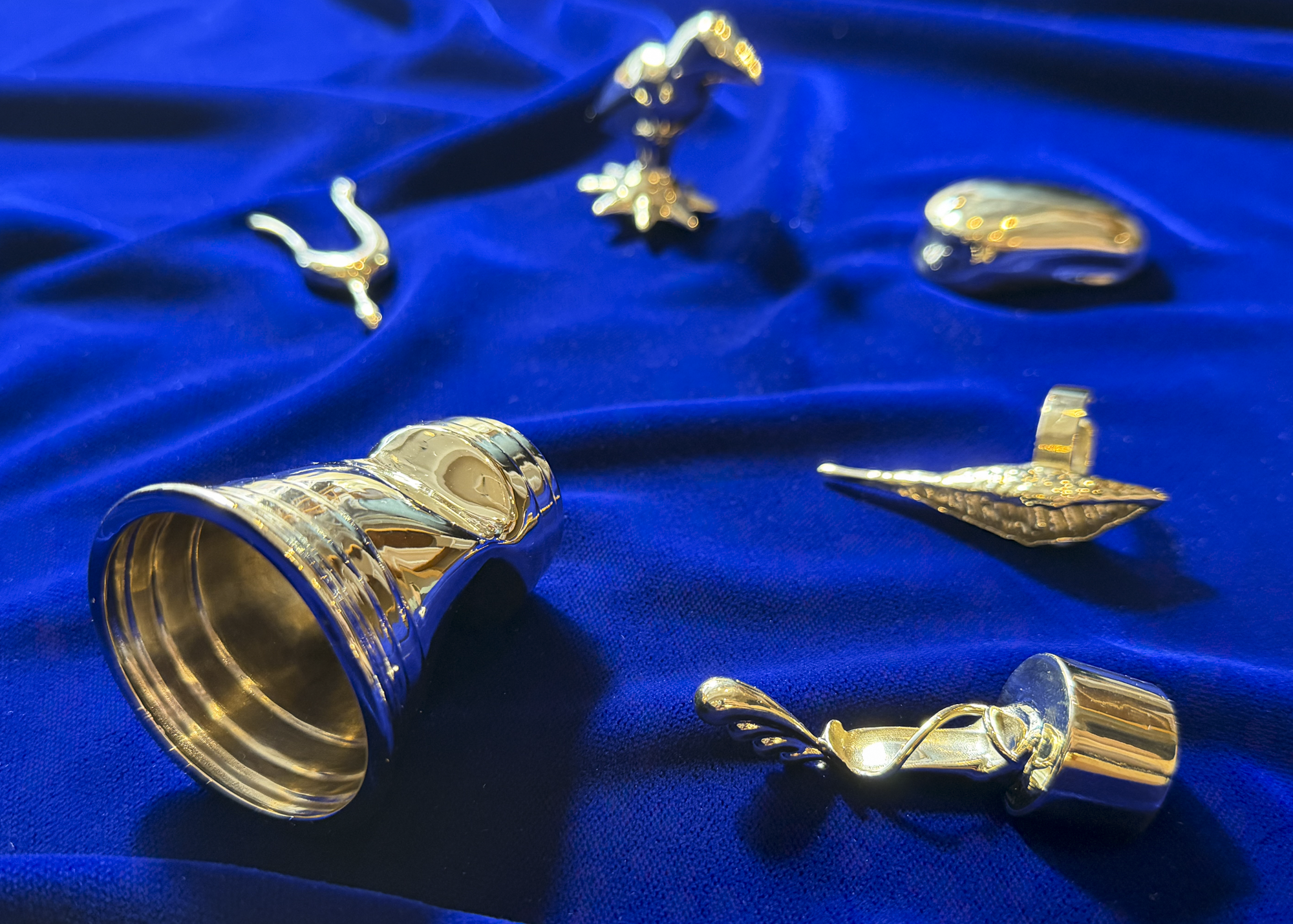
Products of Design Class of 2026 presented Lost Wax at Wanted Design ICFF 2026. The exhibition of 18 objects distills complex thesis topics into iconic forms cast in brass. The objects represent the hours that it takes to make something worthwhile: each piece is an investment in craft, in material, and in the harder work of cultivation.
Join us at ICFF 2026 for Lost Wax—an exhibition by the Class of 2026. 18 objects distill complex thesis topics into iconic forms cast in brass. May 17th to 19th at the Javits Center.
This past December, our founder Allan Chochinov stepped down as Chair of Products of Design. Now, after 13 years as consigliere, Sinclair Smith, PoD cofounding faculty and Director of the Visible Futures Lab, is holding the reins.
We sit down with Sinclair this evening to talk about his life, his career, and his first season as Acting Chair.
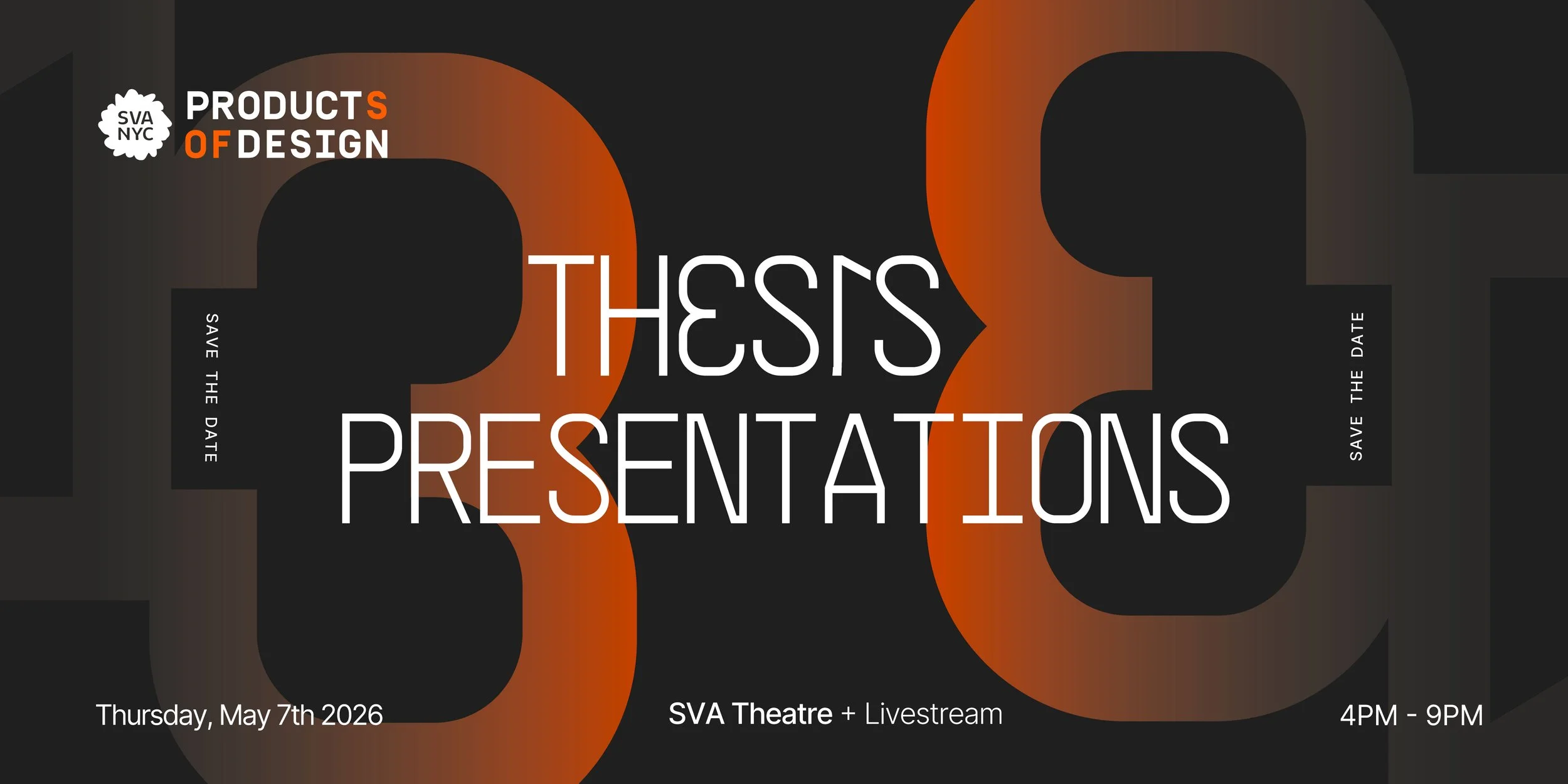
Join us for the 13th annual MFA in Products of Design Annual Master’s Thesis Showcase for the graduating 2025 class, live at the SVA Theatre on Thursday, May 7th from 4–9pm ET.
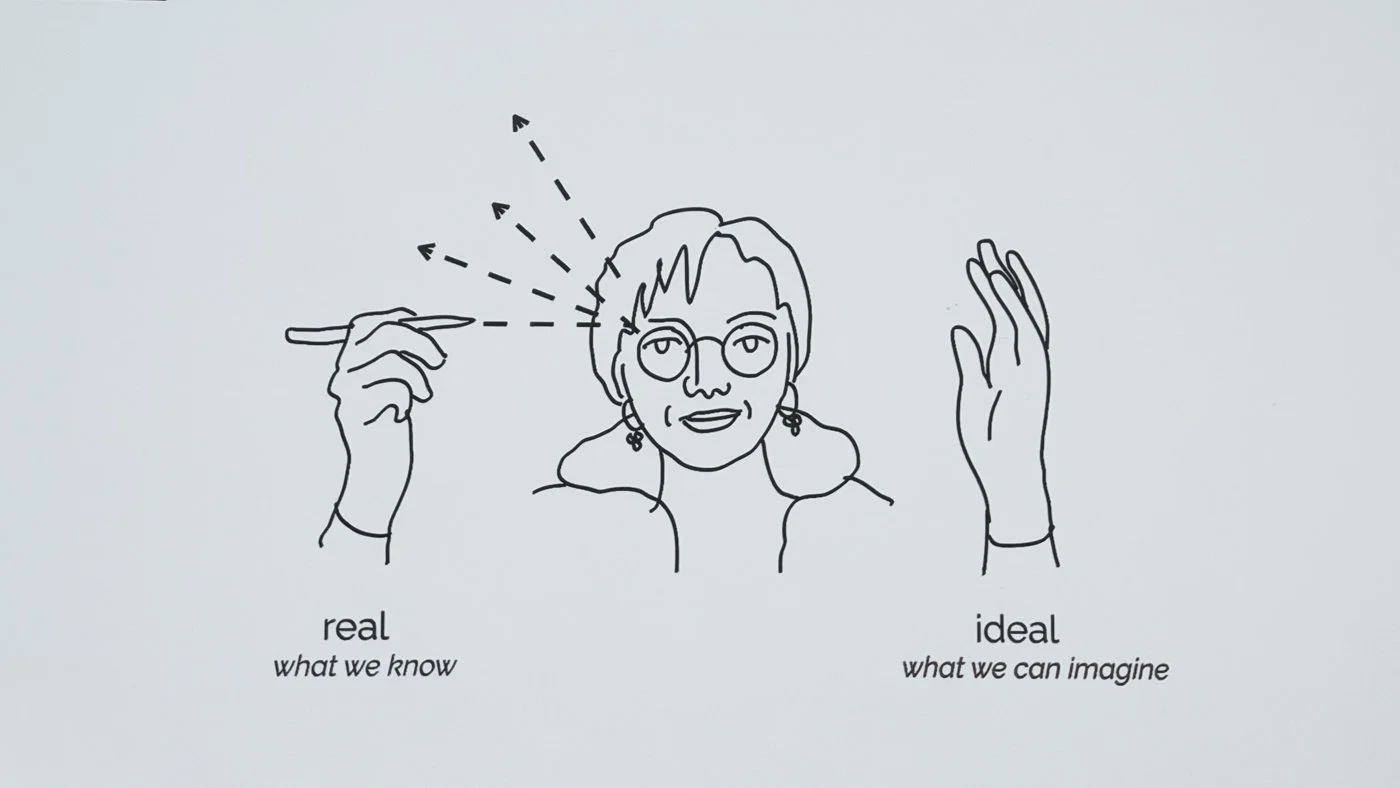
We recently had the pleasure of welcoming back Ayse Birsel, a founding faculty member of SVA’s Products of Design program, for an intimate one-hour workshop with students. An internationally recognized designer and author of Design the Life You Love, Ayse’s return felt especially meaningful—both for the faculty, who were excited to have her back, and for Ayse herself, who spoke about SVA as a kind of home.
Each year, PoD’s first-year students are tasked with scripting, storyboarding, pitching, and producing a 3–5 minute film in just seven weeks. Over the course of the class, each student pitches their concept, and with the support of collaborating teams, seven final films make it into production and premiere at Oscar Night. The only guiding prompt: Each film must center around a designed object or experience from the student’s body of work, building a world where that design can flourish and tell its story.
Student Work
See featured work by Products of Design students. From week-long prototyping sprints to year-long thesis projects, our STEM-designated program centers on three-dimensional, physical design, supported by interaction, service, and experience design.
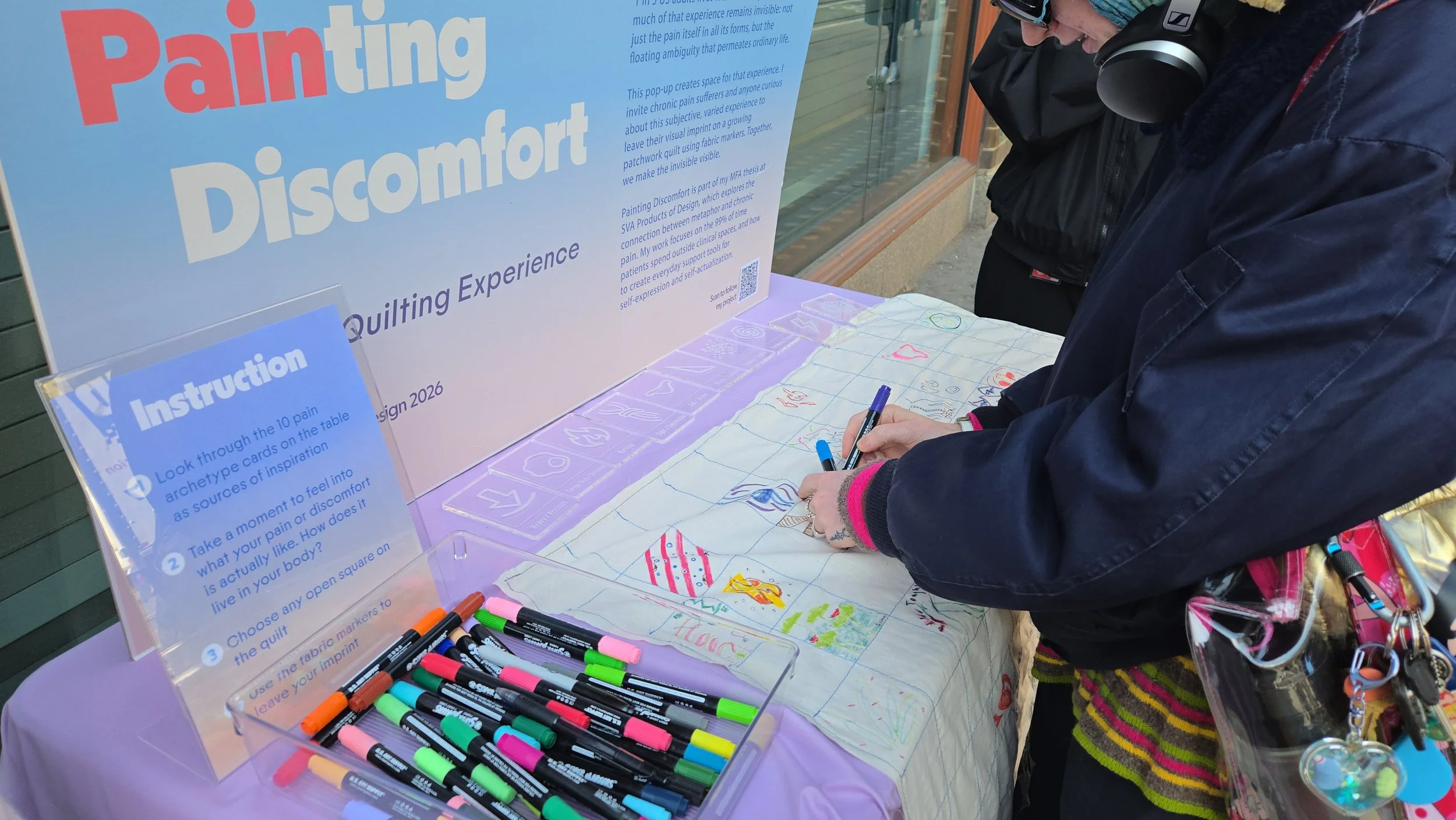
Rida Zeng's thesis, Metaphor as Medicine: Revealing Meaning to Transform Chronic Pain, asks a question millions of people meet every time they walk into a doctor's office: how do you describe a pain that has no words? Today, 1 in 4 adults in the U.S. live with chronic pain, the leading cause of disability worldwide. Yet the clinical communication standard remains the Wong-Baker chart, invented in the 1980s.
Eva Mo’s thesis, Between Presence and Production: Boundary Collapse in Remote Work, examines how remote labor reshapes domestic space and everyday cognition, arguing that many of the stresses associated with working from home stem less from productivity itself than from the disappearance of clear environmental boundaries.
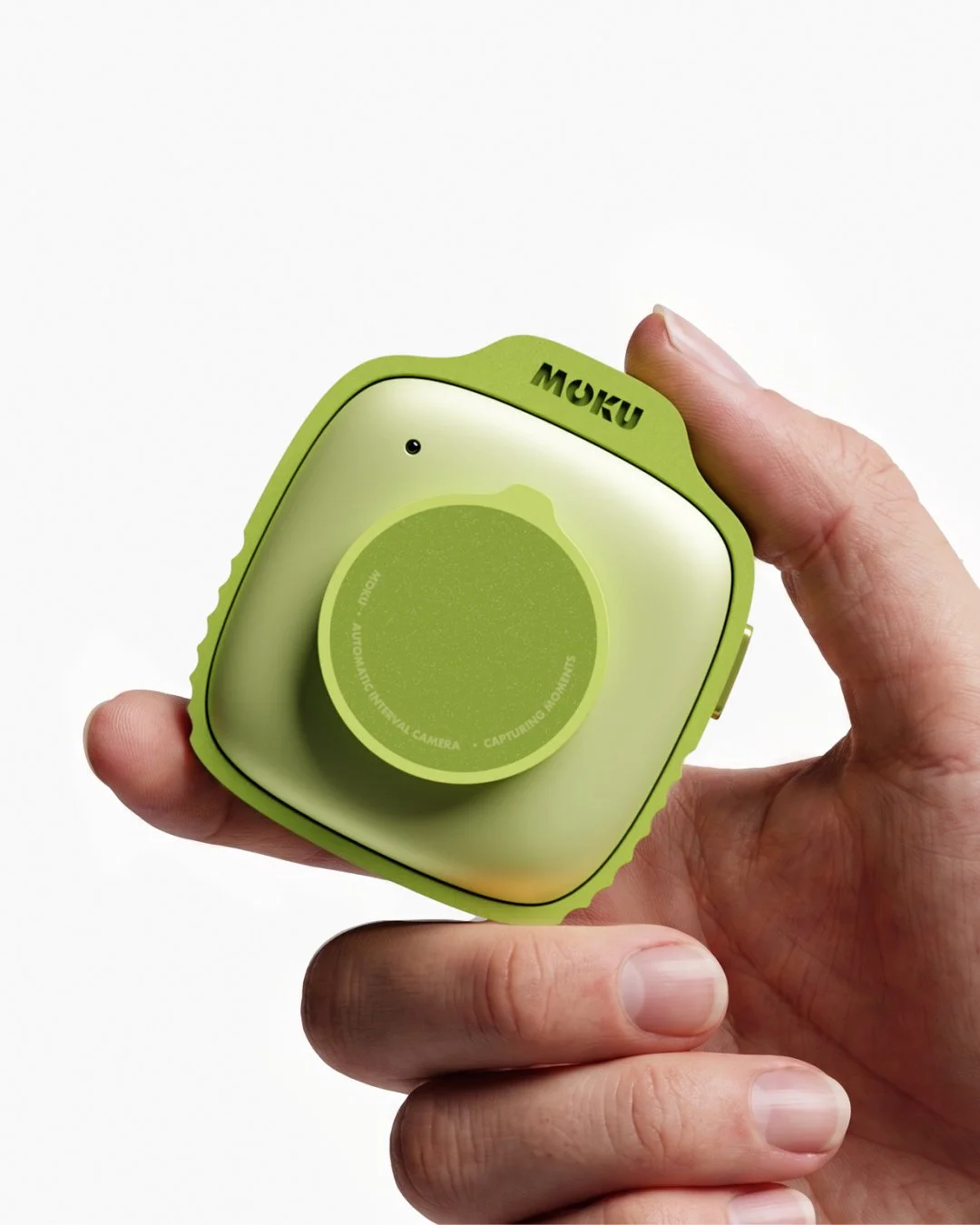
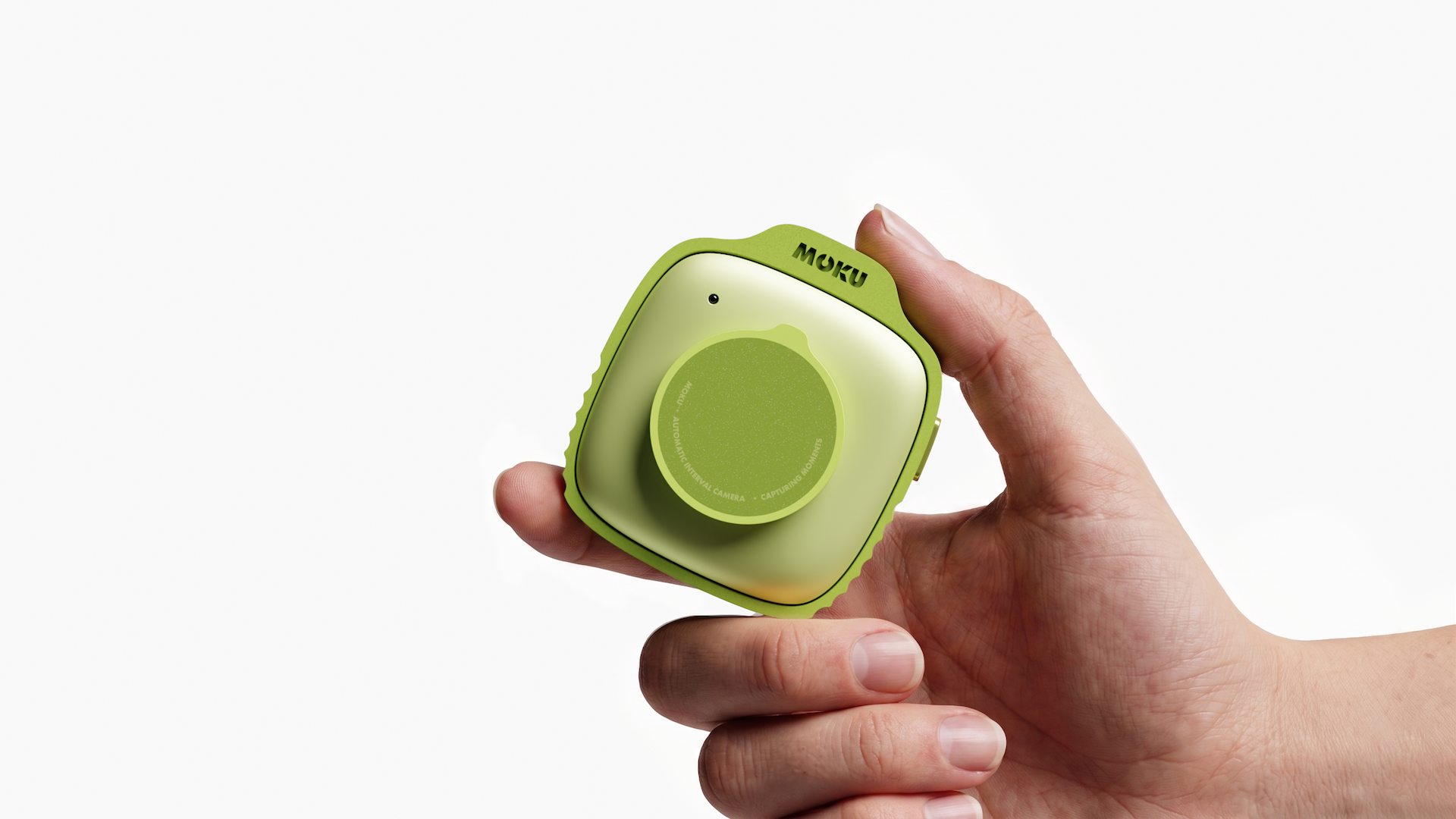
Qianyue Zhou’s thesis, Performing Realness: Posting, Pressure, and Visibility on Social Media, investigates how social media transforms everyday life into something visible, measurable, and performative. Beginning with her own experience of overthinking what to post, she explores how the desire to appear authentic online can create new forms of pressure. Her work looks closely at the full cycle of a moment capture, review, share, and response — and proposes alternative ways for people to document and exchange real life with less performance, less optimization, and more presence.
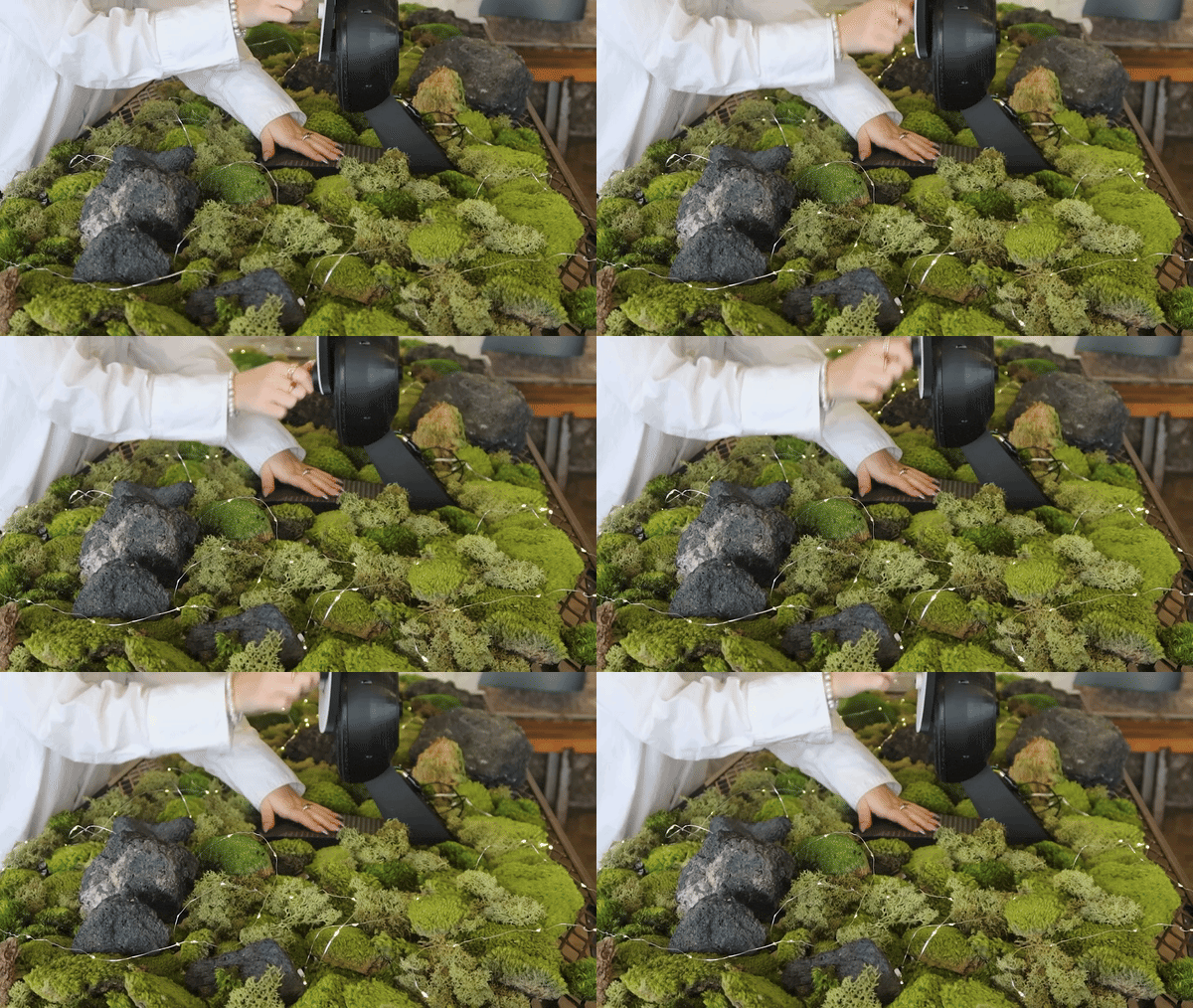
Guðrún Þöll Torfadóttir’s thesis Designing Everyday Energy: Reimagining Renewables in the Home explores how electricity can be generated within the home and how renewable energy can become more accessible in everyday life. Growing up in Iceland, where all electricity comes from renewable sources, Guðrún was surprised to discover that New York City, one of the world’s most powerful cities, still relies on fossil fuels to generate energy. Her thesis asks: how might renters in urban environments become active participants in the transition to clean energy while reducing their electricity costs?
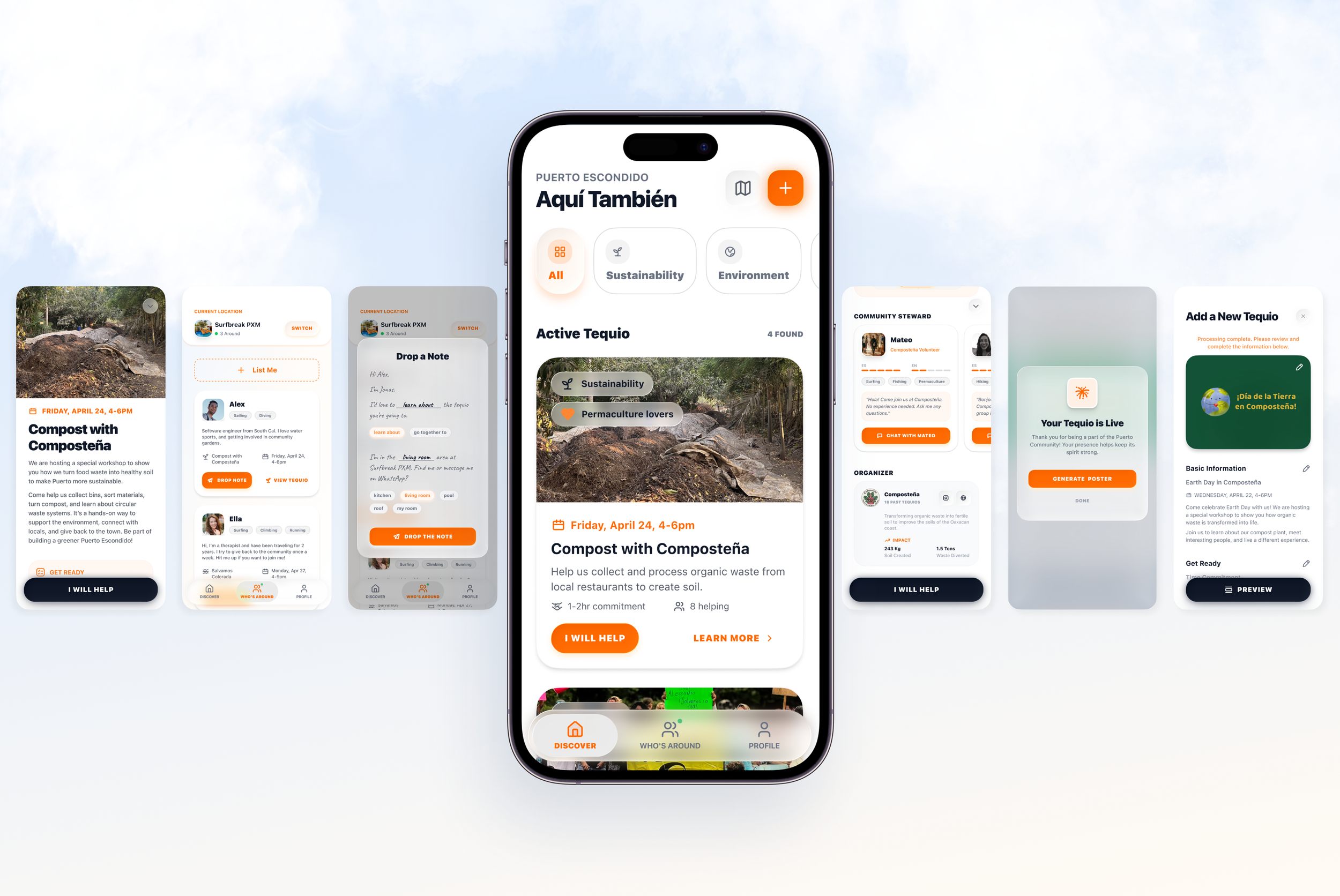
Sige Zheng's thesis, Sharing Waves: When Digital Nomads Meet Local Communities in Puerto Escondido, Mexico, investigates how the rapid growth of digital nomadism affects community life and local infrastructure in Puerto Escondido. As a designer, surfer, and traveler, Sige has witnessed the surge in remote work and digital nomadism following COVID-19. Digital nomads arrive in Puerto Escondido and fall in love with the place. But love without responsibility has a cost—tourism growth has outpaced local infrastructure development. While grassroots organizations continue to support the community, many newcomers remain parallel to these efforts. This thesis asks: how might design create a meaningful bridge between those who are passing through and the communities and places they encounter—at the beginning, during, and beyond their journey?
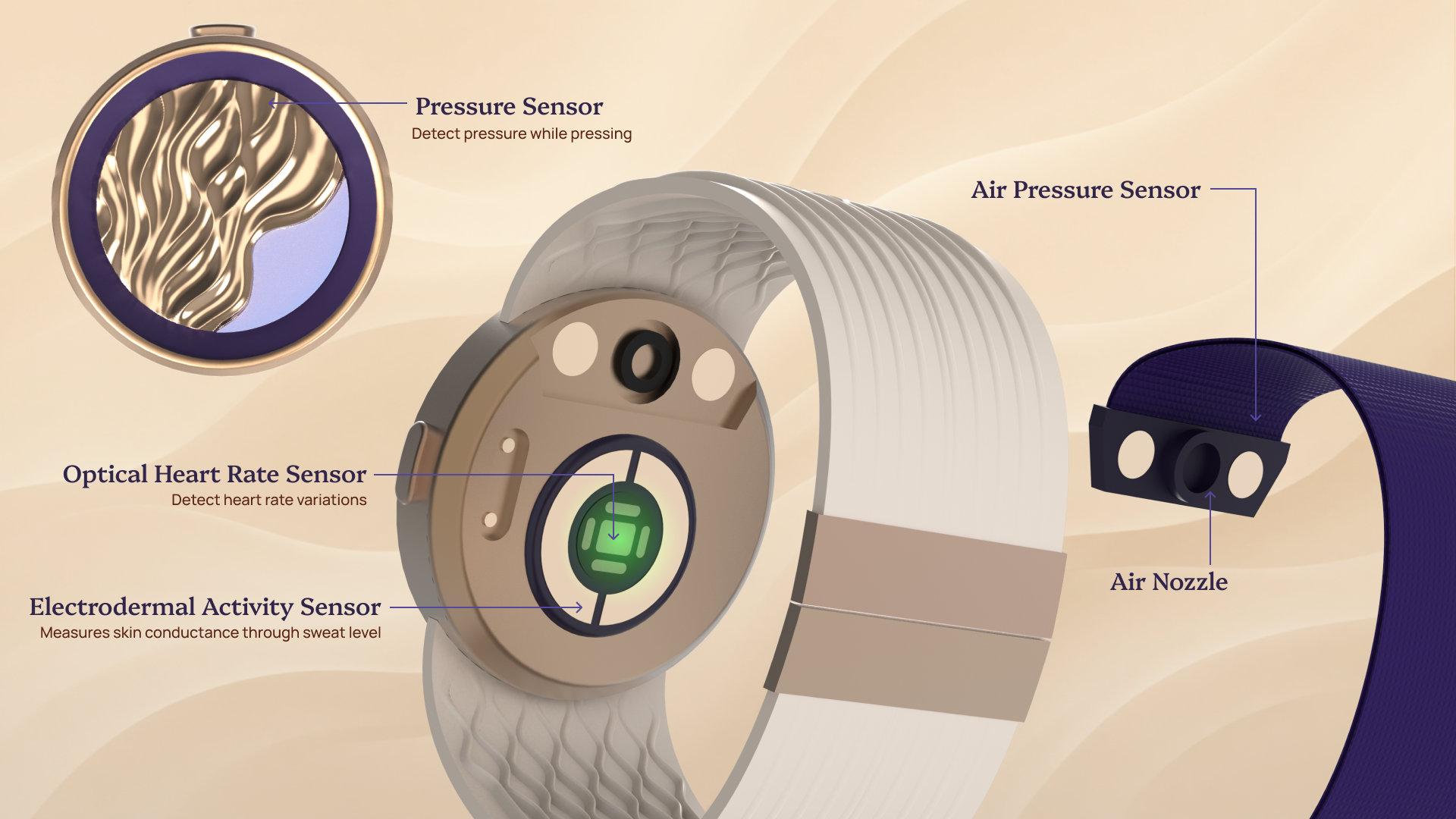
Lynn Zhang’s thesis, From Compulsive to Conscious: Using Somatic Rituals to Rewrite Behaviors, explores how design can transform the physical intensity found in compulsive behaviors into safer, voluntary, and meaning-making rituals. For Lynn, the project began with a contradiction: why do people sometimes deliberately seek physical pain? Habits like nail biting, skin picking, or hair pulling may seem minor, but they exist on a spectrum that can escalate into compulsive, addictive, or self-injurious behavior.
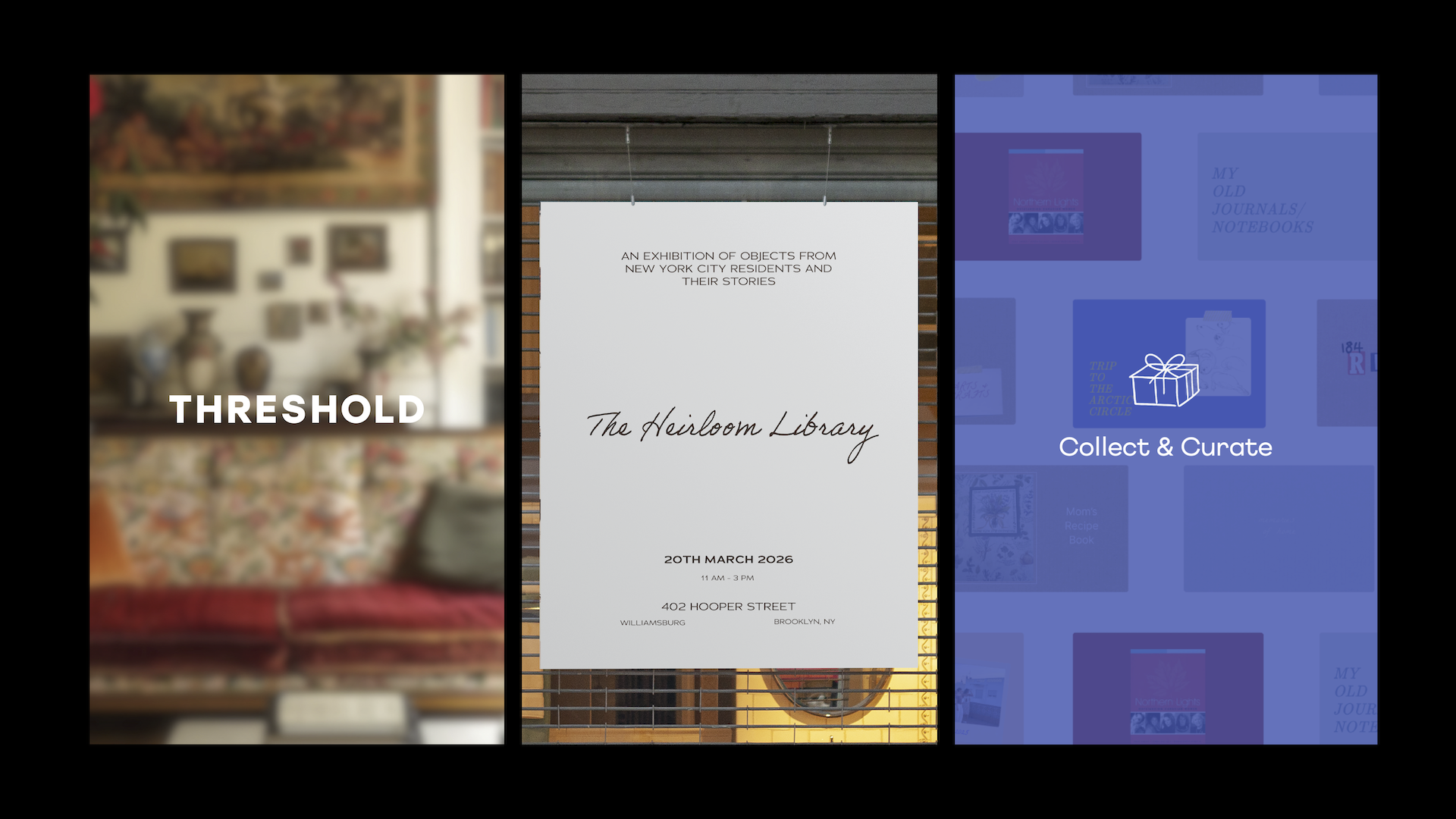
Lauren Palazzi’s thesis, Holding On Differently: Reimagining Heirlooms in an Ephemeral World, examines how inheritance is changing and what that means for the objects and stories people leave behind. Rather than treating heirlooms as rare or especially valuable possessions, the project looks at the broader systems that shape how meaning is preserved, transferred, or lost across generations. It asks what happens when the cultural habits that once sustained heirlooms no longer fit the way people live now.
Carol Tian’s thesis, Expressing Anxiety (焦虑) in American Contexts, explores how Asian cultural values shape the way anxiety is experienced, expressed, and supported among young Chinese women living in the United States. While many existing emotional support systems emphasize direct communication, verbal openness, and immediate sharing, Carol’s thesis investigates what emotional support might look like for people who experience anxiety more quietly—through restraint, internalization, or indirect expression.