
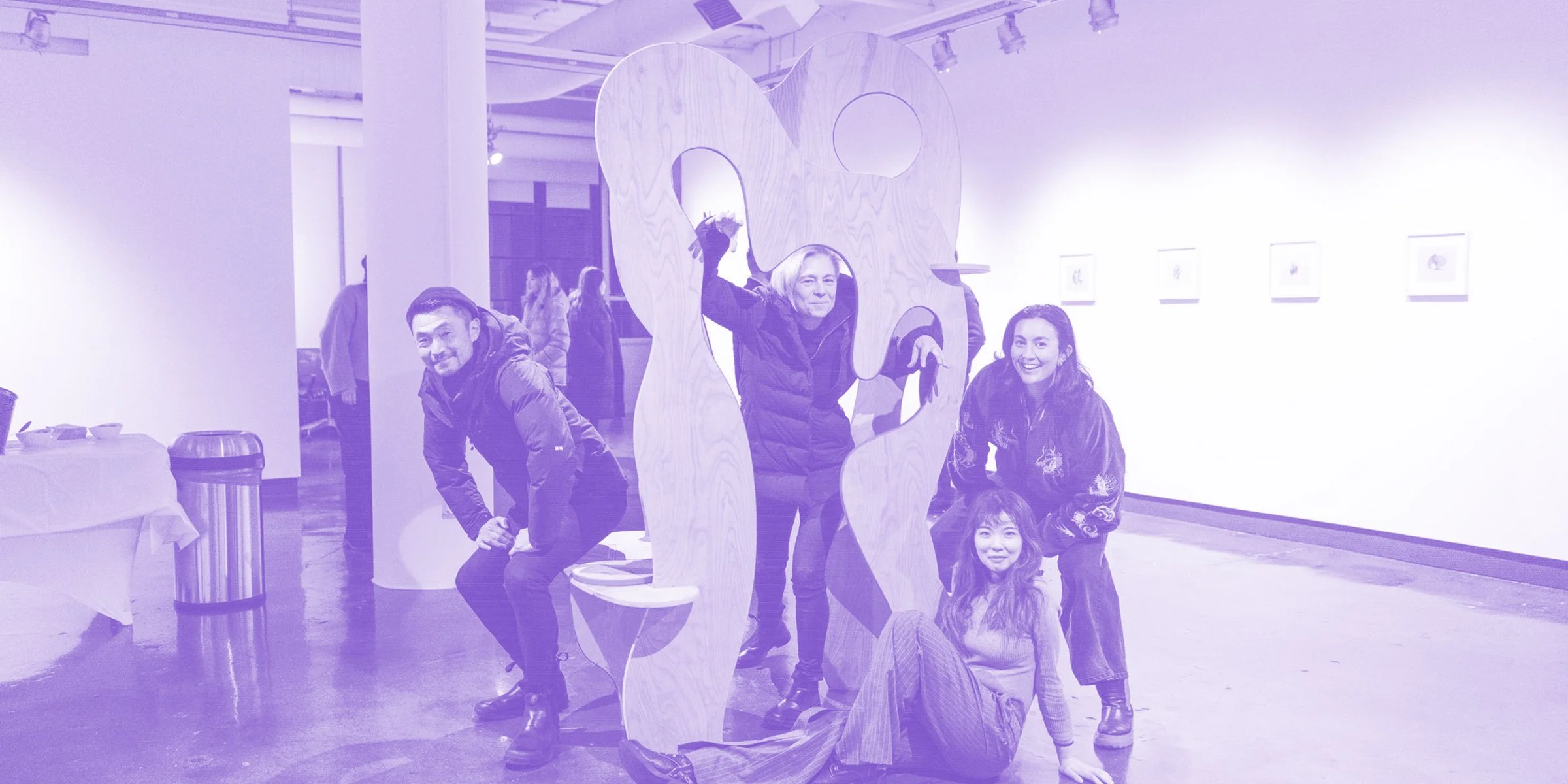
The MFA Products of Design program is a two-year, single-track, immersive physical product design program in New York City that prepares exceptional practitioners to lead in the shifting terrain of design.
Program Overview
Curriculum
Coursework spans handcraft, physical and digital fabrication, history, aesthetics, video, research methodologies, marketing, design management, environmental stewardship, and entrepreneurship.
Most of our courses are shorter, half-semester intensives, allowing us to cover more material and bring you more amazing faculty. The program is single-track. All students get to take every course.
The first-year product design curriculum is grounded in skill building and project-based work. Semester-long courses and five-week studio intensives provide a rapid immersion in fabrication, graphic design, research, strategy, storytelling and fortifying critical thinking. Throughout, students begin developing and researching their thesis topics.
First Year
Fall Semester
-
Faculty: Sinclair Smith
15 Weeks, 3 creditsThis course will introduce students to product development through the creation and exploration of abstract sculpture. Exercises in the elements of composition— line, plane, and volume— develop visual sensitivity and a shared language for articulating and developing three-dimensional form. All work in this course, including material sculpting, finishing, sketching, and mechanical drawing, is done by hand without the use of computers. Students practice hand-crafting techniques and awaken critical hand-eye-mind coordinations that sharpen their own awareness of three-dimensional form and construction, while also exploring its impact on potential users. By working with the pure language of abstract sculptural composition, students learn what it means to see, differentiating between what they observe with their objective eyes and what they project with their knowing minds. A product concept will develop from a process of function-follows-form, allowing functional application to emerge solely from the ergonomic implications of formal composition.
-
Faculty: Stephen Gaffney
5 weeks, 1 credit
The effective two-dimensional representation of perceived reality is necessary for the communication of new ideas, products and experiences and is an essential skill in design practice. This course focuses on understanding and expressing the basic geometry of objects in perspective. A knowledge of perspective geometry and the ability to quickly sketch in perspective is an essential daily too, the foundation for advanced industrial design rendering by hand and a critical tool for understanding the two-dimensional representation of three-dimensional form in CAD systems. Students will learn sketching and rendering techniques that are the standard of industrial design hand drawing and will be able to bring new product ideas to light on the page. -
Faculty: Laura Scofield
10 weeks, 2 creditsThe organization of formal elements in a two-dimensional plane is the basis of human perception, pattern recognition and visual creativity. Perceiving and manipulating depth in three dimensions comes after. In this course, students will begin at the beginning and approach graphic layout, first through a series of exercises in abstract composition, and then through a progression of color, hierarchy and typography. The goal of the course and exercises is to develop visual sensitivity and a language for discussing how things appear and what perceived physical and emotional impacts result from adjustments made to the design. Particular styles and histories of graphic design will be discussed as a means toward continued focus on intention, articulation and execution with visual clarity.
-
Faculty: Sinclair Smith
5 weeks, 1 creditWhat is design? When did it begin? Is it an activity distinct to certain types of people? Or does it pervade human behavior? Why do humans manipulate the environment more than other species? Why should we feel the need to have or make more than what the earth provides for us? This course explores the fundamental nature of design, its role in human evolution and culture, and its ability to create and carry meaning. We will ask questions about how our physiology, senses and perception co-evolved with our tools. We will ask what compels us to consume and to create. We will look at design through the lens of linguistics and semiotics as well as behavioral psychology and neuroscience, asking questions about need, motivation and behavior change. Readings, cinema and essay writing will constitute most of the assignments in addition to some speculative prototyping and design provocations.
-
Faculty: Daniel Basiletti
10 weeks, 2 creditsThe importance of studying where we came from is greater than ever. Students today spend enormous amounts of time consuming short-form internet content and turning to AI tools for context. But recursive data generation limits the depths student researchers can reach online without knowing where to look. Reading books and history is down globally, taught less in grade schools, and despite the cultural focus on business and consumer technology, the story of how we got to our current technological state is insufficiently told. This course tells a chronological story of product design beginning with stone tools, moving through surplus, mercantilism, feudalism, industrialization and into our post-postmodern, digital present. Key moments in design are seen through the lens of technological and manufacturing development as well as economic and sociopolitical changes, all of which contribute to a robust history of aesthetics and value. Through this story, students see persistent, underlying patterns of human behavior emerge that defy circumstantial change and provide them with deeper insight into how to design for people living today and beyond.
-
Faculty: Adam Fujita
5 weeks, 1 creditPoint of view is a core building block of any successful design and any successful design career. It’s about what you believe and why you believe it. While it’s easy to rationalize almost any design project as “good” from various sets of design criteria, the strongest designers take a proactive role in defining and articulating a clear point of view and carrying it through their work. These perspectives stem from upbringing, education, life experience and the morals and ethics that result. The goal of this course is to identify and articulate the unique perspectives of students when they enter the program in an effort to help guide them toward a thesis topic within the first semester. Our deepest, personal perspectives are often unshaken by new interests and experiences as adults. On the contrary, because of confirmation bias, these tend to reinforce our POV. We will home in on each student’s respective POV and support the identification of an area of inquiry that can hold and sustain them throughout their thesis process.
-
Faculty: Becky Stern, Shannon Jones
15 weeks, 3 creditsA successful product designer requires at least a cursory knowledge of how things are made as well as first-hand experience with materials and process. This studio intensive moves through a series of basic design and fabrication sprints that introduce students to carving, casting, forming, molding, machining, joining, fusing, assembling, and more. Each student will make a wood stool, a cast vessel, a welded steel frame and plywood cabinet, a thermoformed plastic product and an electrified light that combines multiple processes. The goal of the class is to provide students with a hands-on overview of manufacturing principles as well as a comfort with prototyping in the Visible Futures Lab.
-
Faculty: Brooke Viegut
10 weeks, 2 creditsAll phenomena, whether scientific, cultural or behavioral exist in relational and contextual system. To understand why things break and how conflicts arise, we need to be able to understand those systems. This course uses the lenses of history, anthropology and culture to ask questions about our lives today and to begin framing thesis topics. This course offers a brief introduction to research methodologies, design thinking and human-centered design in preparation for a thesis. Students will hear about the thesis experience directly from MFA PoD alumni, setting the stage for them to consider personal interests and goals and how they align with contemporary concerns and trends. The course goes on to introduce basic skills applicable to desk research, including browsing and evaluating sources, tracking research and taking notes. The course will be co-taught by an academic design researcher and a cultural critic and food specialist. Half of the course will use food and cultural studies around the table to frame and examine how we approach design work. Class time will include field trips to museums and restaurants.
-
Faculty: Julia Knoll, Allan Chochinov
Rotating weekly: Lecture Series introduces the students to world-renown design thinkers and practitioners. Studio Visits bring students out into New York City to visit the most contemporary studios and designers in their own environs. Seminars introduce professional practice, portfolio, interviewing techniques, and creating a network that will fortify students in their professional lives.
Spring Semester
-
Faculty: Suma Reddy
8 weeks, 1.5 creditsMany product designers feel trapped in siloed roles, supporting the production of wasteful, disposable and toxic materials. Through the theme of food, this course will examine relationships, systems and infrastructures connecting us to local and global sustainability: growing, harvesting, processing, transporting, distributing, selling, preserving, cooking, eating and disposing of the waste related to food—the elements that shape many aspects of our lives and relate directly to our planet’s future. Working with sustainability experts and change makers (including scientists, engineers, farmers and other specialists), students create designs that address one of the most fundamental aspects of life. Sessions take place at various locations throughout New York City and its surrounding region, as living laboratories for design projects.
-
Faculty: Andrés Cuervo
7 weeks, 1.5 creditsUX Essentials is designed to introduce students to the fundamentals of user experience design methodologies. The course will delve into UX research and synthesis, design sprints, service design, IoT, voice design, AI, diversity in design, cognitive design and storytelling in design. In addition to readings and case studies, students will be given the tools to explore complex opportunities found in existing communities and will complete the course with a solid understanding of how to translate user research into design solutions that incorporate advanced technologies.
-
Faculty: Michael Chung
7 weeks, 1.5 creditsVisual storytelling has become a critical tool in helping designers sketch, prototype, visualize and communicate their ideas. Increasingly, this storytelling takes place within the medium of video, which provides a powerful, immersive and easily disseminated means of articulating the products of design. From context to scenarios, from use to benefits, as product designers expand their purview into the realm of experience design, video has become a lingua franca of both design practice and design commerce. This course will cover the basic principles of visual communication using techniques in contemporary filmmaking. Working in teams on a tangible project, students will get hands-on experience in different stages of the storytelling process, including observation, ideation, script writing, storyboarding, shooting and editing.
-
Faculty: Allan Chochinov
10 weeks, 2 creditsAffirming Artifacts is a course that quickly immerses the designer into navigating the design criteria of purpose, appropriateness and fit. Too often, design solutions are conceived in isolation or abstraction, with little bearing on the context in which they will ultimately live and thrive. In this course, students will take a rigorous approach to conceiving and executing various products of design—material, experiential, discursive or activist—with an eye toward pushing beyond obvious wants and needs and moving toward preferred behaviors through context-specific persuasive objects. Students will use their initial explorations into thesis topics in other classes to inform their design briefs for this class.
-
Faculty: Sigi Moeslinger, Masamichi Udagawa
7 weeks, 1.5 credits
Physical engagement results in behaviors and mannerisms that communicate on many levels. Whether intentional or not, the physical mannerisms leading to or resulting from product engagement are performances of character and culture. One aspect of designing an artifact is to encourage an intended activity and mediate the relationships between its multiple audiences, making the interaction a key factor of the design. In this course, students will design an engagement in a public space, providing an object/environment/service intended to encourage curiosity, investigation, thought, interaction, socialization and positive change. -
Faculty: Sinclair Smith
15 weeks, 3 creditsExploring how our cultural roots, histories, and values inform and are influenced by the visual qualities of the artifacts that we produce, this course introduces a template for how to design for the individual tastes of others. We will use ethnoformology (a term coined by the instructor for the study of form in cultural context) to explore how the elements of three-dimensional form combine to create what we experience as the material of our own cultural identities and how our senses of style and taste emerge as a result. Students design artifacts in their own cultural style and then in the cultural styles of their peers. From this practice, students develop control to manipulate the elements of form to appeal to different user groups.
-
Faculty: Heath Wagoner
5 weeks, 1 creditThis course explores the development of high-resolution prototypes and the documentation necessary to manufacture products. Students will sketch in two and three dimensions, refine their designs, and make detailed tech packs that communicate form and process to a vendor. Designs will draw from other coursework, such as thesis exploration, to find meaning and form. They will be limited in material and functionality in an effort to focus the work on making and documentation skills. In the process of deriving significance and refinement from minimal designs, students will explore the ways in which our objects serve as totemic symbols, creating value that exceeds functional purpose.
-
Faculty: Jon Wasserman
15 weeks, 3 creditsSecondary Research is the beginning of directed research. This course explores key approaches to researching for design ideation. It involves source-based discussion, group and individual projects, and presentations. Critical thinking, ethics and methodology will be emphasized, as well as documentation and creative expression of research material.
“The curriculum breaks you apart and builds you back up. The first semester is a reboot, where you prove to yourself that you can do so much more than you ever thought. By the time spring semester arrives, you’re a totally different animal.”
BEN HONE, CLASS OF 2026
The second year builds upon the foundation of the first with an emphasis on the thesis project. Courses in business structures, manufacturing, embedded circuitry, environmental stewardship, experiential marketing and sustainable entrepreneurship support the development of a thesis project that culminates in an advanced product proposal and pitch deck. Students develop the personal, creative and business connections to enable their professional success.
Second Year
Fall Semester
-
Faculty: Pilar Finuccio
7 weeks, 1.5 creditsCulture, values, law, politics, policy and the state—these are the materials of a society, but what do each of these words mean, how do they interact as a system and how do we leverage them to create change? In this course we will seek to answer this question and examine the practicalities of government, including common processes of developing policy and delivering services. Students will be exposed to classic philosophical readings on the nature of the state, as well as current design practitioners working to innovate in government. Together, we will interrogate how we practically—and ethically—negotiate power, values, politics and physicality as we work in the public sector, for the public good. By the end of the course, students will have practiced connecting social theory to professional practice, visualized public systems, identified levers of change and explored policy innovation initiatives around the world.
-
Faculty: Dino Sanchez
7 weeks, 1.5 creditsProducts are increasingly seen as the embodiments of brands and consumer experiences, with product design playing a critical role in reflecting a brand’s personality. In this course, students discover how product design, consumer experience and branding interrelate, and how addressing the needs of both users and markets from different perspectives can provide a more holistic approach to the creation of designed objects. We will work through a complete design process, defining an opportunity within a specified consumer space, performing research, developing insights and strategy, concepting and refining. Throughout the process, students concentrate on creating a cohesive and viable brand campaign, including final design, identity and packaging.
-
Faculty: Becky Stern
7 weeks, 1.5 creditsThis course will introduce students to physical computing and electronic prototyping. Elementary coding and circuit assembly will help them more deeply understand how to embed electronics in physical products and allow them to explore possibilities within their own product development. The relationship between the digital and physical components of the thesis product will be explored and developed in an effort to bring greater seamlessness between the interaction and three-dimensional product experiences.
-
Faculty: Krissi Xenakis
7 weeks, 1.5 creditsIn this course students will frame, ideate and create compelling digital experiences, and learn how to design for technologies such as AI, big data and AR/VR to support their thesis explorations. Students will employ user testing, journey mapping and prototyping to evaluate and communicate their work. They will also learn competencies such as design systems and agile development processes to understand the roles and expectations of product development teams required to launch digital projects. This course includes visiting lecturers and panels with data scientists, product managers and design managers to bring real-world views of the current state of digital product design.
-
Faculty: Toshi Mogi
8 weeks, 1.5 creditsThis course examines the critical aspects of successful organizations, including the development of strategy and business models, business plans and pitches, intellectual property and entrepreneurship. Through an exploration of fundamental business issues at the beginning of the 21st century, students develop either a business plan for a new organization or a new business model and strategic plan for an existing organization. The result is a formal “pitch” presentation given to guest professionals and classmates.
-
Faculty: Sinclair Smith
15 weeks, 3 creditsThis course uses the future as its frame of reference, and students will develop a product that instantiates the central arguments of their individual thesis work. Rather than design based on the findings of past precedent, the course asks students to extrapolate their research into speculative futures and to explore how imagined behavioral and cultural consequences could be met with three-dimensional product propositions. We will examine how, in an increasingly digital world, three-dimensional artifacts will continue to be necessary for the health and survival of humanity. The course’s approach moves through three phases: deep futuring, near futuring, and presenting. As students reel their wild explorations back into the present, they will sketch and fully develop a product concept that prepares for an unforeseeable future while meeting the functional, aesthetic and philosophical demands of today.
-
Faculty: Antya Waegemann
15 weeks, 3 credits
Primary Research introduces students to best practices when exploring design need and opportunity in direct contact with people. Students will be exposed to research methodologies, design thinking and human-centered design through a combination of lectures and workshops. In guided workshops, students will learn how to create safe environments for exploring sensitive user experiences and data and gain firsthand experience in conducting research, interviewing participants, creating user journey maps, generating insights, prototyping solutions and testing their ideas with users. A scope of research will be outlined and submitted for review according to federal Internal Review Board (IRB) protocol, paving the way for students to safely and responsibly conduct user interviews and testing in the Spring semester.
Spring Semester
-
Faculty: Allan Chochinov
There are many ways to tell a story, many strategies for finding focus and drawing meaning from one’s work. The goal of this course will be to guide students in determining how to tell the story of their thesis work: what texts, artifacts, images, and other materials can best convey their growth and discoveries. Students will find a cohesive union of what to say and how to say it. The course represents the culmination of the program and will communicate the knowledge, strategies and practices that students have engaged with during the program. The ultimate product of this course is a published book that defines each student’s thesis area and presents their research, thinking and project work. -
Faculty: Kristine Mudd
Services have a significant impact in our everyday lives and in great measure determine the quality of our well being as we interact with the world around us. As designers are called upon to imagine and design increasingly complex product- service systems, we need new frameworks for understanding, and tools to steer us toward better outcomes, more meaningful service experiences, and greater chances for the viability of businesses. Great service experiences are about relationships: those between people, between people and things, and between people and processes. These relationships form and grow based upon the quality and effectiveness of the “conversations” that take place. Learning how conversation works among the participants of larger service systems is useful to describe how a service works, and to reveal opportunities for improvement through design. In product-service ecosystems, students will learn to see participants, objects and interactions as opportunities for conversation to define and agree on goals, and the means by which to achieve them.
-
Faculty: Sinclair Smith
Futuring and Three-Dimensional Product Design helps students develop traditional 3D product designs that instantiate the central argument(s) of their thesis. Using the future as a frame of reference, students will be asked to imagine how their research will unfold in the future and to imagine how they can meet those behavioral criteria and demands with three-dimensional product propositions. We will examine how, in an increasingly digital world, three-dimensional artifacts will continue to create value for humanity. The course’s approach moves through three phases: deep futuring, near futuring, presenting. As students reel their wild explorations back into the present, they hone a product concept that is ready for an unforeseeable future but meets the functional, aesthetic, and philosophical demands of today.
-
Faculty: Bill Cromie
Creating iterative business models aimed at uncovering the assumptions that impact the potential success of any venture is the focus of this course. We will explore how to prioritize risks and apply rapid, low-cost methods to generate earnings and increase confidence. The course is structured to help students strengthen their ability to create more robust business concepts by iterating on the fundamental business cases underlying them. By the end of the course, students will be able to access the primary drivers of success for their concepts, map out the path forward and pitch their business plans to a panel of invited experts.
-
Faculty: Emilie Baltz
This course celebrates the joy of design. While design is traditionally seen as a problem-solving discipline, there are incredible opportunities to introduce products and experiences into the world that find their genesis in other rationales. Through design making, interviews and research, students will play with stimulation, celebration, amplification, choreography, symbolism and emotion as tools that inform a new design ethos. We will challenge traditional needs-based design processes, and delve into celebration, heightened articulation and drama as new expressions of design. Through the lens of the emotional and the experiential, students will explore both the place of design within the world of the senses, and the role of the senses within the world of design. -
Faculty: Krissi Xenakis
Digital interaction is a ubiquitous form of communication in today’s world. Designing for Screens provides students with the framework to understand, discuss and create effective interactive designs on digital displays. Through a series of collaborative studio sessions, open discussions, critiques, site visits and guest lectures, students will be immersed in the current culture of screen design. From UI to UX, from mobile apps and tablets to desktops, immersive displays, and AR and VR, this course will cover the process of designing products for screens from concept to wireframe to interface design and user testing.
Faculty: Krissi Xenakis, Americas Design Lead at the IBM Garage for Cloud
-
Faculty: Allan Chochinov
Whether telling a tale through text, video, audio or other medium, knowing how to engage an audience and make a clear argument is crucially important to making an impact and producing a lasting effect. In this course, each student will be assisted in defining a presentation that effectively communicates the message at the heart of the thesis.
No Grades Policy
Product design at SVA has a no grades policy. We believe in encouraging students to take risks and explore their creativity, just as they would in a career setting. Grades can dampen creativity and create caution where otherwise there would be none.
Our product design faculty focus their time on mentoring students instead of evaluating them. Students and faculty build a level of trust that allows students to truly learn from faculty and prepare for their future professional interactions with colleagues.
Studio Space
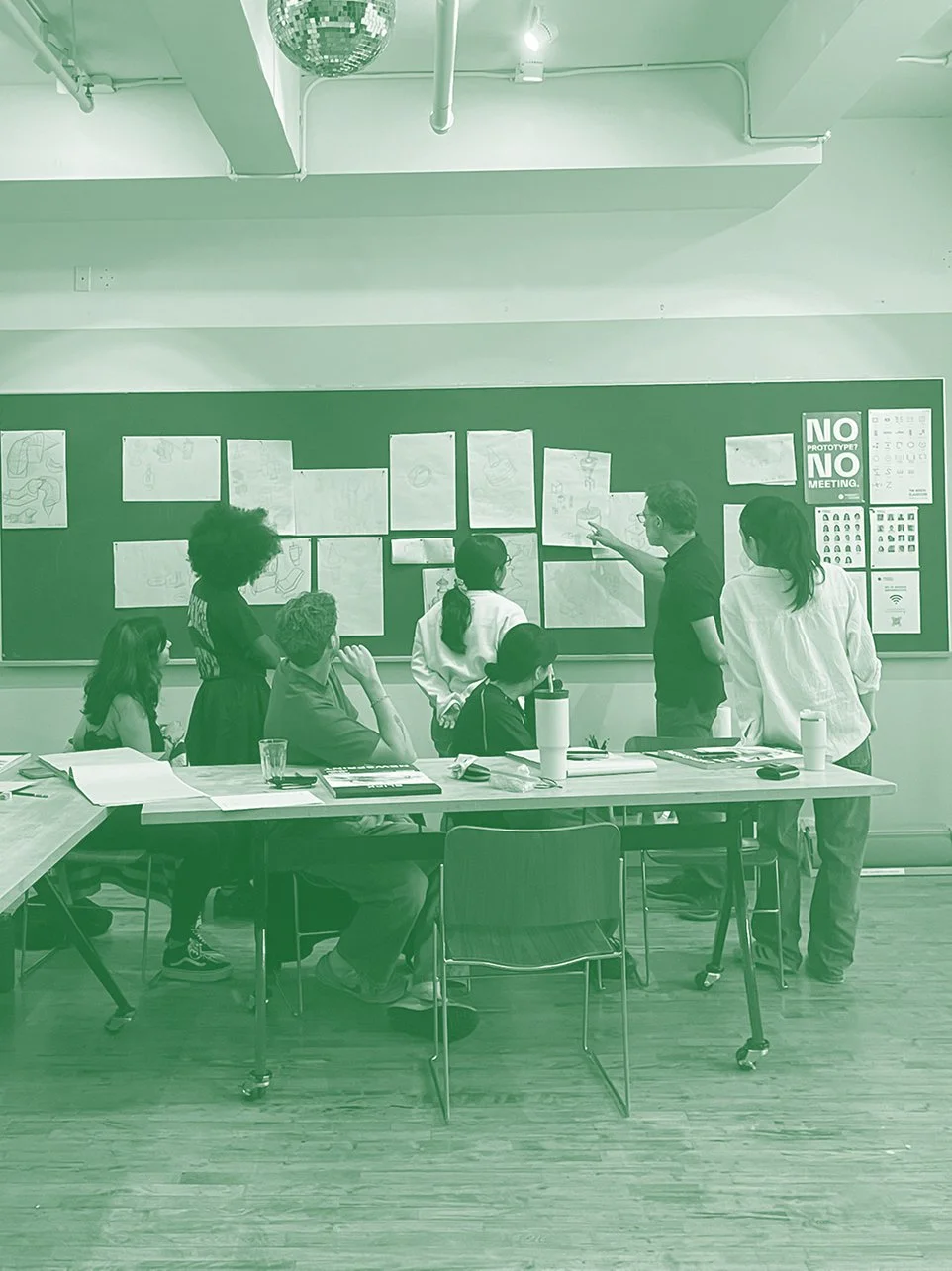
The MFA Products of Design studio is designed for flexibility. Innovative classrooms feature movable walls, and classroom tables and marker boards on wheels.
Classrooms open onto a large communal kitchen with abundant natural light, where the community comes together for events and casual meals.
Each student has a dedicated desk and storage area, with additional shared spaces including a photo studio, a quiet room, a departmental library, and a gallery space.
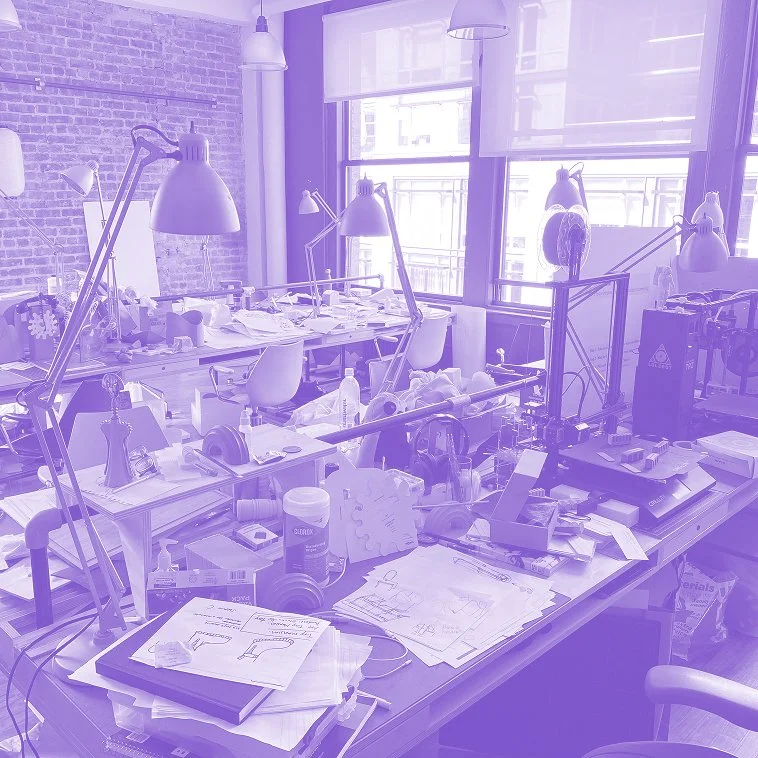
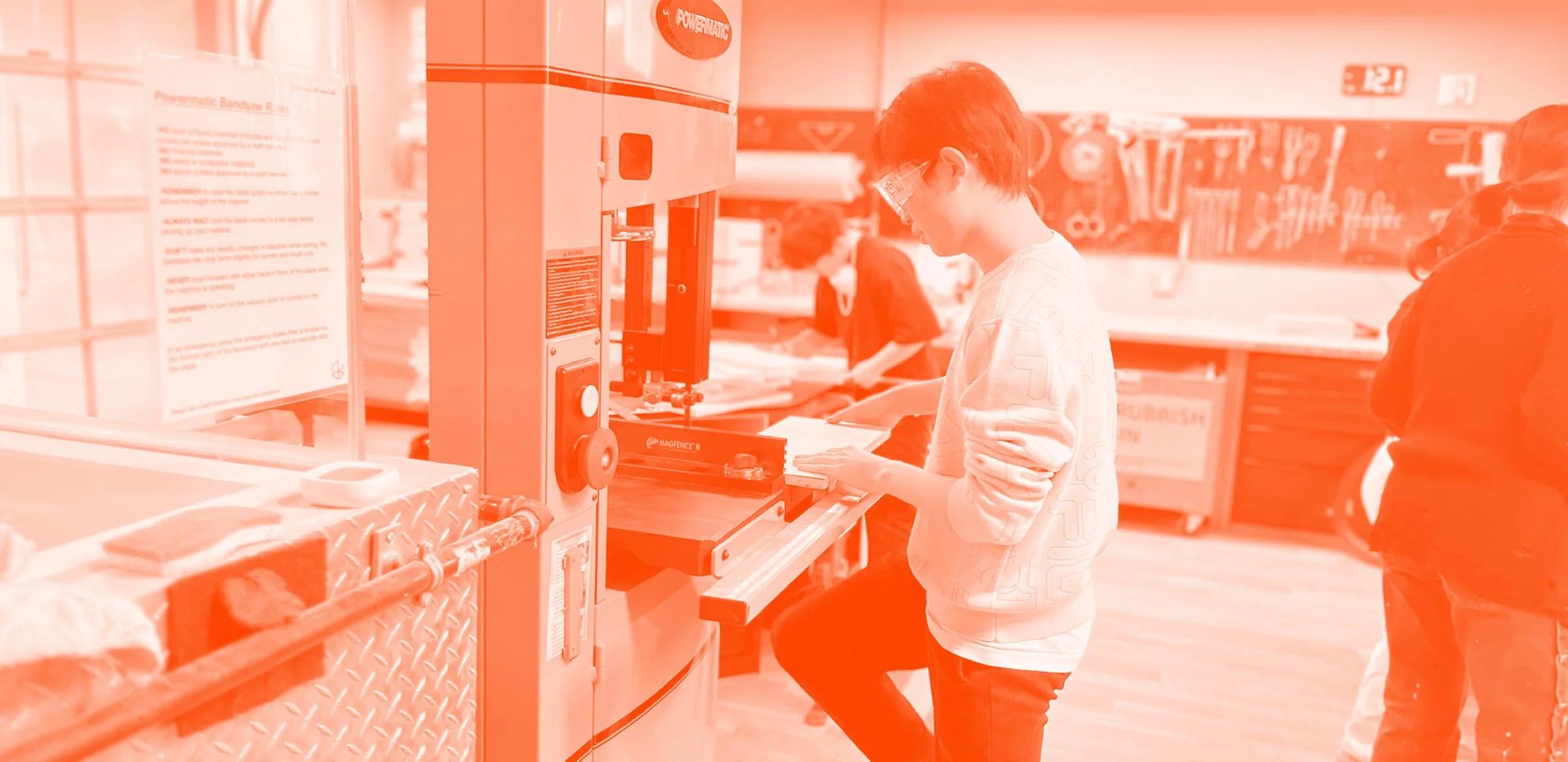
Next door to the gallery, the Visible Futures Lab makerspace features:
State-of-the-art digital fabrication machines (3D printers, scanners, printers/cutters, etc.)
A fully-equipped wood shop
Sewing, soldering/electronics machines and equipment
1000+ machine tools, hand tools, and specialty tools
Life After PoD
Students graduate with a substantial portfolio of prototypes, service blueprints, apps, platforms, business plans, and videos—along with a pitch deck for a viable physical product and a plan for launching a business. Graduates leave the program with the methods, confidence, and strong professional network needed to excel at elite design firms, progressive organizations, or their own start-ups. Learn more about our annual Job Fair, meet our Alumni, and read what they have to say.
Find the answers to our most frequently asked questions below!
Can’t find what you’re looking for? Contact us here with additional questions regarding our program.
FAQs
-
Traditional industrial design programs are built around a term and a model born in the early 20th century: product concepts developed for mass manufacture, and optimized for corporate supply chains and industrial scale.
At Products of Design, we believe that the term industrial design does not sufficiently reflect the growth of the maker movement. Today's designers are just as likely to launch a hand-crafted brand from their laptop as to work for industrial-scale corporations. They design with the environment, wellness, and justice in mind. They are makers, researchers, strategists, and entrepreneurs—not just manufacturers. A traditional industrial design MFA prepares you for one career path. Products of Design prepares you for many paths.
Not to be confused with "product design", which is a term largely claimed by digital UX and screen-based work, we call our subset in the design field, “physical product design”. And, to return focus to the physical, three-dimensional object and its real-world consequences, we call our program “Products of Design.” -
Yes. The MFA in Products of Design is a STEM-designated program, reflecting the program's grounding in research methodology, systems thinking, technology, and the analytical rigor that defines contemporary product design practice.
STEM certification benefits international students by conferring eligibility for an extended Optional Practical Training (OPT) period. STEM-designated programs qualify graduates for a 24-month OPT extension, giving international designers up to three years of U.S. work authorization after completing the degree. Please refer to USCIS.gov for more information.
-
After graduation, our alumni go on to start their own studios and lead at world-renowned organizations–including Apple, Google, IDEO, Nike, MoMA, Pentagram, Huge, Frog Design, and dozens of other studios, agencies, and in-house teams that define contemporary design practice. They work as product designers, UX and interaction designers, design strategists, creative directors, brand designers, and design researchers. Several have founded their own studios and companies. Others have moved into design education, public policy, and social innovation fields, where the program's emphasis on the consequences of design translates directly into meaningful work.Our program includes extensive professional preparation and practice. Throughout the two-year program, we work on:
- Effective interviewing techniques
- Presentation skills
- Portfolio development
- Negotiating
- Public speaking
- Résumé crafting
- Website representationWe cultivate relationships with leading organizations and brands while you are in the program, so you are building your professional network while building your skills. Learn more about our annual Job Fair here.
-
Since 2014, MFA Products of Design has been thrilled to have an incredible and exclusive partnership with the Museum of Modern Art Design Store. Each year, first and second year students are challenged to design products for possible inclusion in MoMA’s Wholesale Catalog. Students receive a brief, create prototypes and pitch products to MoMA Design Store buyers. Every year, products make it through all the way to the catalog and store shelves! We are the top source of products for the store’s in-house brand.
-
No, you do not need a design background to apply to Product of Design. We look for a diverse group of individuals in every cohort. Whether you’re a practicing designer looking to change your focus, or someone who is interested in a complete career change, we consider the “whole person” and their potential, curiosity, and passion.
-
Product Design at SVA embraces a zero grades policy. We believe in encouraging students to take risks and explore their creativity much as they would do in a career setting. Grades can create fear and caution where there otherwise would be none.
Our Product Design faculty focus their time on mentoring students instead of evaluating them. Students and faculty build a level of trust that allows students to truly learn from faculty and prepare for their future professional interactions between colleagues.
-
The MFA Products of Design program is a two-year, single-track, immersive physical product design program. Students move together as a cohort through a curricular program of semester-long courses and five-week studio intensives. These shorter, half-semester intensives, allow us to cover more material and bring you more amazing faculty. The single-track program allows every student to take every course.
-
We do thesis differently. Rather than a “first part research, second part designing” we believe in both research-led design and design-led research—and engage the students to do them simultaneously and continually. Additionally, rather than a “here’s my research, and here’s my solution” approach, each of our students creates multiple prototypes and design offerings across a broad spectrum of design. Thesis projects take the form of advanced product designs proposals and business pitch decks, engaging in physical product design, digital product design, social innovation design, business modeling, and branding. The thesis culminates in a public presentation of the student’s work and a hard-cover book documenting the process and its goals. You can find a selection of past thesis projects on this page.
-
We believe design and business are inseparable, so we teach them together, across both years of the program.
Students develop real business plans and strategic models, study intellectual property and entrepreneurship, and deliver formal pitches to guest professionals. They learn to build and iterate on business models, stress-test assumptions, prioritize risk, and identify the primary drivers of success for a venture. And they go deep into the design of product-service system, exploring how relationships between people, objects, and processes create viable, meaningful businesses.
Students graduate with a pitch deck for a viable physical product and a concrete plan for launching a business.
-
It depends on what you're optimizing for. We know that graduate school is a significant investment. If you're looking for a credential, there are faster paths. If you're looking to become a significantly better, more versatile, and more consequential designer—one who can lead teams, launch ventures, and work across physical, digital, and experiential domains—then two years at PoD is a serious accelerant.
Our graduates work at Apple, Google, IDEO, Nike, Pentagram, Frog Design, Microsoft, R/GA, and Lyft. Others have launched their own studios, founded companies, and built products that have reached FDA clearance and MoMA shelves. The program is STEM-certified, which means international graduates qualify for up to three years of U.S. work authorization after graduation.
But the deeper return is harder to quantify: the ability to see design as a system, to move fluidly between making and strategy, to pitch a business and build the product yourself. Two years of immersive, hand-on, no-grades studio education in Chelsea, New York City, taught entirely by working practitioners, changes how you think, not just what you can do.
-
Students take 5 courses in any given week, and courses range in duration from 7 to 15 weeks in length. Our 7-week structure allows us to offer more learning opportunities during the entirety of the program.
In addition to the courses, we have “specials” that range from field trips and student visits to guest lectures and MoMA ideation sprints. Most weeks offer something unique, so that students learn a myriad of things beyond what happens strictly in the classrooms.
-
Products of a Design is a full-time, in-person program that demands a lot of its students, and gives a lot in return. We typically advise that students limit their outside working commitments to about ~18 hours/week, in order to allow for a healthy balance between personal commitments and the degree. Though we do not offer this program as a part-time or remote, we have had students from many different stages of life and career find success in our program
-
Due to the hands-on nature of this degree, we cannot offer the program remotely. Our MFA program is a two-year, immersive program, and all classes meet in person.