
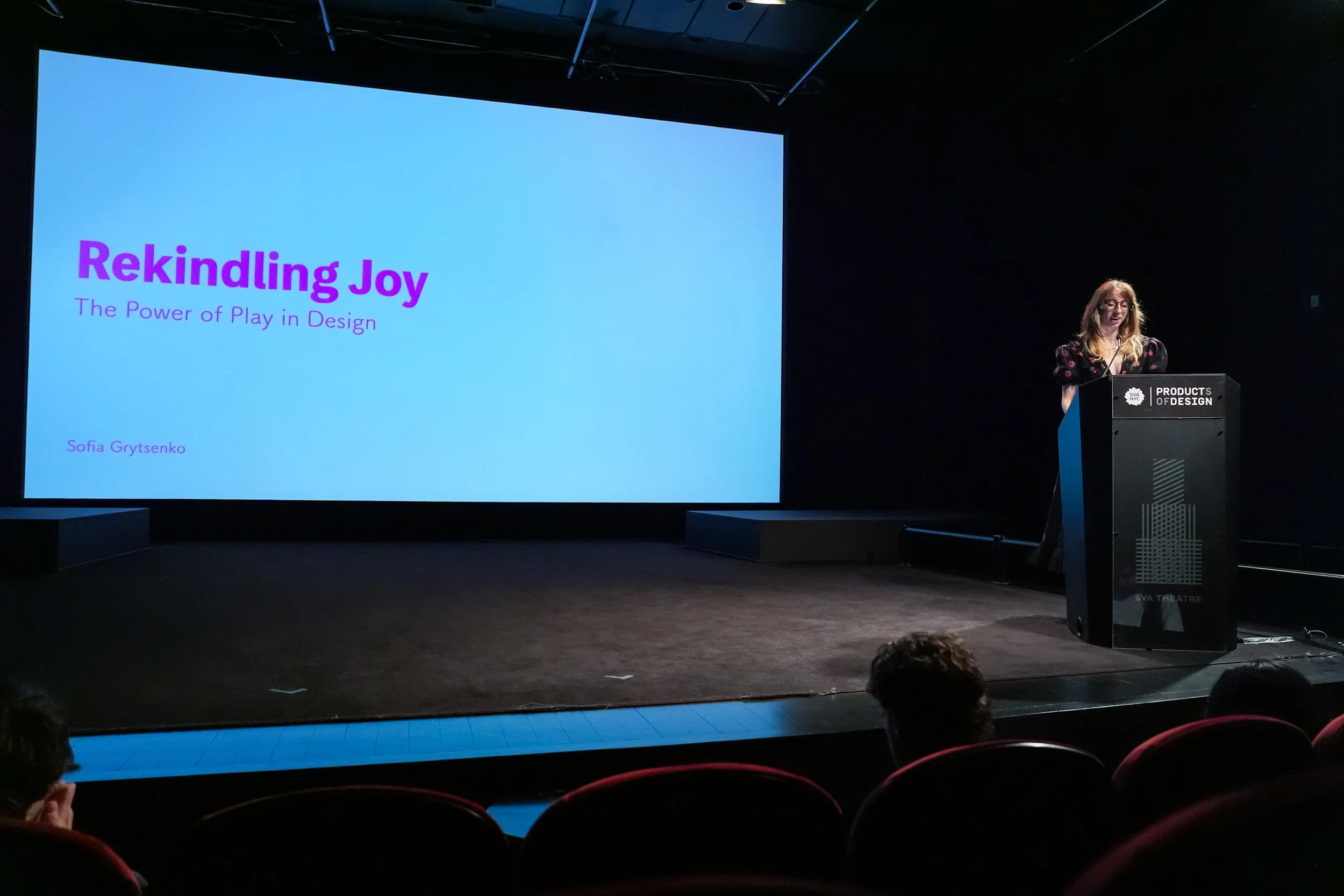
Rekindling Joy: The Power of Play in Design
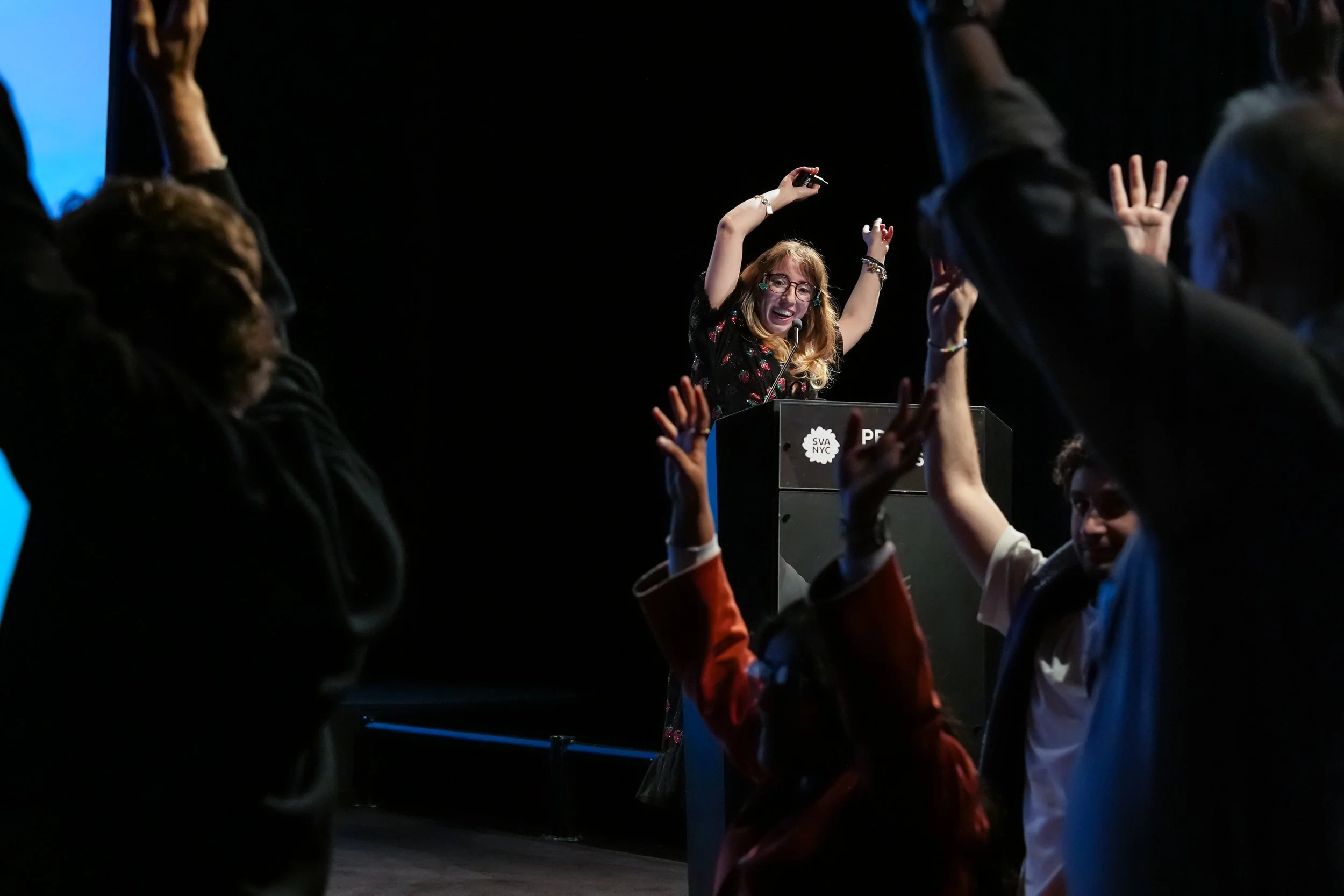
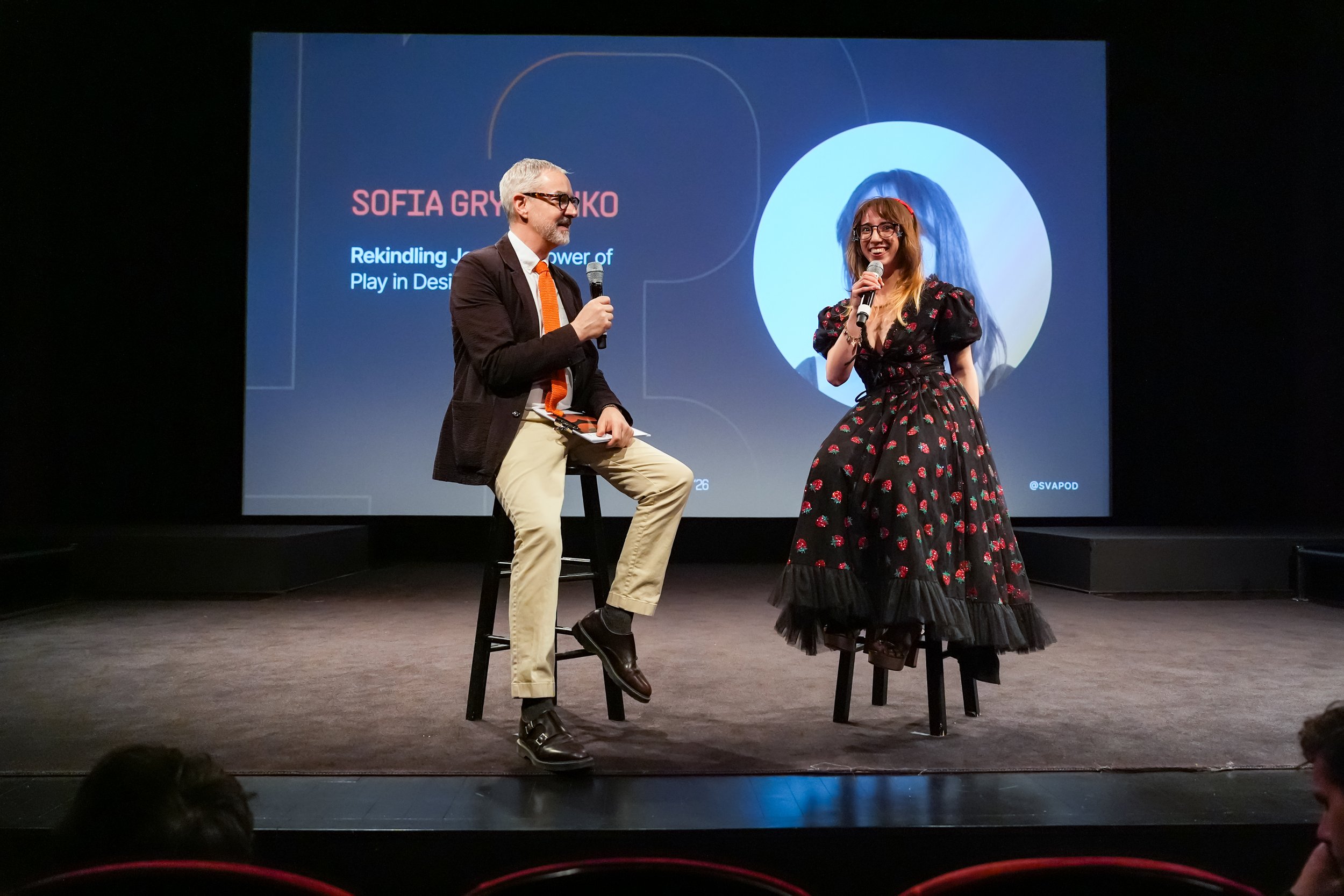
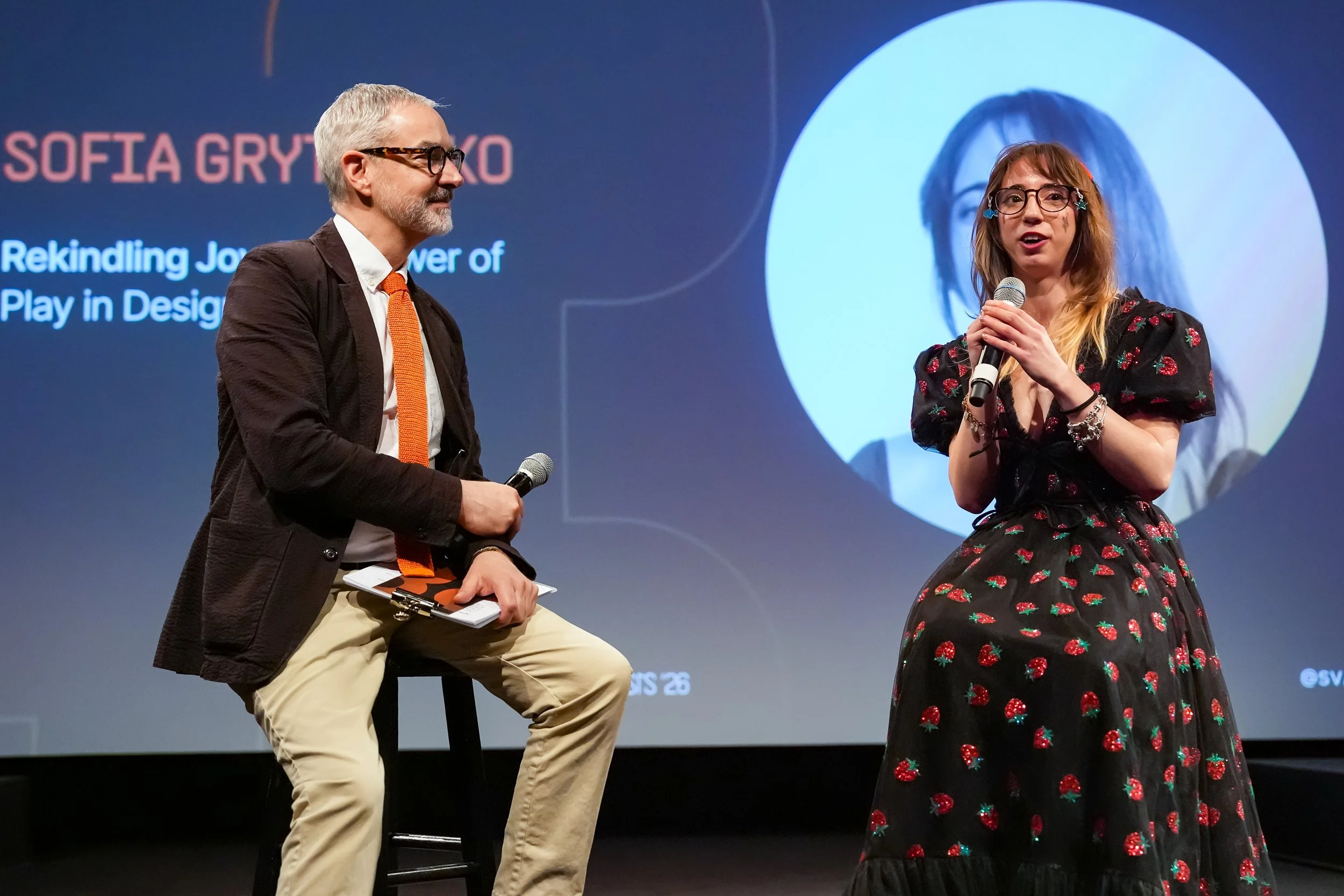
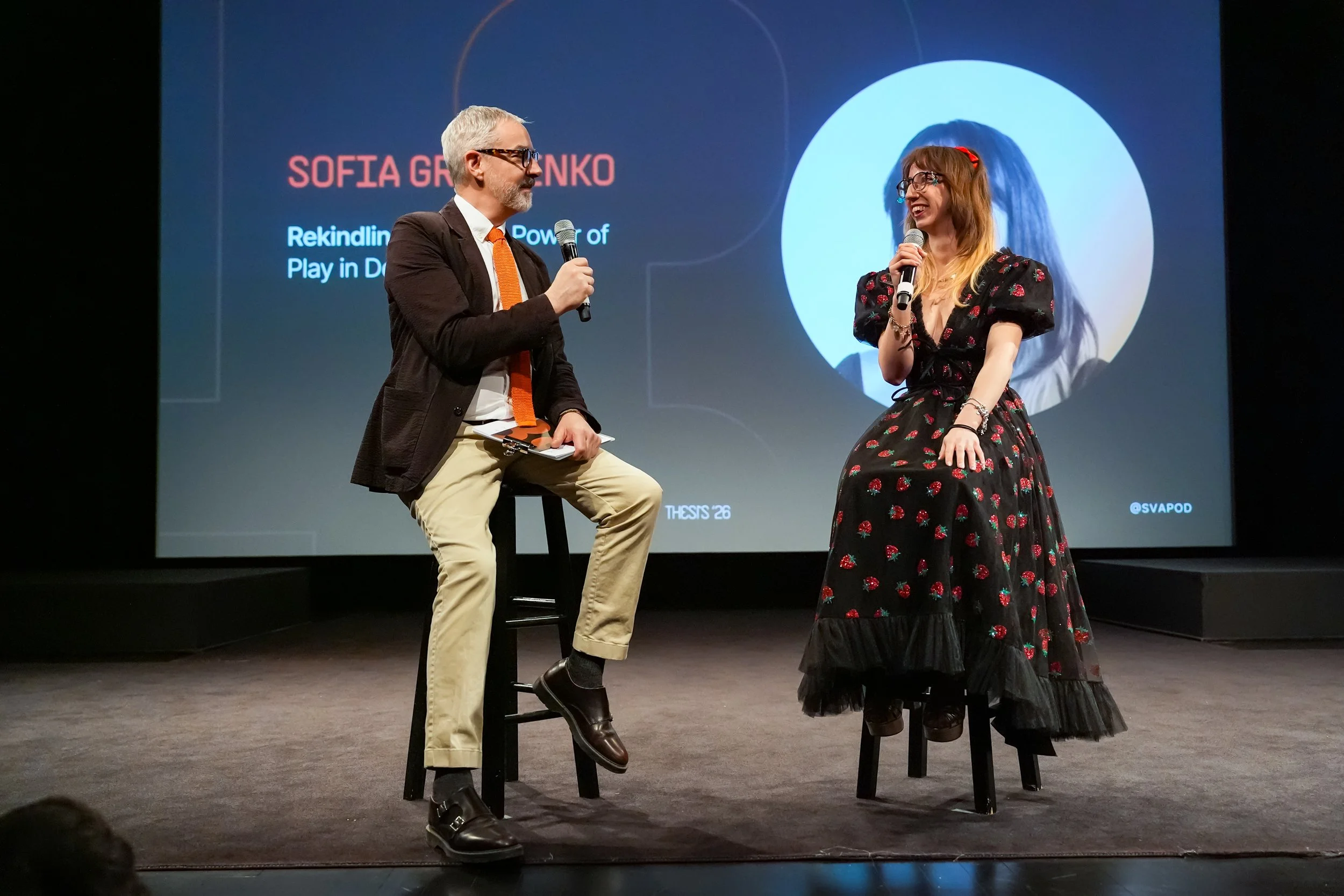
Sofia Grytsenko's thesis, Rekindling Joy: The Power of Play in Design, explores what it means to design for joy, not as a side effect, but as an intention. Through a series of interventions, experiments, and prototypes, her work asks: Can joy be designed? And if so, what conditions does it require?
"Joy has not disappeared. It remains present, but often unrecognized."
Sofia's inquiry began with a personal observation. Looking back at photographs of herself at different ages and in different places, she noticed a consistent thread: the presence of joy. But as she paid closer attention to the world around her, especially in New York City, she began to see something else. In everyday spaces like the subway, people were physically together but mentally elsewhere. This raised a question that would shape her entire thesis: Are we designing environments that allow joy to emerge at all?
What is joy?
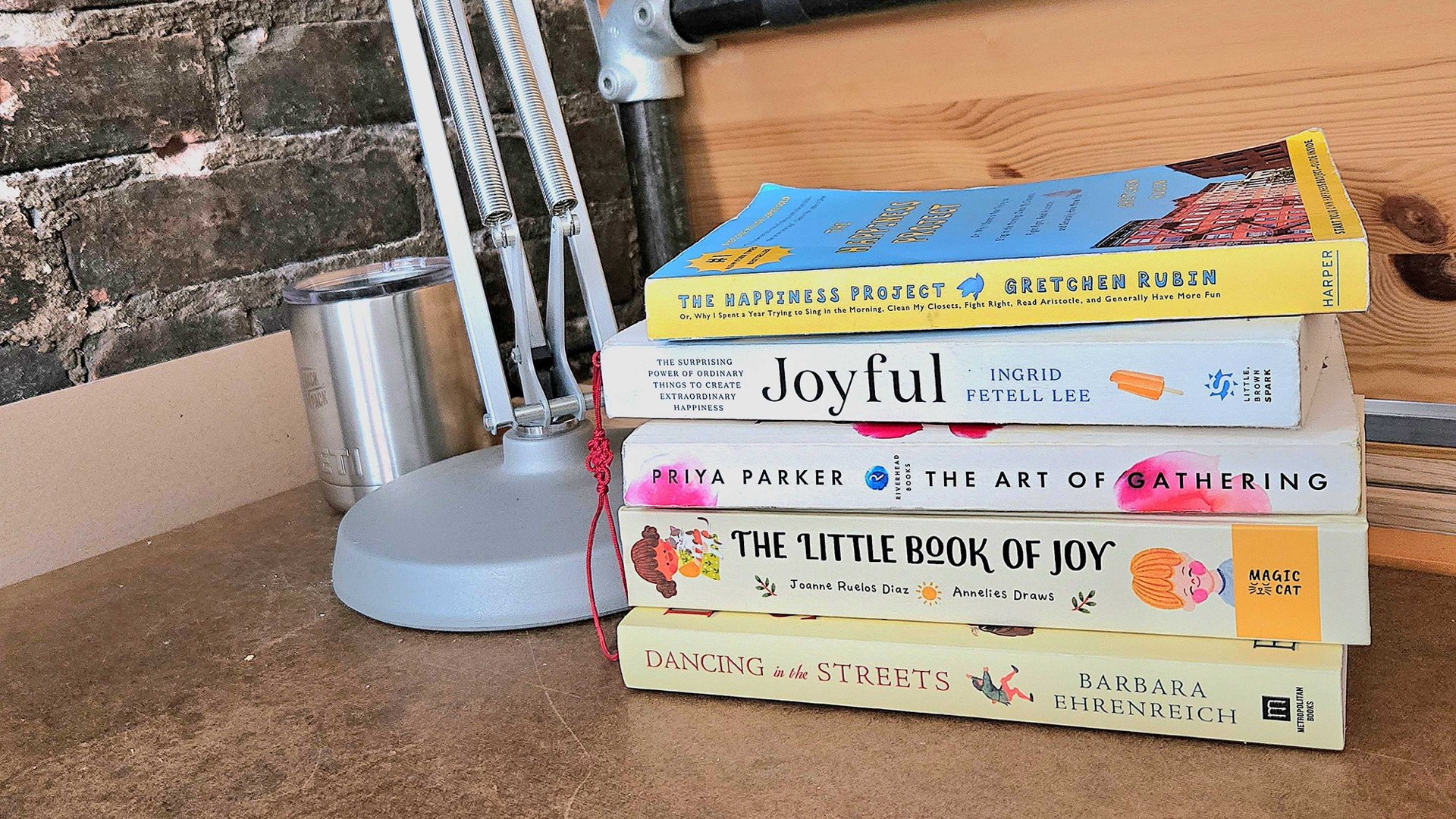
Sofia began with a fundamental question: What is joy? Despite its importance to human experience, it has been largely underexplored. Researcher Barbara Ehrenreich noted that while tens of thousands of studies have focused on depression, only a few hundred have examined joy, treating it as incidental rather than intentional. Sofia chose to approach it differently. She talked to designers, artists, practitioners, and even a clown about how joy surfaces in their work and in the world. Designer and researcher Maria Roberts offered a definition that became central to Sofia's framework: joy is an embodied and cognitively appraised feeling that arises in response to meaningful moments. It is something we feel, and also something we recognize.
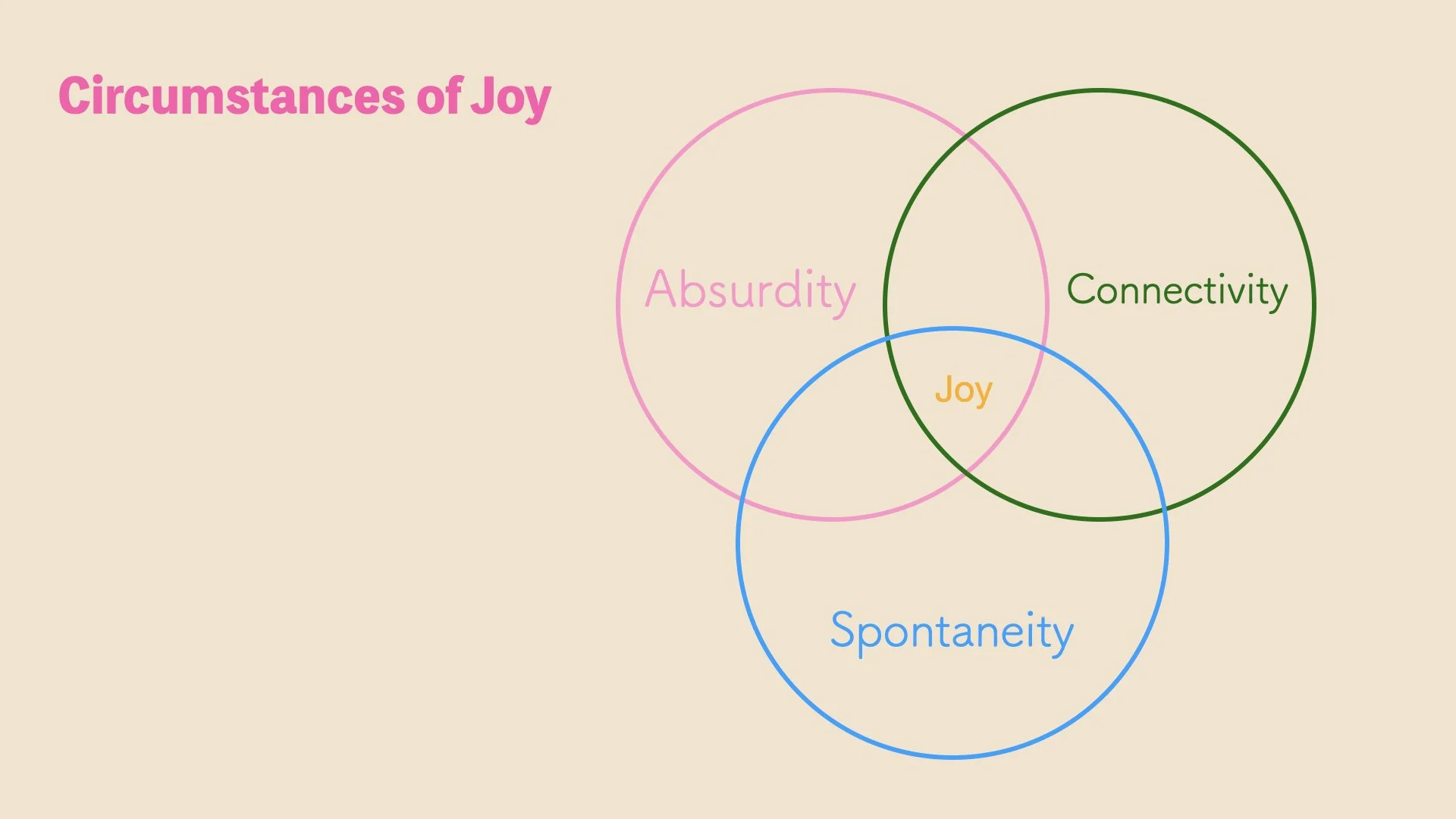
Through her interviews, three recurring conditions emerged. Joy tends to arise through spontaneity, absurdity, and connectivity. These are not rules or guarantees, but they are reliable openings—moments where joy becomes possible.
Balloon Hunt
Sofia began by testing the principle of absurdity. She walked through New York City carrying a large red balloon. There was no explanation, no signage, no invitation to participate. Just an object that interrupted the visual field.
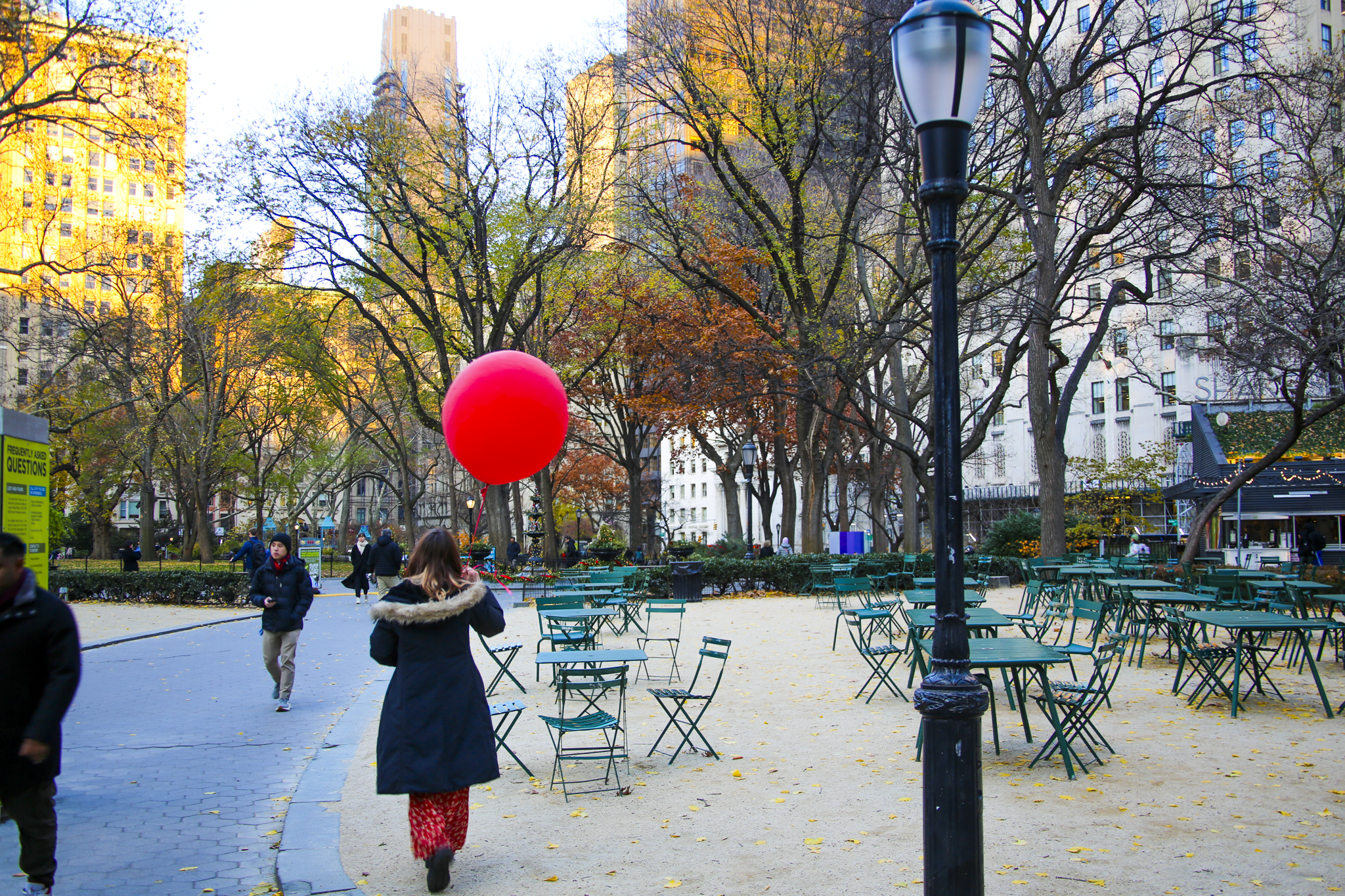
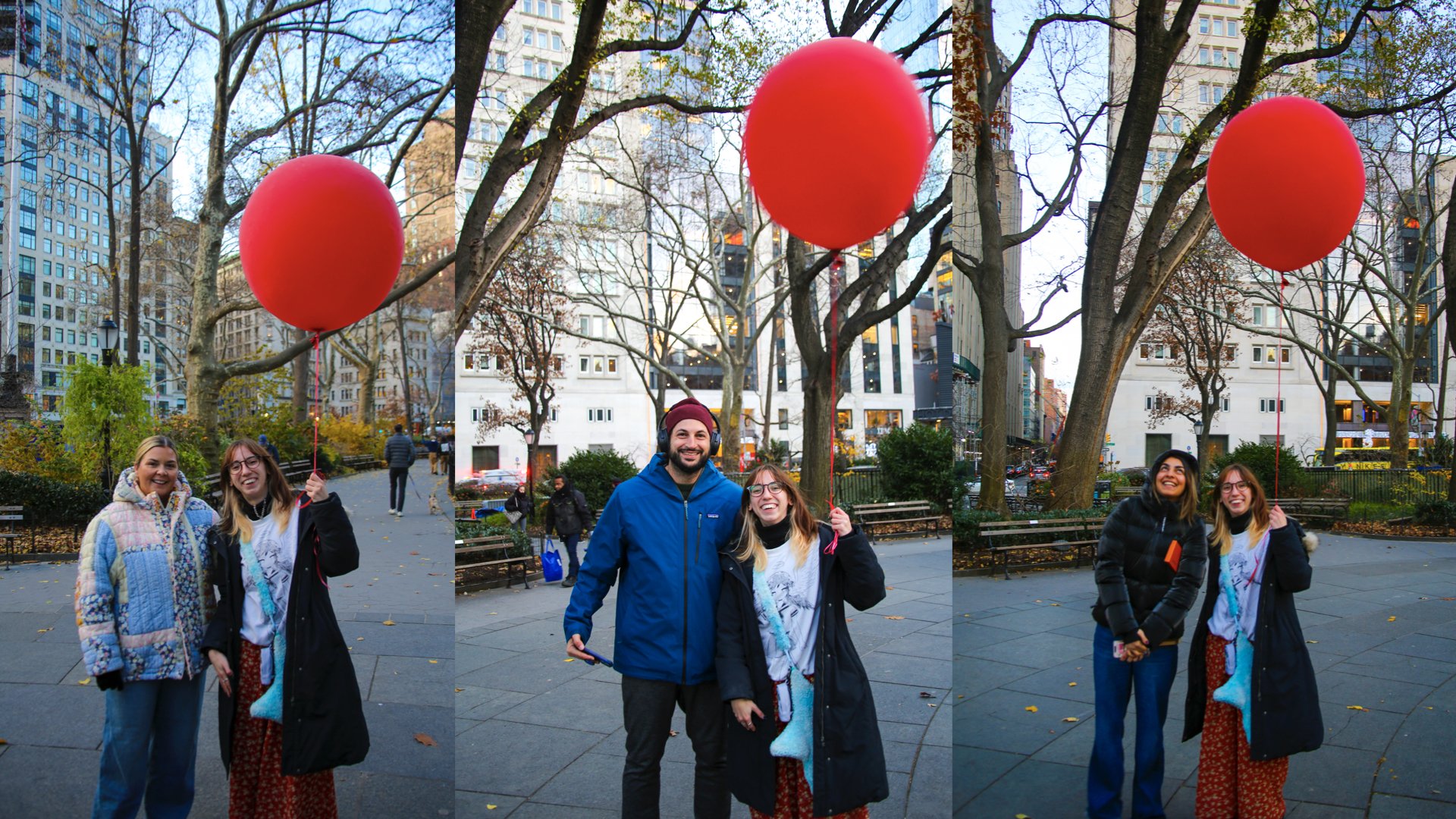
The response was immediate. People stopped. They smiled. Some approached and asked questions; others simply observed. As one person remarked, "It's big, bright, and in your face. How could I miss it?" The balloon introduced both spontaneity and a quiet absurdity, interrupting routine without demanding anything in return.
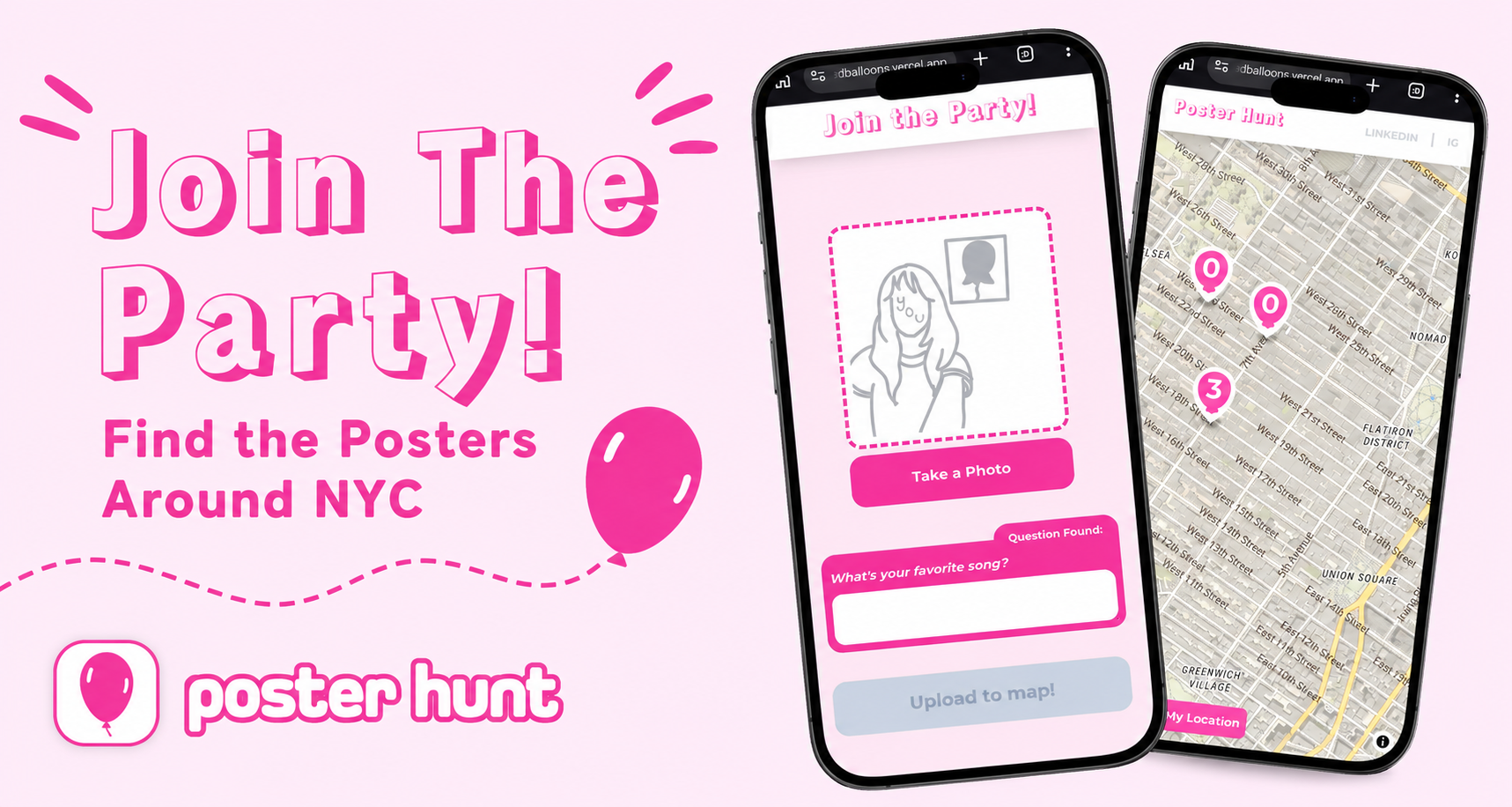
Encouraged by this, Sofia attempted to scale the interaction with Poster Hunt, placing balloon posters across the city, each with a QR code leading to an app-based experience. It failed. There was little to no engagement. The posters lacked presence and asked for effort without offering a compelling reason to engage.
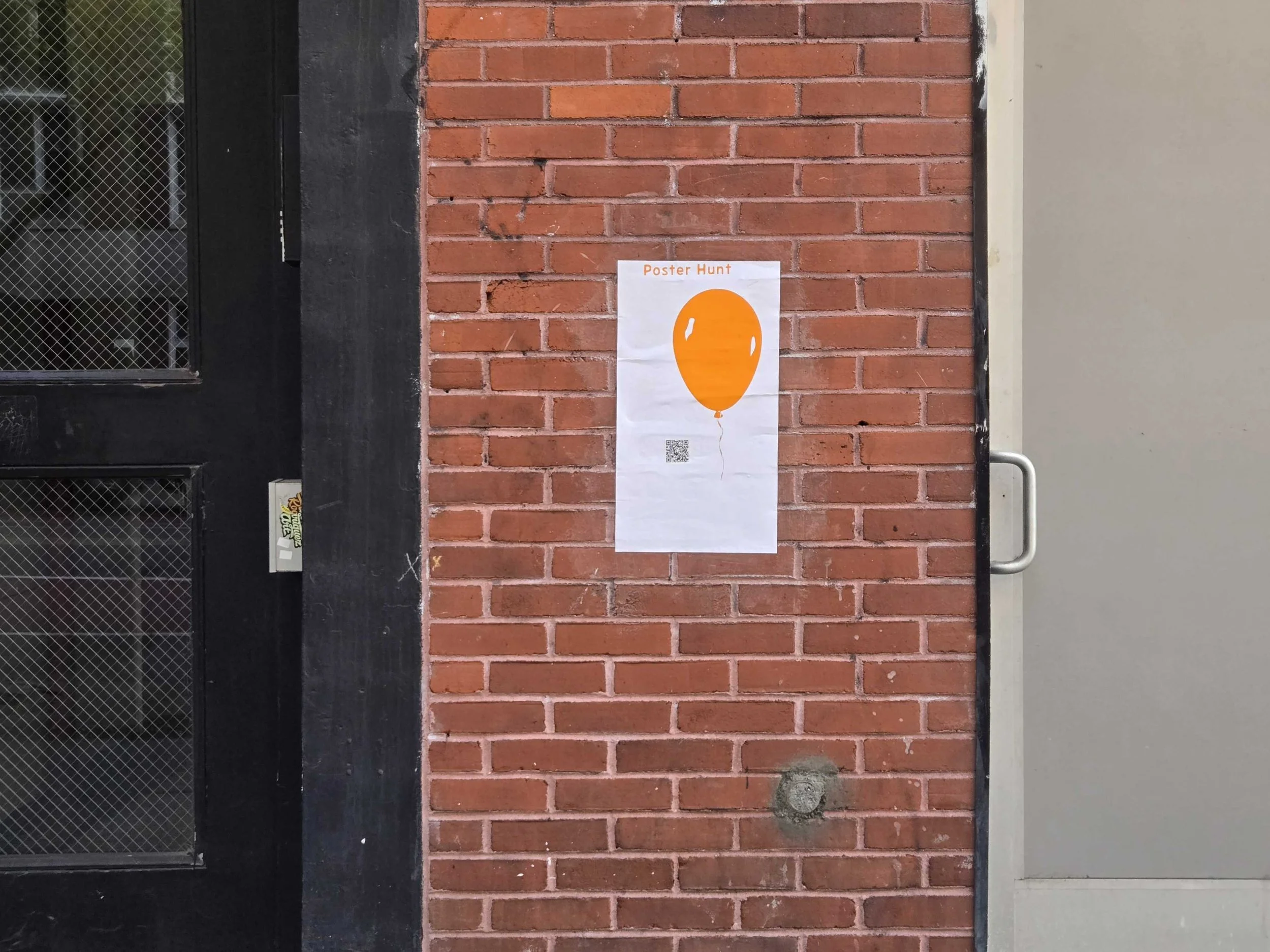
This failure shifted Sofia's thinking. Instead of asking how to scale a moment, she began asking a different question: what actually causes people to stop?
Routes to Joy
This question led Sofia to facilitate a workshop called Routes to Joy. Participants were invited to map locations in the city where they had experienced joy. The responses were not grand or extraordinary. They were specific and personal.
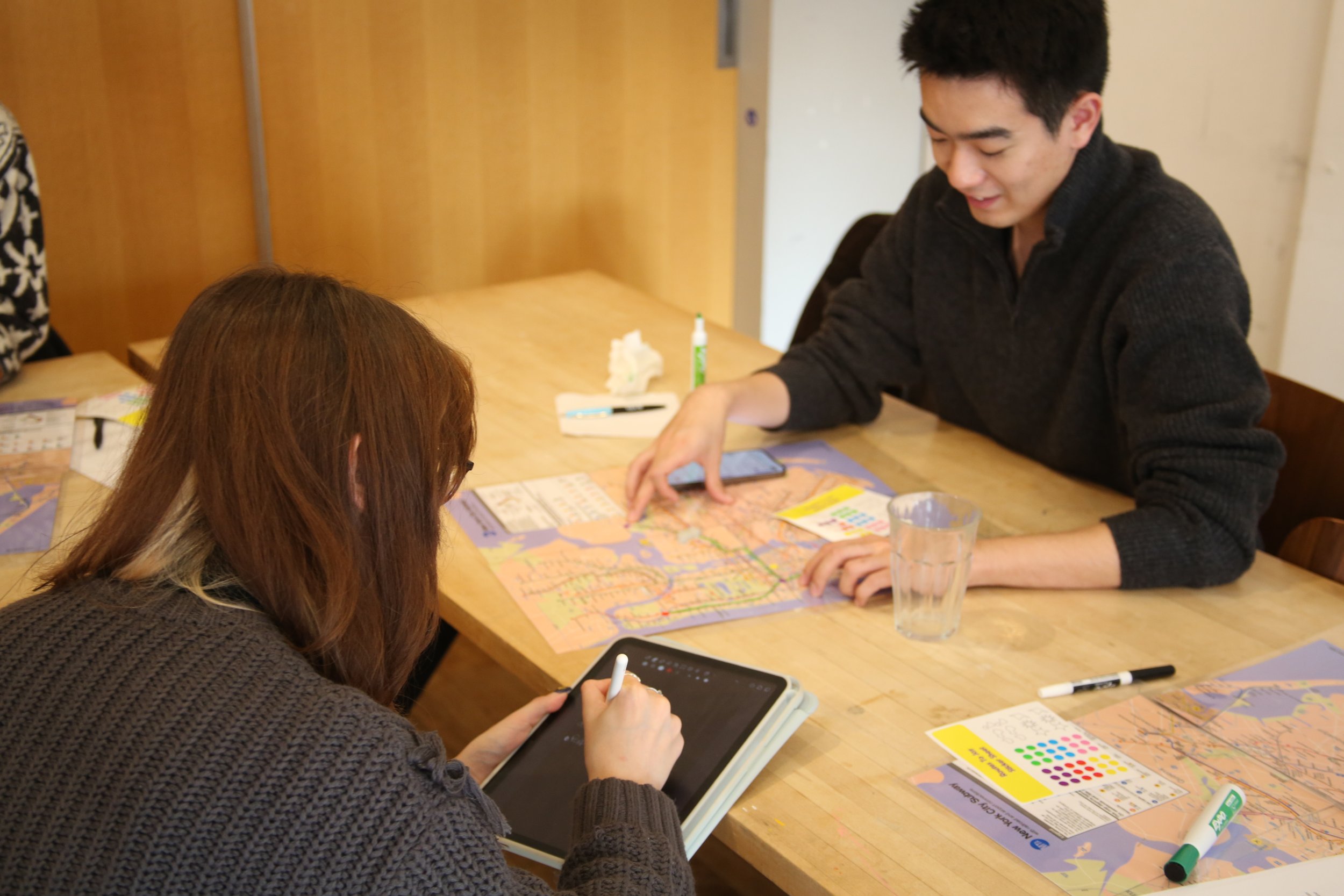
A dog encountered on a regular walk. Sunlight hitting a building at a particular time of day. A farmer's market along a familiar route. These moments shared a common quality: they disrupted the expected.
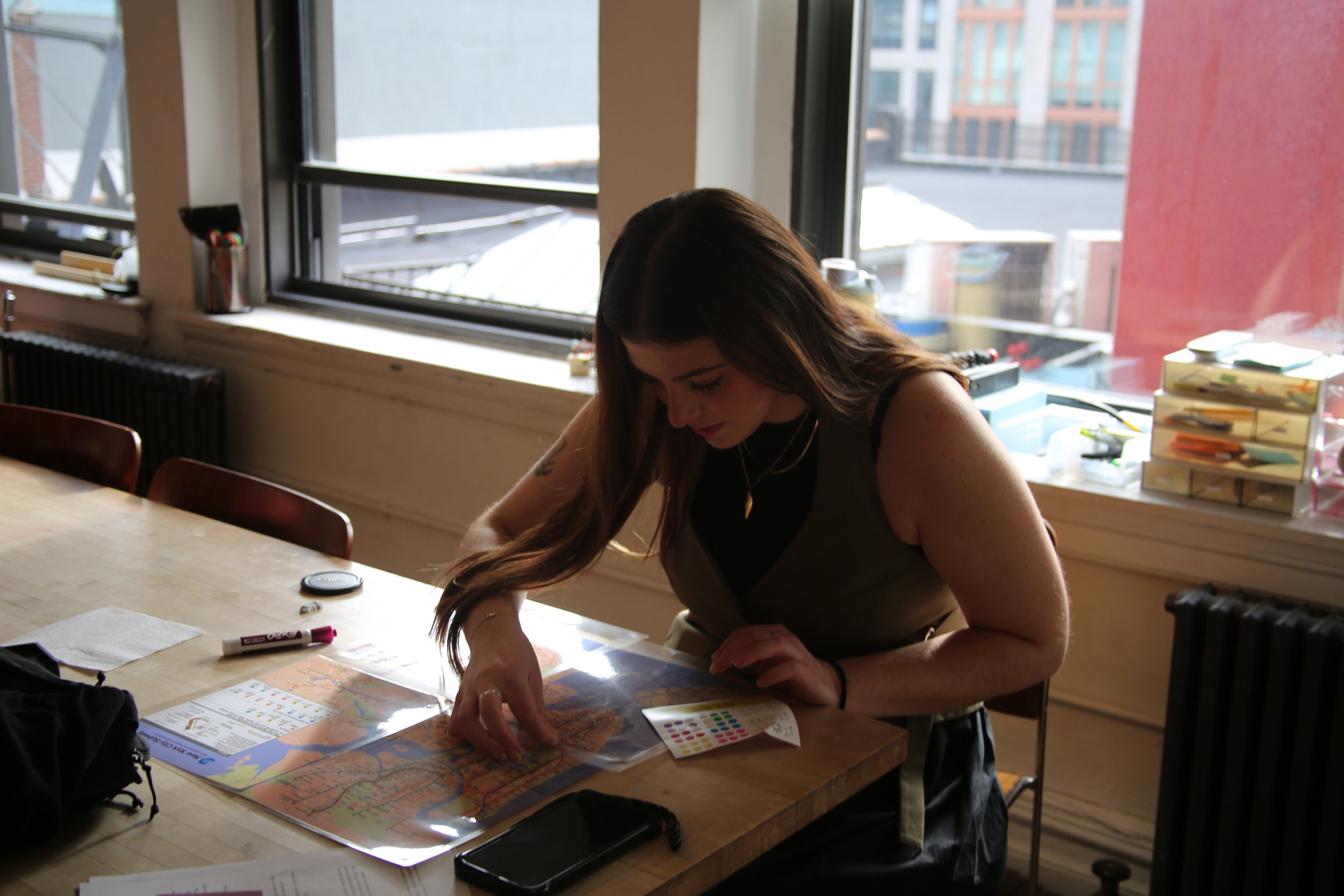
But the most significant insight did not come from the maps themselves. It came from the interactions between participants. They began to share stories, compare experiences, and bond, particularly over shared frustrations like the subway. As one participant reflected: "The joy was in the journey. We never finished because we were having so much fun."
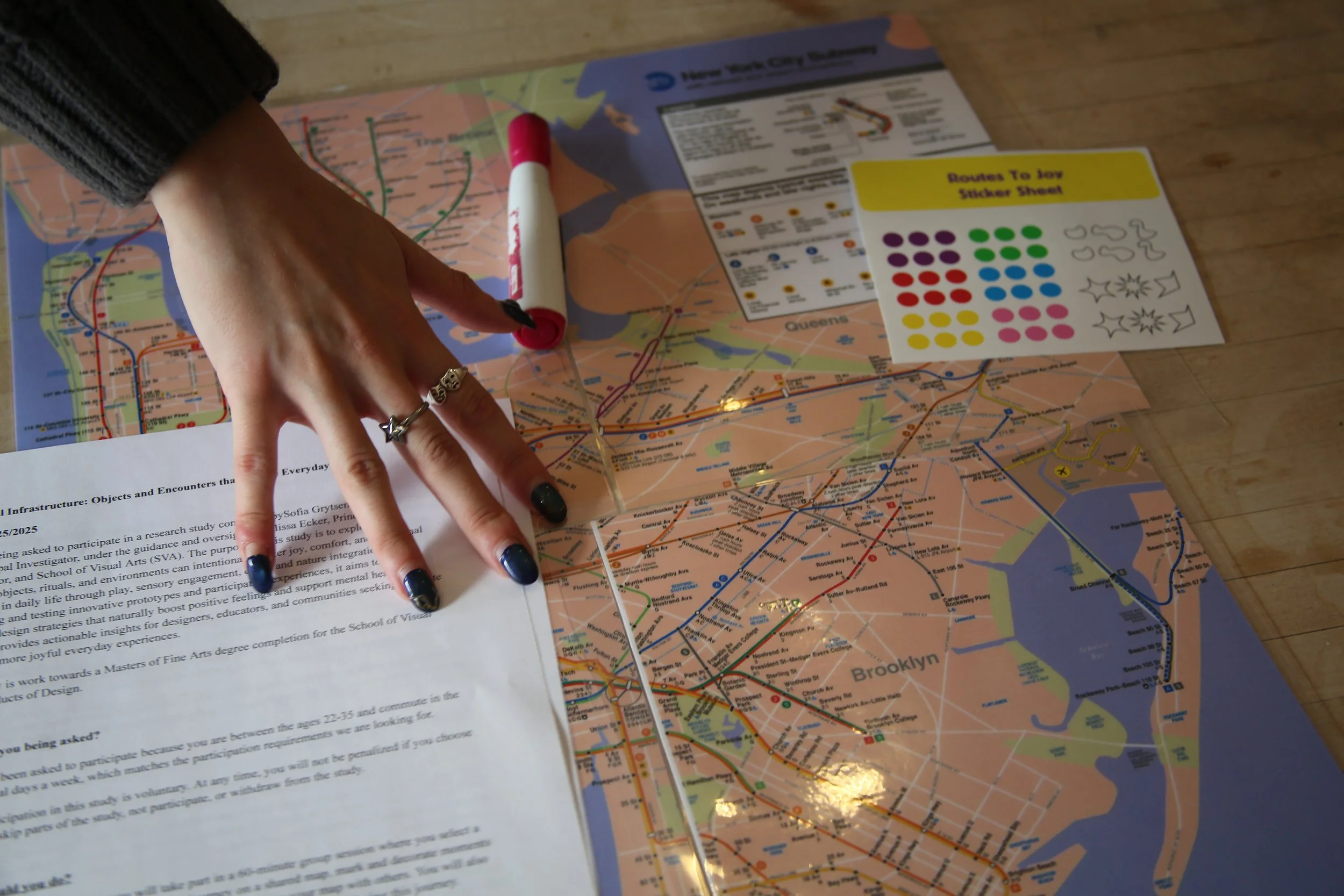
Joy is not only found in moments of interruption. It is amplified when those moments are shared.
Pocketful
This led Sofia to consider how small interruptions might be integrated into everyday routines. As one workshop participant noted: "I am not very inspired on my daily commute." In response, Sofia designed Pocketful, an application inspired by observational games like I-Spy that introduces small prompts into daily movement. Users receive a prompt, engage with their surroundings, and document what they find. Rather than moving passively through space, they begin to notice it. Routine becomes slightly altered, and attention becomes active.
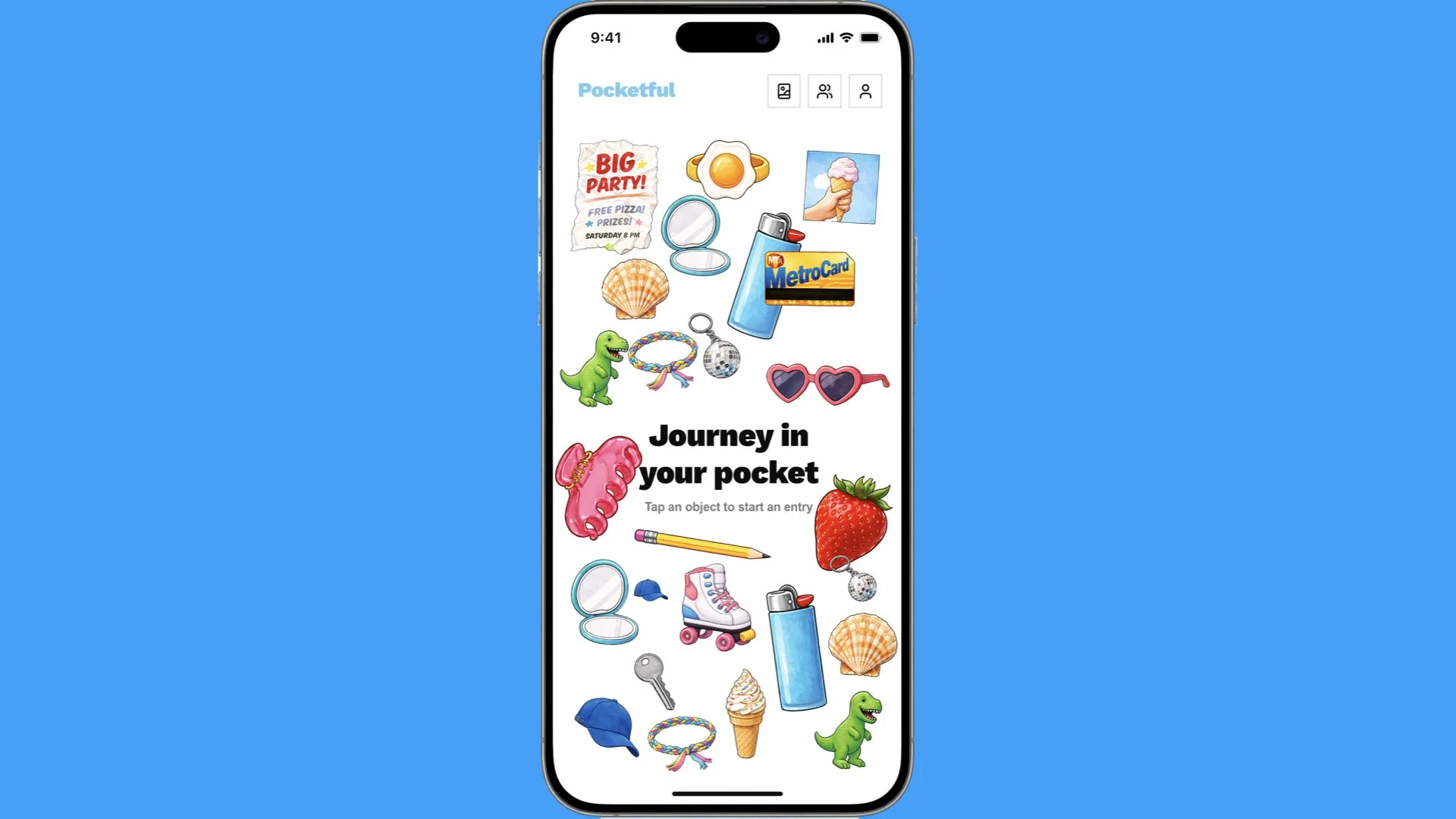
Testing showed a clear shift: reported boredom during commutes decreased significantly. Spontaneity had introduced novelty. But connection deepens the experience further.

Frienier
Next, Sophia designed a paired device called Frienier. The concept was sparked by a simple statement: "My sister misses her pager."
What is missed is not the device itself, but the feeling it represented. The quiet awareness that someone is thinking of you.
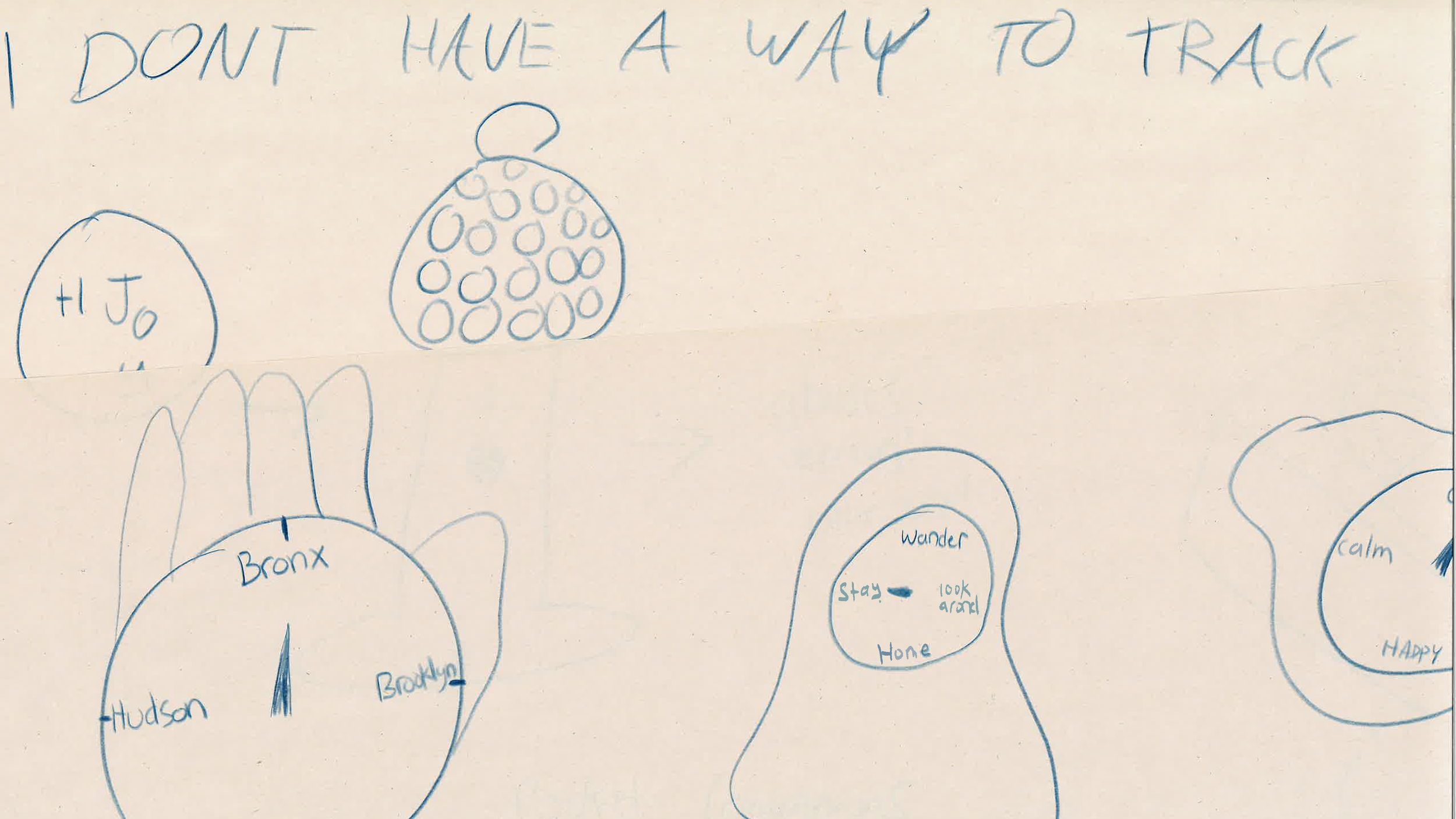
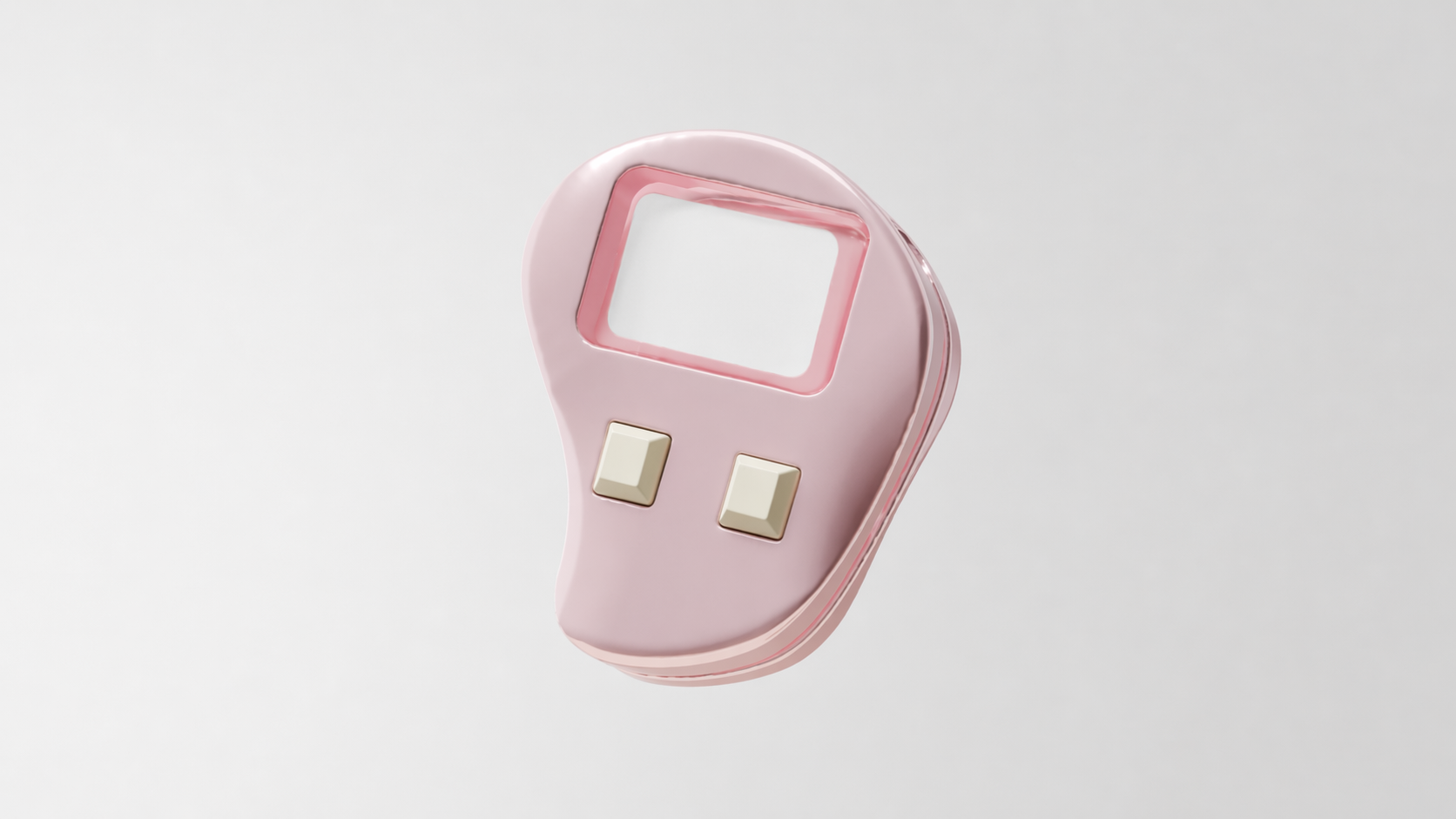
Frienier is a paired device. When two users come within proximity, it emits a subtle vibration. It does not demand attention. It simply signals presence, a quiet acknowledgment that someone you care about is nearby. If both users respond, it transforms into a shared experience, guiding them toward one another.
Camp Winter Social Club
Through interviews, another idea emerged: joy is often associated with a childlike state of discovery. As Barbara Ehrenreich describes it, this is collective effervescence, joy that emerges through shared participation. This raised a new question: How might we design environments that give adults permission to engage in that way again?
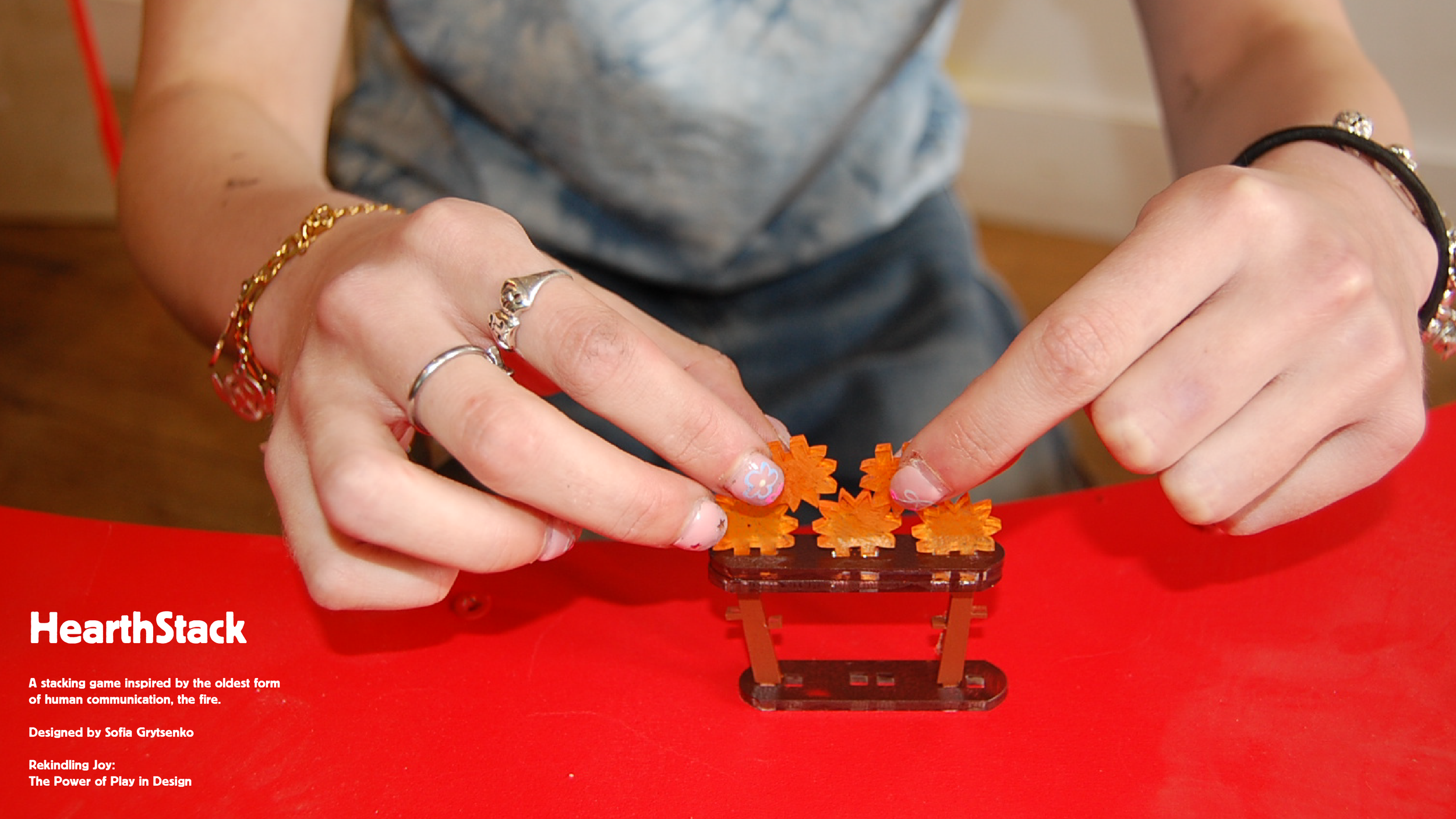
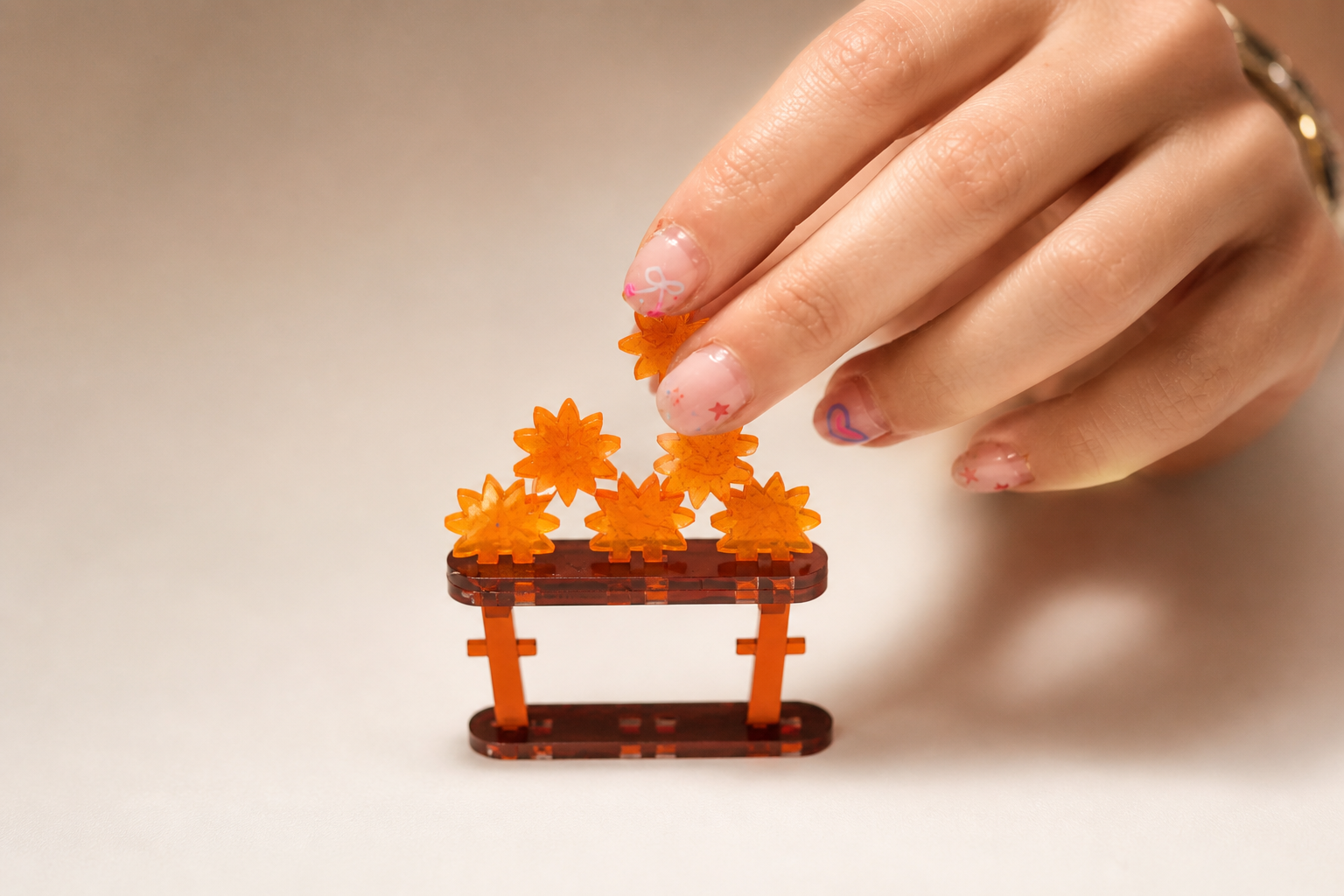
Camp Winter Social Club was developed in response. It is a structured experience built around familiar elements, roles, badges, and a guidebook, that create a framework for participation. Many people already hold an idealized memory of summer camp. This project allows them to re-enter that space within the context of their current lives.

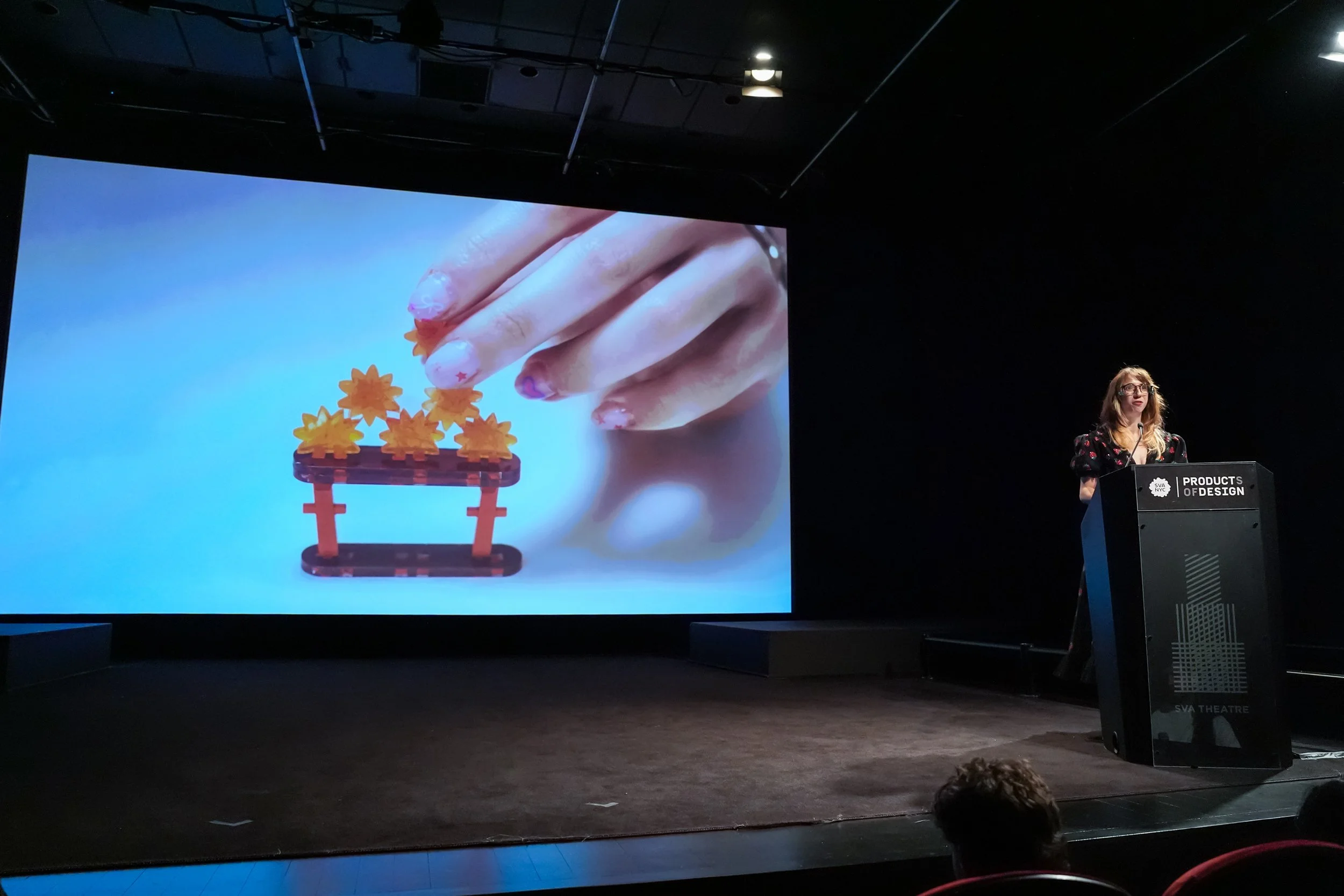
At the center is HearthStack, a stacking game inspired by one of the oldest forms of human bonding: gathering around a fire. Except this version is entirely safe for a Brooklyn apartment. It recreates the conditions for connection not through nostalgia alone, but through shared attention and interaction.
Get Up On Your Soapbox
This encouraged Sofia to return to public space. What do New Yorkers and children have in common? They love to complain.
Get Up On Your Soapbox is a public installation where individuals could stop and express something that mattered to them. When you say something out loud, it stops living only inside you. It becomes external. Observable. Manageable. Being seen, even through frustration, is a form of connection.
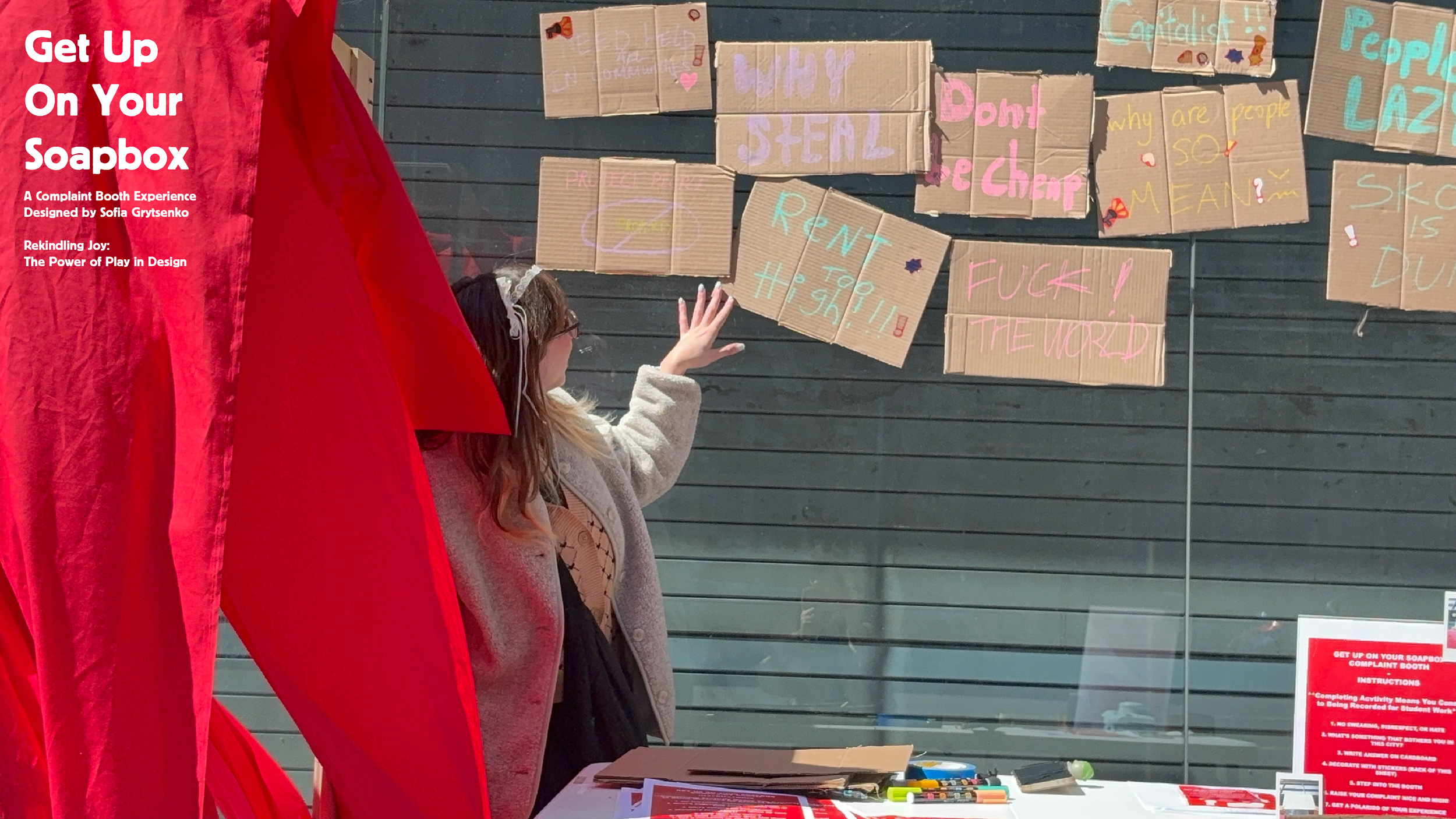
Sofia shared that people immediately showed up to participate. They wrote, reflected, and shared their thoughts. As one participant noted: "I am glad I stopped and wrote something important, and now others will see it too." The act itself was simple, but in that moment of visibility, connection emerged.
Each of Sofia's thesis projects activates one or more of the three conditions: spontaneity, absurdity, connectivity. But when they intersect, they create the most impactful moments of joy.
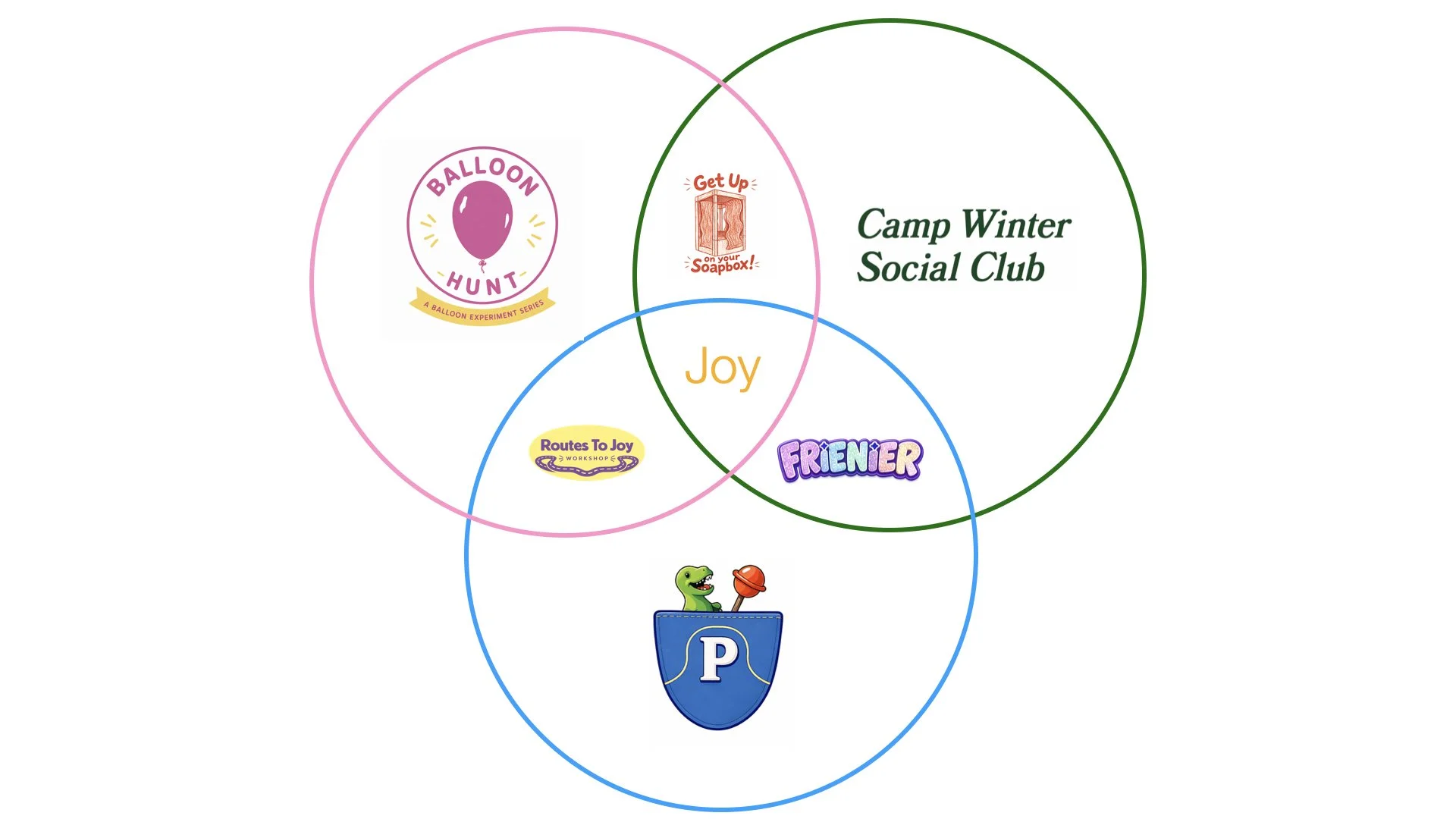
Joy is not arbitrary. And it can be designed.
Sofia's work is an invitation. Joy has not disappeared. It remains present, but often unrecognized. It exists in small interruptions, shared experiences, and moments of attention. The conditions for joy can be designed, and when they are, they feel less like design and more like a spin, a red balloon, a quiet vibration in your pocket.
To learn more about Sofia’s work, take a look at her projects in more detail at: cassiowave.com