
Why Parents Reach for Their Phones: Families and the Attention Economy
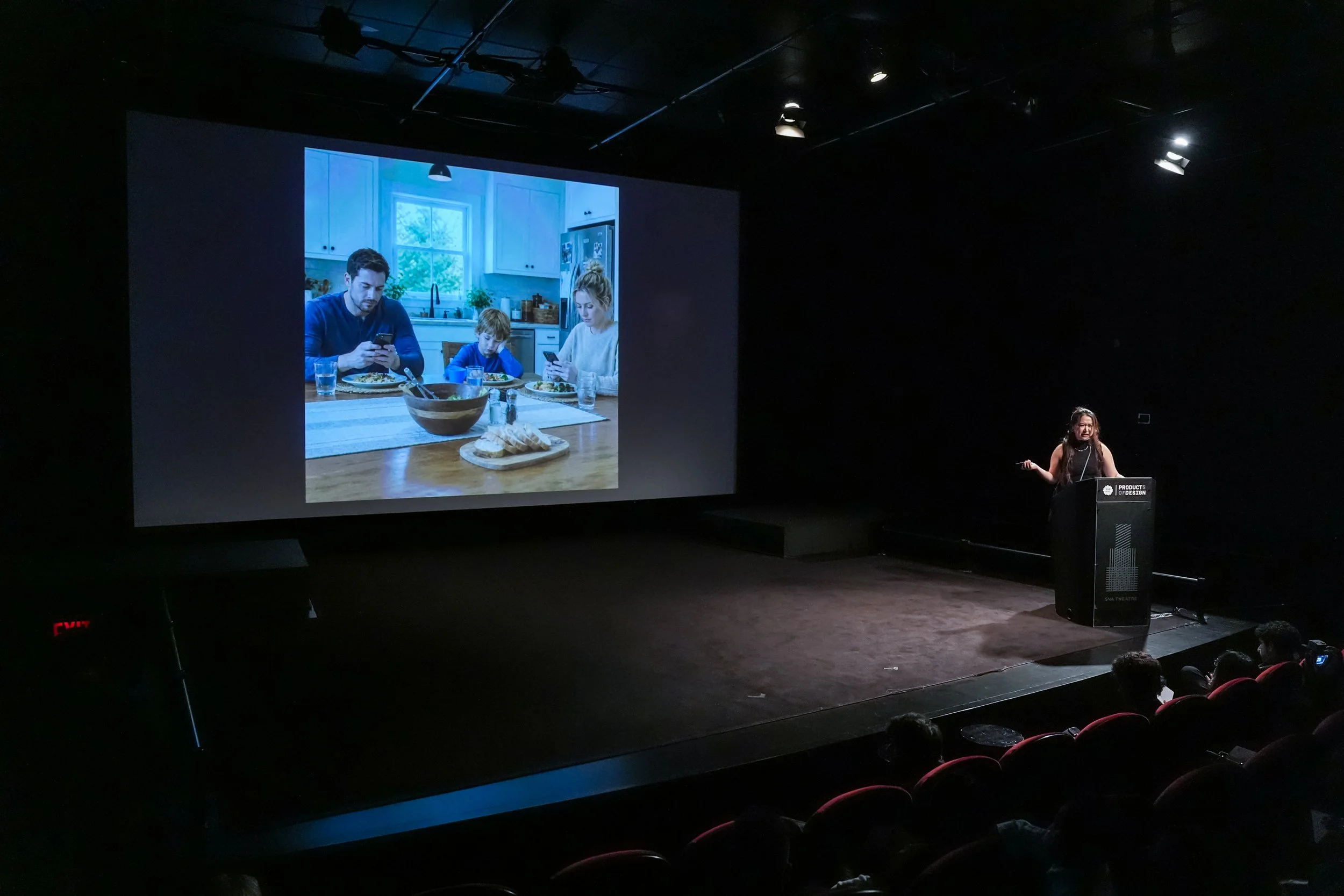
Tong Zhao's thesis, Why Parents Reach for Their Phones: Families and the Attention Economy, examines phone addiction not as a personal failure but as a symptom of broader emotional, behavioral, and social pressures shaping contemporary family life. Phone addiction is often framed as a personal weakness, a failure of discipline, or even a moral issue. In conversations about parenting, this judgment becomes especially sharp. We see parents scrolling beside their children and immediately assume neglect. But behind many of these moments is not indifference, but exhaustion, anxiety, loneliness, and uncertainty. Tong's thesis begins from a shift in perspective: instead of blaming parents for their relationship with technology, what if systems were designed to support them emotionally, behaviorally, and socially?
"I'm already overwhelmed. I just need a moment alone."
— Interview Participant
As a product designer, Tong became interested in the hidden emotional structure behind "technoference" — the phenomenon in which technology interrupts human relationships, especially within families. Research shows that excessive screen distraction can reduce eye contact, emotional responsiveness, verbal interaction, and moments of shared attention between parents and children. Over time, this can influence children's emotional regulation, social development, and behavioral health. Yet despite understanding these consequences, many parents still struggle to change their habits. During interviews, Tong repeatedly heard variations of the same sentence: "I know the phone is a problem, but I don't know how to stop."


Through interviews and research, Tong identified the deeper struggles faced by parents. Behind parents' phone addiction lies a behavioral dependency system closely connected to stress, emotional fatigue, cognitive overload, and the pressures of modern family life. Through a series of speculative and functional design projects, Tong investigates how design can reduce the friction of parent-child interaction, create healthier behavioral feedback systems, and help people rediscover emotional presence in daily life. Rather than focusing on punishment or restriction, these projects focus on guidance, emotional support, and behavioral transformation.
Relay Box
Through her research, Tong found that the issue was not simply that parents preferred phones over children, but that the parent-child interaction often contains too much friction. There is decision fatigue, preparation effort, learning effort, and emotional exhaustion. “If scrolling is easier than connection, then connection itself needs redesigning,” says Tong.
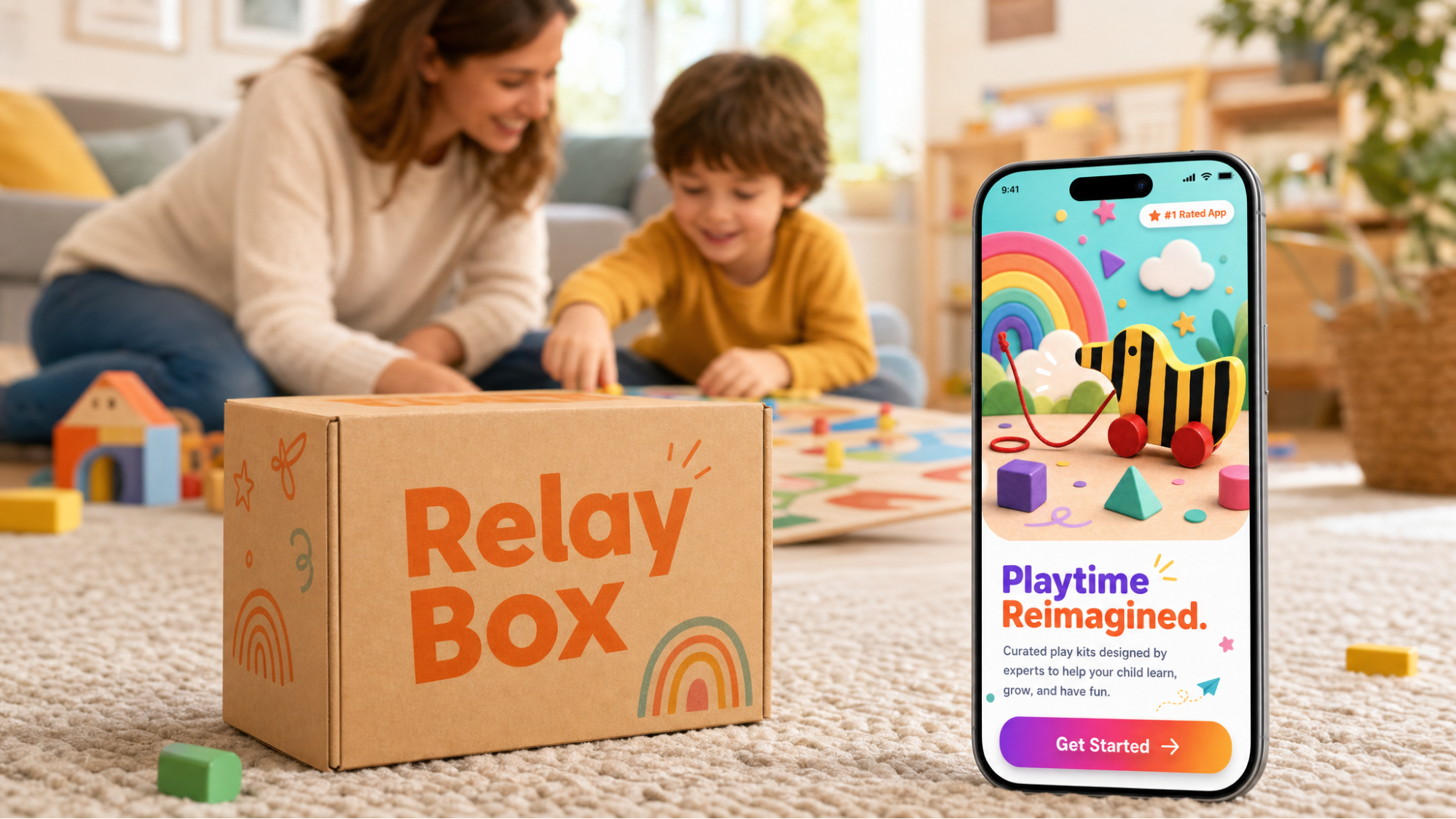
Relay Box is a family game subscription service designed to reduce the cognitive cost of spending time together. The platform matches the interests of both parents and children and delivers ready-to-play experiences directly to families. Instead of asking exhausted parents to constantly invent meaningful activities, Relay Box removes the preparation stage entirely. Families receive curated interactive games and activities that are easy to start immediately. Relay Box treats enjoyment as mutual. Shared pleasure becomes central to sustainable interaction. If parents genuinely enjoy the activity, they are more likely to stay present.
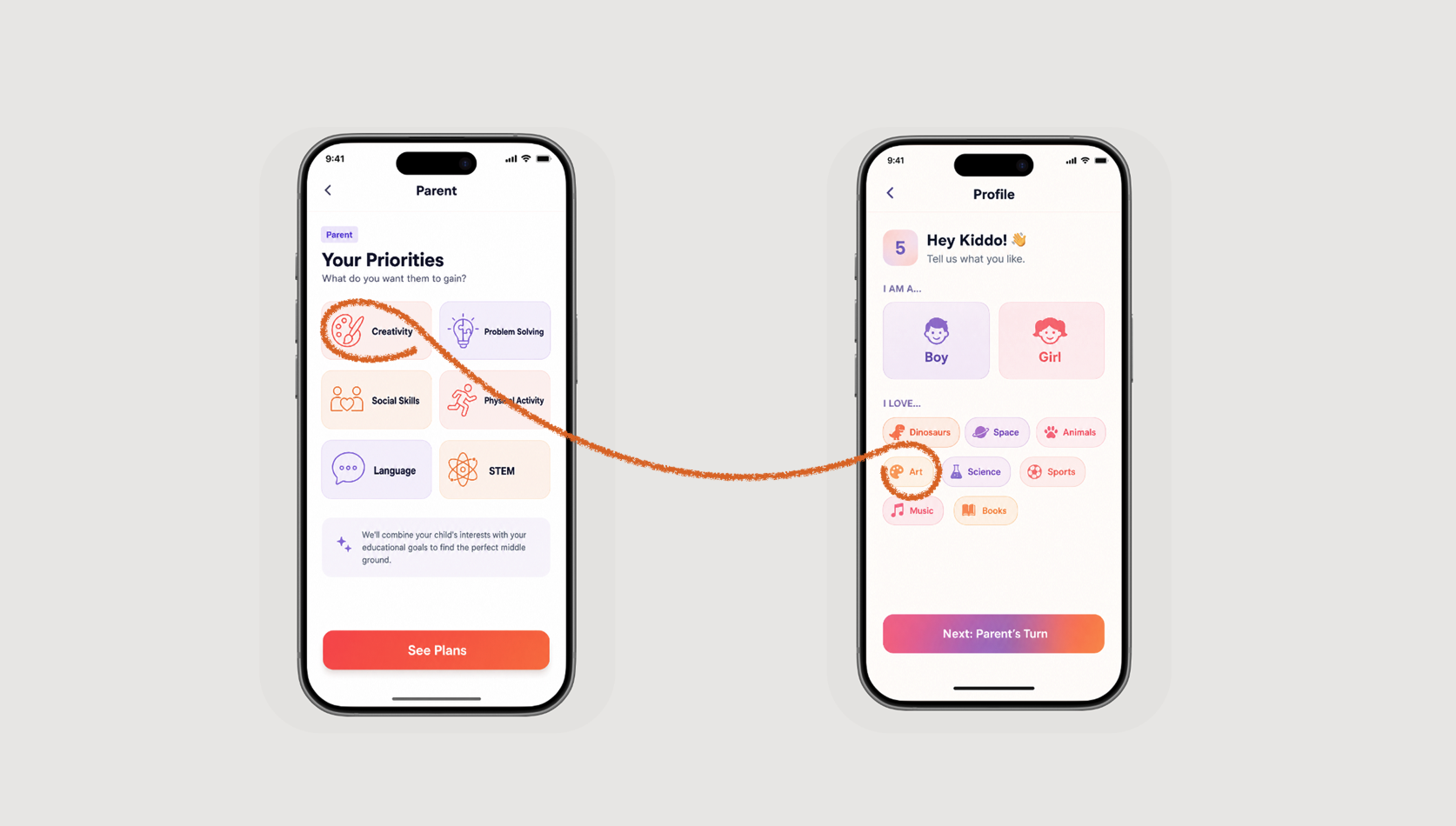
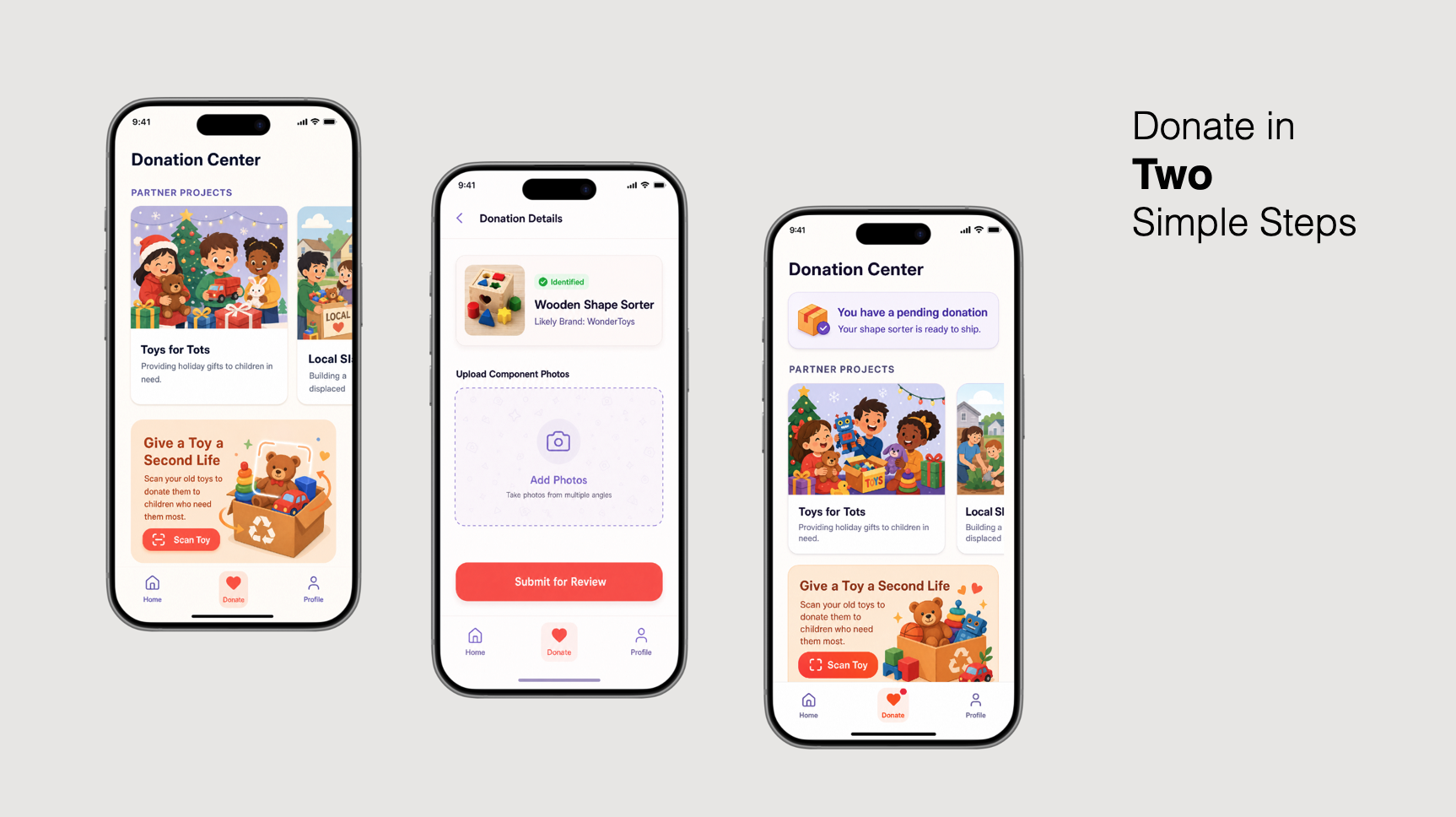
Tong identified the target users as middle-class families with a certain level of purchasing power. To ensure a more trustworthy and simple user experience, Relay Box only provides brand-new products to users. The project also introduces a circular donation system. Once children outgrow certain toys or games, families can return them through the Relay Box loop system. These materials are then redistributed to children and communities in need. In this way, past joy becomes a new gift for another family. The system extends emotional value beyond the individual household and transforms consumption into social sharing.
Lulupu
The second project investigates the deeper behavioral and psychological structure behind phone addiction itself. Through interviews, Tong discovered that parental anxiety operates in two directions simultaneously. Parents worry about their own inability to stop using phones, but they also fear what technology may do to their children in the future. In moments of fear, parents often respond to the issue through avoidance and heightened control.
"Children, at an age when their judgment and critical thinking are still developing, should not independently manage smartphone use,” Tong explains, “However, simple avoidance often prevents children from building a healthy cognitive relationship with technology during critical stages of development." Behavioral science shows that addiction is not simply about content. It is connected to dopamine systems, habit loops, environmental cues, and emotional regulation. Psychologist Sun Miao argues that guidance is more effective than prohibition.
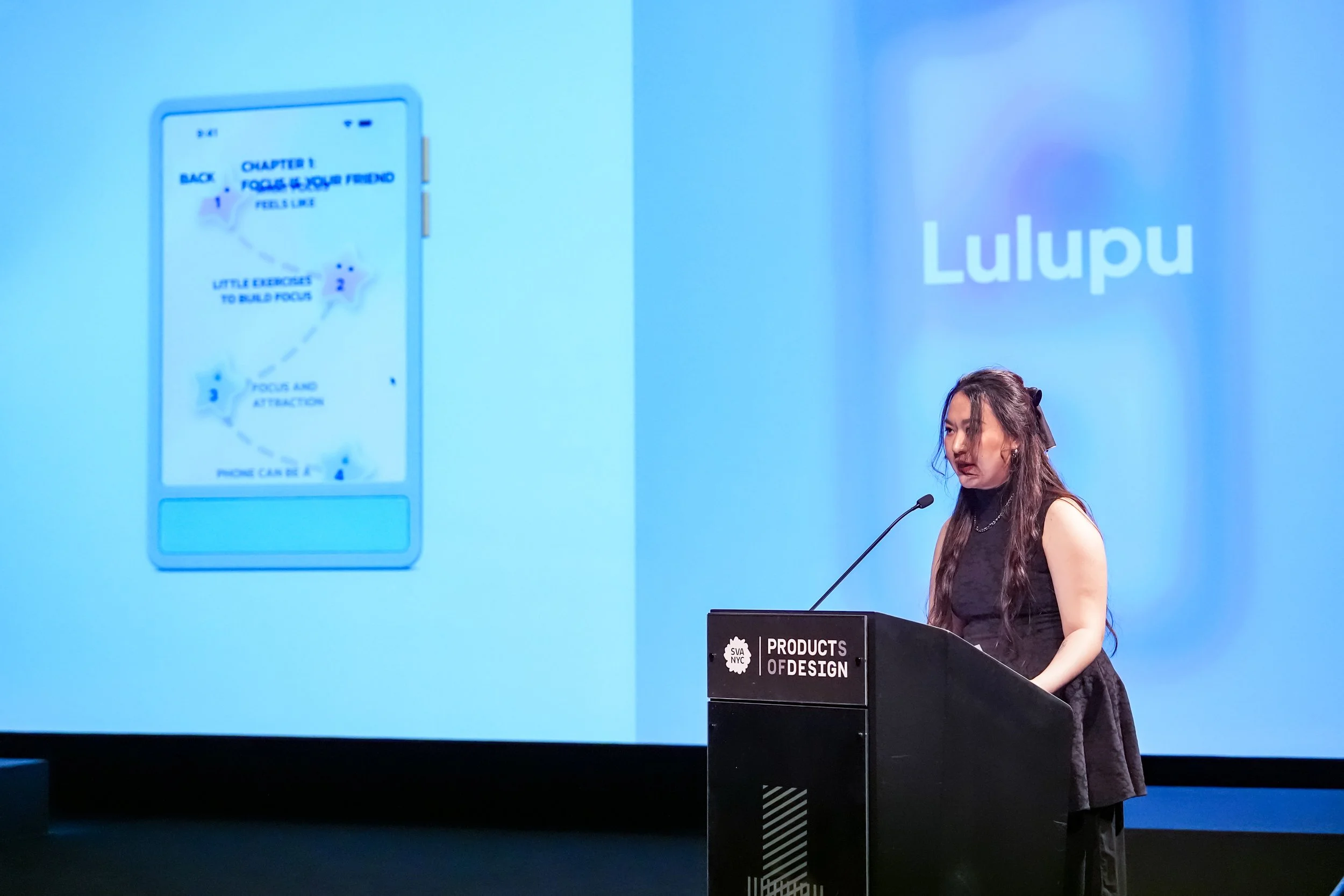
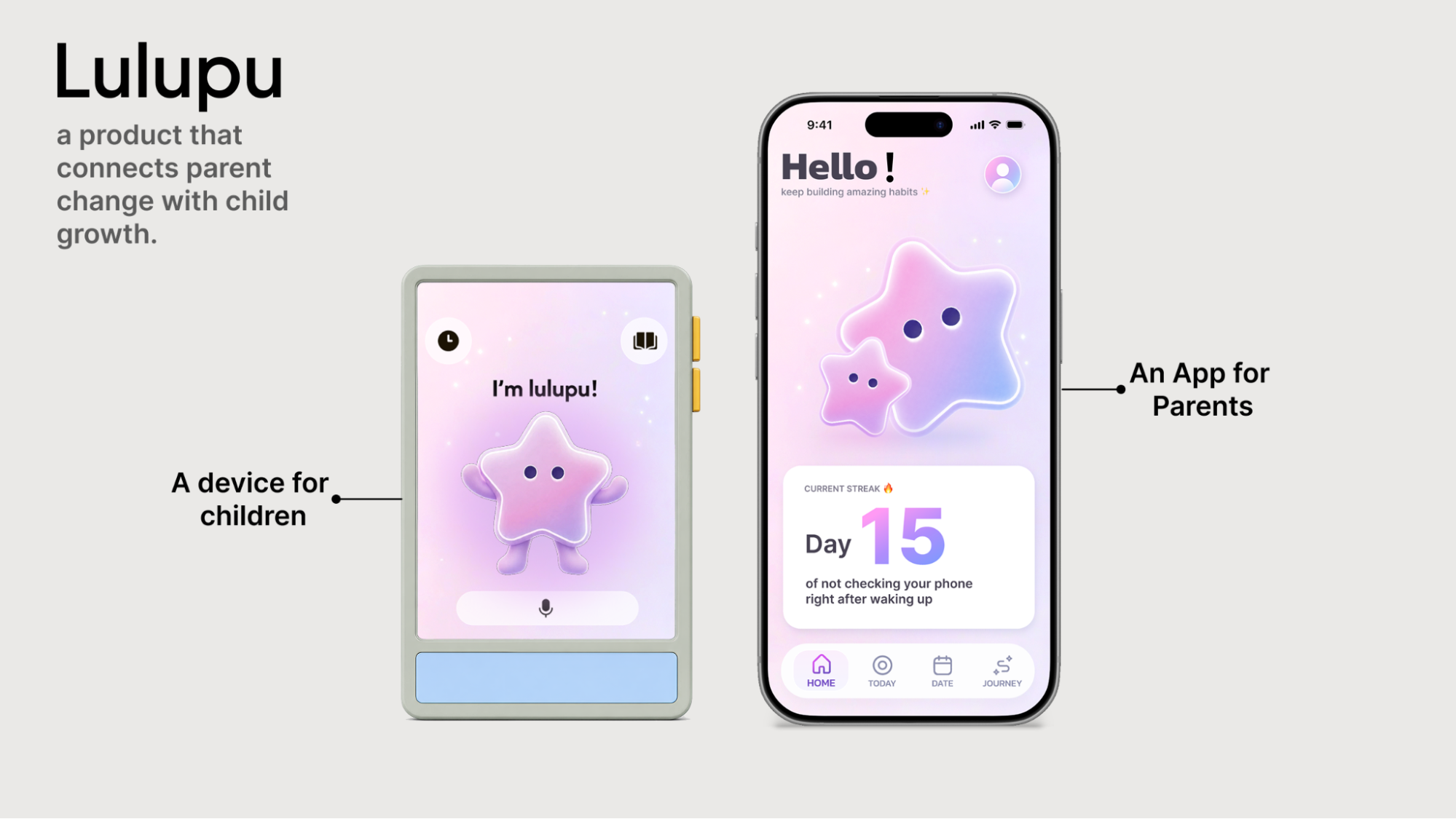
Lulupu is a behavioral support system that connects parents' self-change with children's cognitive growth. Instead of simply limiting screen time, it helps families build healthier relationships with technology through shared learning, behavioral guidance, and emotional connection. Lulupu encourages parents to openly acknowledge their own phone-use struggles and choose one habit they want to improve. Through daily tracking, encouragement, and reflection rituals, the system supports parents in building consistent behavioral change without relying on punishment or guilt.
Children can observe their parents' progress through their own interactive interface while also learning about the psychology and neuroscience behind phone addiction. Rather than receiving abstract warnings, they understand healthy technology use through participation, observation, and shared experiences.
Lulupu reframes phone addiction as a collaborative family learning process rather than an individual failure. By combining behavioral visibility, emotional openness, and shared motivation, the project aims to create healthier long-term relationships between families and technology.
The Kind Heart Steve
As Tong's research progressed, a more specific behavioral question emerged: are people addicted to phones themselves, or to the physical action of scrolling? Scrolling is often treated as a neutral interaction, but it may actually be one of the most powerful behavioral triggers in digital life. People scroll when they are bored, anxious, uncomfortable, lonely, or avoiding social awkwardness. The motion itself becomes soothing. Eventually, the behavior continues even when the content no longer matters. This observation led to Tong’s third project: The Kind Heart Steve.

The Kind Heart Steve is a small tactile device that mimics the physical interaction language of smartphones without providing digital content. Its surface feels similar to a phone screen and contains multiple haptic feedback responses, but there are no notifications, feeds, videos, or information systems attached to it.
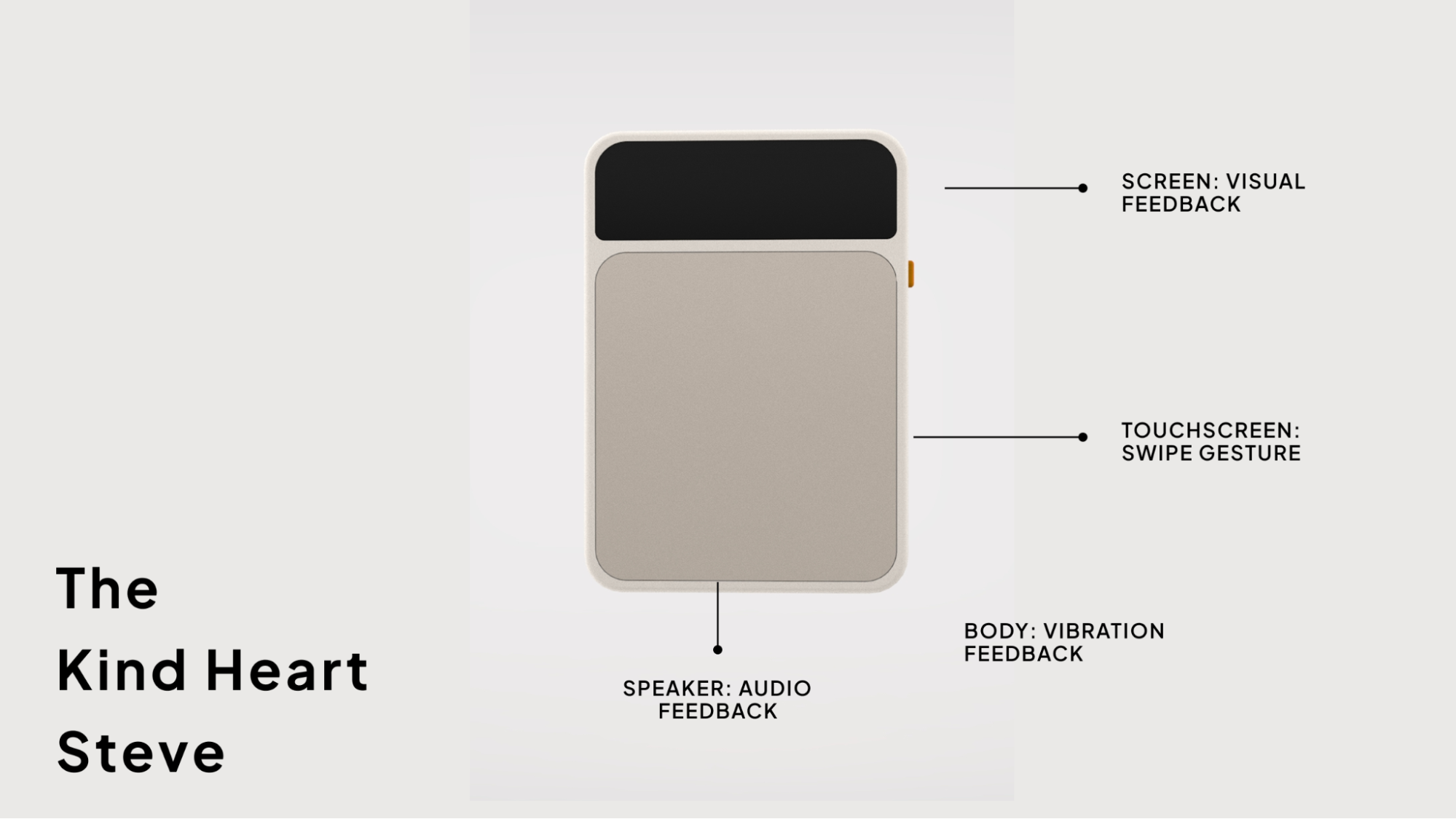
The device can magnetically attach to the back of a smartphone or function independently. It acts as a behavioral substitute — a "plan B" for moments when people instinctively reach for their phones. Instead of demanding complete behavioral suppression, the device acknowledges that habits are embodied and physical.
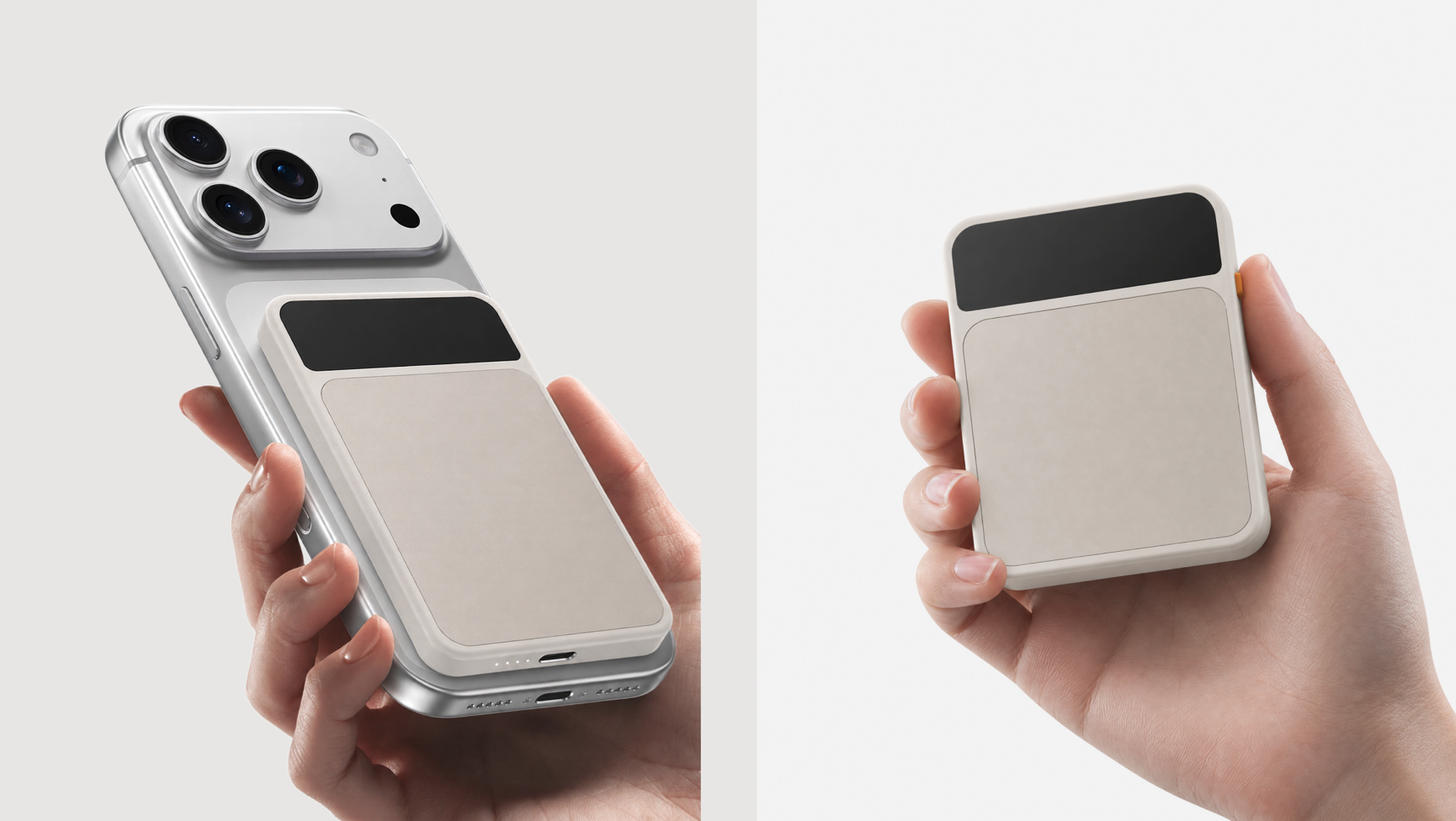
Most anti-phone solutions rely on restriction, blocking, or guilt. The Kind Heart Steve instead explores redirection. It separates tactile comfort from algorithmic addiction. By preserving physical interaction while removing endless content streams, the project questions whether behavioral dependency can be softened through sensory replacement rather than discipline alone.
Exploring the Joy of Being Without Your Phone in Central Park
Many interview participants described a strange emotional loss after reducing phone use. Without constant stimulation, they felt disconnected from themselves and uncertain how to experience presence again. This realization led to the final project in Tong's thesis: an emotional healing experience in Central Park.
The experience invites participants to remember a moment in their lives when they felt completely present without their phones. This could be a conversation, a walk, sunlight through trees, laughter with friends, or a small unnoticed moment of peace. Participants then place these memories onto a shared physical map designed by Tong within the park.
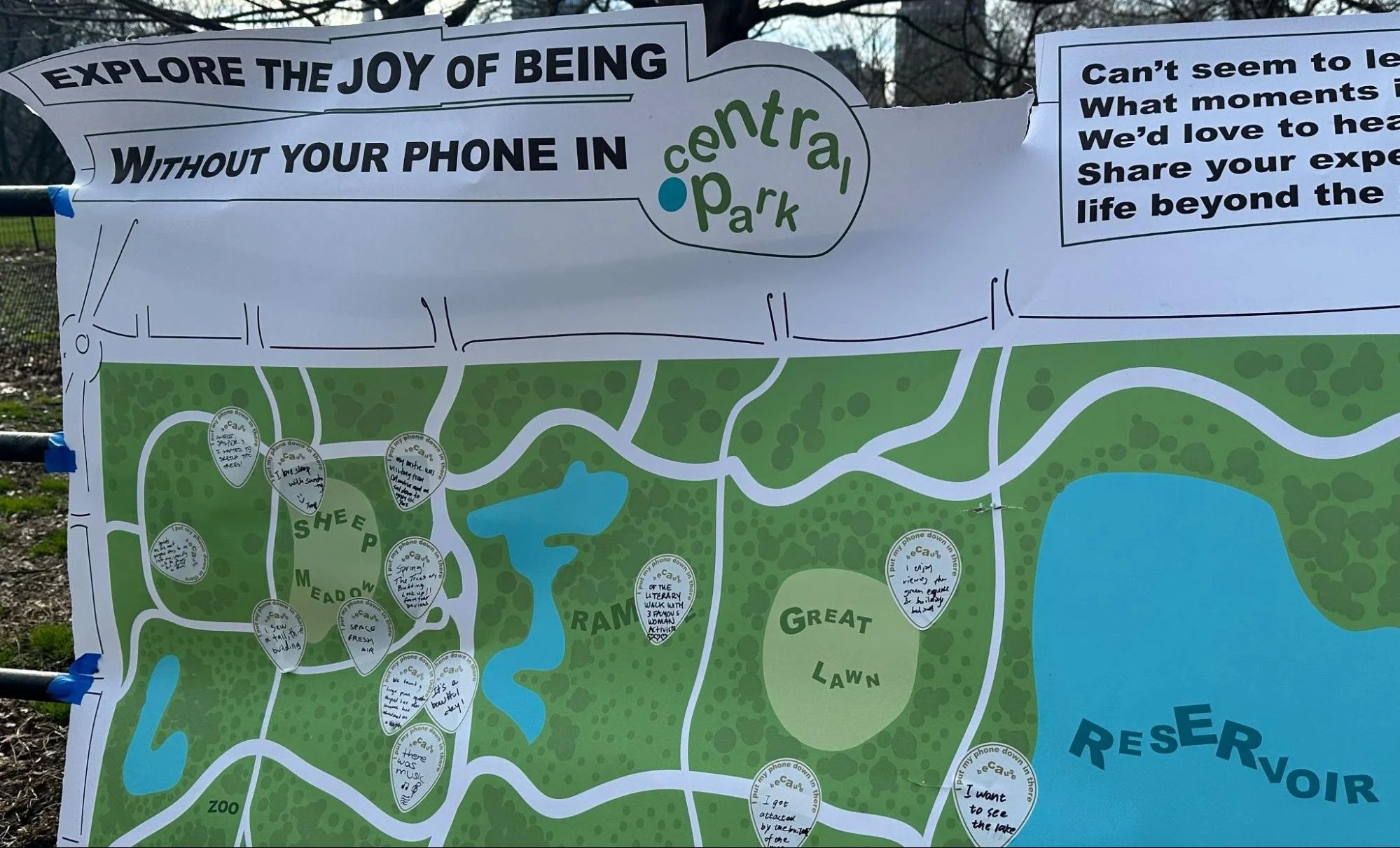
The map becomes a collective archive of presence. Other visitors can follow these shared memories and physically retrace emotional experiences created by strangers. In doing so, presence transforms from an isolated personal memory into a shared social resource.
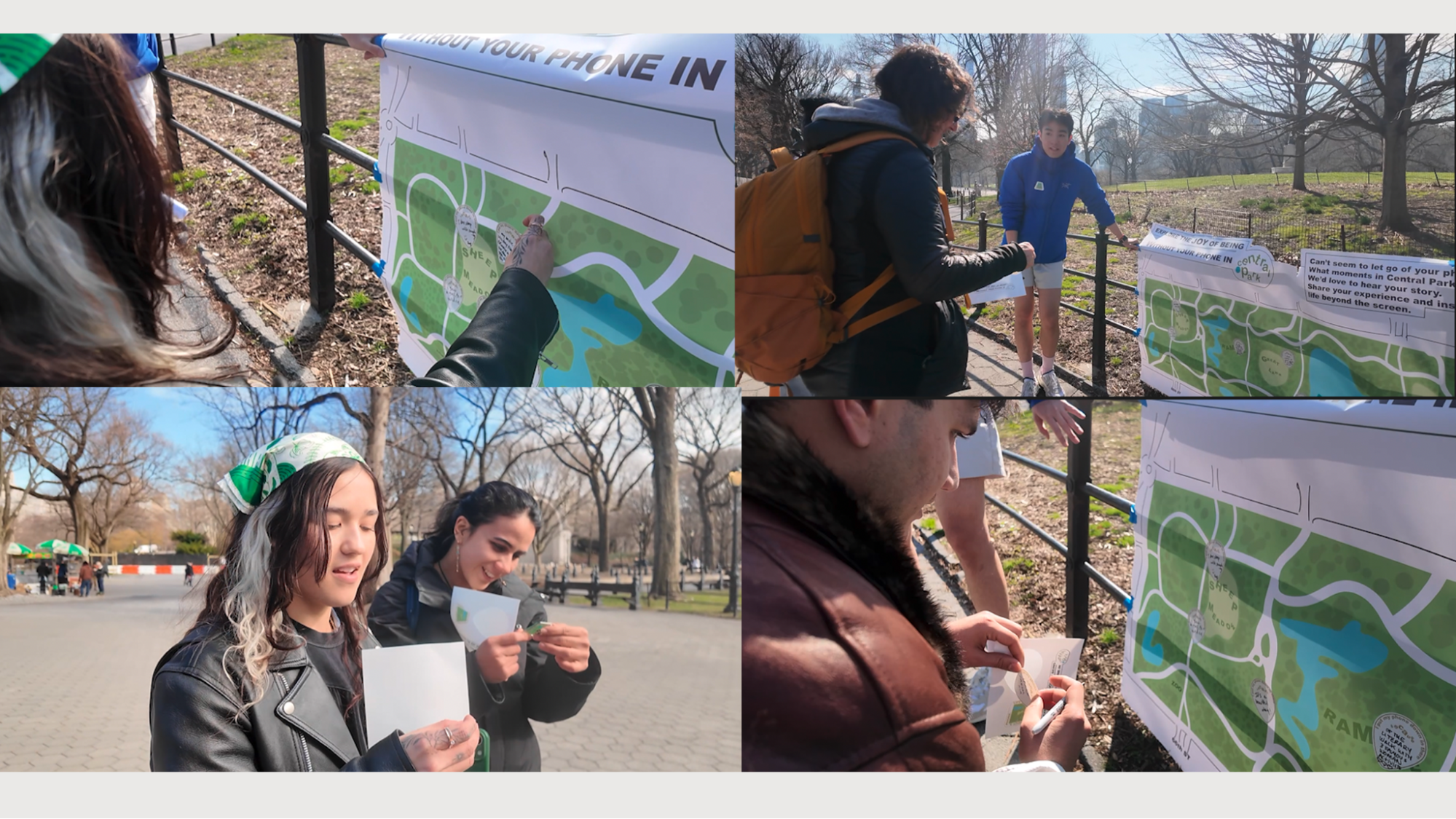
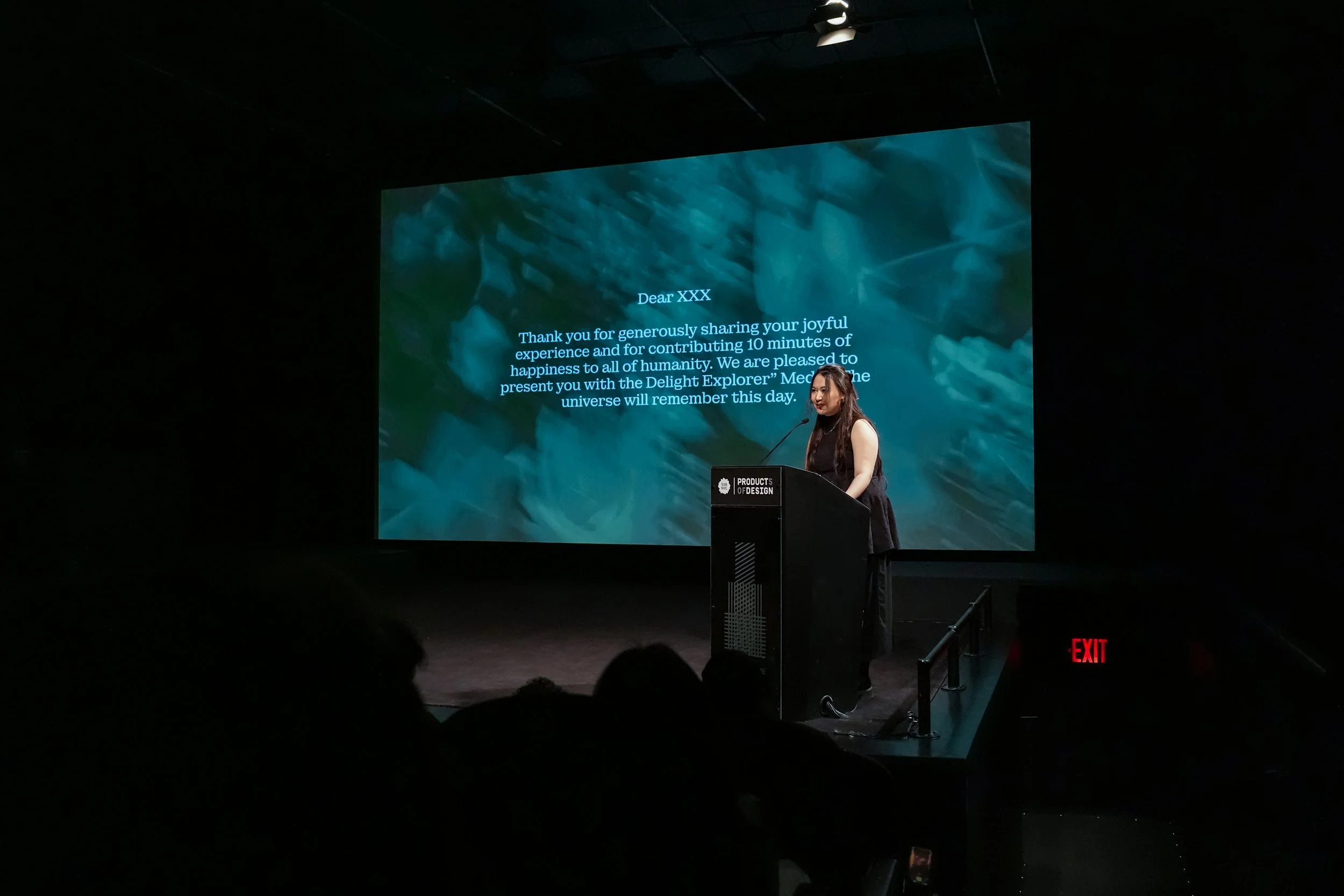
At the end of the experience, participants unexpectedly receive a playful award as part of a ceremony. Each person is thanked for contributing moments of joy and emotional memory back into the collective world. They receive a fictional "Delight Explorer Medal" alongside a message expressing gratitude for their contribution to humanity's shared emotional archive.
“The ceremony may appear humorous, but it serves an important emotional function,” Tong says. Celebration and gratitude strengthen memory. Public acknowledgment transforms fleeting emotional experiences into lasting psychological significance. The project investigates whether collective recognition can help rebuild people's relationship with attention, gratitude, and embodied presence.
Tong's thesis argues that phone addiction cannot be solved through shame, restriction, or individual willpower alone. The issue is deeply connected to emotional exhaustion, behavioral systems, family dynamics, and the loss of meaningful presence. Parents are not simply the cause of technoference; many are also its victims. Rather than designing against people, Tong designs with their vulnerabilities.
The projects in Tong’s thesis ask us: what if technology design focused not on maximizing attention, but on repairing relationships — relationships between parents and children, between habits and emotions, and between people and the present moment itself? Change begins with the people who are already aware of the problem. By supporting them first, change can slowly spread outward to those who are still lost inside the scroll.
To learn more about Tong’s work, take a look at her projects in more detail at: zhaotongzt.com.