
Souvik Paul On How Designers Make The World: From MFA Thesis to FDA Approval

An interview with Souvik Paul, School of Visual Arts MFA Products of Design Alumnus, and Founder of the Aurie System, which gained FDA approval in May, 2026.
Like so many successful designers, Souvik Paul began his journey in a completely different field. After earning his bachelor's degree in social studies at Harvard, Souvik worked on a trading floor at JPMorgan. During this time, he dreamed of becoming an industrial designer, and in that dream, the world was wide open. But two weeks after he arrived at Products of Design in 2014, his future sister-in-law was in a car accident and sustained a severe spinal cord injury. Souvik was devastated. The incident cast a shadow over his new beginning, but it also provided focus and a sense of personal stakes for the work ahead. The event ultimately became the basis for Souvik's 2016 thesis, Unbound, an exploration into how design can address the daily, unseen realities of living with disability. One of those commonly overlooked realities was the catheter.
A catheter is a small, flexible tube that can be inserted into the body to allow the passage or drainage of fluids. It is frequently used for emptying the bladder. Around 600,000 Americans rely on intermittent catheters six to eight times a day to urinate, and because companies can fail to cover enough catheters for their beneficiaries, individuals who rely on catheters can be forced to urinate less or reuse their catheters. Standard single-use catheters carry a 50% annual chance of a severe urinary tract infection, which is a leading cause of death for people with spinal cord injuries. Safer, no-touch alternatives, while effective, are covered by insurance for fewer than 5% of Medicare patients.
Souvik's answer, first built as a thesis prototype, was a sleek, handheld device that sterilized catheters using UV light. But like many design concepts, it had problems. Now, nearly a decade later, after tireless hours in incubators working through design and business sprints, Souvik’s concept has evolved into the Aurie System––a reusable, no-touch catheter system that delivers the infection-control features of premium catheters at the cost of the disposable standard of care.
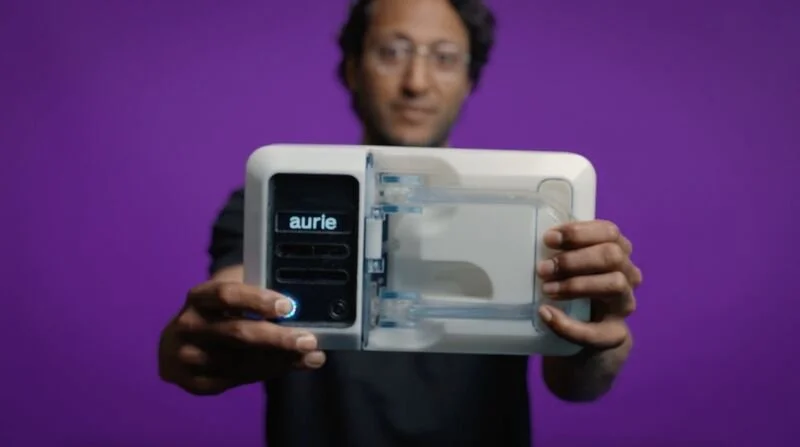
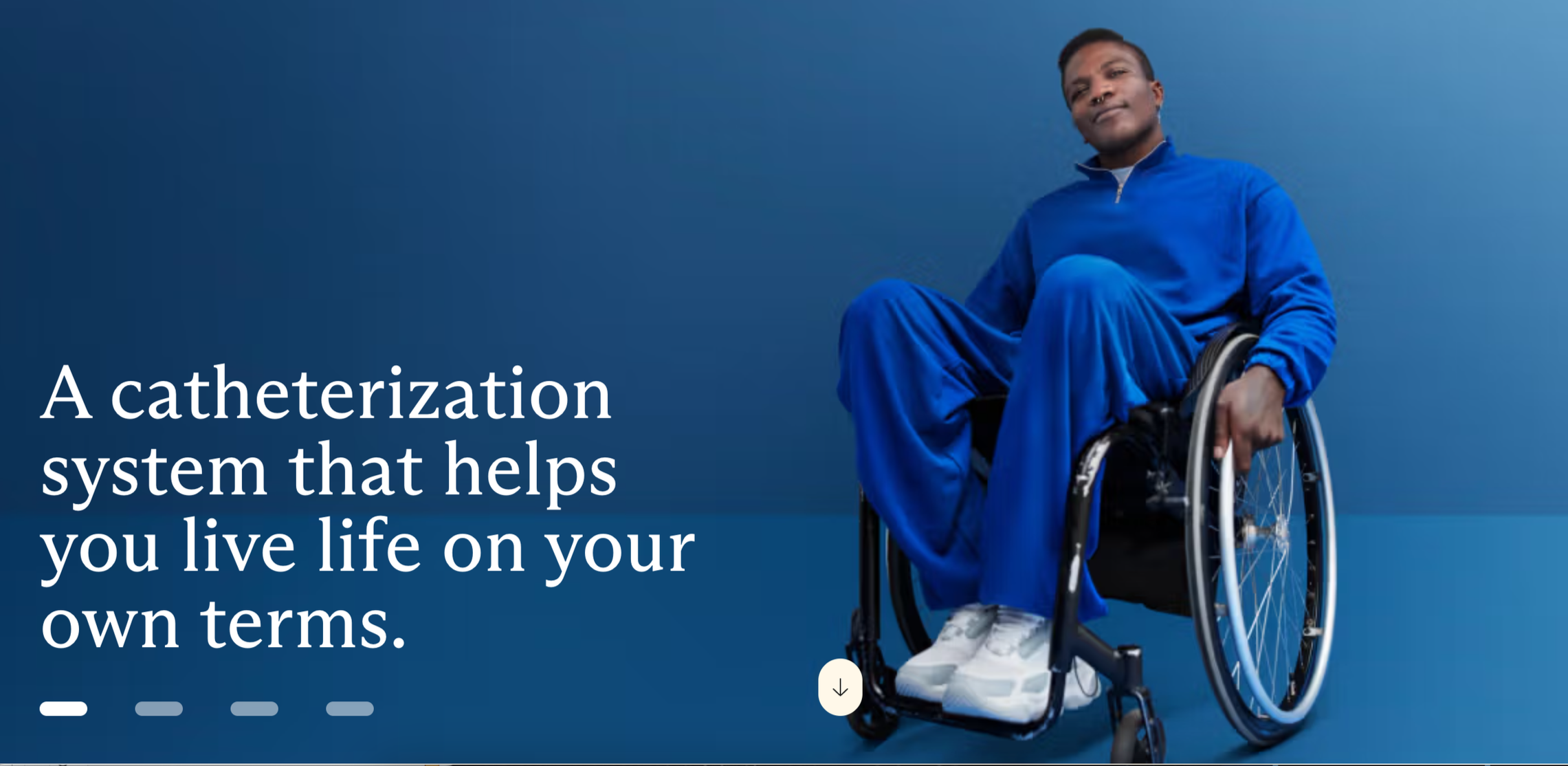
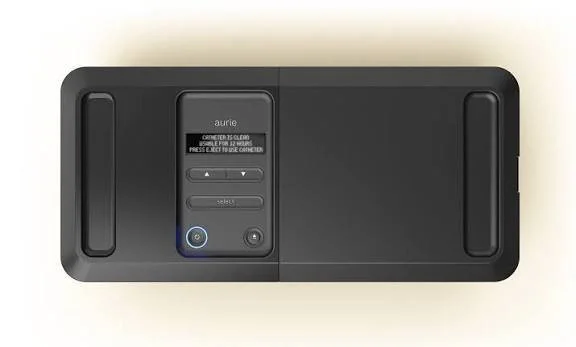
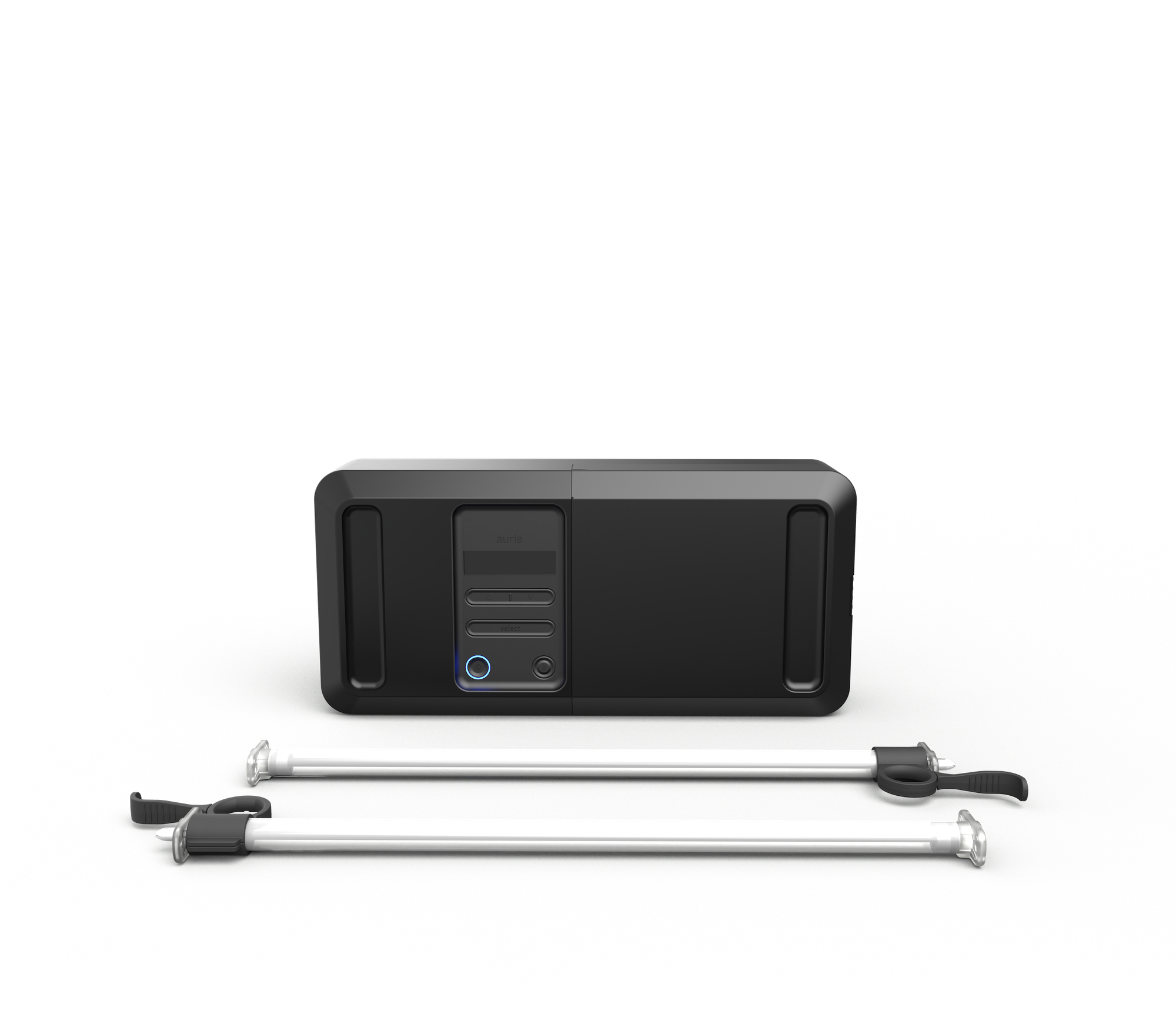
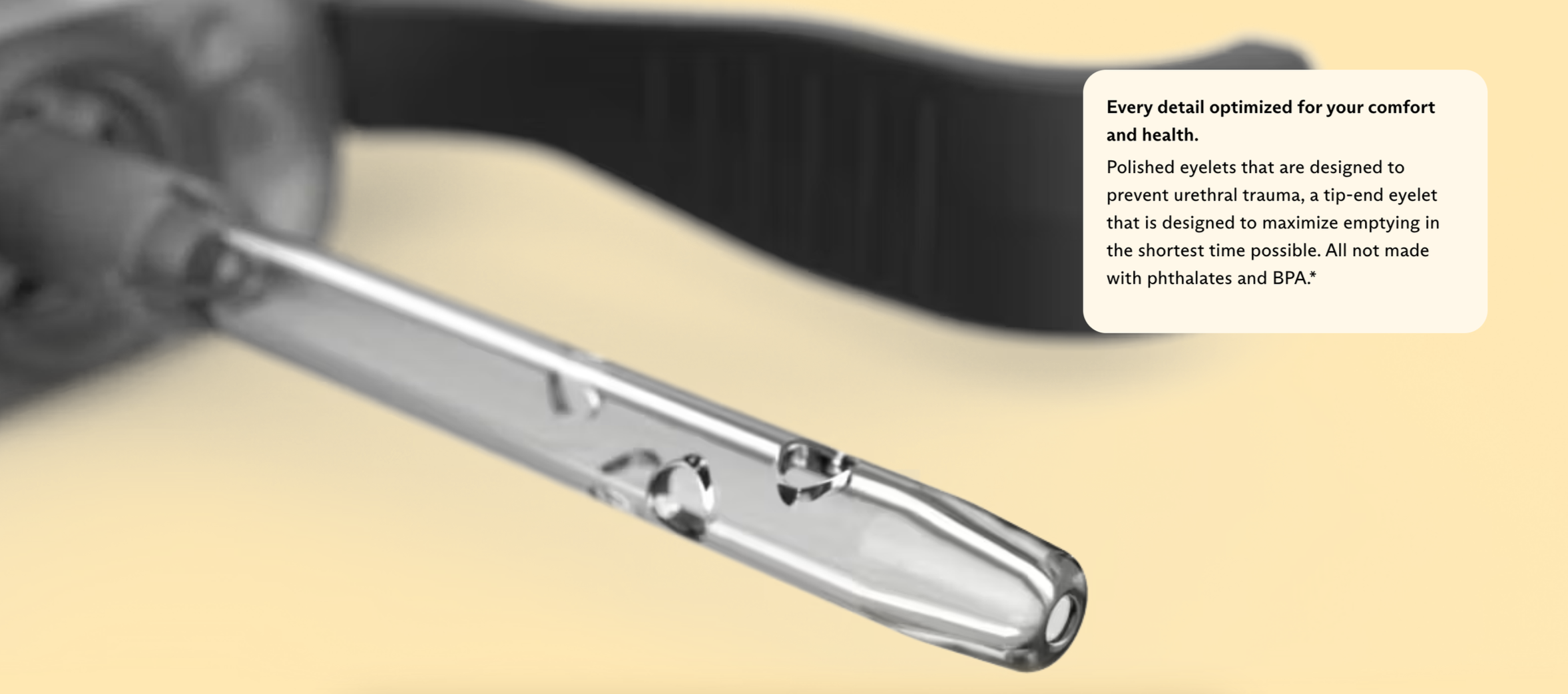
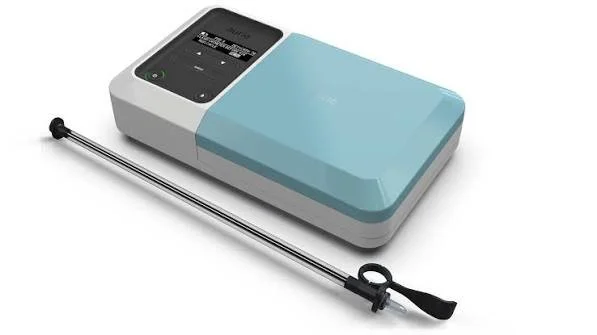
Above: The Aurie System received FDA De Novo Class II marketing authorization in May, 2026.
In May 2026, Aurie received FDA De Novo Class II marketing authorization, making it the first reusable intermittent catheter system ever cleared for market and establishing a new device classification. Aurie will launch at Veterans Health Administration spinal cord injury hospitals in early 2027.
Souvik is the first MFA Products of Design alumnus to achieve FDA approval for a product. He follows in the footsteps of designers who address large-scale issues in healthcare, including as School of Visual Arts alumna and faculty member Deborah Adler. Adler designed Target’s ClearRx and CVS Health’s ScriptPath systems that help millions of people take and manage their medications.
We sat down with Souvik to talk about what it took to get to this moment: design education, user research, near-misses, and nine years of iteration between a thesis presentation and a product authorized by the federal government.
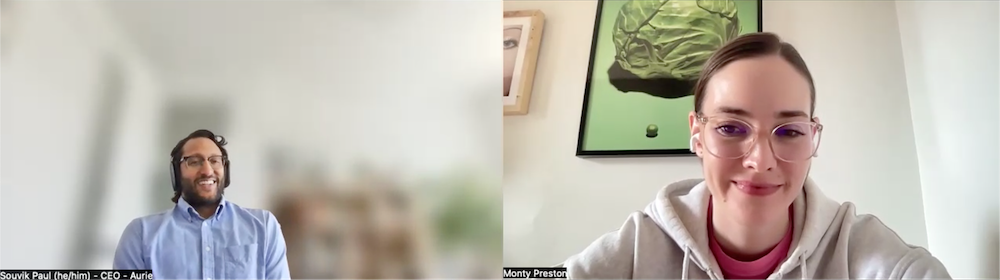
Above: Monty interviews Souvik over Zoom.
Monty: Souvik, all of us at Products of Design are thrilled about this milestone and very excited for you. It has been fascinating to dive back into past presentations to see how Aurie has developed from your thesis and how you've gotten to this point today. It is apparent that it has been a massive undertaking. Can you share some of the challenges of the FDA process?
Souvik: The FDA process is a gauntlet. And I'll be the first to say that regulation is really important—the FDA serves a very necessary function. There were times when we interacted with our review team and didn't necessarily agree with what they asked us to do to test the product. But it ultimately led us to build a better product that was better for patients and safer for them to use.
We are considered a Class II DeNovo. Class I is like a band-aid; Class III is something like an implantable device; and Class II is kind of in the middle. Generally speaking, for a Class II device, if you can point to another device that the FDA has already cleared, you can use it as a predicate and base all of your testing on what the predicate device did. You're showing that you're equivalent to the product that the FDA has already approved. There's a category between a Class II and a Class III called a Class II De Novo—it's something the FDA has never cleared before, but is logically not as risky as something like an implant. We are a Class II De Novo. The FDA has never approved a reusable catheter system before.
When we submitted our full application, the Agency reviewed it for two months and came back with a bunch of questions. We had a very collaborative dialogue: “Hey, you asked for this, here's why that would be really difficult to do, can we do this other thing?” And the Agency was really willing to work with us on it.
“We are a Class II De Novo. The FDA has never approved a reusable catheter system before. Other people who want to enter the space need to work with us rather than work against us.”
Monty: How does it feel to be a new benchmark? Any future reusable catheter systems will be measured against yours.
Souvik: It's definitely exciting. The way we pitch the company to potential investors has changed. Now we set the standard, and we have intellectual property that covers a lot of what the FDA has made a requirement for future systems. And that's really cool. Initially, we had tried to tell the FDA, “Here's another product you cleared that's similar to ours, can we string along predicate devices to get to a reusable system?” The agency said, “No, you're a Class II De Novo.” And now that we're on the other side of it, there's a real advantage to us being the first, because our IP is reflected in the requirements for the entire category. That gives us a little time to continue improving the product based on user feedback and to start commercializing it. And it makes it so that other people who want to enter the space probably need to work with us rather than work against us.
Monty: In your 2023 guest lecture at Products of Design, you included a graphic illustrating a spectrum with 'asking questions = art' at one end and 'solving problems = engineering' at the other. If you hadn't been at art school in a program that had such a big focus on asking questions and talking to users—if you had gone to Stanford or MIT, for instance—do you think you'd be in the same position today?
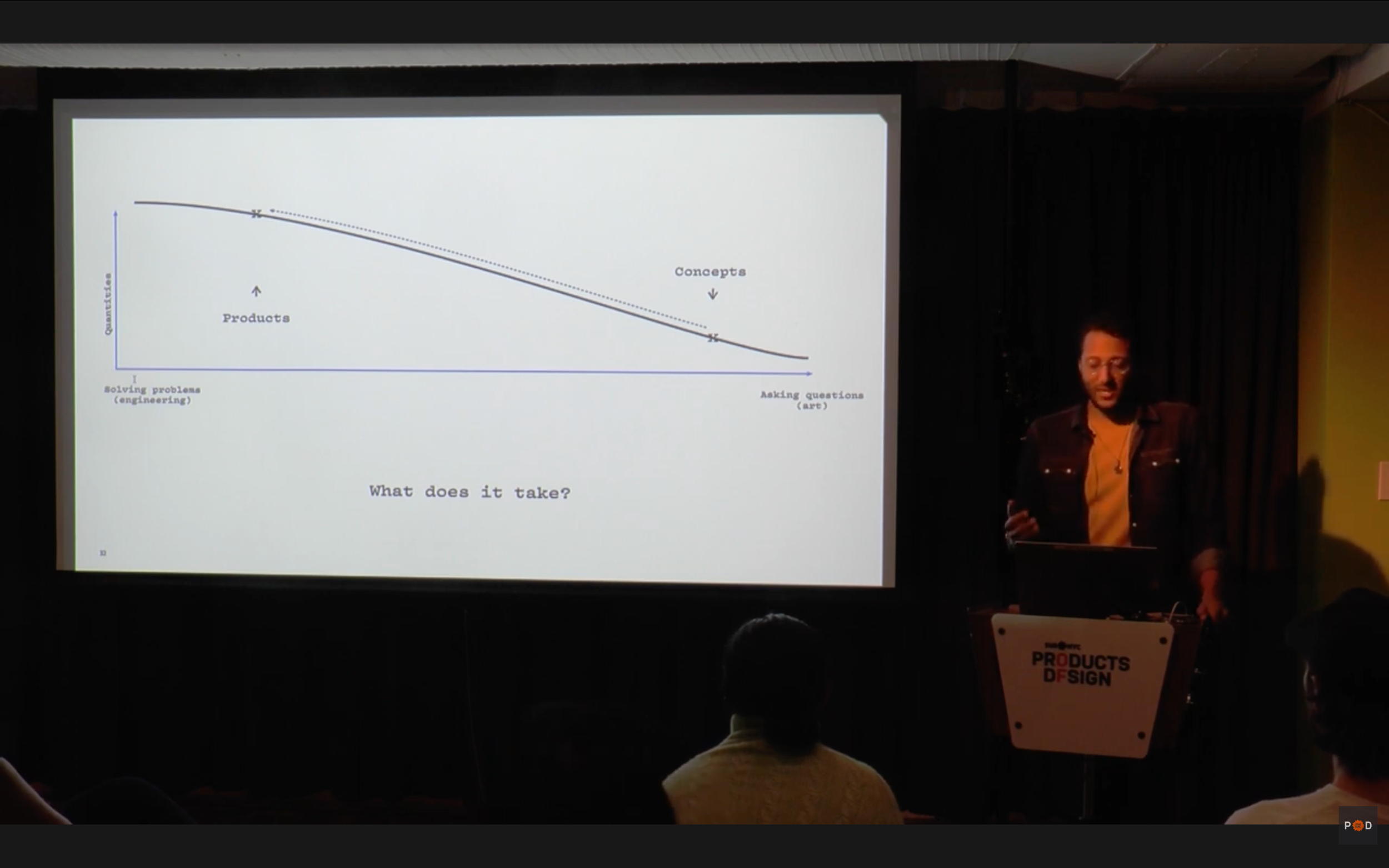
Above: Souvik’s guest lecture at Products of Design.
Souvik: Probably not. I went to Harvard for undergrad, which meant that I've always been surrounded by really, really ambitious people. And I don't think I shared those ambitions… not deeply. I had friends, colleagues, and peers who wanted to start a business, wanted to be their own boss, and do their own thing. And I just never felt that way. Without Products of Design and learning about user-centered design, human-centered design research, and ultimately what happened to my family, I wouldn't have gone down this road. The whole thing really started with identifying a need and figuring out how I could use my training to address it. It was Products of Design that delivered training in the specific framework of building technologies to help solve problems.
“The whole thing really started with identifying a need and figuring out how I could use my training to address it. It was Products of Design that delivered training in the specific framework of building technologies to help solve problems.”
In the context of something like spinal cord injury, the first thing that people think about is walking. If I had gone to MIT or a similar institution, I might have been more interested in exoskeleton design. But when you look at surveys done of people living with quadriplegia and paraplegia, walking is not the first thing that they talk about. For people with quadriplegia, it's usually arm function, and then beyond that, it's bladder and bowel function. Being in an academic setting that emphasized discovery directly from users, of what their priorities were, paralleled the clinical literature in allowing me to understand and be receptive to people saying, “Hey, I actually need development in this area of my life that's non-obvious to the outsider.” And that’s a unique framing learned in design school that I would have missed out on in business school or a traditional engineering degree.
“When you look at surveys done of people living with quadriplegia and paraplegia, walking is not the first thing that they talk about—it’s usually arm function, and beyond that, it’s bladder and bowel function.”
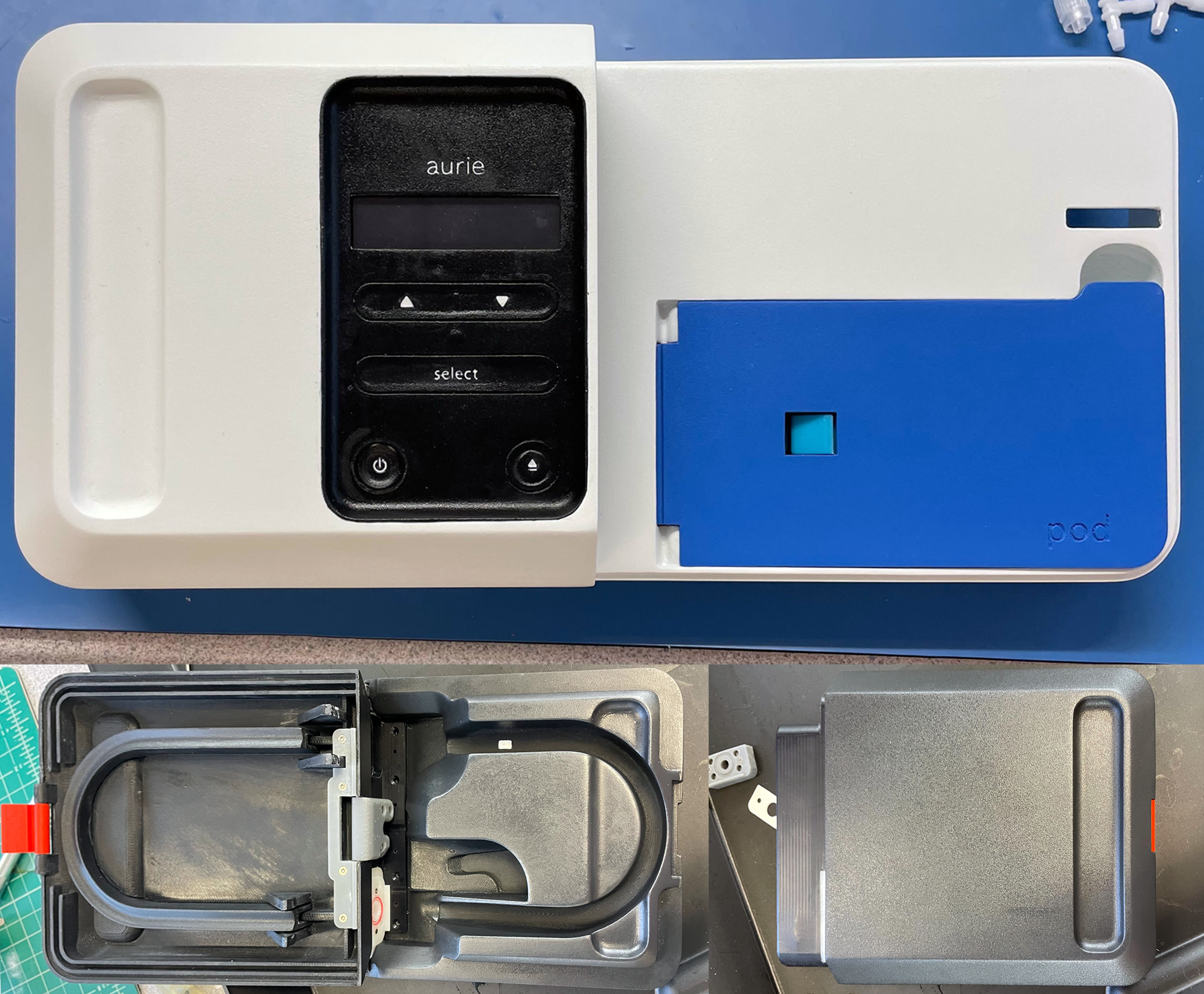
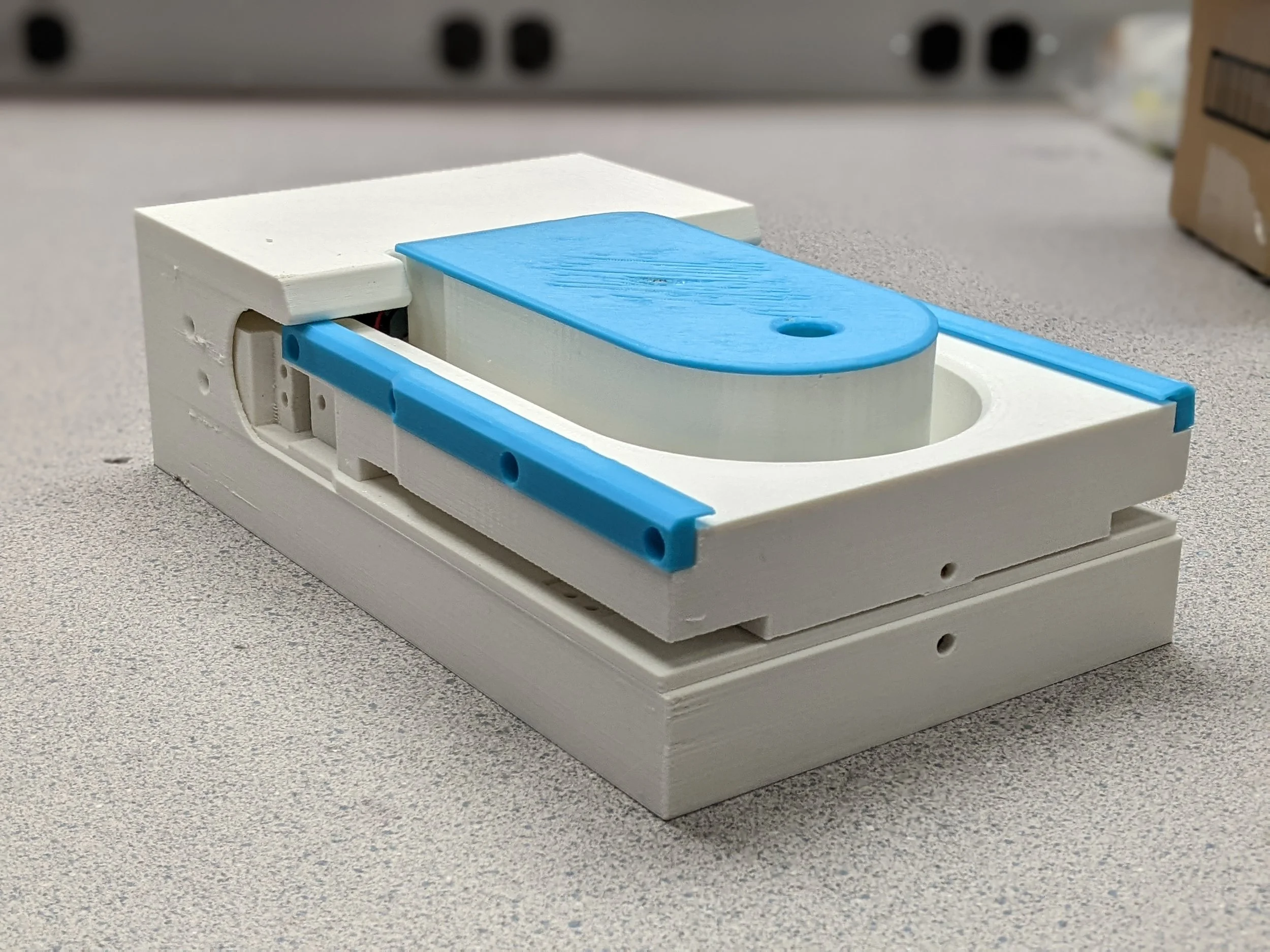
Above: Aurie System prototype development.
Monty: Who else is out there working in this space? Do you have competitors approaching this from a more tech-centric perspective? Do you feel you have a competitive edge in being user-first?
Souvik: For my thesis, in our 3D Product Design III class, I had already identified urinary catheterization as an area I wanted to focus on, and I speculated about an implant that users could control with Bluetooth to empty their bladder. But in my final presentation, I concluded that it would take five to ten years to develop something like this, and I wanted to design for the here and now. So I transitioned my thesis to focus on a catheter sterilizer. That was ten years ago!
There have been so many delays along the way. I think the time we've spent troubleshooting the product and trying to figure out pretty thorny issues amounts to probably a year and a half, maybe two years. If I could do it all over again with the benefit of hindsight and everything I know now, I think we could have gotten regulatory clearance two years earlier.
As we've been going through this process, I have been tracking what else is out there, who's developing what, and their time-to-market. It turns out that the idea of a Bluetooth-enabled bladder controller is something companies are working on today. I've seen their pitch presentations and have a reasonable sense of where the technology is. They're probably five to seven years away from market. It adds an element of pressure, making it feel like we have to really get going and get to market to make this impact. I've raised money from friends, from family, from professional investors, and I want to be a good steward of their capital and do everything I can to get to market with a product that is safe, that helps improve users' health and quality of life, and is also worth the investment of money and time that people have put into me.
Monty: Do you think your competitors aren't working toward reusable catheters because they're too technology-focused? And perhaps missing the gaps you've identified in terms of cost and ease of use?
Souvik: There's a tendency in the venture landscape to discount problems as being too small or too specific. For a lot of people interested in spinal cord injury research or medical device innovation, the thinking is, wouldn't it be better if we got rid of catheters altogether? My perspective—probably because of my connection to my sister-in-law—has always been, if you put all of your eggs in the ‘we're going to cure this and make it totally go away’ basket, then there will be people using catheters for the next 20 years while you're off working on that solution. Christopher Reeve thought there was going to be a cure for paralysis in the early 2000s. It's already been 20 years since then. We are closer, and it's really important that we focus on those things. But if that's all we focus on, we end up ignoring so many needs and issues that exist today.
I see a combination of ego and a framing of the market through a purely financial lens that leads to the perspective, “If I'm going to spend a hundred million dollars developing something, I want to be able to sell that business for a billion dollars.” Making the next-generation catheter may not be a big enough problem. That kind of thing comes up a lot.
“If you put all of your eggs in the ‘we’re going to cure this’ basket, there will be people using catheters for the next 20 years while you’re off working on that solution. We end up ignoring so many needs and issues that exist today.”
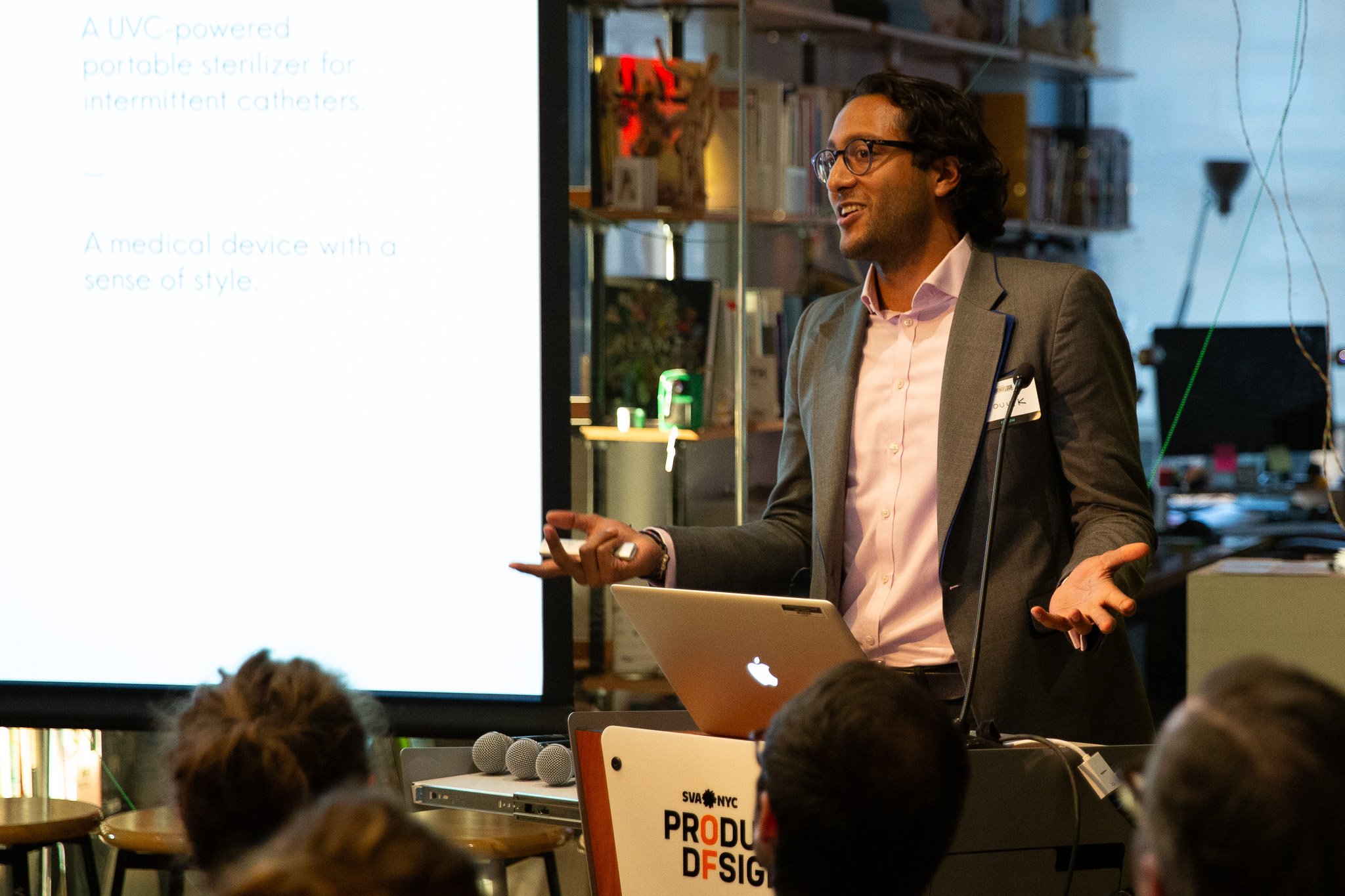
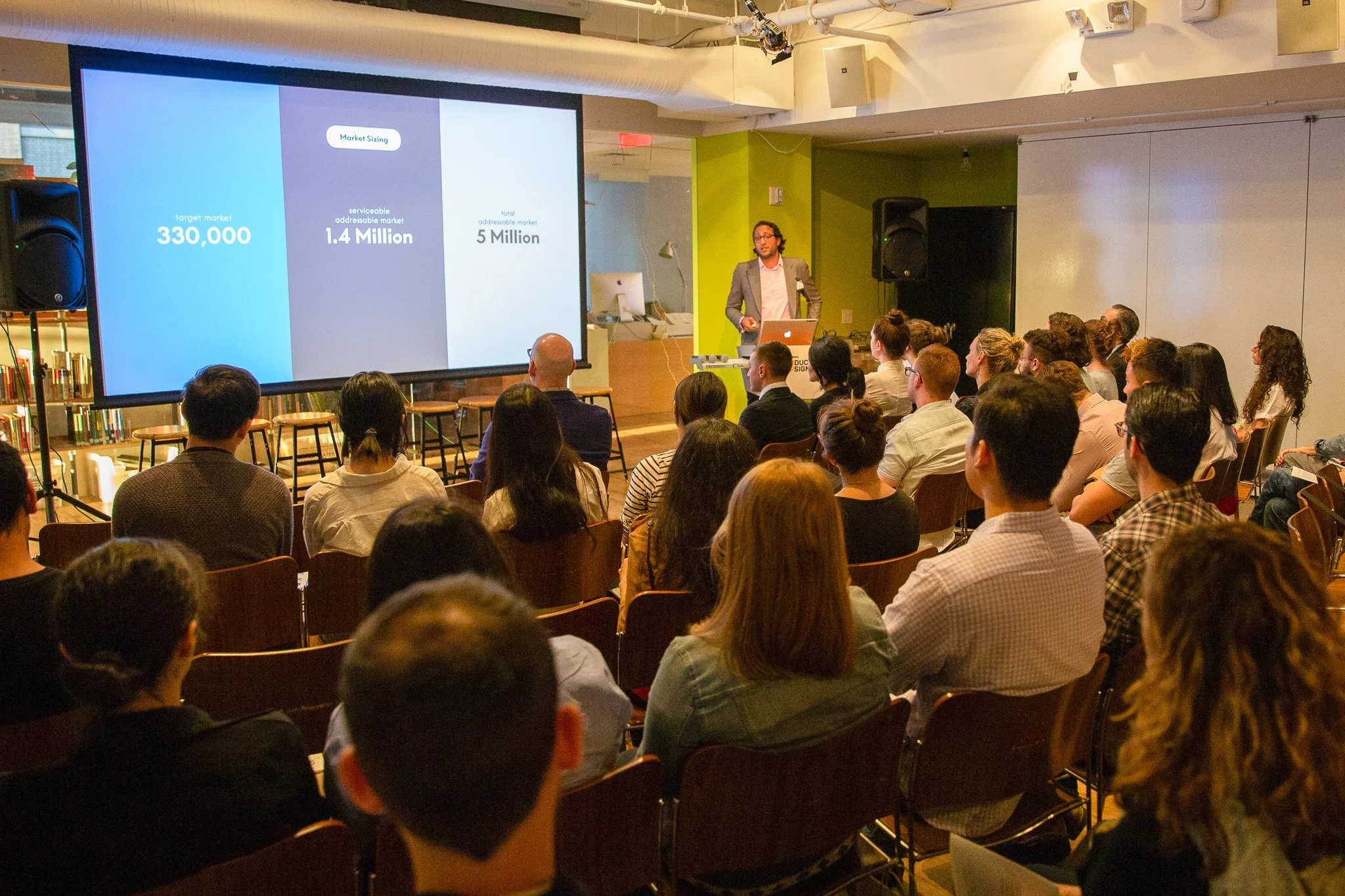
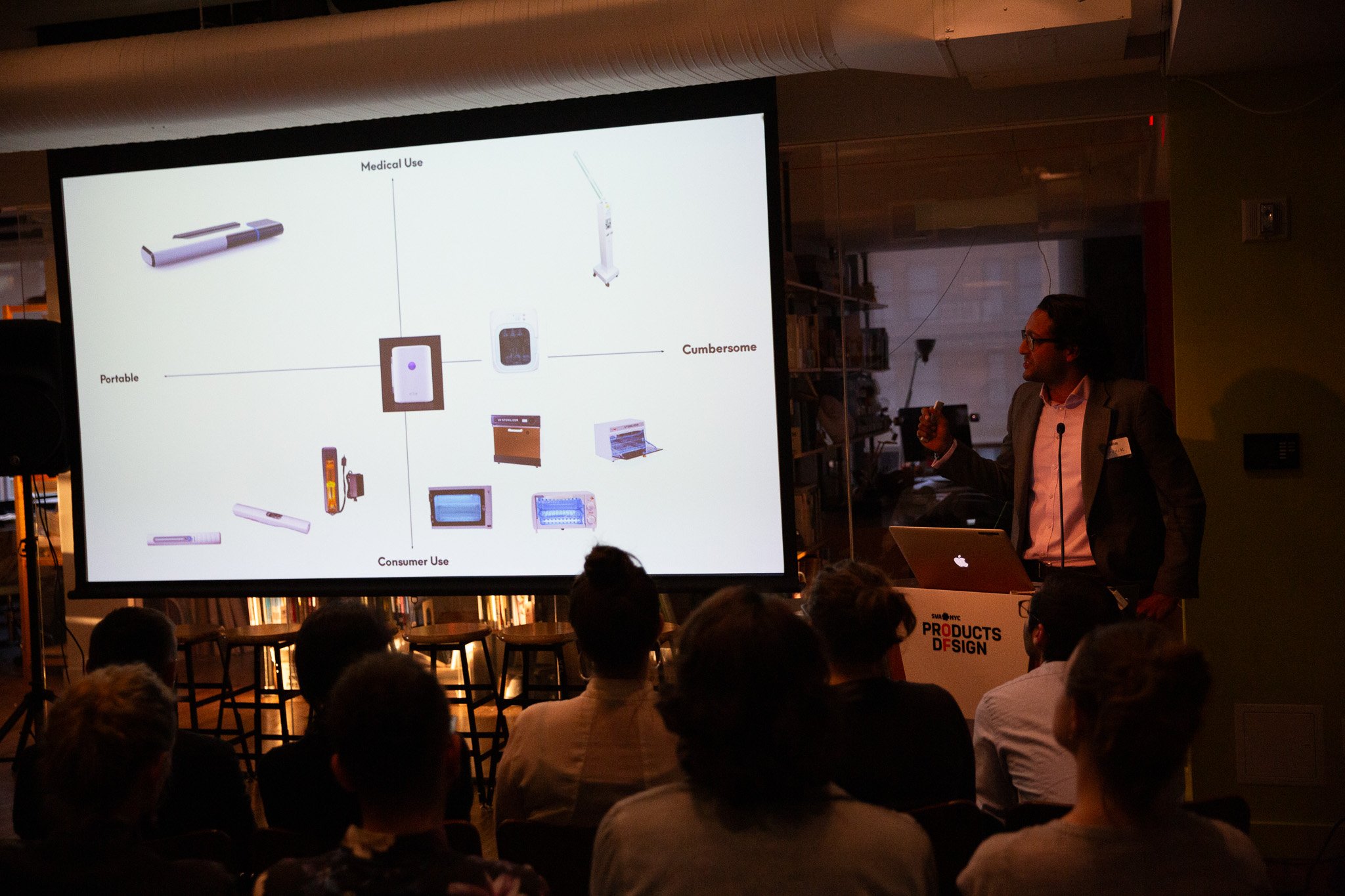
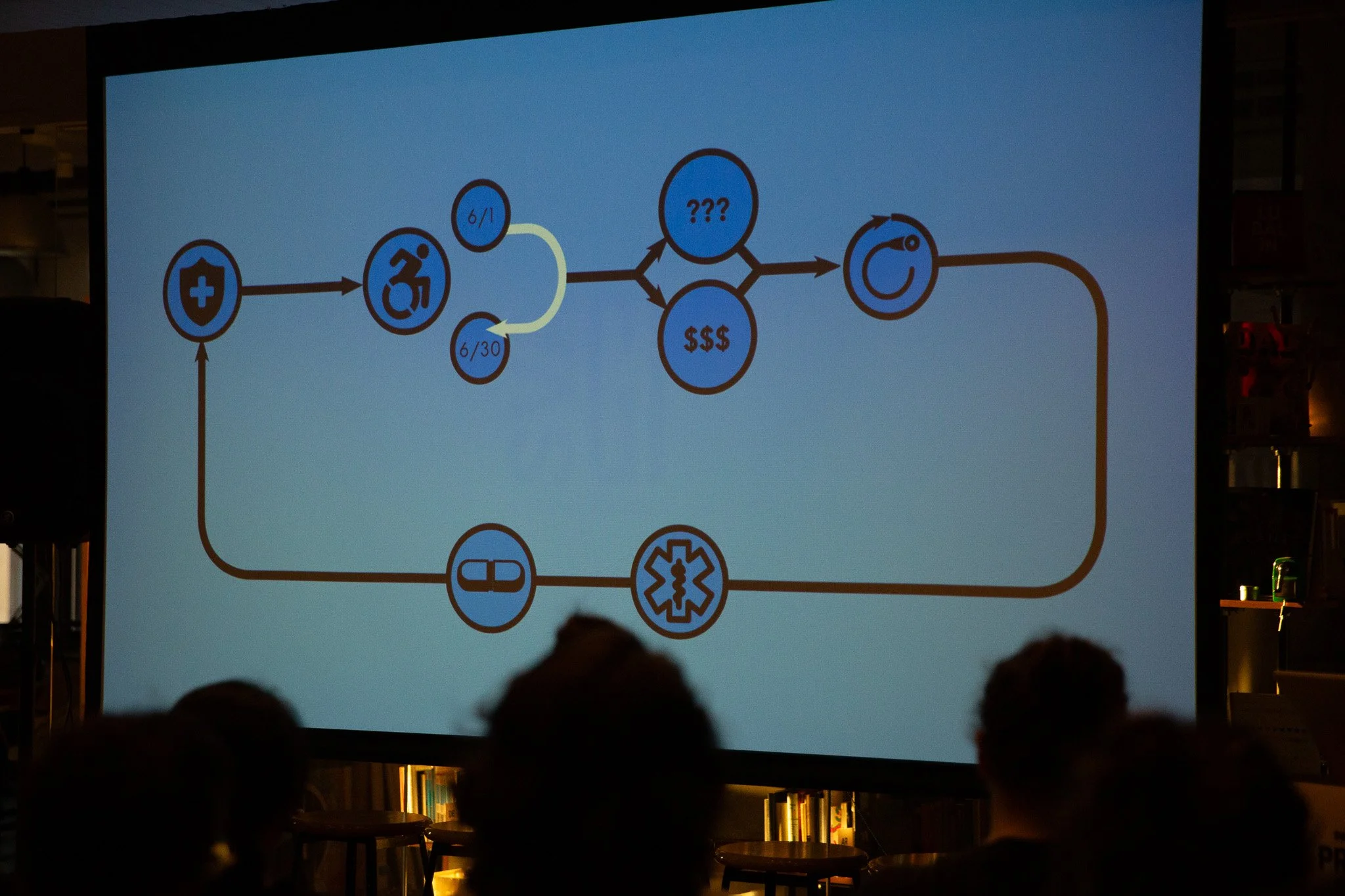
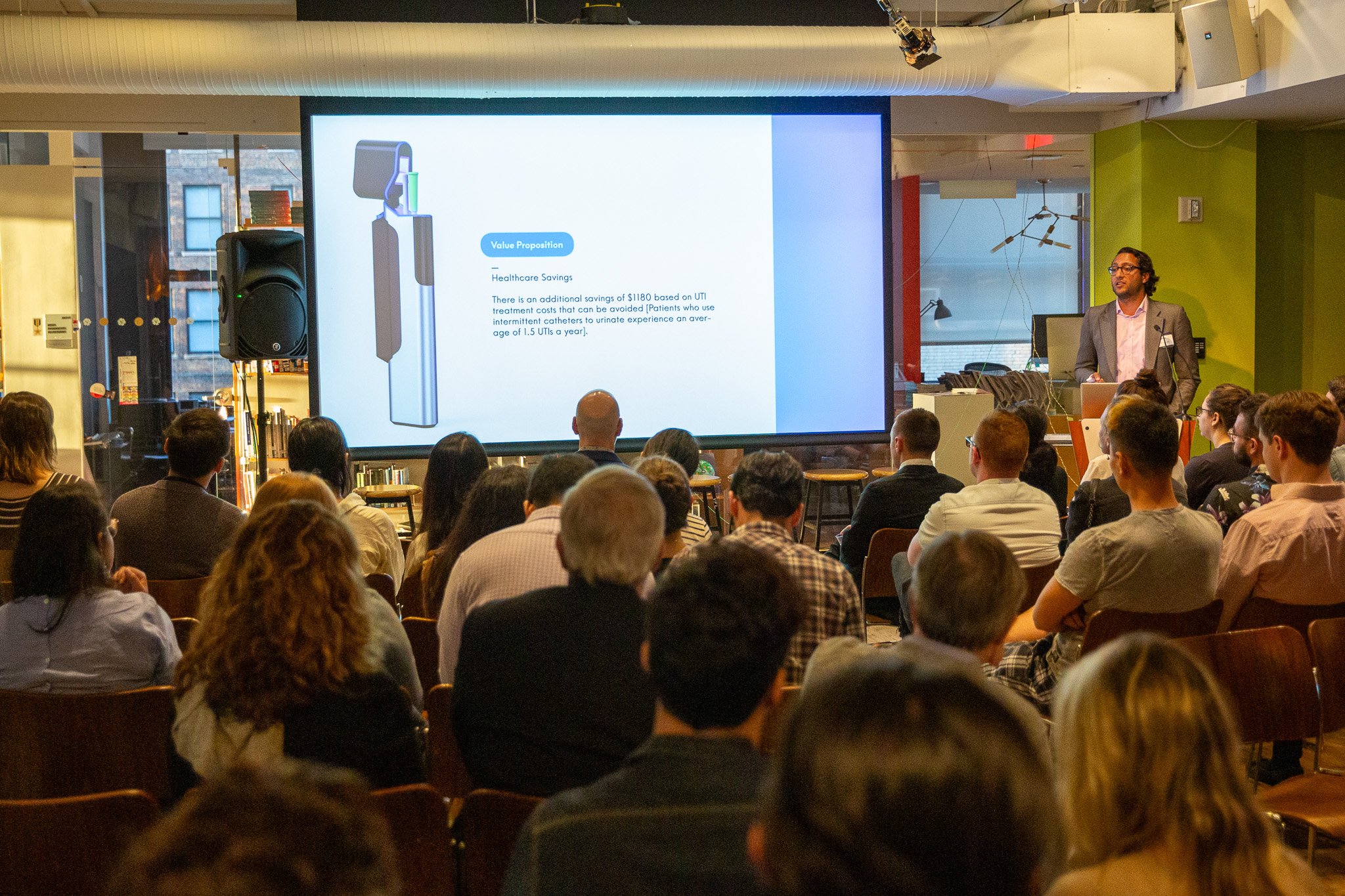
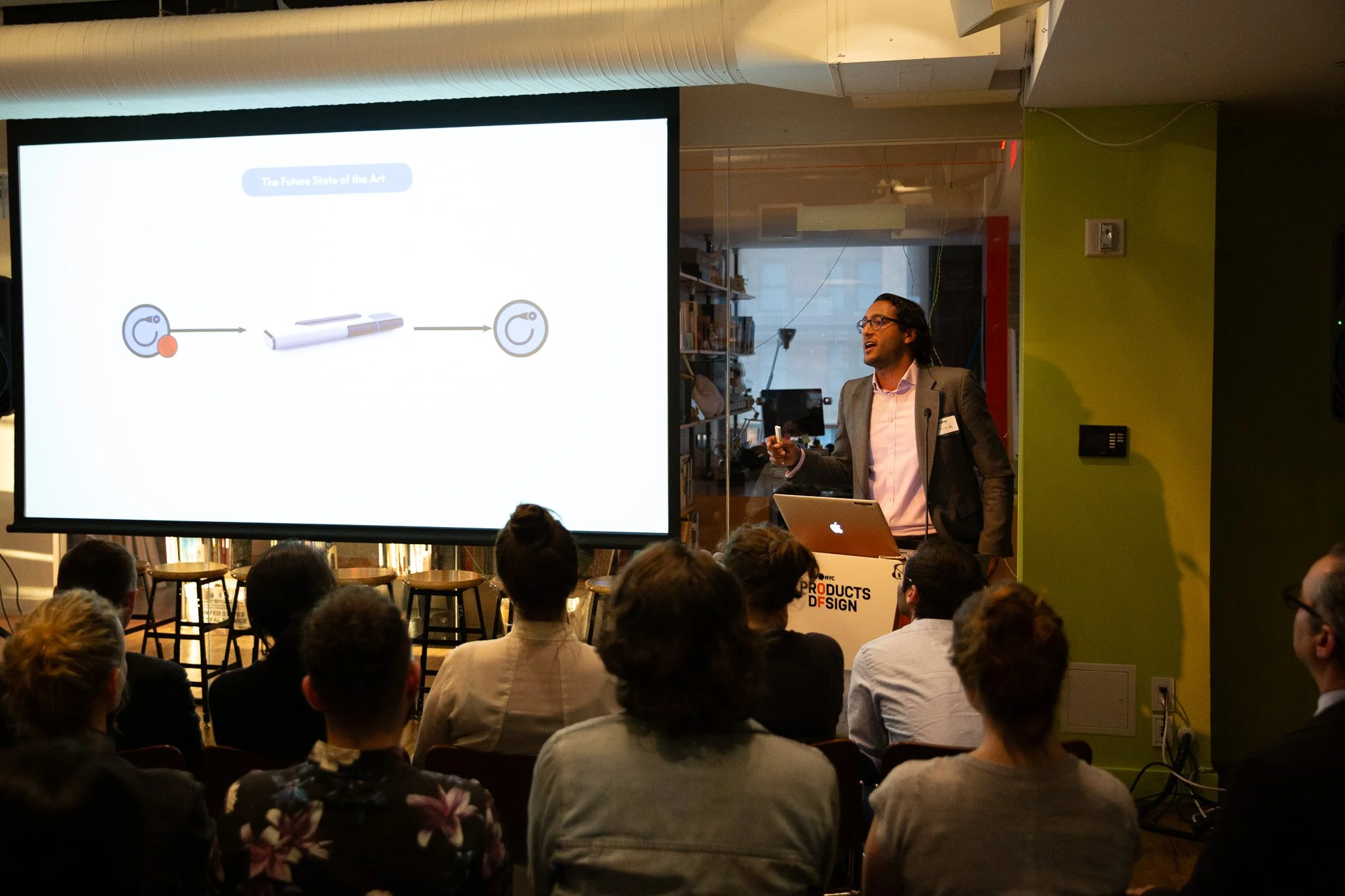
Above: Souvik presenting at MFA Products of Design for the SVA GroundFloor Incubator pitch night.
Monty: Out of school, you went and worked at Johnson & Johnson as a Healthcare Solutions Lead. Did you know after graduating that you wanted to bring your thesis into the world? And would you recommend that new grads work in their field of interest first, or dive straight into entrepreneurship?
Souvik: When I got to grad school, before the accident, I wanted to really focus my time on creating products that could be real. Not concepts that hand-wave away reality or physics by saying that the technology isn't there yet, but concepts that could be possible in ten years. I set a challenge for myself to at least do the preliminary research and be able to say that my designs would be possible on a theoretical level, based on the technology that we have at our disposal now.
“Then the accident happened, and I thought, “If I believe in this underlying idea that design can help change people’s lives, then it should be applicable here.”
And then the accident happened, and I thought, "If I believe in this underlying idea that design can help change people's lives, then it should be applicable here." Then the challenge became an even bigger one: I wanted everything I did to have the immediacy of being applicable, something that we could actually build. In general, I think design schools place a lot of emphasis on how to get from identifying user needs to creating a concept. But there isn't always as much emphasis on how you go about actually creating that product. That was a core curiosity I kept with me beyond PoD.
It wasn't a tactical or strategic decision to go to Johnson & Johnson. It just so happened that my thesis was in healthcare, and I really wanted to have a job after graduating. From the job fair, I started interviewing at Johnson & Johnson. My actual job description was serving as a program and project manager for design work with other parts of the J&J business. Having a design background was really helpful because it immediately gave me the fluency to speak with designers, but it also enabled me to contribute directly to projects.
Being at J&J was happenstance, and carving out my thesis from the IP clause in my contract was, too. But while I was at J&J, I was able to go out to different parts of the business and see what I could learn about sterilization, about entrepreneurship, intrapreneurship, all of that.
At the end of the day, what really convinced me to leave and try it was the GroundFloor Incubator. I can say that with 100% certainty that if it weren't for Sinclair's support, the education around how to think about a business, the program of two-week sprints, and having a place to go after work to develop this, I would not have gotten anywhere close to getting Aurie off the ground. I just wouldn't have given it the attention it needed. And I wouldn't have known where to start, even if I'd had the ambition.
Would I recommend working in your industry? Absolutely. Especially coming from design school, there's a credibility gap. Brian Chesky is probably the big example of someone from design school creating a multi-billion-dollar business. And I'm sure there are more, but not that many—that's kind of the one story I know of. Investors are pattern matchers. Having a non-traditional background in building companies is a challenge when it comes to raising capital. Being able to say, "Hey, I spent some time at Johnson & Johnson, these were my responsibilities, I learned how the industry works and how medical devices get made and approved," becomes a really important part of the storytelling.
Also, grad school is expensive! Being a founder means not paying yourself at all for two years, and then paying yourself below market salary for several years after that. I would never have been able to do this without the support of my parents, who literally paid my living expenses for two years while I was trying to build this. I am incredibly privileged to have that kind of support in my life to do this. Not many people have that. For anyone coming straight out of grad school, I recommend building a financial foundation so you can afford to take risks.
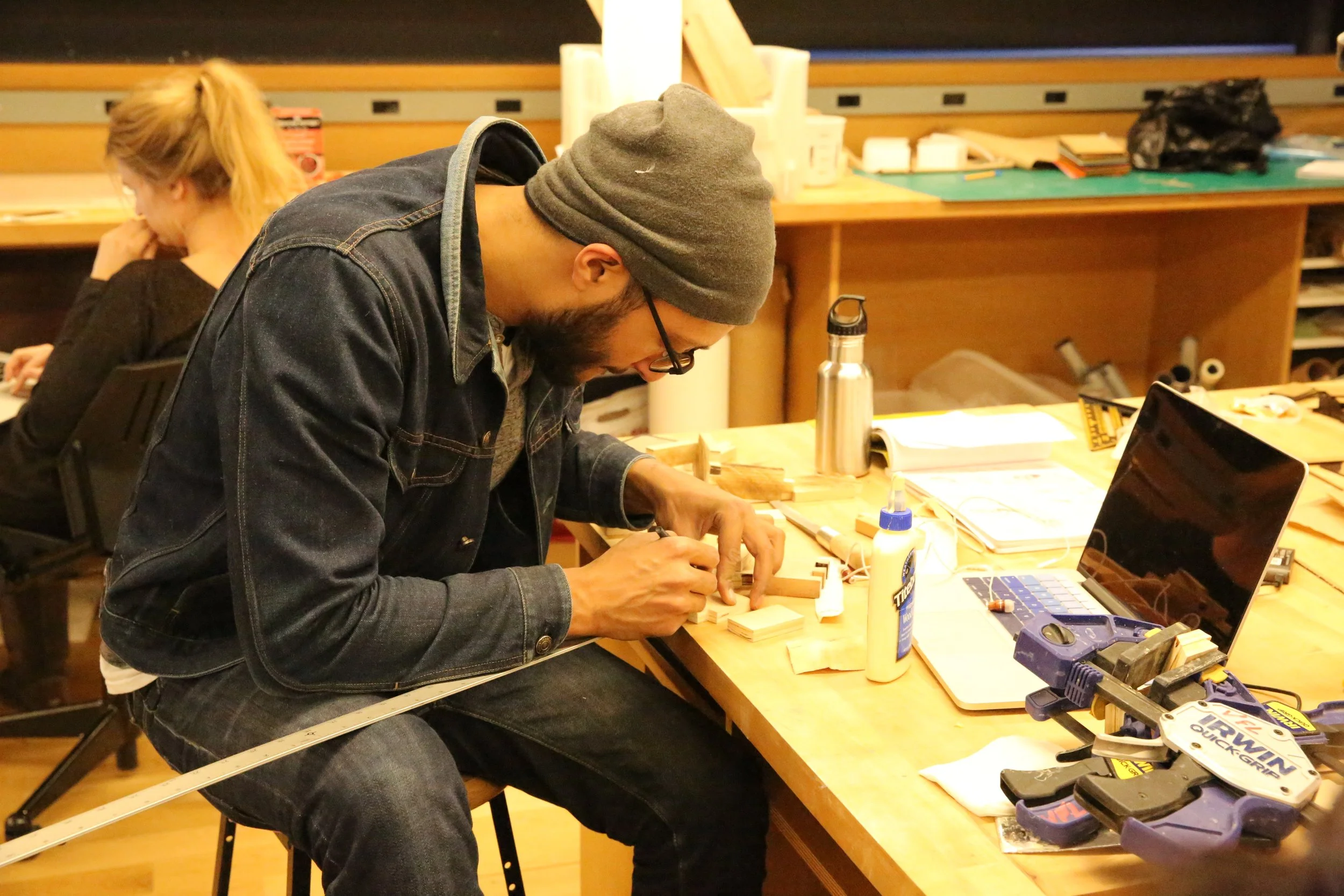
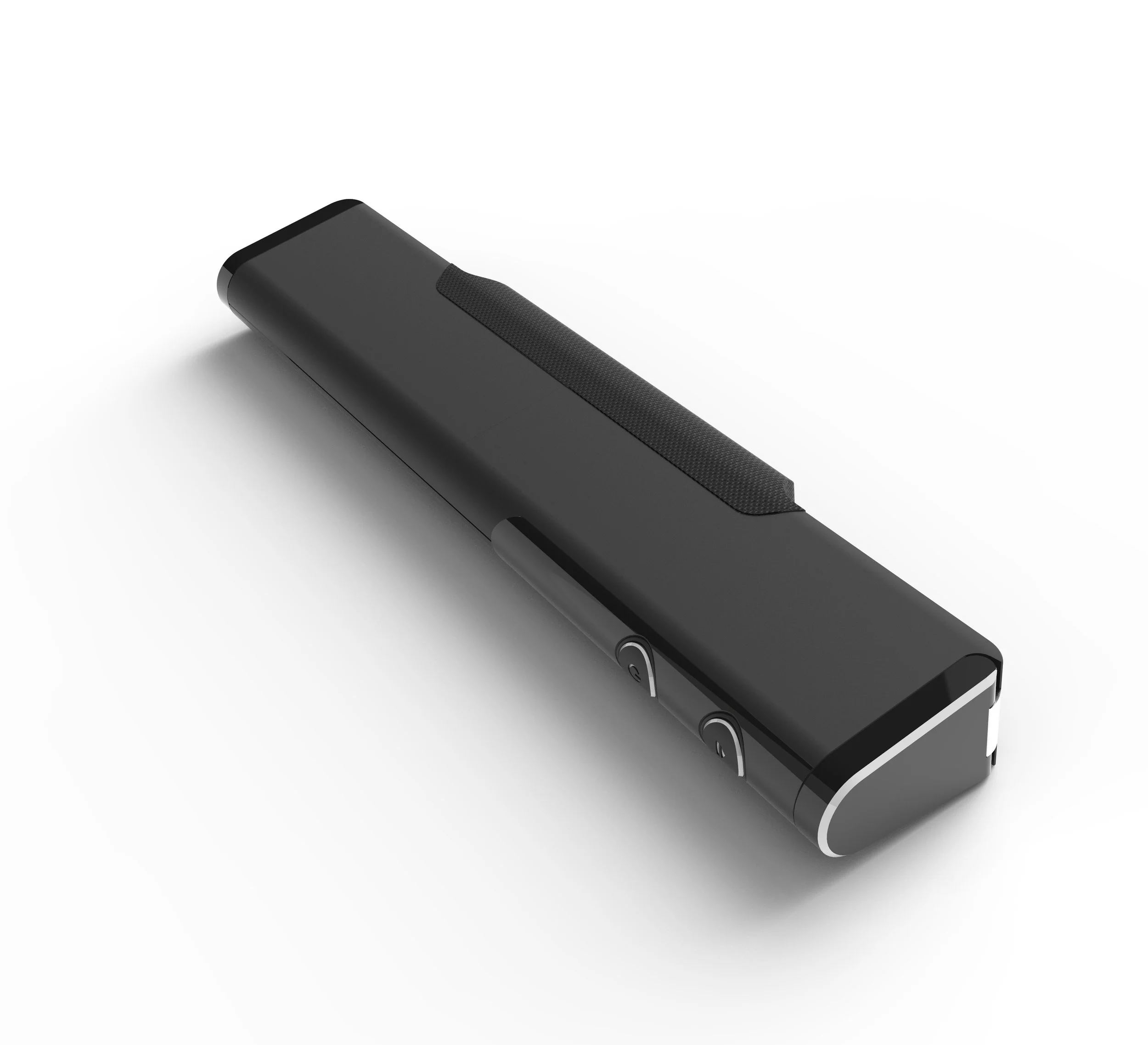
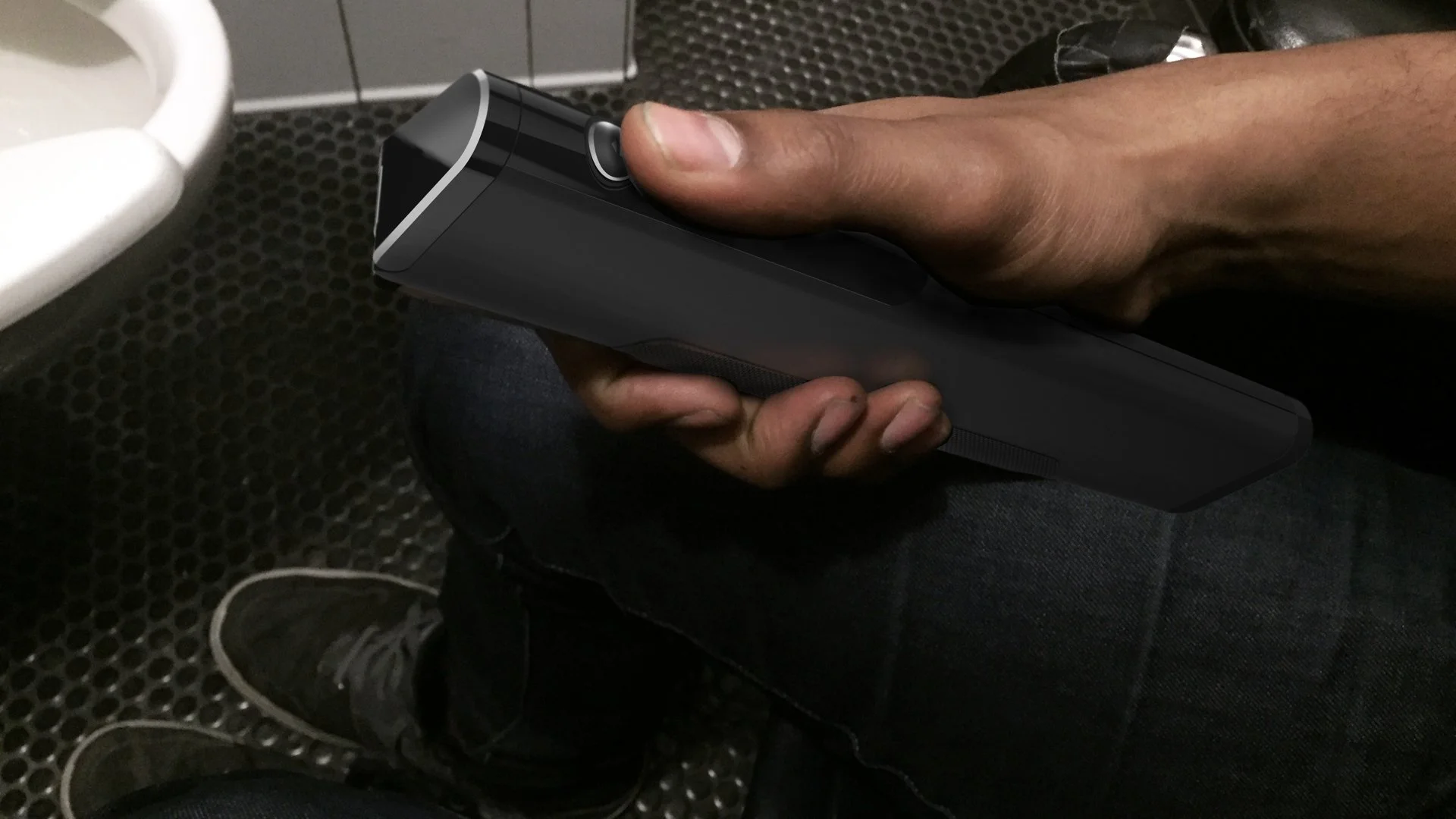
Souvik prototyping CleanCath, an early catheter sterilizer, at School of Visual Art’s Visible Futures Lab,
Monty: You touched on the credibility gap around design school. People are increasingly skeptical of higher education and what a graduate design degree is worth. Looking back, was Products of Design worth it? What would you say to somebody weighing that investment?
Souvik: The last ten years would have unfolded very differently had I not gone to design school. And certainly there have been times—especially when we're struggling to raise funds for the company, or we're dealing with a ton of questions from the FDA, and it didn’t feel like we were ever going to get clearance—where I’ve been left wondering, was this worth it? Did I do the right things? My friends are all doctors and lawyers living very different lives. But I made the choice I made, and in the end, it's been a really good choice for me, personally. I empathize with people weighing the pros and cons of pursuing higher education in design. It's a really difficult question to answer, especially now when everyone's talking about AI. A lot of the nominal reasons to go to design school are maybe challenged by the idea that a computer algorithm or model could generate work that's just as good. In a lot of ways, I feel like Products of Design was structured in a way that predicted this.
“What Products of Design does really well in retrospect is teach people to engage with users, identify problems to solve, and determine how to build solutions couched in research, user needs, and validation along the way. It taught a process. And that’s incredibly valuable now because the barriers to creation are lower than they have ever been.”
I went to PoD to become an industrial designer, but I didn't really feel like one when I graduated. The program has a bigger focus on industrial design and entrepreneurship today, but when I was there, we didn’t spend that much time on CAD or sketching. When Allan would ask me to talk to prospective students, I would say, “You're not necessarily going to be an industrial designer when you come out of this program—you're going to get a different set of skills.” Looking back, building up this other skill set was pretty brilliant on Allan's part, given the influx of design tools that now exist and are continuing to come out, like Claude Design and Lovable. Is algorithmic design truly creative? You could argue no. But it does mean there are more people out there who don't think they need to hire a designer.
What Products of Design does really well in retrospect is teach people to engage with users, identify problems to solve, and determine how to build solutions couched in research, user needs, and validation along the way. It taught a process. And that’s incredibly valuable now because the barriers to creation are lower than they have ever been. On the one hand, it's amazing to democratize the ability to put something into the world, have it exist, get feedback, and make an impact. On the other hand, it calls for more discernment on what should exist. And that's what higher education, and design in particular, are good at.
In the conversations I've seen around AI and design, there's often this fallback to the concept of taste. If everyone can create designs, the thing that differentiates experienced designers from inexperienced ones, and where there is strategic value, is within this concept of taste. There are definitely multiple ways to get there, but design school is one way to learn methods that help you start developing taste. That's my perspective anyway.
Monty: Is there anything I didn't ask you about that you want to emphasize?
Souvik: When we got the clearance, Sinclair and Allan were the first people I emailed outside of the company and my family to say, "Hey, we got clearance!" Without Products of Design and especially without the GroundFloor Incubator, I would not have gotten to this point. Because of the GroundFloor Incubator, I've been able to stick with it and accomplish this thing. I really want to underscore that.
Monty: Thank you so much, Souvik. Congratulations again, this is really exciting.
Souvik: Thank you!
Visit Aurie.com to learn more about the Aurie System.
