
Between Presence and Production: Boundary Collapse in Remote Work
Eva Mo’s thesis, Between Presence and Production: Boundary Collapse in Remote Work, examines how remote labor reshapes domestic space and everyday cognition, arguing that many of the stresses associated with working from home stem less from productivity itself than from the disappearance of clear environmental boundaries.
“I’m not fully working, but I’m also not fully off.”
— Remote worker, interview participant
This sense of existing in a continuous in-between state became the starting point for Eva’s research. Drawing from her own experience navigating the blurred conditions of remote work, she investigates how homes increasingly function as spaces without clear divisions between labor, rest, and personal life. Through interviews, workshops, and speculative design interventions, the project explores what happens when the spatial signals that once structured the workday—commutes, offices, doors, and transitional routines—are removed.
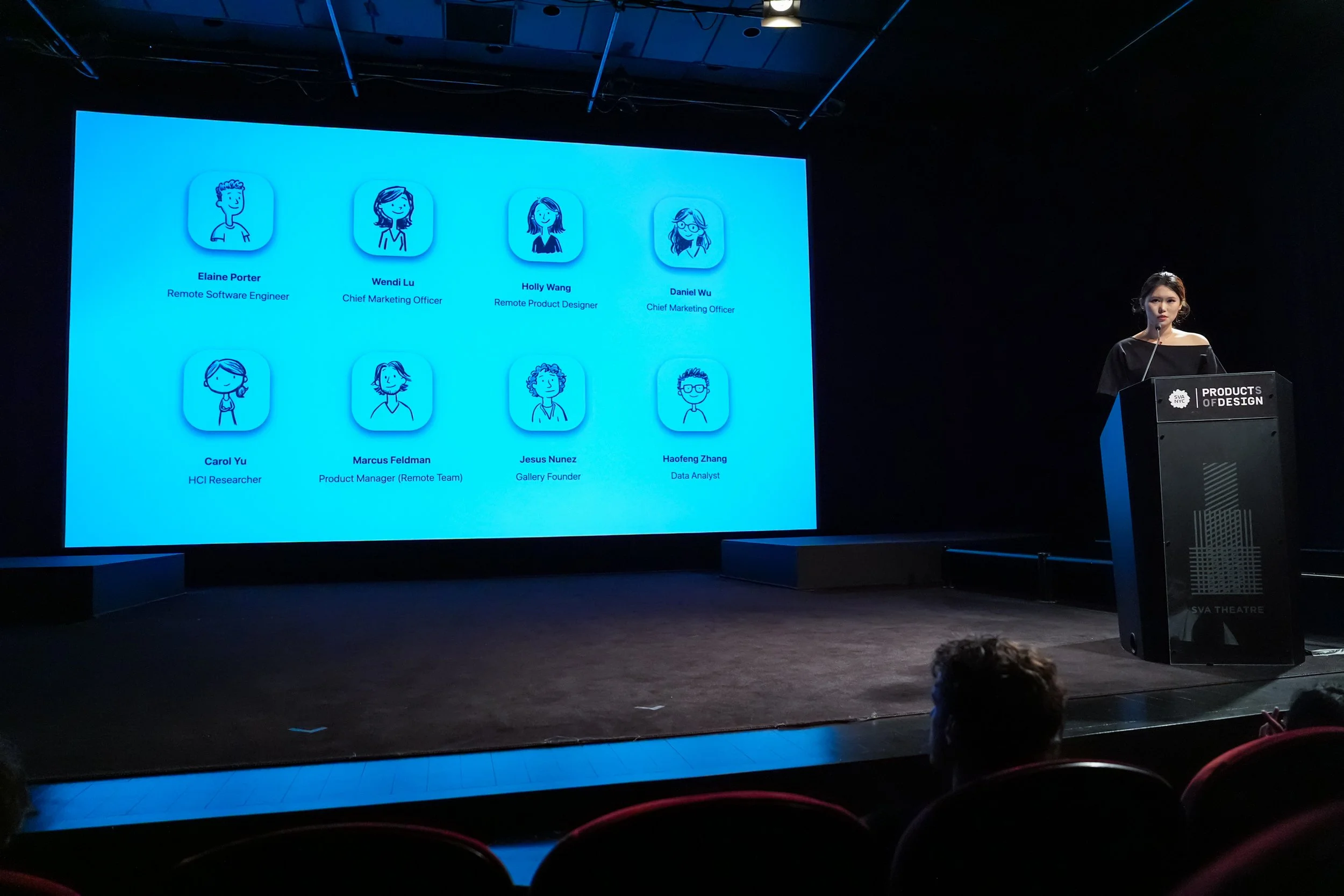

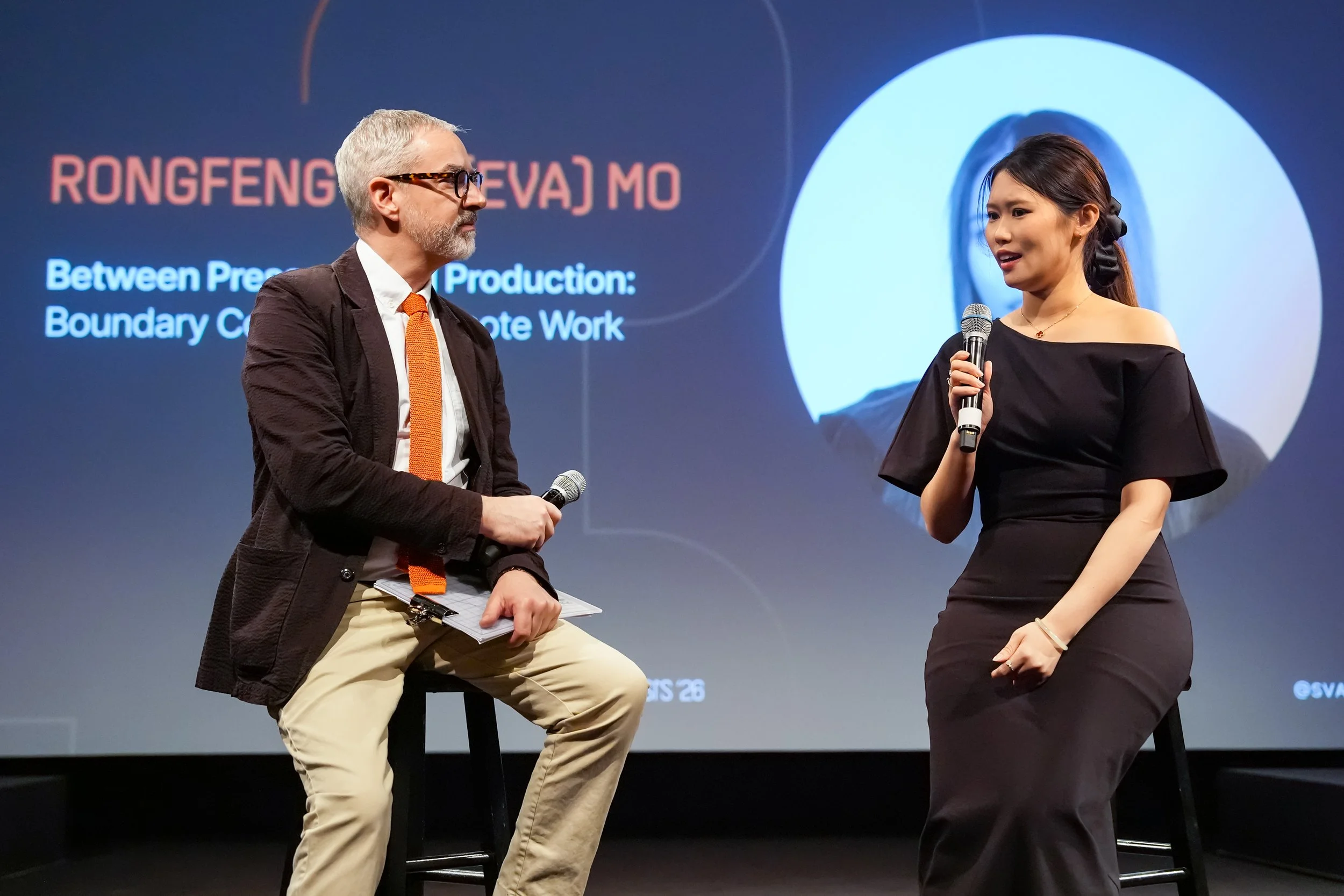
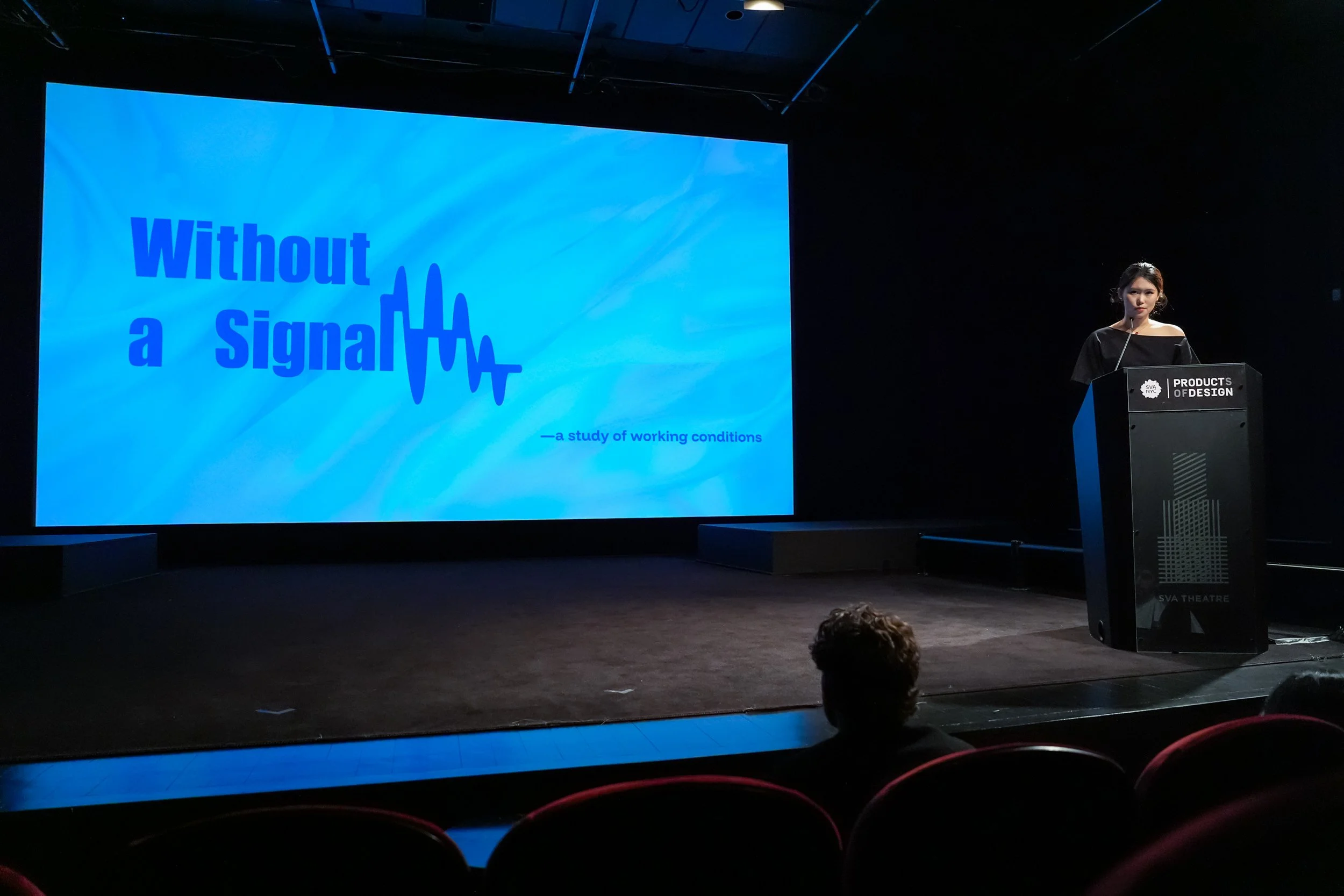
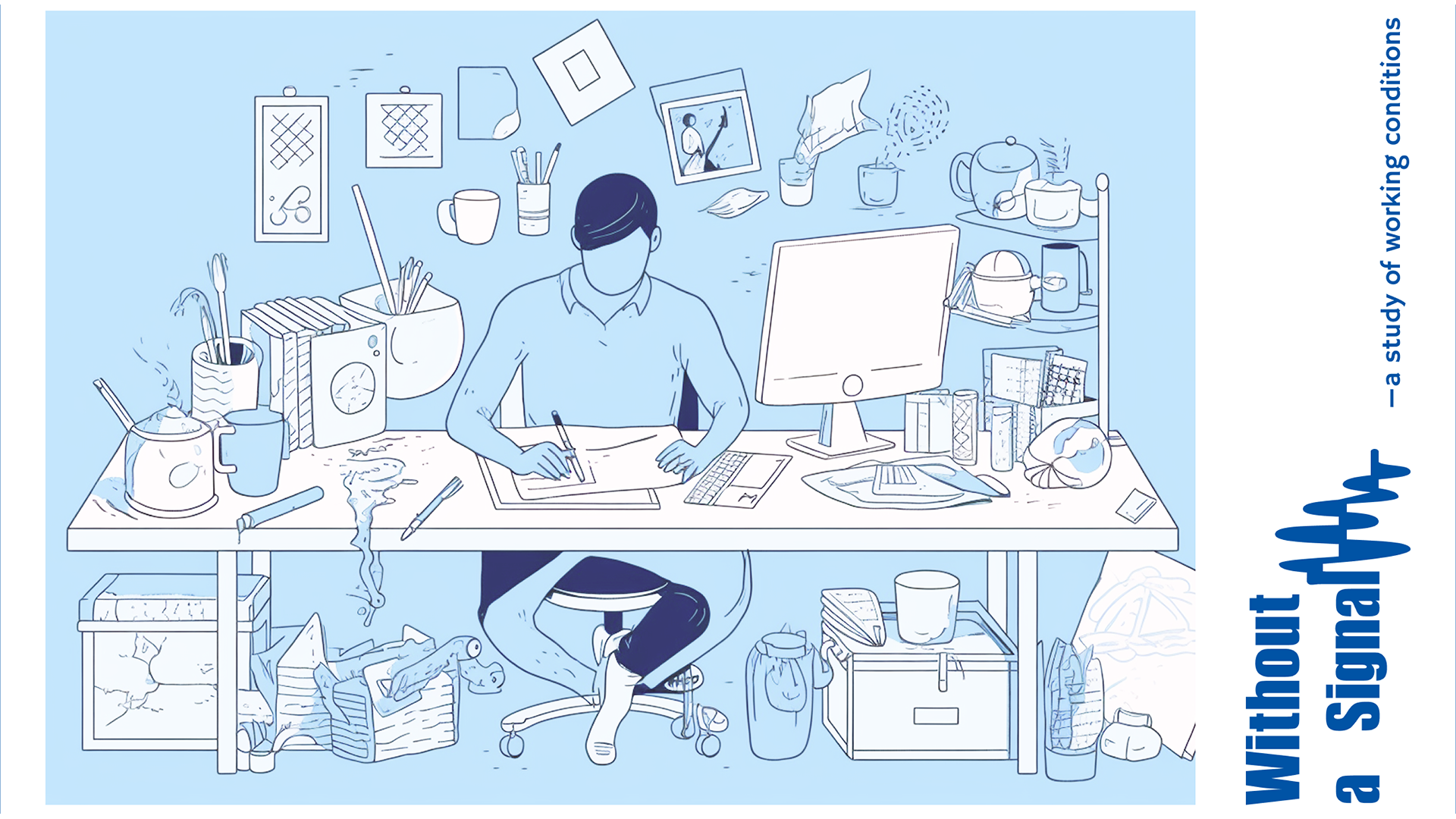
Rather than treating burnout or distraction as purely individual problems, Eva reframes them as architectural and environmental ones. Without external cues to separate working time from personal time, the burden of maintaining boundaries shifts onto the individual. In remote work, those boundaries often erode gradually: a Slack notification answered during dinner, a laptop left open after hours, a workspace that remains permanently visible inside the home.
“These shifts are subtle, but cumulative,” Eva explains. “Over time, they create a state of constant presence without ever achieving deep focus.” Her research identifies what she calls an “Attention Tax”—the cognitive effort required to maintain focus and disengagement in environments not designed to support either. Without a commute or a physical threshold separating office and home, workers must rely on willpower alone to perform tasks once reinforced by architecture and routine. As work expands into kitchens, bedrooms, and living rooms, the distinction between working and being off-duty becomes increasingly difficult to sustain.
The Experiment: Work Without a Signal
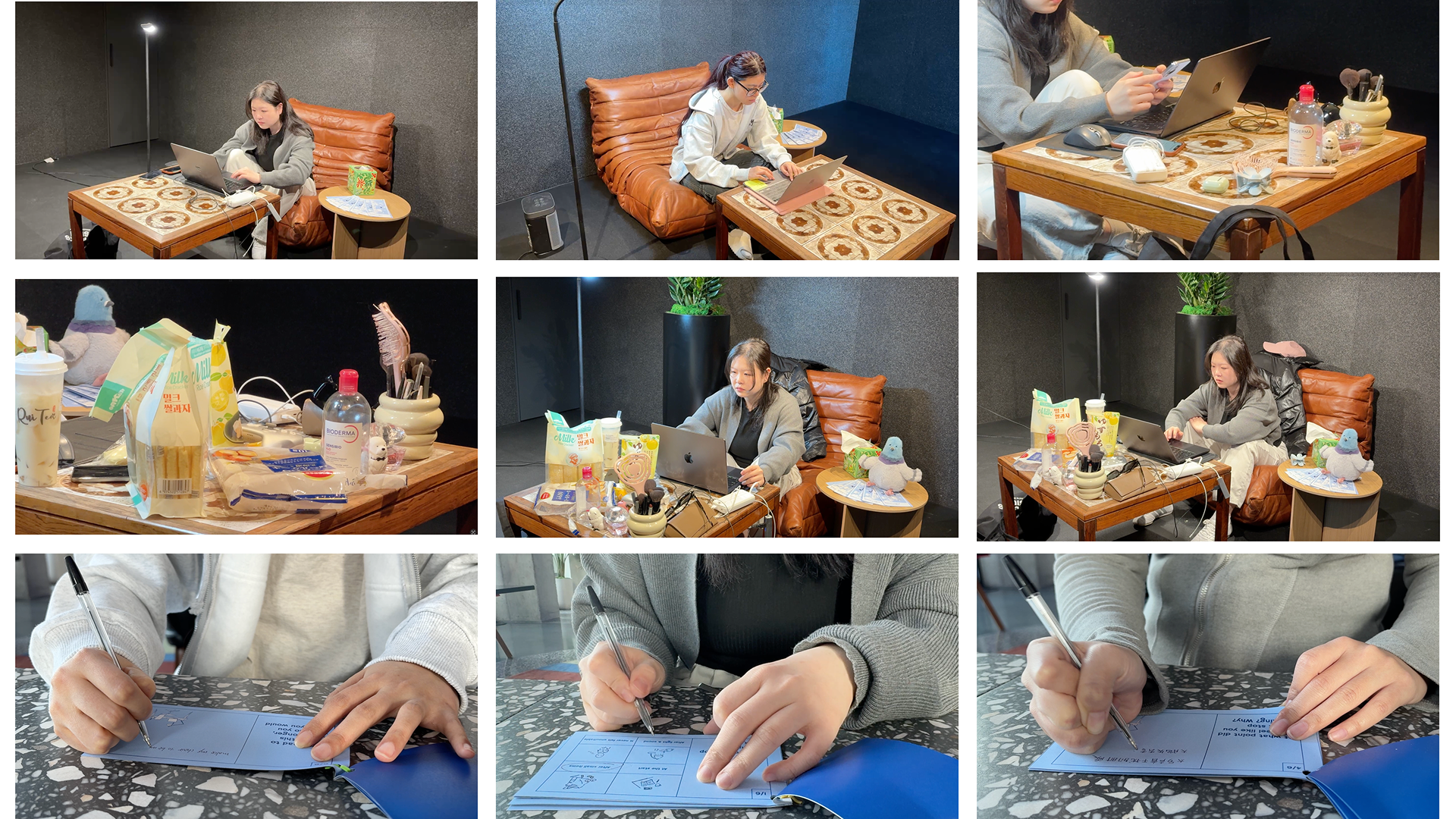
To better understand the psychological effects of boundary-less work environments, Eva developed an experimental intervention titled Work Without a Signal. Participants were invited into a controlled workspace for a thirty-minute session, during which the environment was intentionally manipulated to destabilize focus and orientation.
Throughout the exercise, Eva introduced subtle disruptions: personal belongings were moved, the edges of participants’ workspaces were gradually obscured, and temporal cues were removed from the room.
By the end of the sessions, many participants reported difficulty disengaging from the task, even after the exercise had formally concluded. Without clear environmental signals marking the end of work, participants remained in a prolonged state of low-level attentiveness and anxiety.
“I realized I wasn’t just working; I was constantly fighting my environment to stay focused.”
— Experiment participant
The experiment reinforced a central premise of the thesis: boundaries are not abstract psychological constructs but conditions actively reinforced through space, ritual, and sensory cues. Deciding to stop working is often insufficient if the environment itself continues to signal productivity.
InRhythm: Materializing the “Stop” Signal
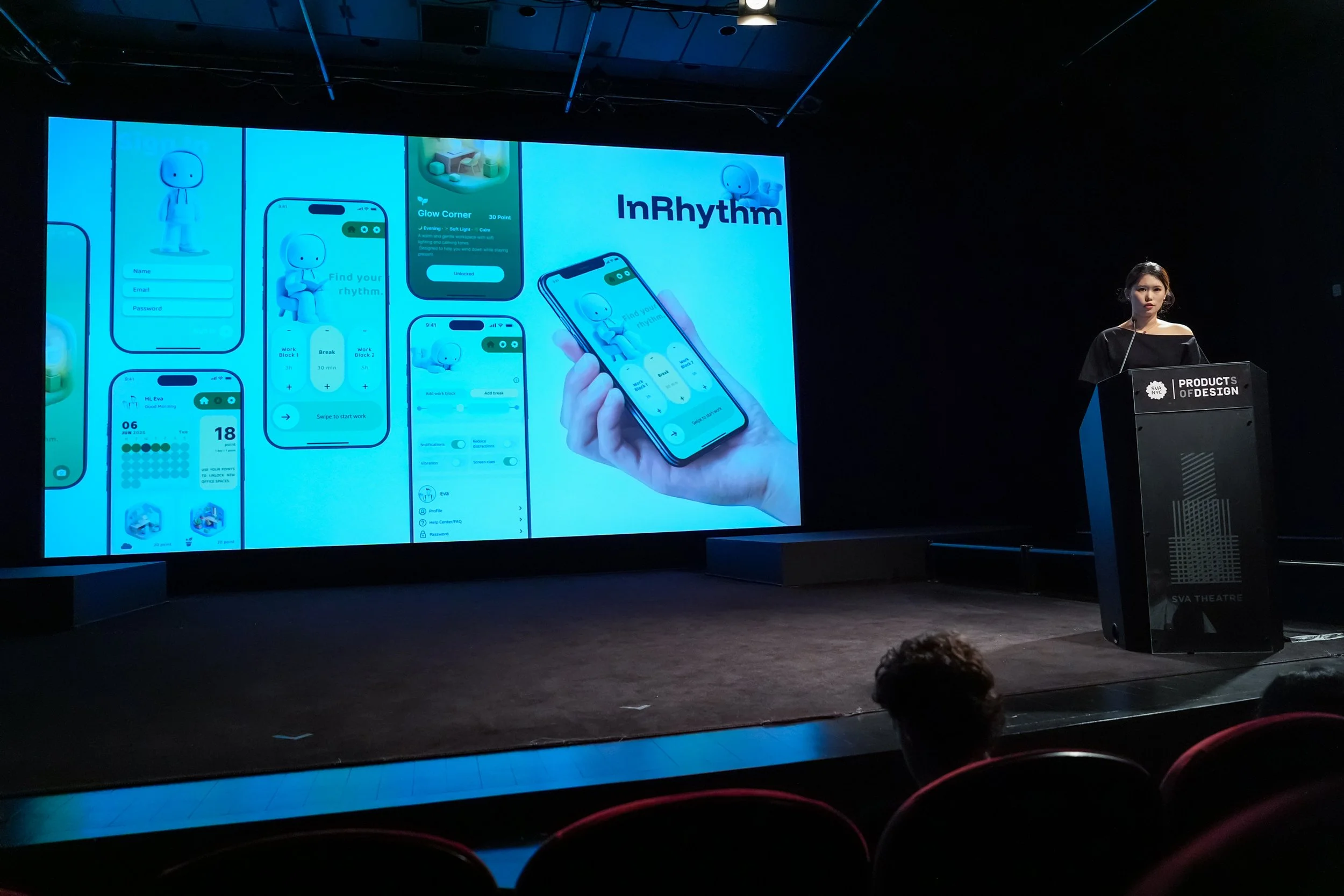
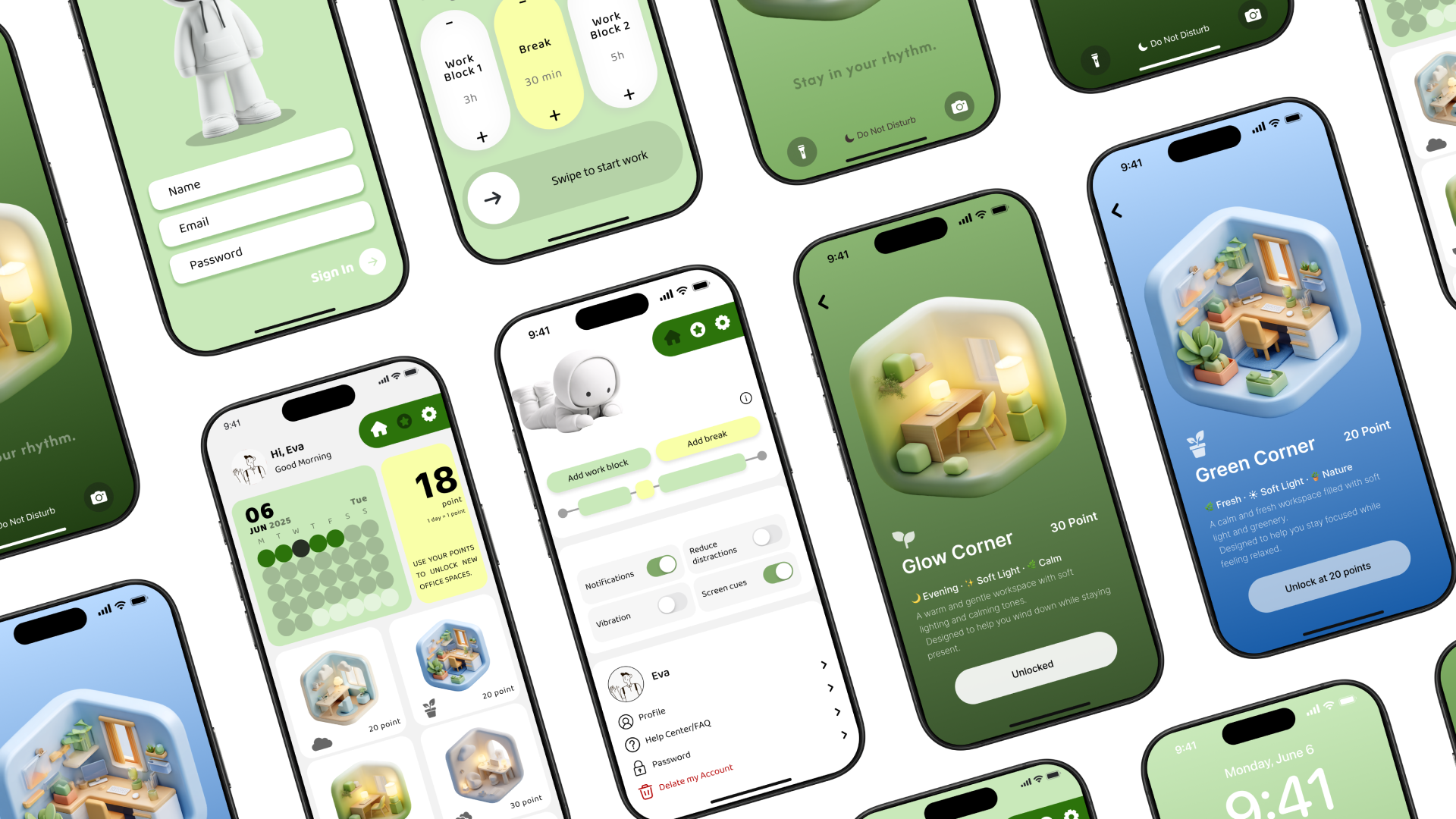
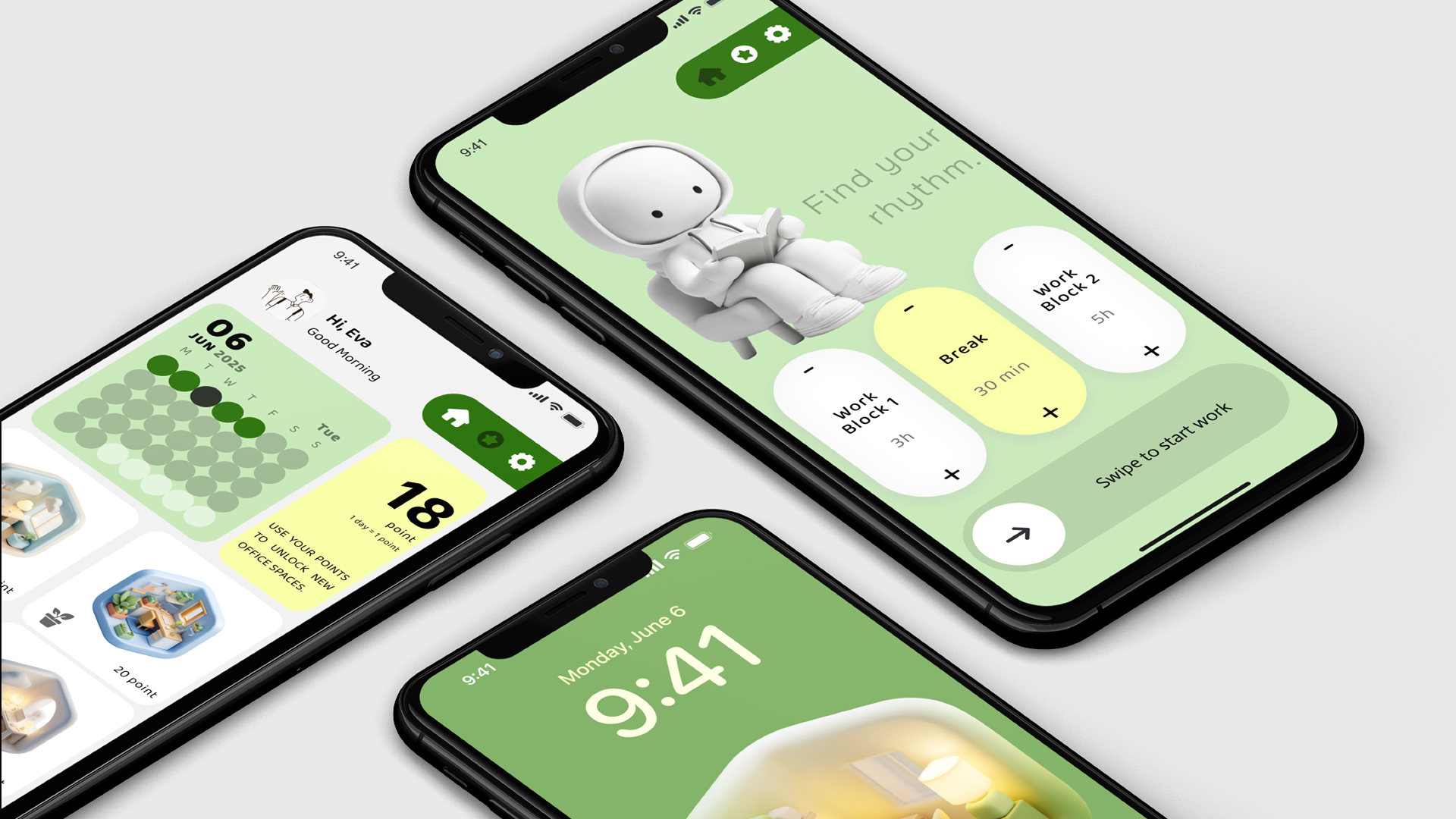
Eva’s first major intervention, InRhythm, translates these findings into a responsive workspace system designed to externalize the act of stopping work. Rather than relying on notifications or self-discipline alone, the project uses sensory feedback to create physical transitions between working and resting states.
The system operates through a combination of timed interactions, tactile vibrations, and an animated interface that encourages users to pause, step away, or conclude their work sessions. Instead of functioning as a conventional productivity tracker, InRhythm focuses on regulating transitions and endings.
“The hardest part of my day isn’t starting work—it’s knowing when I’ve done enough to justify stopping.”
— User testing participant
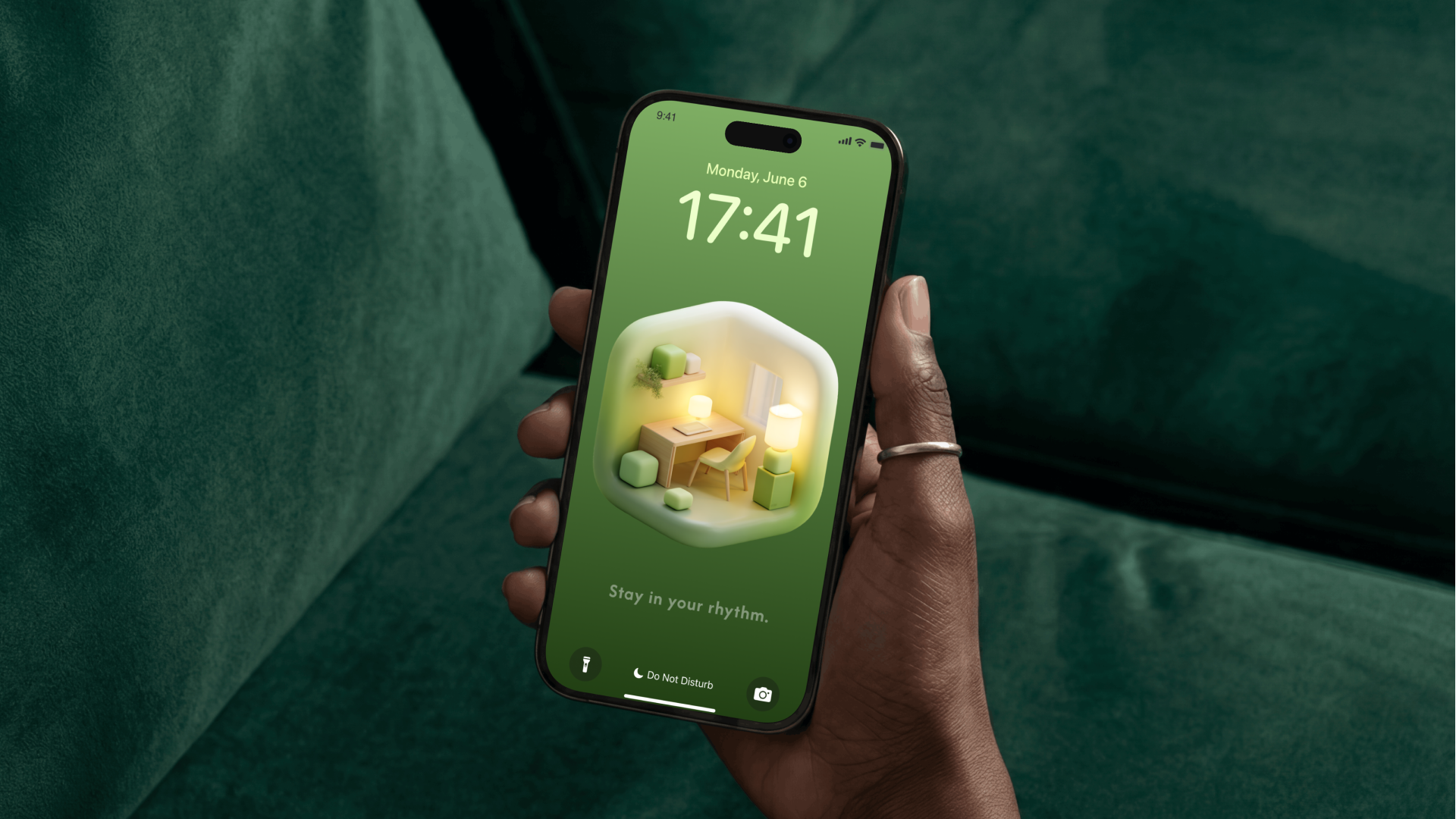
One of the project’s defining features occurs during what Eva calls the “Closing Hour.” At the end of a session, the digital workspace does not simply minimize; it disappears entirely from view. By removing visual reminders of unfinished labor, the system attempts to recreate the psychological separation once provided by leaving a workplace at the end of the day.
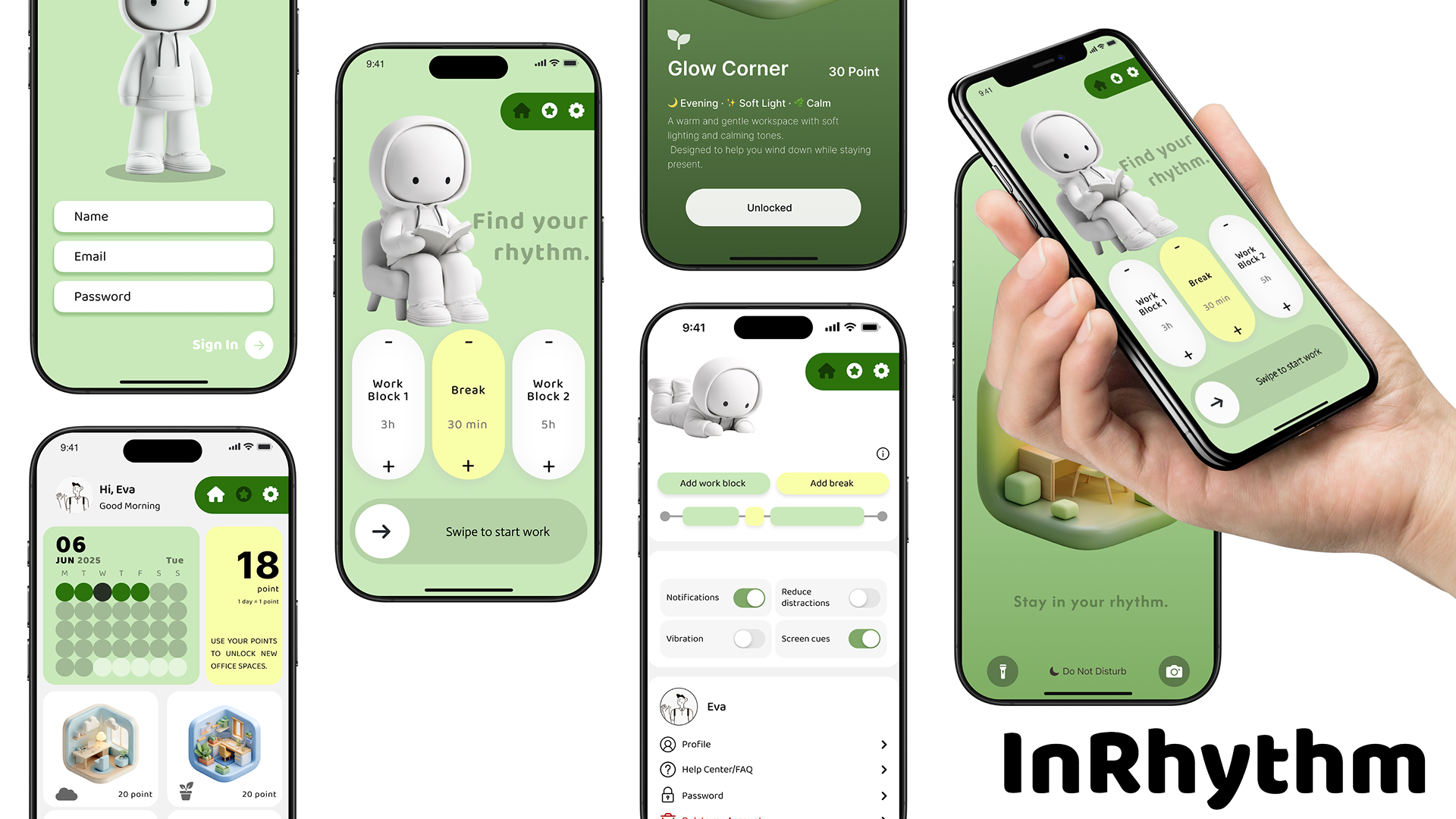
Within InRhythm, the transition from worker to private individual becomes a physical and sensory event rather than an ongoing internal negotiation.
Urban Desk: Negotiating the “Third Space”
As her research expanded beyond the home, Eva began examining the growing number of remote workers who relocate to cafés and other public environments in search of focus and separation. While these spaces often provide relief from domestic isolation, they introduce a different form of psychological strain.
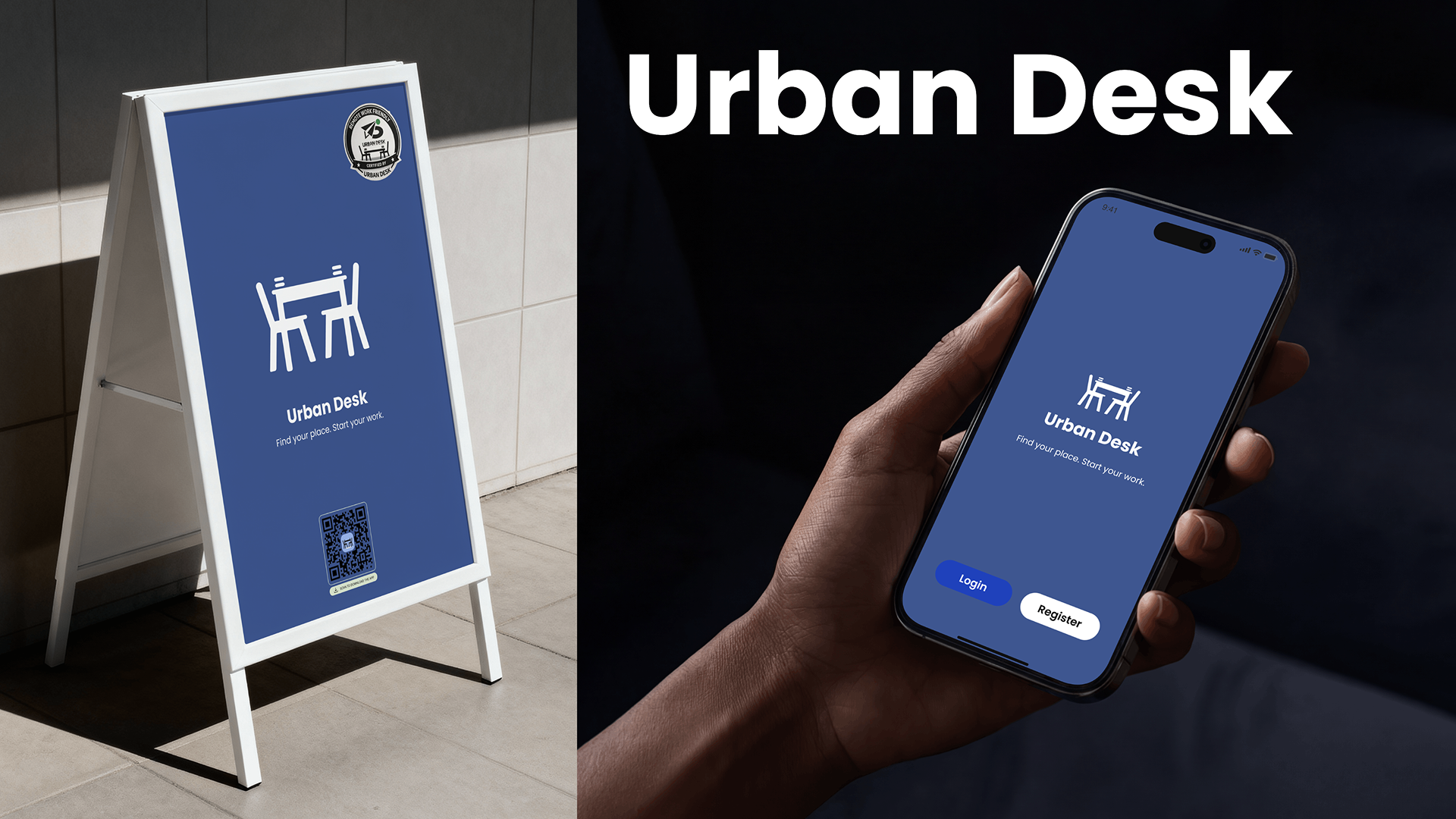
Participants described a persistent awareness of social expectations: uncertainty about how long they could remain, whether they were occupying too much space, or whether certain work activities felt inappropriate in public settings.
“I feel like an intruder. I’m constantly looking at the barista,
wondering if I’ve overstayed my welcome with just one latte.”
— Interview participant
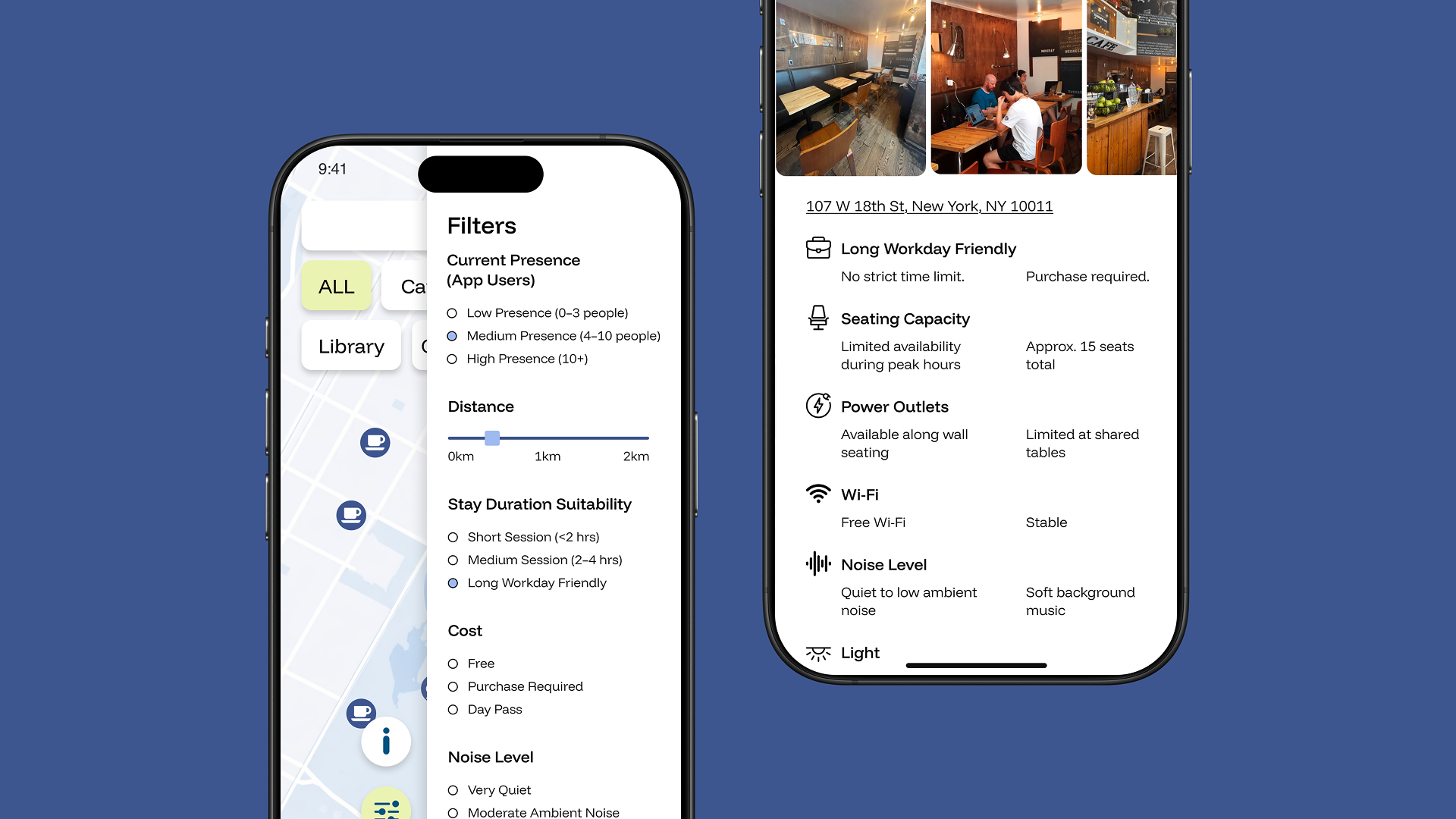
In response, Eva developed Urban Desk, a partnership framework connecting remote workers with local businesses through a visible certification system. Cafés participating in the program display an Urban Desk label indicating that remote work is explicitly supported within the space. Rather than redesigning the café physically, the project redesigns the social agreement surrounding it. The label acts as a public signal that expectations between workers and businesses have already been negotiated.
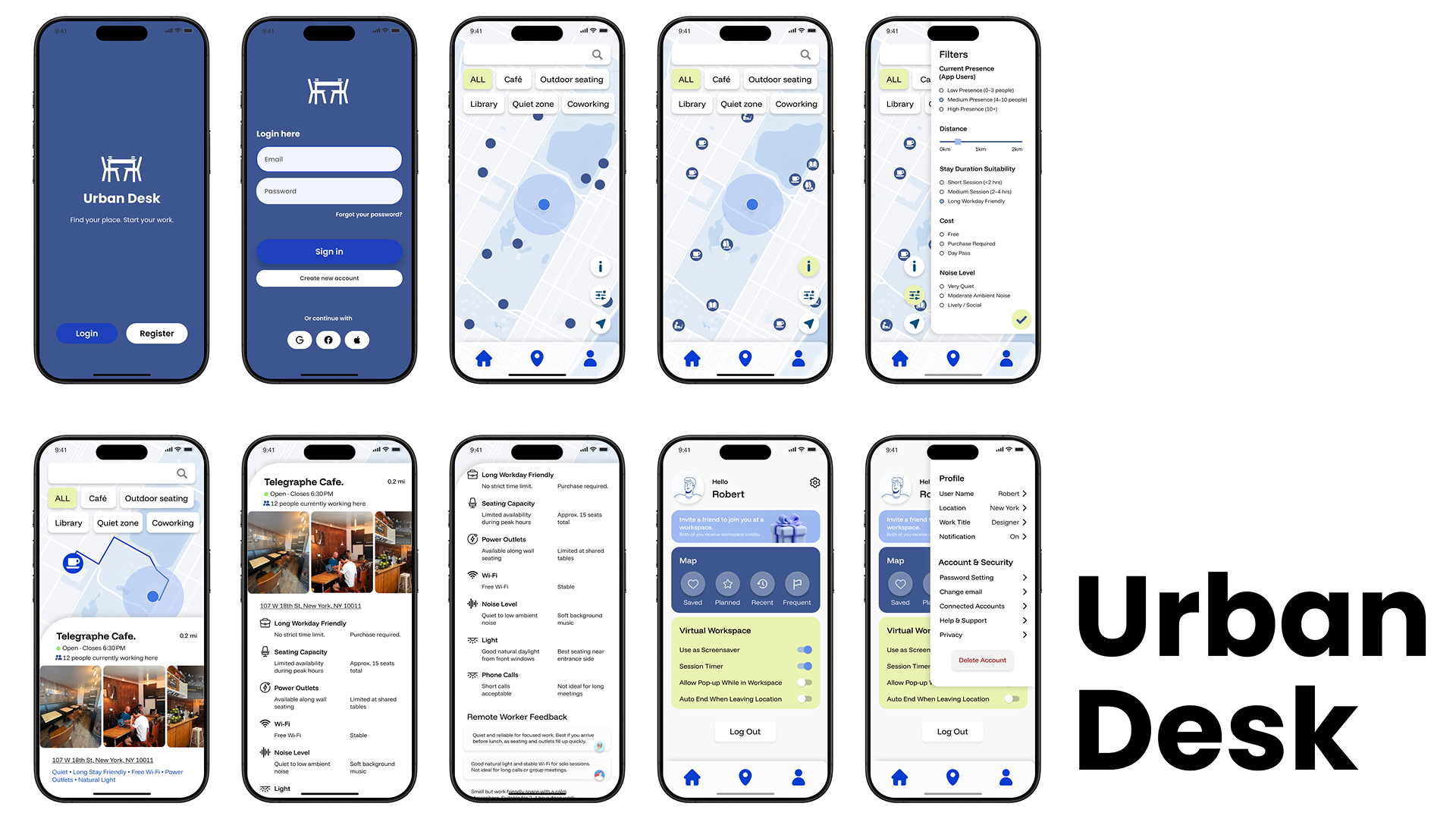
For remote workers, this creates a more stable and psychologically secure environment. For businesses, the system offers a way to attract consistent daytime traffic during slower hours. Through Urban Desk, Eva argues that boundaries are not solely architectural; they are also social contracts reinforced through shared expectations and visible cues.
Duora: The Physical Architecture of Closure
The final component of the thesis returns to the domestic interior and addresses what Eva describes as the “visual pollution” of remote work. In many homes, desks, monitors, and cables remain constantly exposed, extending the psychological presence of work long after the workday ends.
“Without a door to close, my brain never feels like it has truly ‘left’ the office.
The mess is always staring at me.”
— Workshop participant

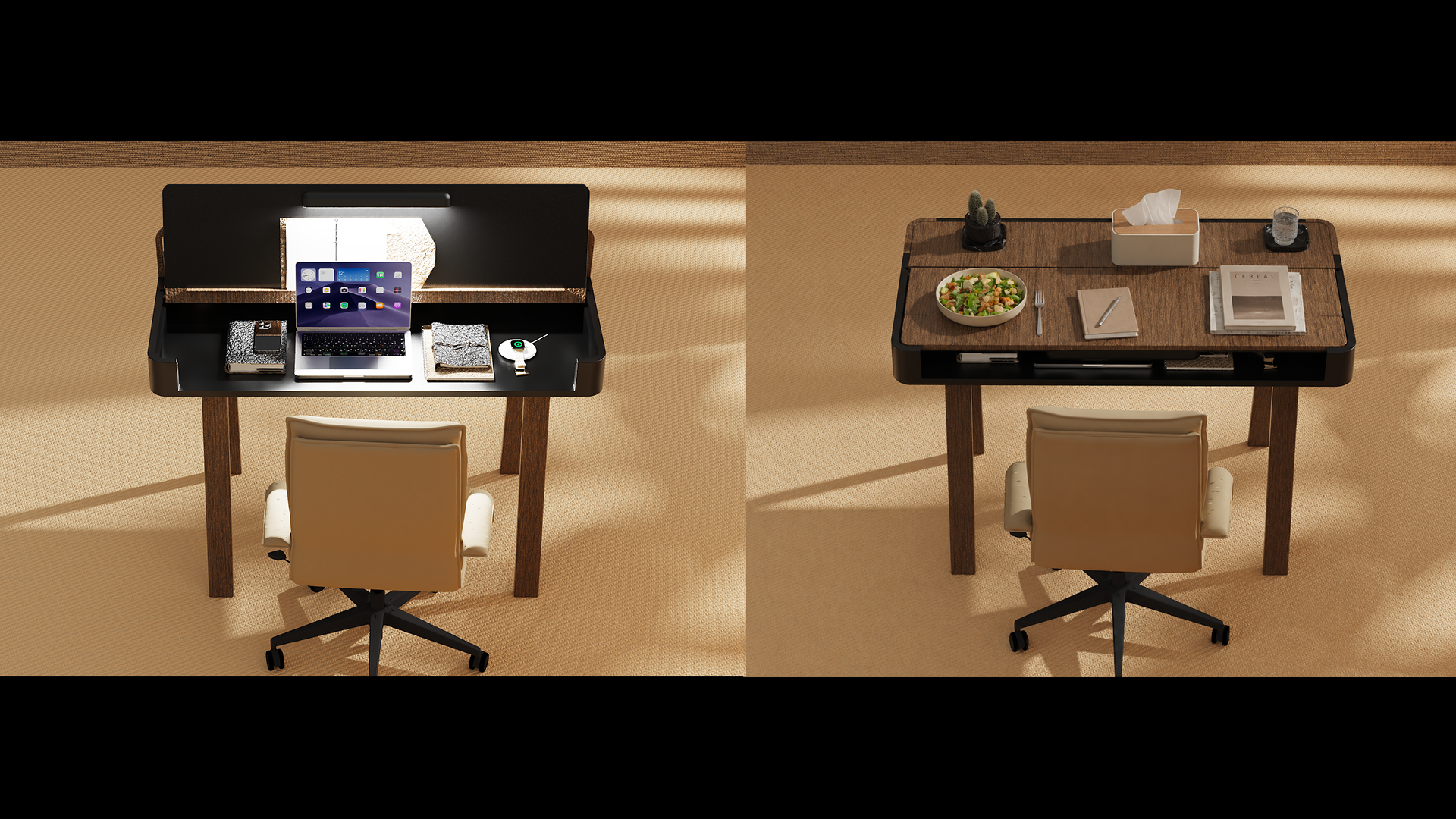
Eva’s response is Duora, a dual-purpose workspace system that physically conceals work materials through a kinetic panel mechanism. With a single movement, monitors, cables, and office tools disappear behind a clean domestic surface.
More than a storage solution, Duora functions as a spatial cue for psychological closure. By removing the visual presence of work from the room, the project attempts to restore a distinction between domestic and professional space without requiring additional square footage.
Across Work Without a Signal, InRhythm, Urban Desk, and Duora, Eva’s thesis approaches remote work as an environmental design problem rather than a question of individual discipline. The projects collectively argue that focus, rest, and disengagement are not simply habits to be optimized, but conditions shaped by architecture, objects, rituals, and social expectations.
For additional research, process documentation, and projects, visit Eva Mo’s website: rongfengyanmo.com.