
Performing Realness: Posting, Pressure, and Visibility on Social Media
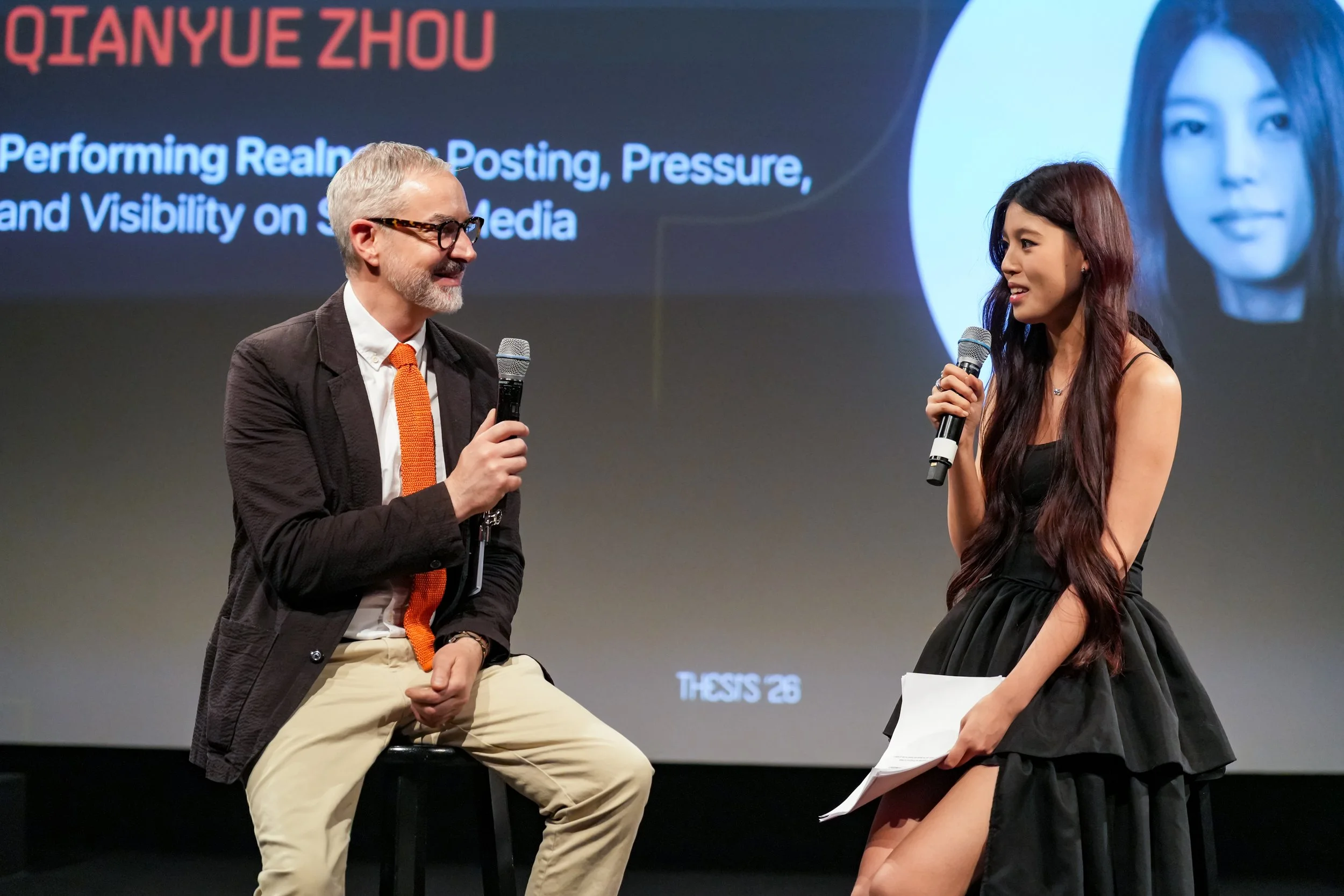
Qianyue Zhou’s thesis, Performing Realness: Posting, Pressure, and Visibility on Social Media, investigates how social media transforms everyday life into something visible, measurable, and performative. Beginning with her own experience of overthinking what to post, she explores how the desire to appear authentic online can create new forms of pressure. Her work looks closely at the full cycle of capturing a moment, reviewing, sharing, and responding—and proposes alternative ways for people to document and exchange real life with less performance, less optimization, and more presence.
“Authenticity online is often not simply expressed—it is edited, judged, and performed. Through design, how might everyday moments be captured and shared with less pressure to prove that they are real?”
Through four distinct but interconnected projects, Qianyue investigates how design can reshape the way people capture, review, share, and respond to everyday life in an age of constant visibility. MOKU is a screenless wearable camera that captures moments automatically, helping people stay present instead of constantly framing and checking. In Between offers a slower return system for MOKU’s photos, transforming captured images into contact sheets, envelopes, and delayed galleries rather than instant content. Daily Hunt turns sharing into a lightweight friends-only ritual, where posting unlocks a shared wall instead of becoming a performance. And A Like in Real Life translates the smallest digital gesture into a physical exchange through Polaroids, heart stickers, and written responses. Together, these works propose a shift from performing realness online to creating slower, lighter, and more human ways of experiencing, sharing, and responding to real life.
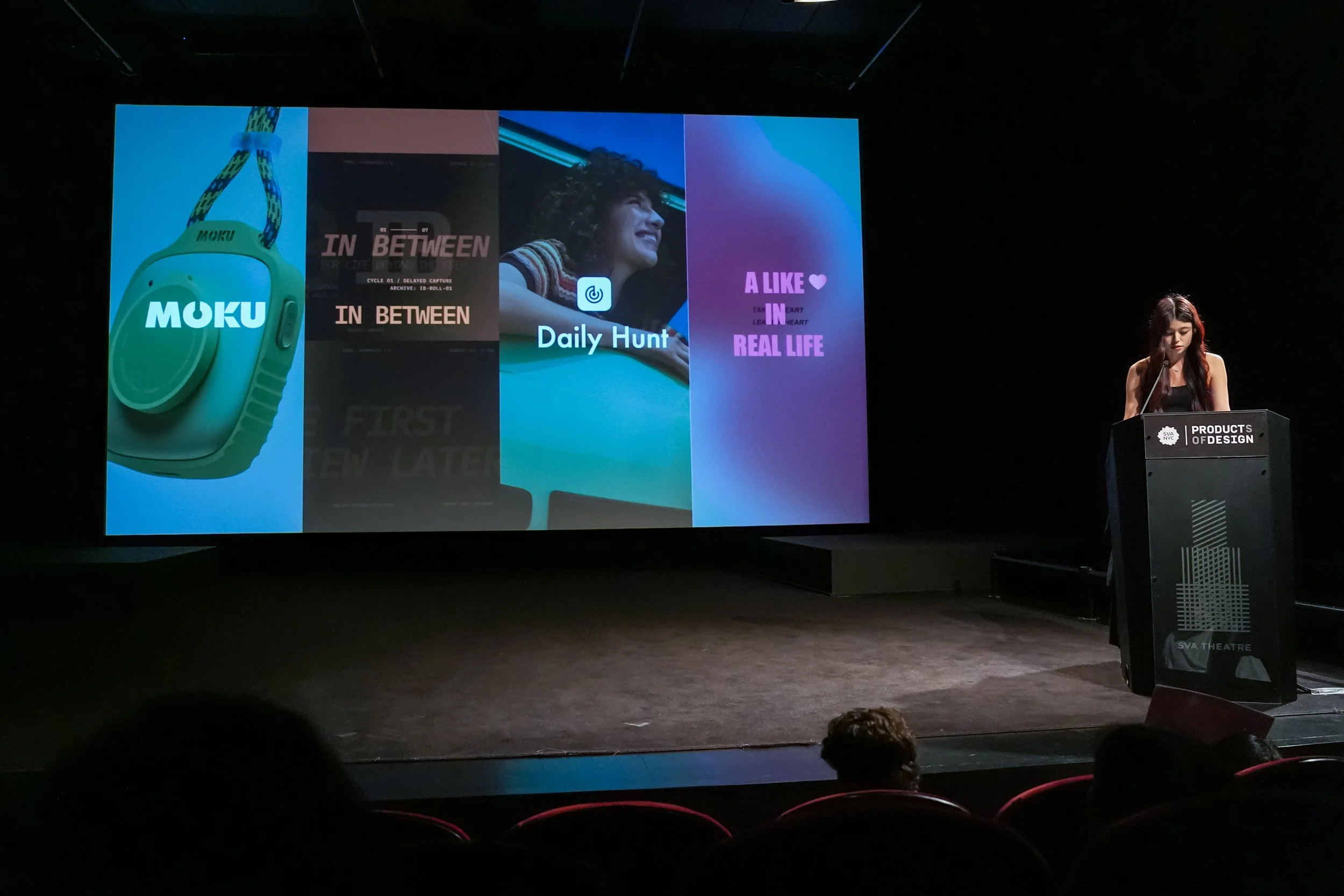
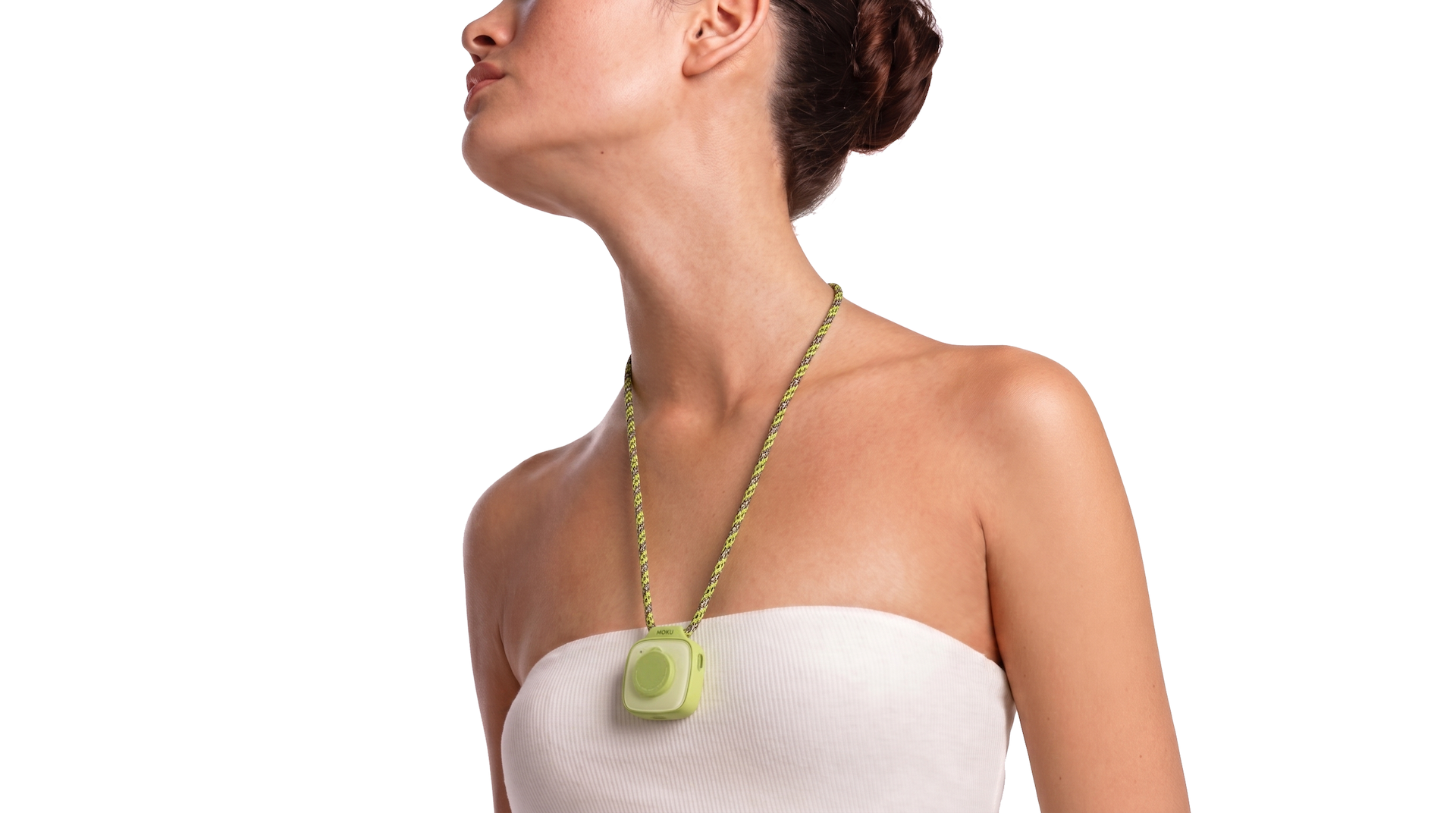
MOKU: A screenless wearable camera
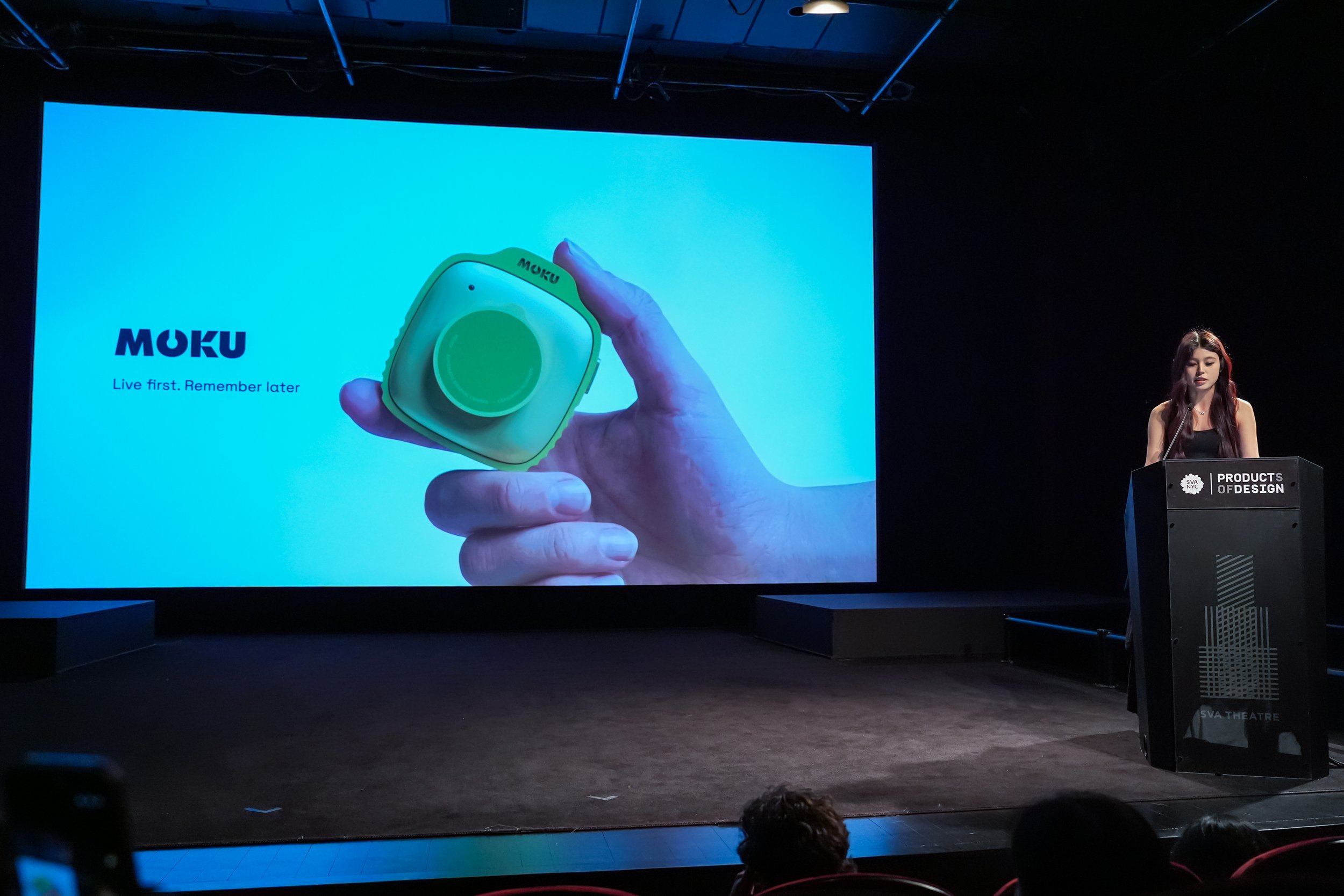
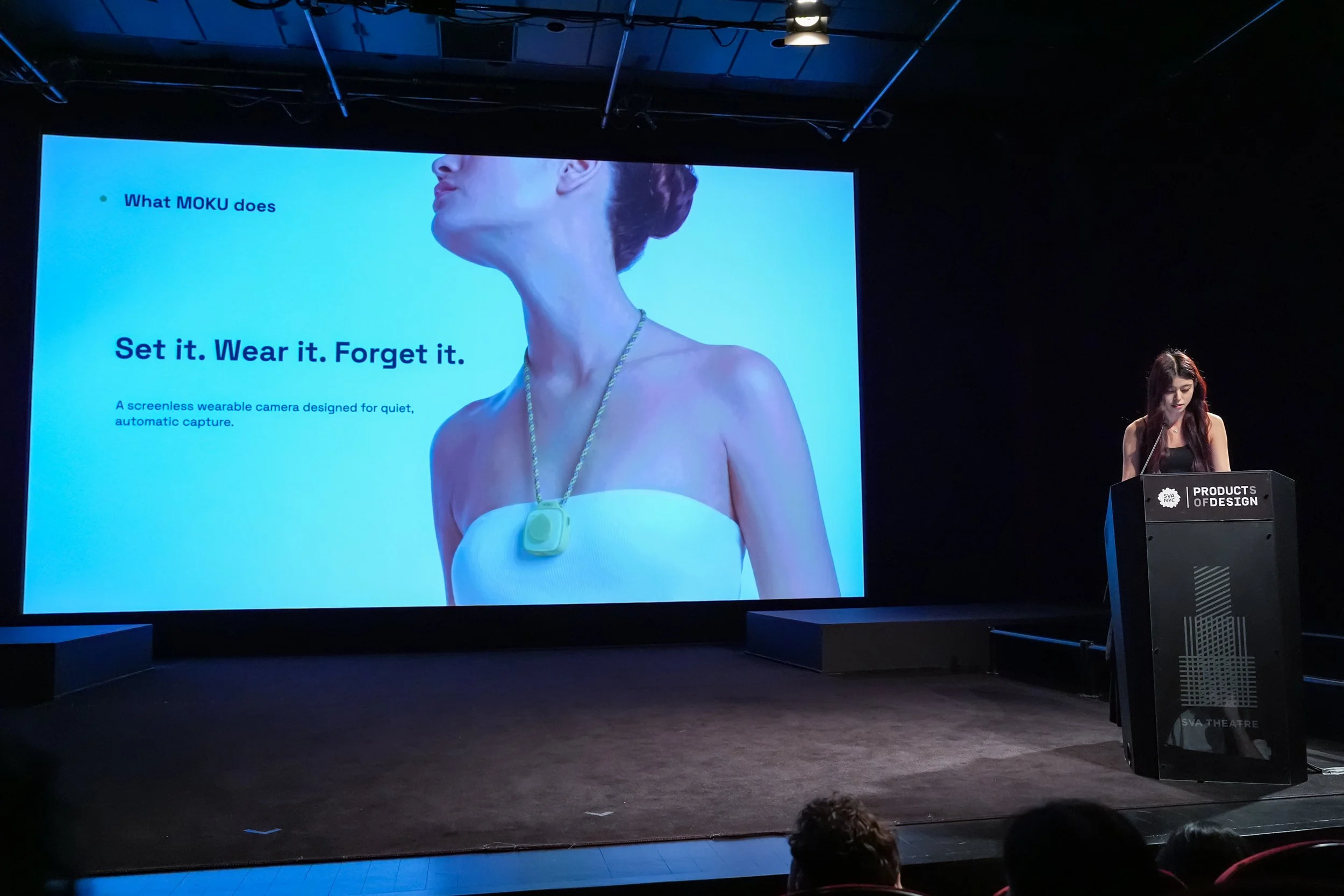
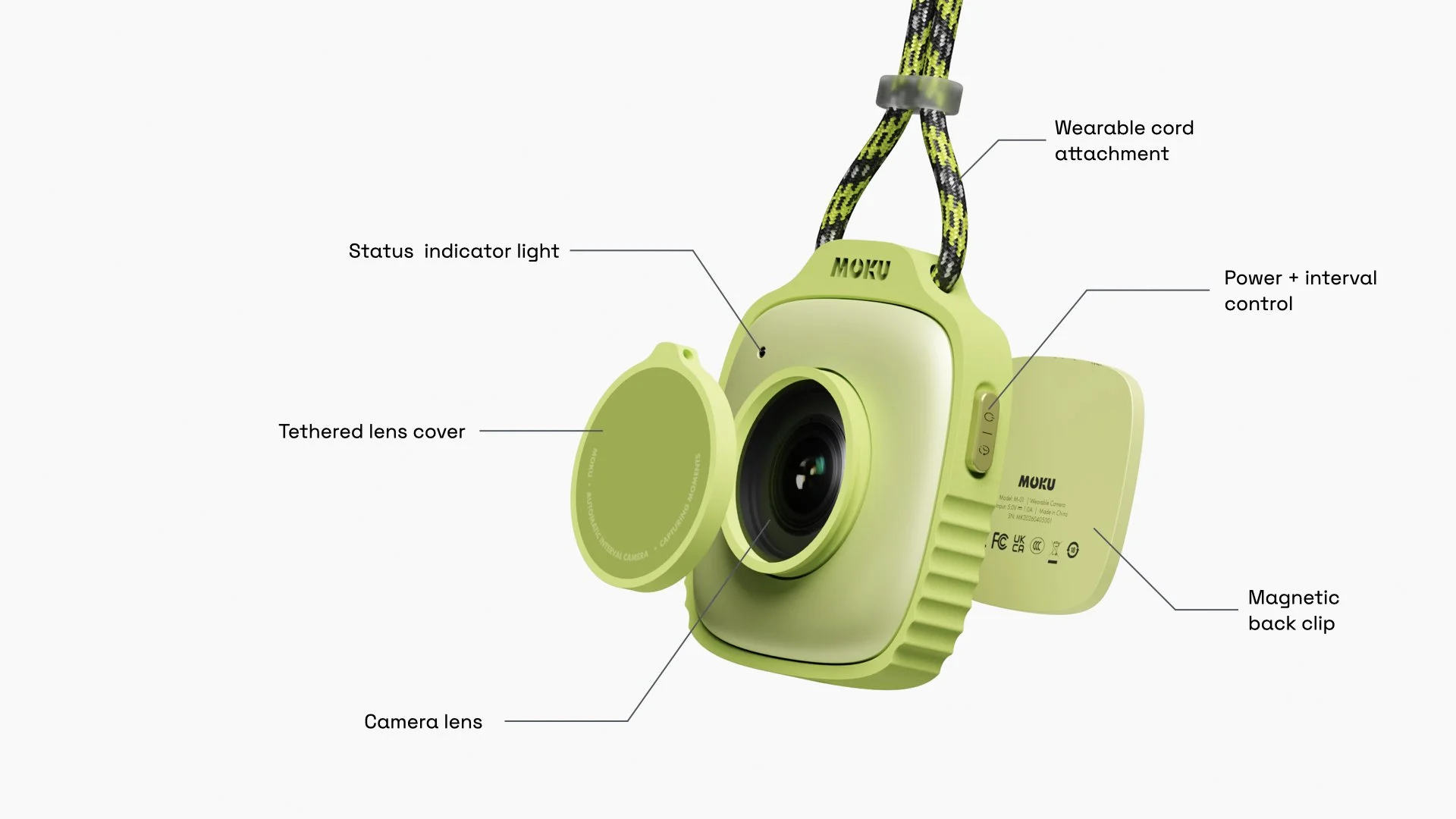
MOKU is a screenless wearable camera designed to change how people capture everyday moments. Instead of asking users to constantly frame, preview, and check every image, MOKU captures automatically at set intervals while the user stays present in the moment. With a simple physical control, users can choose an interval such as 10, 15, or 30 minutes, then wear the camera during walks, dinners, exhibitions, commutes, or time with friends.
The MOKU companion app supports the camera without turning it into another social media tool. It allows users to manage the device, check battery and storage, adjust capture settings, and review their captured moments later in a quieter, more private space. The app is designed as a gentle record of the day, not a feed for performance, comparison, or instant posting.
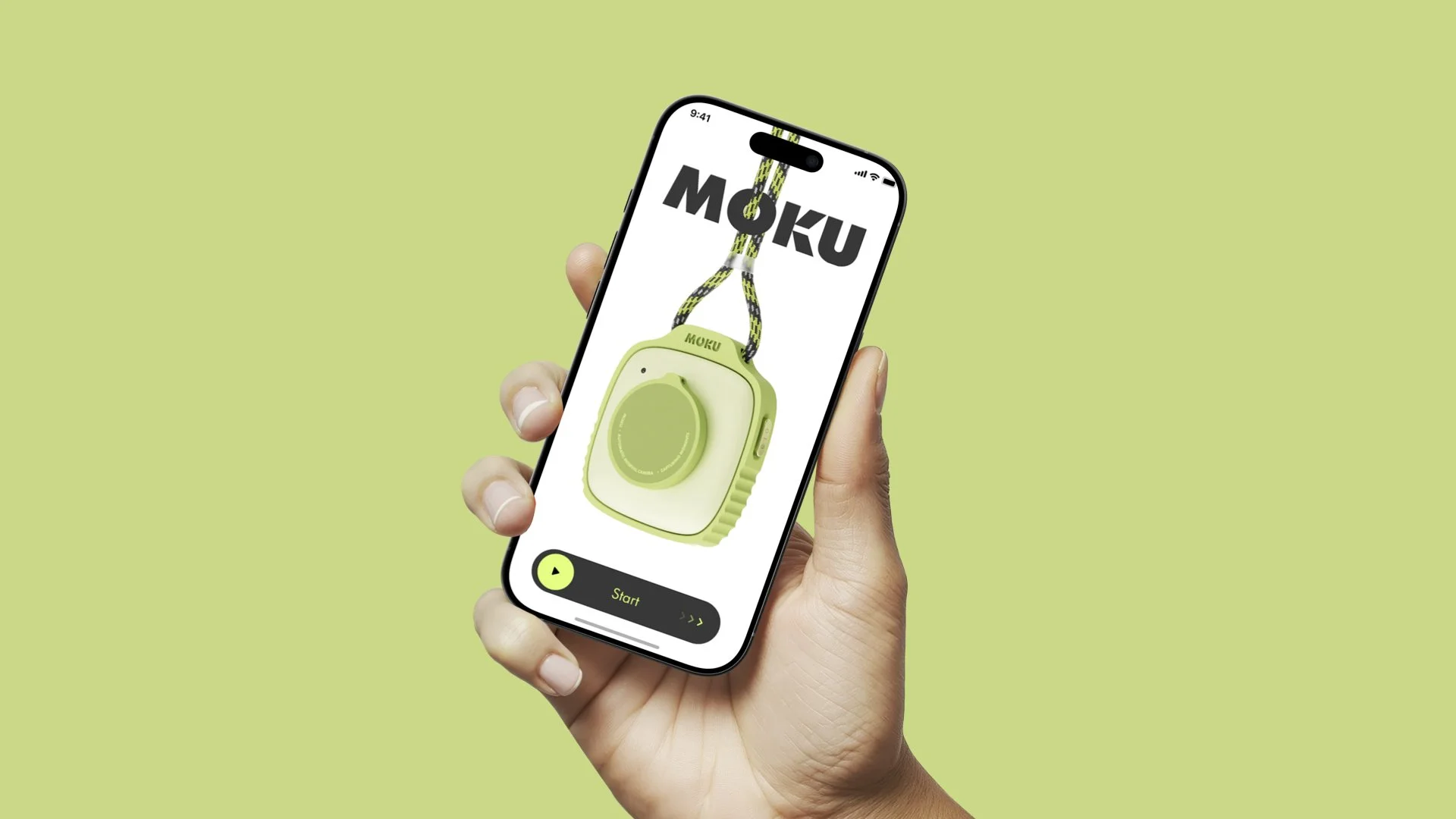
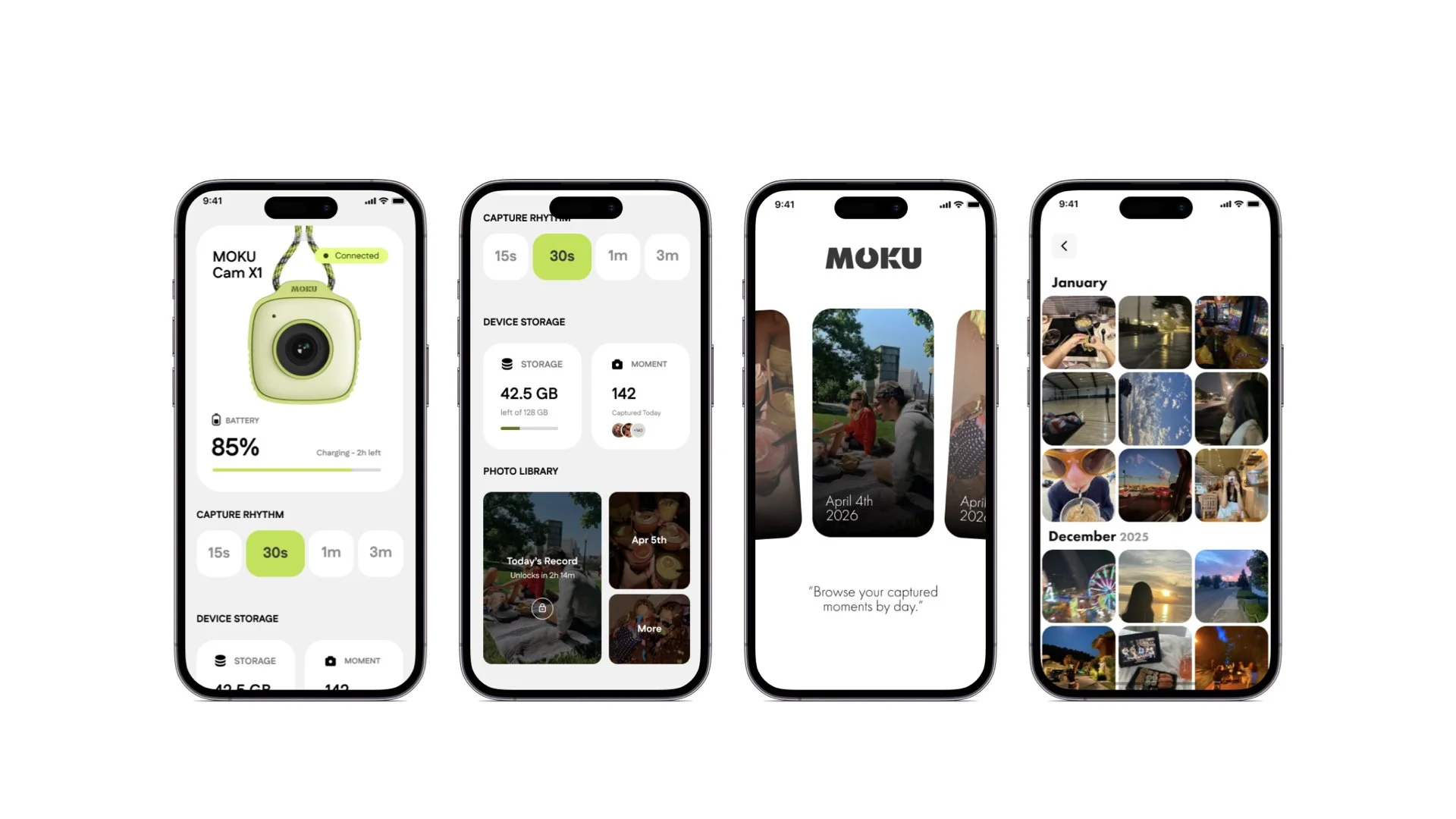
MOKU is made for people who want to document their lives without turning every moment into content. By removing the screen, MOKU reduces the habit of immediately judging, deleting, editing, or preparing images for posting. The camera’s visible lens cover and subtle LED signal make the device feel intentional and transparent, while the soft wearable form keeps it closer to an everyday object than a surveillance tool.
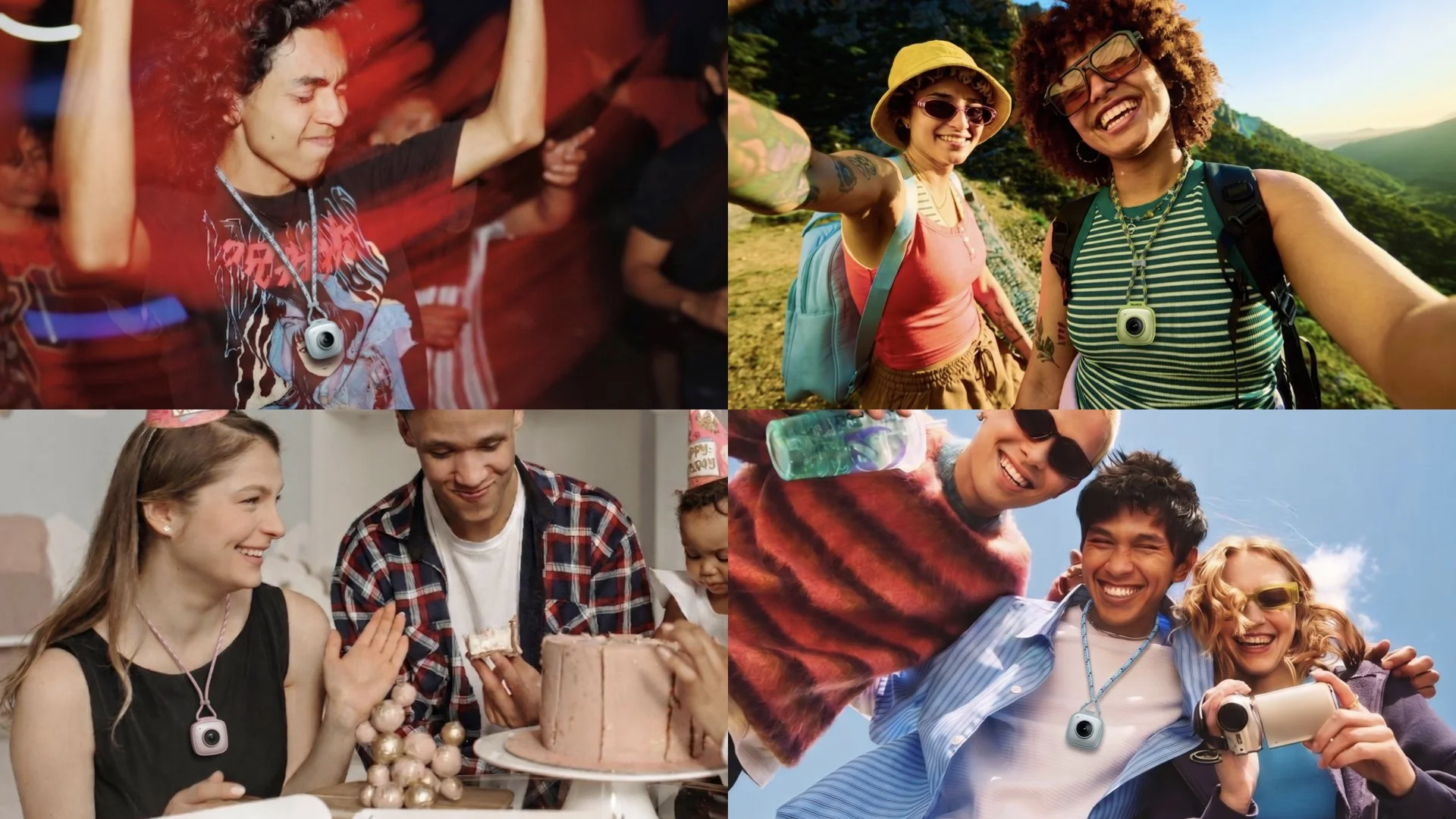
Through MOKU, Qianyue asks whether capture can become less performative and more present. The project shifts photography away from control and optimization, and toward trust, surprise, and later reflection. Instead of helping people create the “perfect” image, MOKU helps them return to the texture of real life as it happened.
In Between: A delayed photo return service
In Between is a delayed photo return service connected to MOKU. After a MOKU session ends, the photos do not immediately become available for checking, deleting, editing, or posting. Instead, they are held for a period of time and returned later through a slower, more intentional format, such as a contact sheet, sealed envelope, limited online gallery, or selected prints.
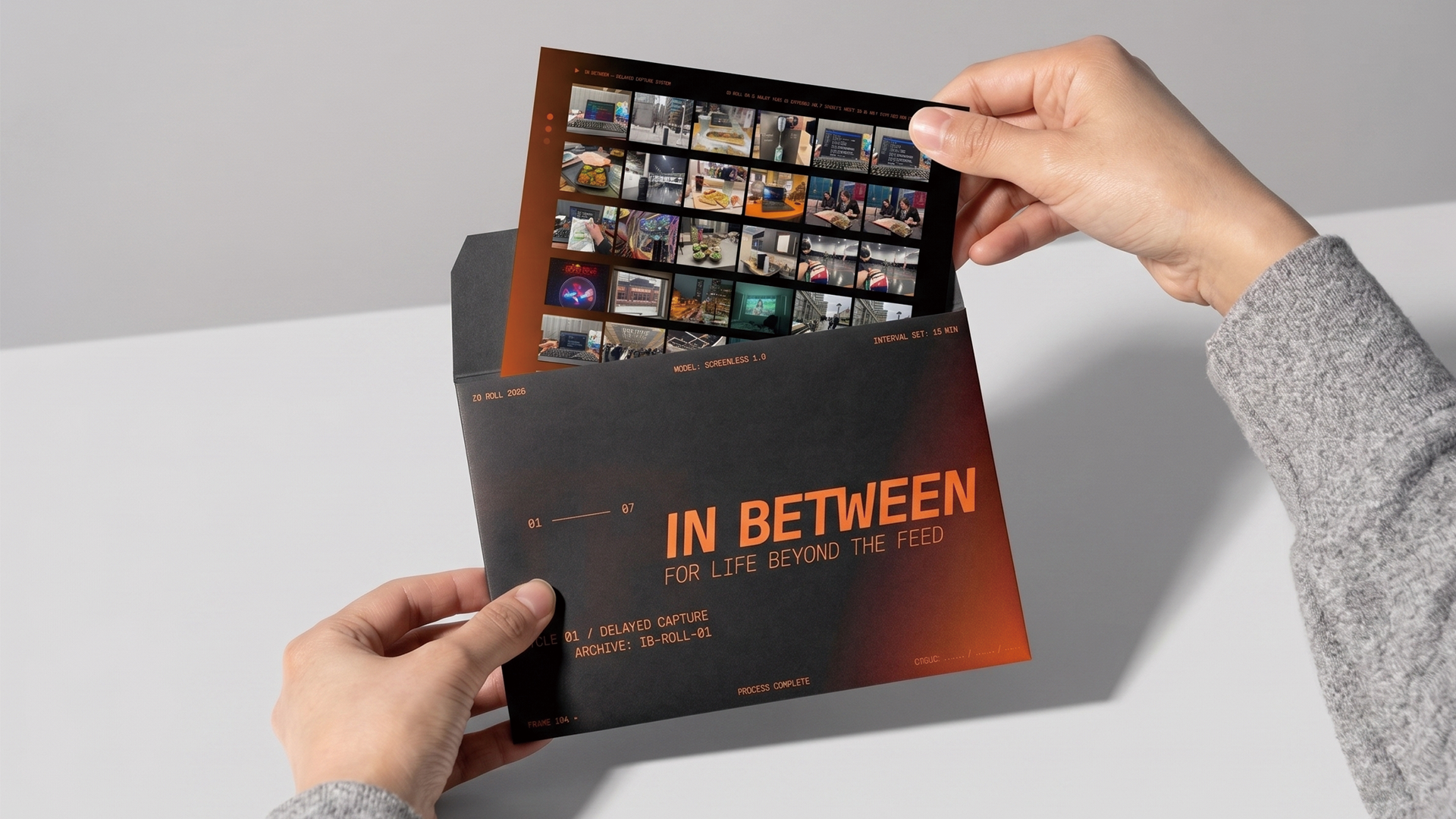
The service is designed for people who want to document meaningful moments without immediately turning them into content. By delaying access to the images, In Between creates distance between the moment of capture and the moment of review. This pause helps reduce the pressure to instantly judge whether a photo is good, postable, or worth keeping.
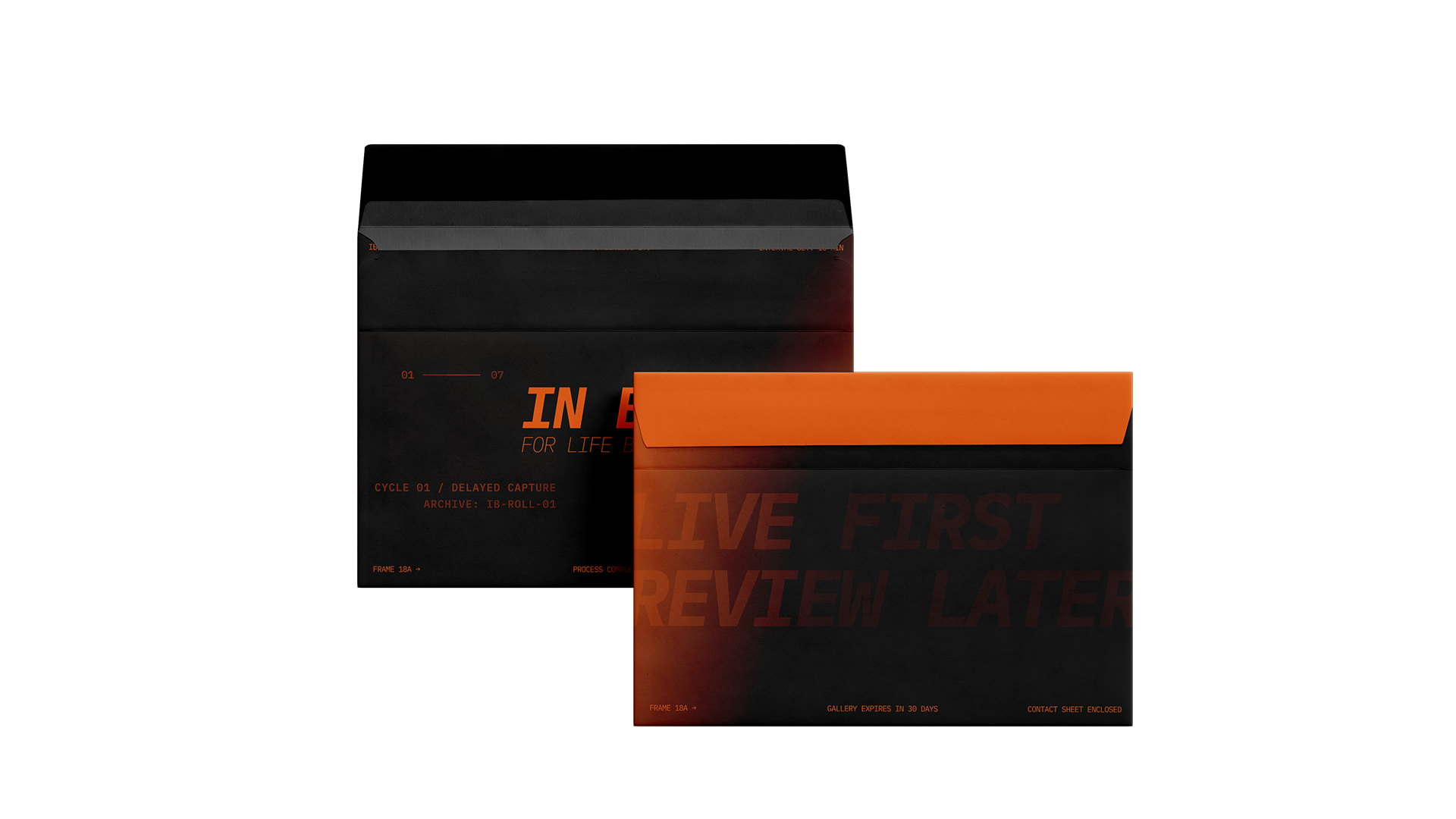
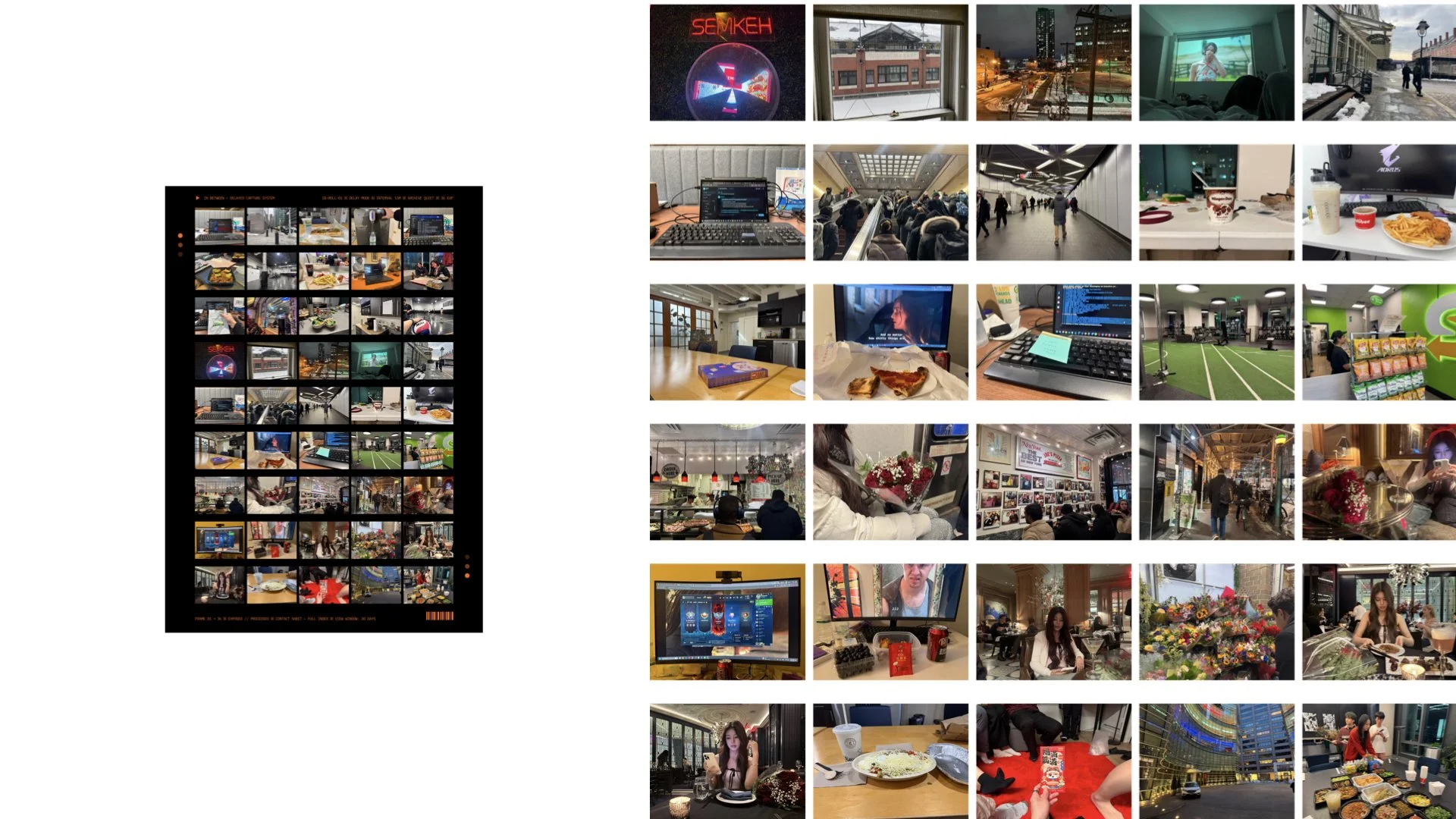
In Between changes the role of the photo from instant proof to returned memory. The contact sheet shows the full record of the moment, not only the best image. The envelope and print options make the experience feel more physical, private, and personal. Instead of asking users to optimize every photo, the service invites them to receive the memory later and reflect on it with more care.
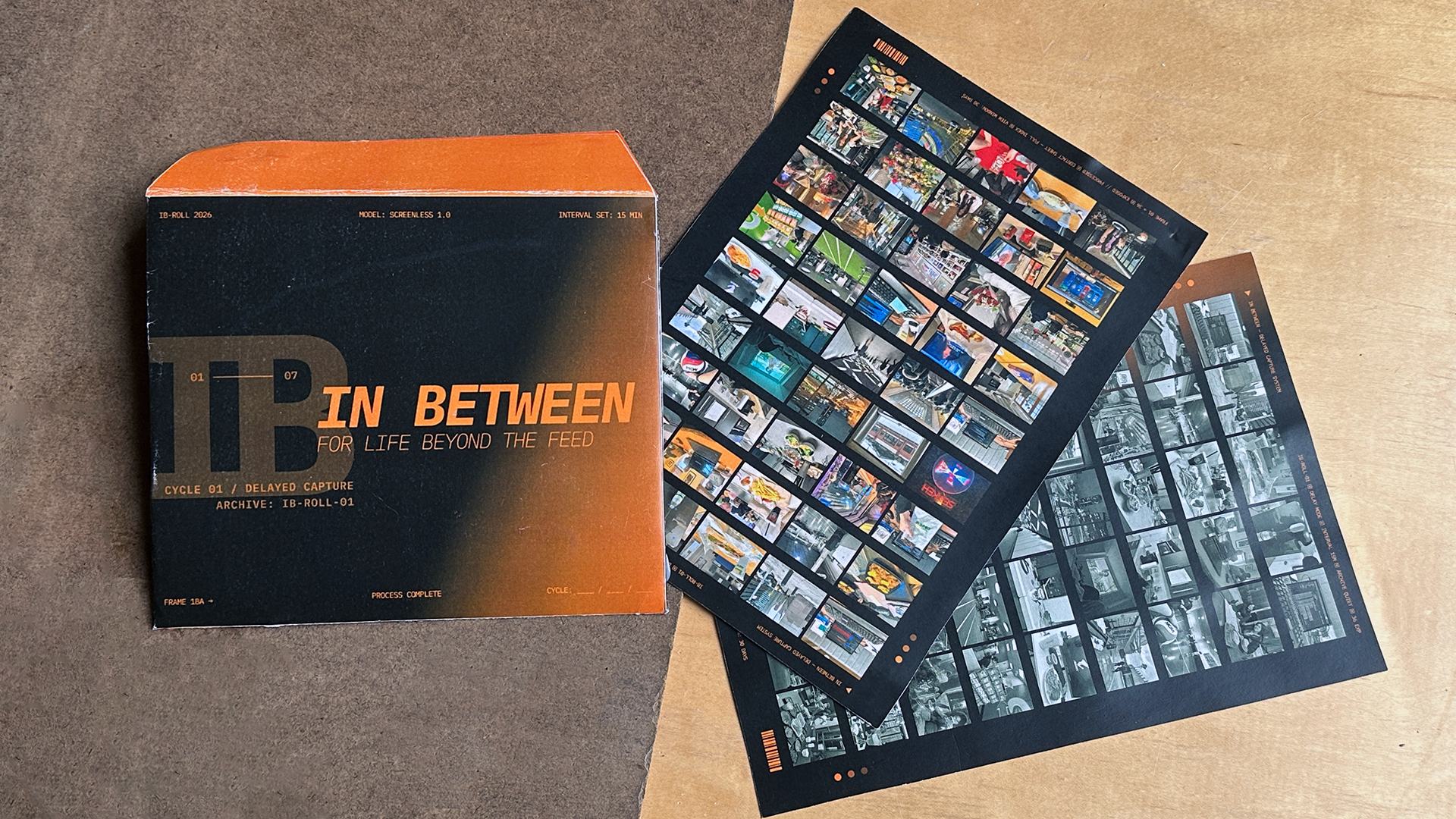
Through In Between, Qianyue extends MOKU’s screenless capture into a slower system of review. If MOKU helps people stay present while moments are being captured, In Between helps them stay away from the pressure of immediate evaluation afterward. Together, they propose a different rhythm for photography: capture now, return later, and remember without performing.
Daily Hunt: The friends-only photo-sharing app
Daily Hunt is a friends-only photo-sharing app that turns posting into a small daily ritual. Each day, users receive a simple prompt that asks them to notice something ordinary around them, such as a small detail, a corner of their space, or a moment they might usually ignore. To respond, they must take a photo directly inside the app, without uploading from the camera roll or over-editing the image.
The Daily Hunt app is designed for people who feel pressure to make everyday life look more interesting, beautiful, or postable online. Instead of rewarding polish, Daily Hunt rewards participation. After users post their own response, they unlock the Friends Wall and can see what their friends captured that day. This creates a shared moment without likes, public metrics, or the pressure of performing for a large audience.
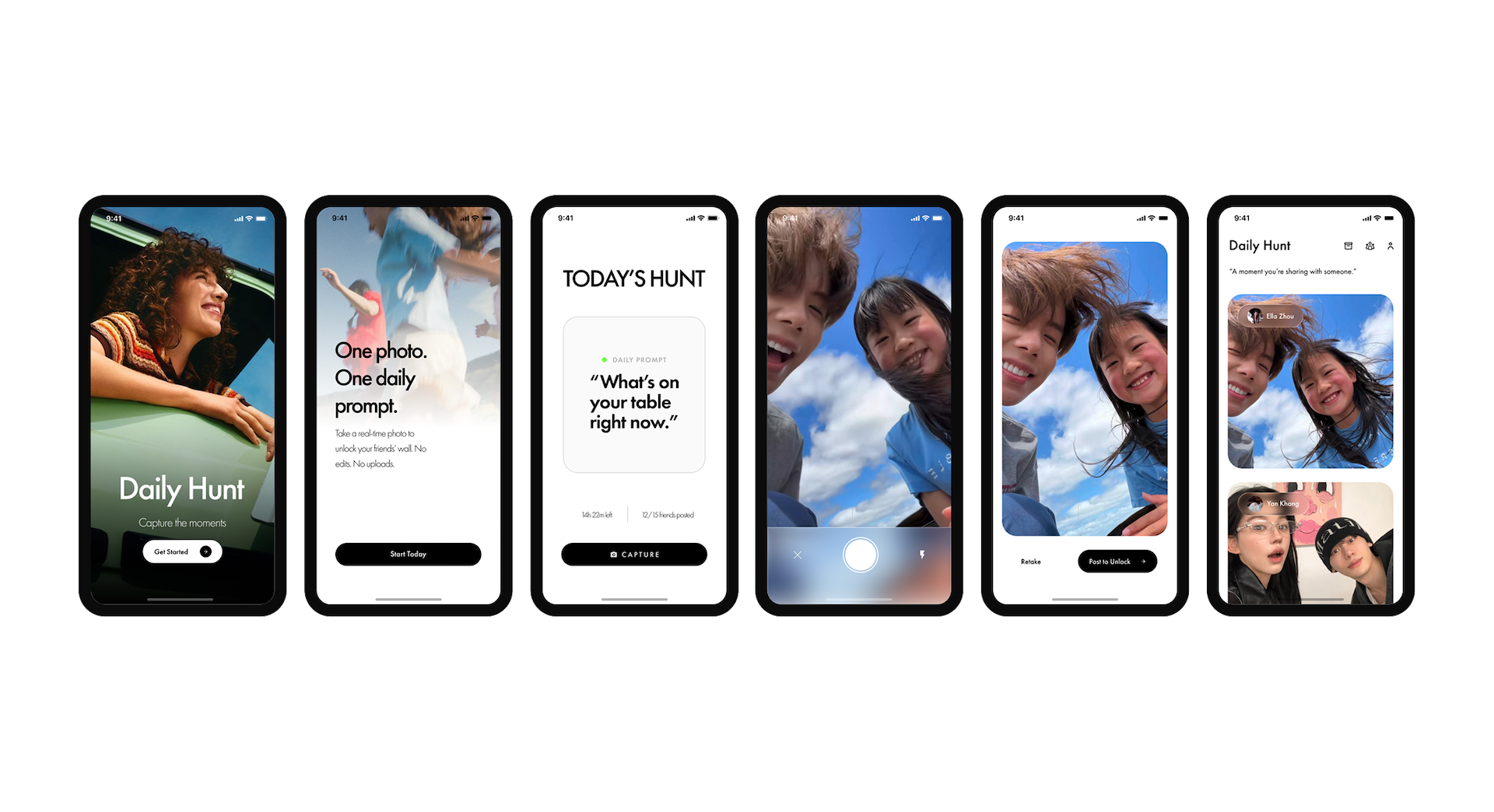
Daily Hunt also makes timing and participation visible in a lighter way. Users can see how many friends have posted, receive gentle reminders, and return each day as the prompt resets. The experience feels more like a game or a shared scavenger hunt than a social feed. It asks users to look at real life first, then share it with a small group. Through Daily Hunt, Qianyue explores whether sharing can feel less like self-presentation and more like participation. The project shifts social media away from proving that life is exciting and toward noticing, contributing, and staying connected through ordinary moments.
A Like in Real Life: A physical response experience
A Like in Real Life is an experience design project that turns the smallest digital gesture into something physical, slower, and more personal. Instead of tapping a like button on a screen, participants respond to another person through a Polaroid, a heart sticker, and a short written note.
The experience works as a chain. First, one participant receives a natural Polaroid portrait. Then the next participant sees that photo, places one heart sticker on it, and writes one short positive line about what feels real or memorable. The chain continues from person to person, creating a quiet exchange between strangers.
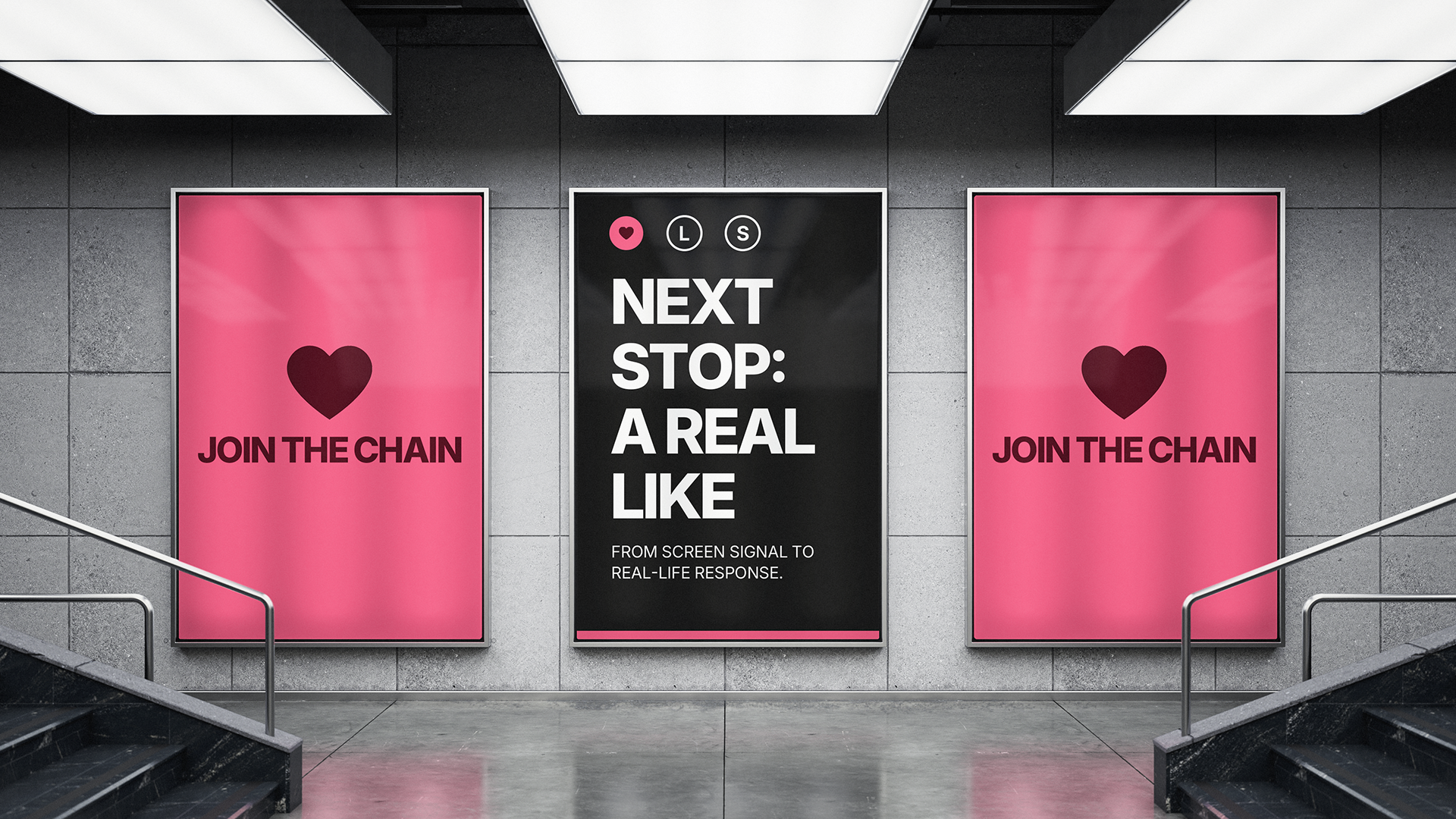
This project is designed for people who are used to giving and receiving quick online reactions but rarely feel the weight of those responses. By making the “like” physical, A Like in Real Life slows the gesture down and makes it more visible. A small sticker and handwritten sentence can feel more intentional than a number on a screen.
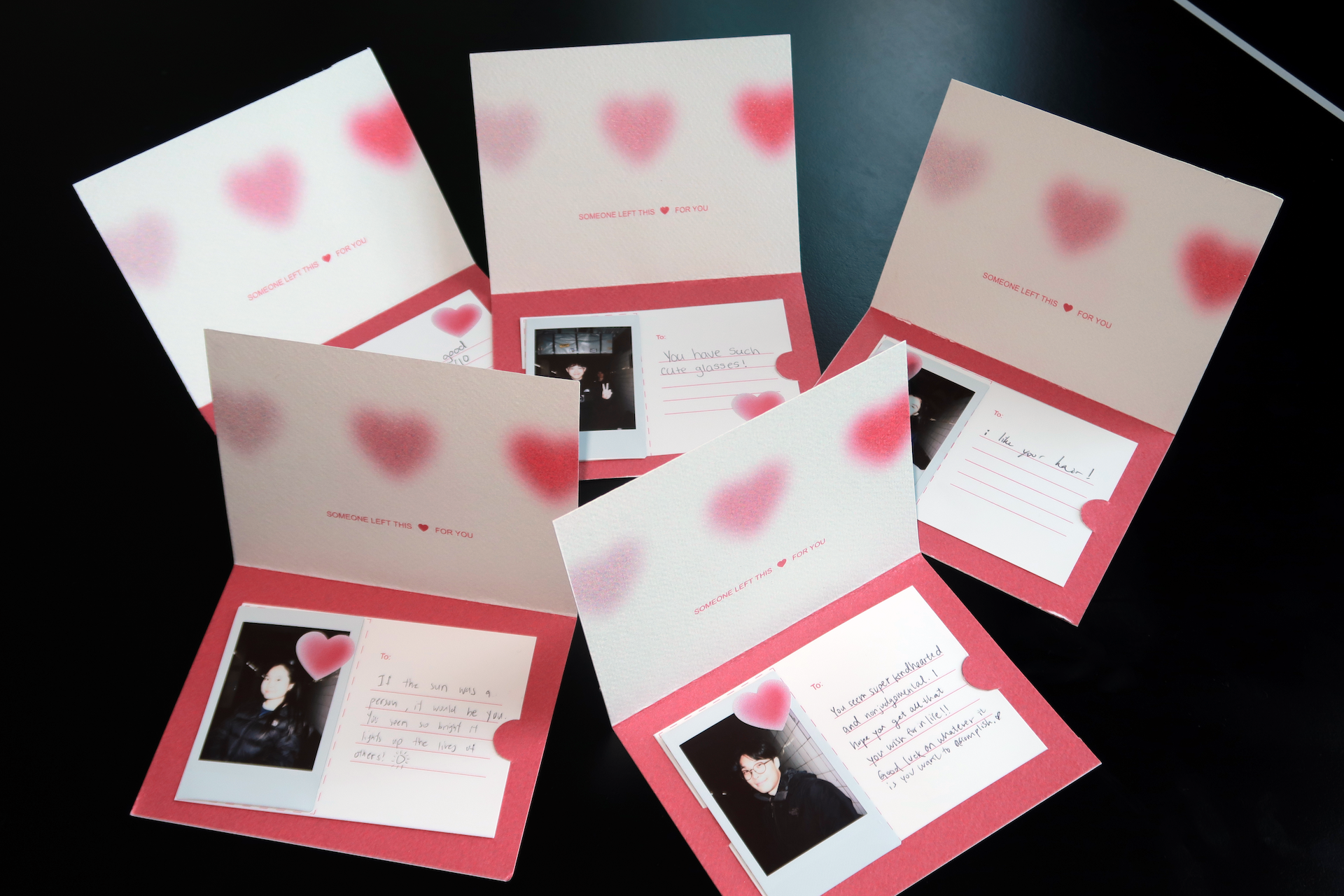
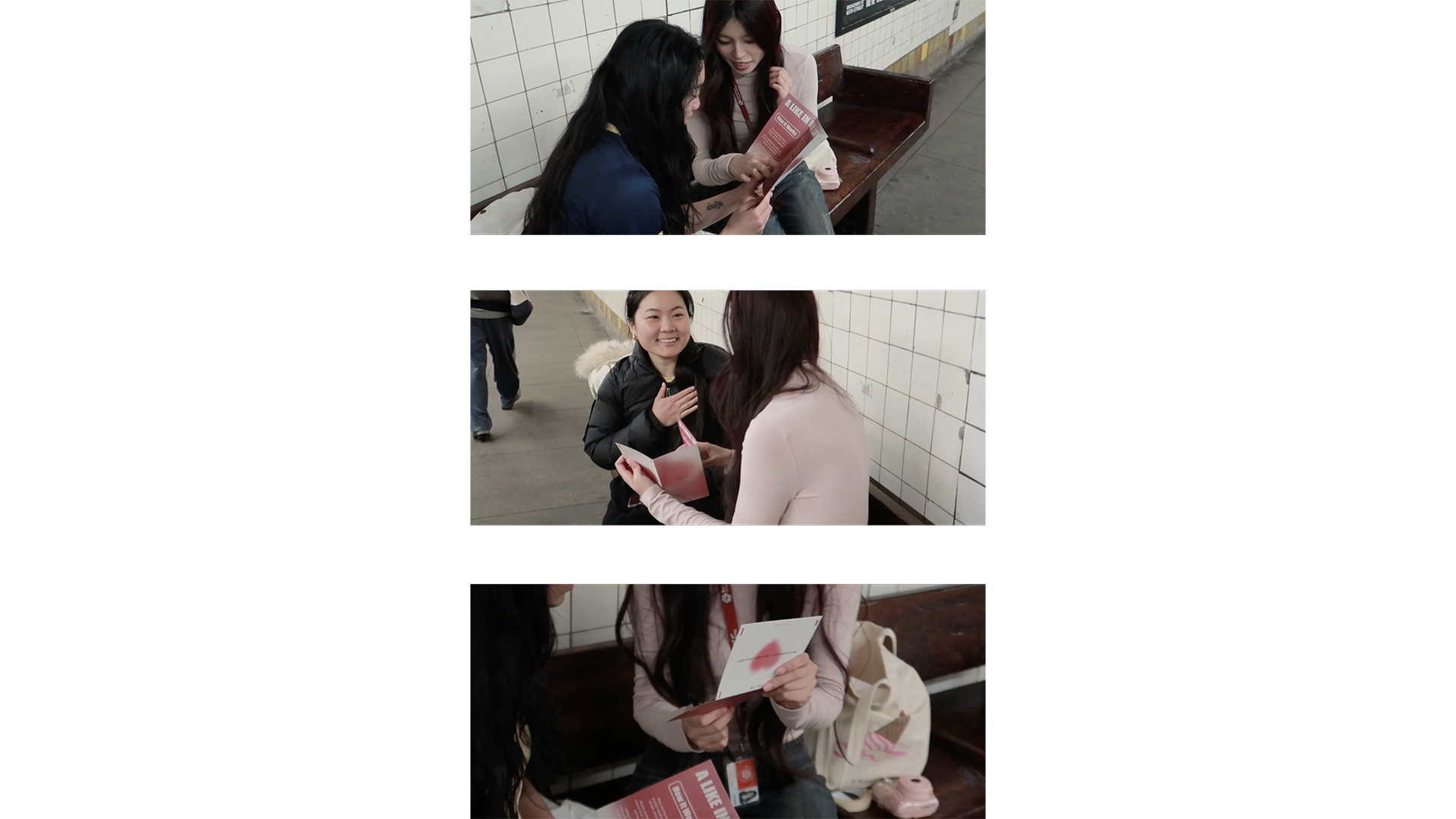
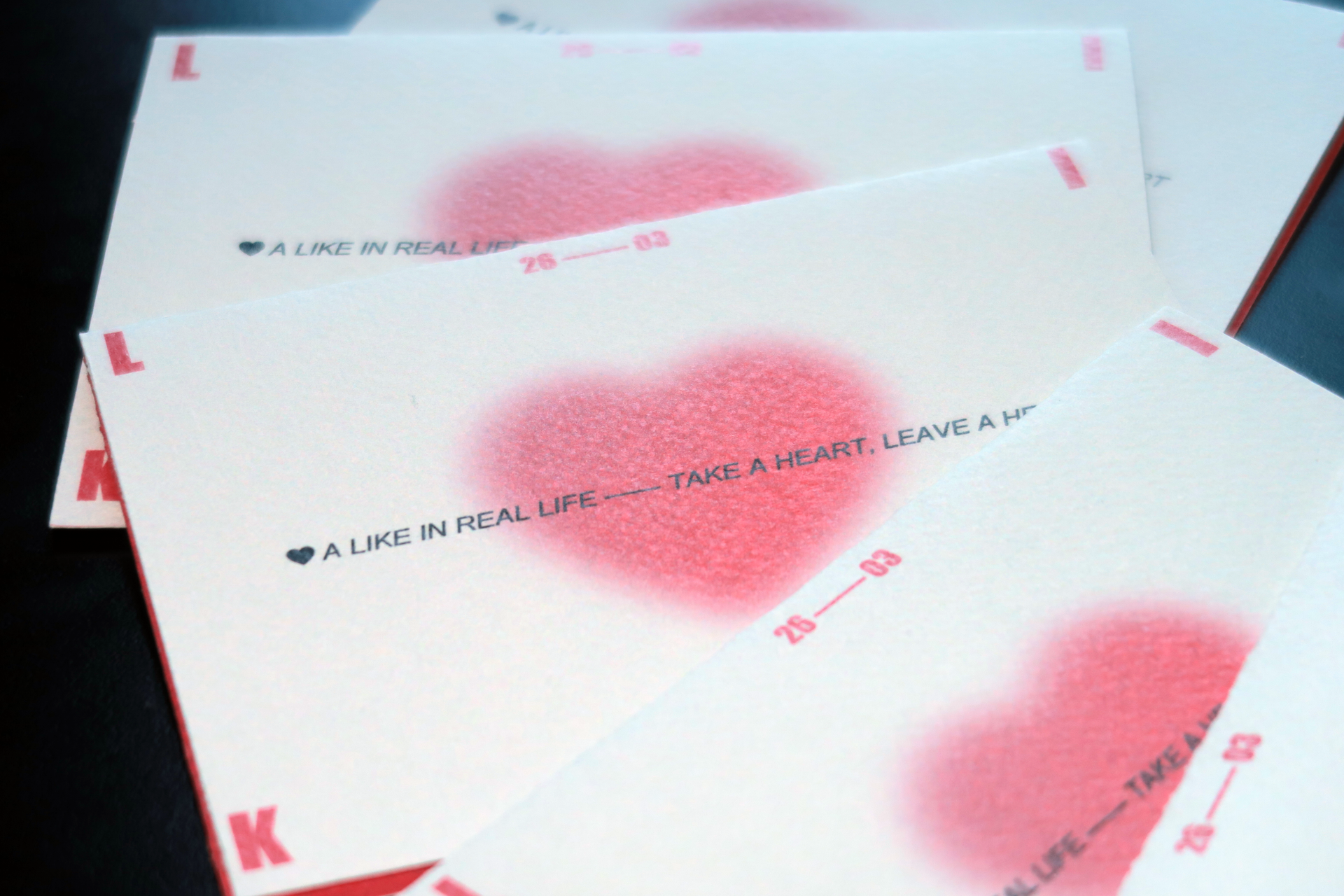
Through A Like in Real Life, Qianyue asks what response could feel like outside the logic of metrics. The project shifts the like from public validation into a small act of attention. Instead of measuring approval, it creates a moment of recognition that participants can keep, receive, and revisit later.
See more of Qianyue Zhou’s work on her website.