
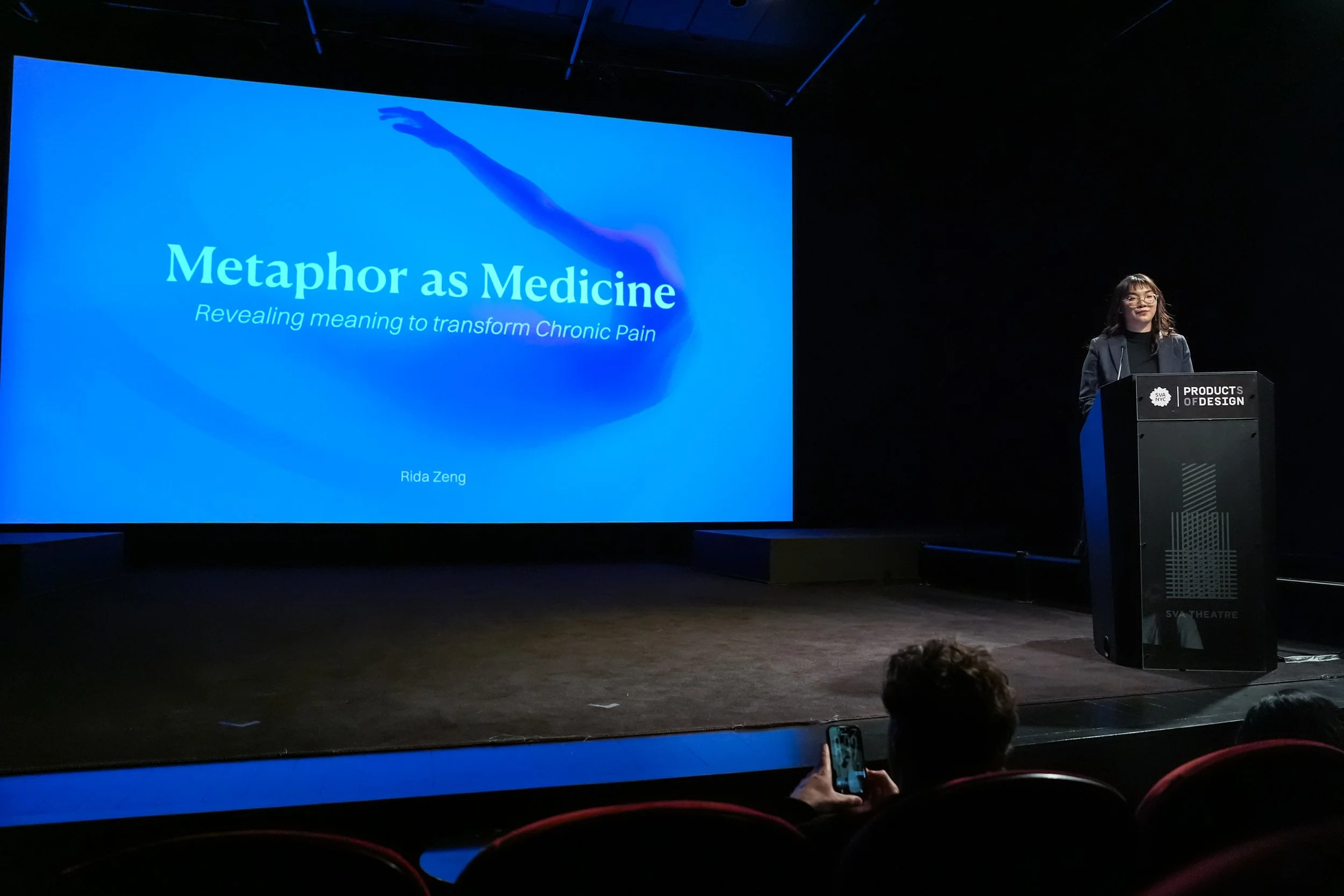
Metaphor as Medicine: Revealing Meaning to Transform Chronic Pain
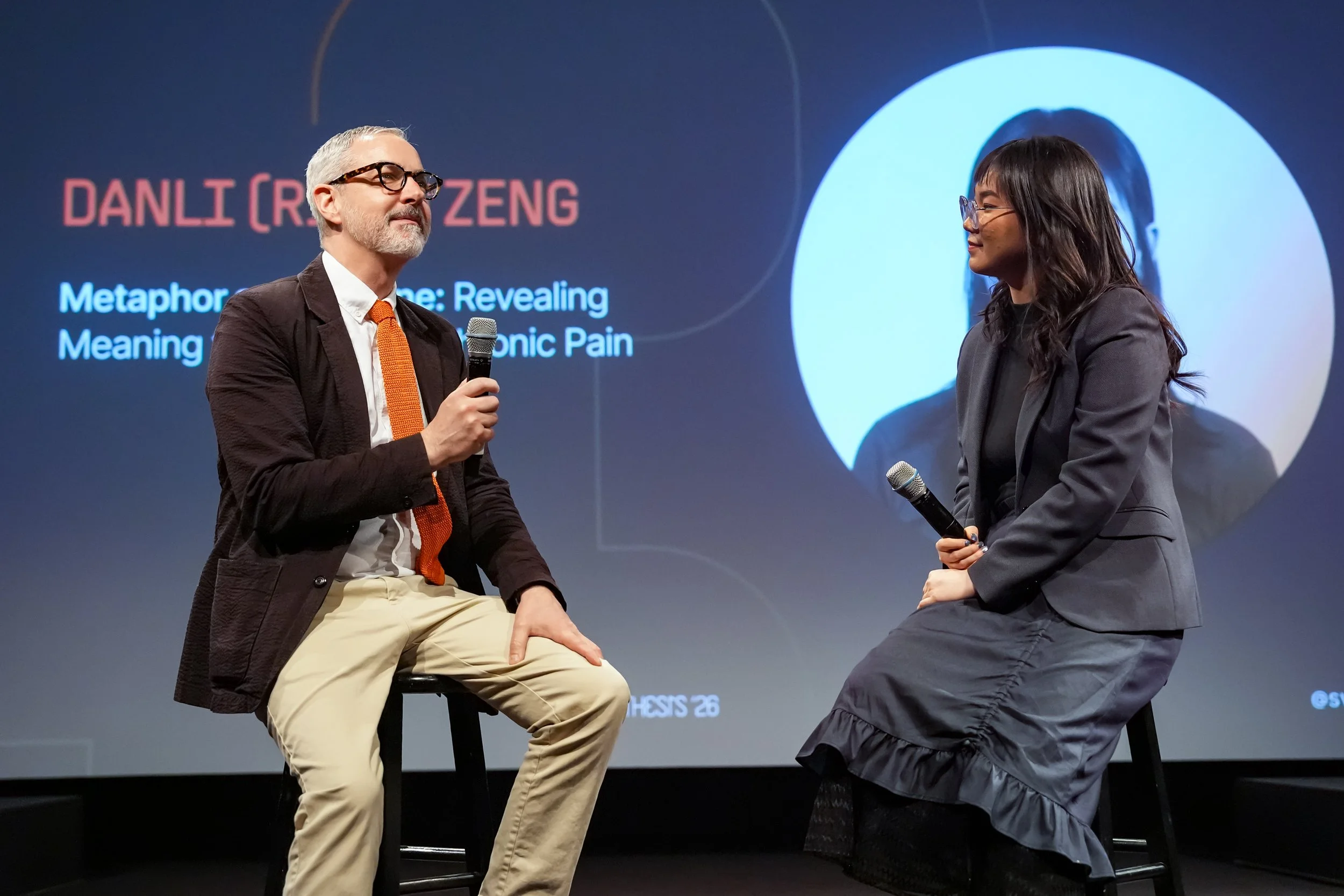
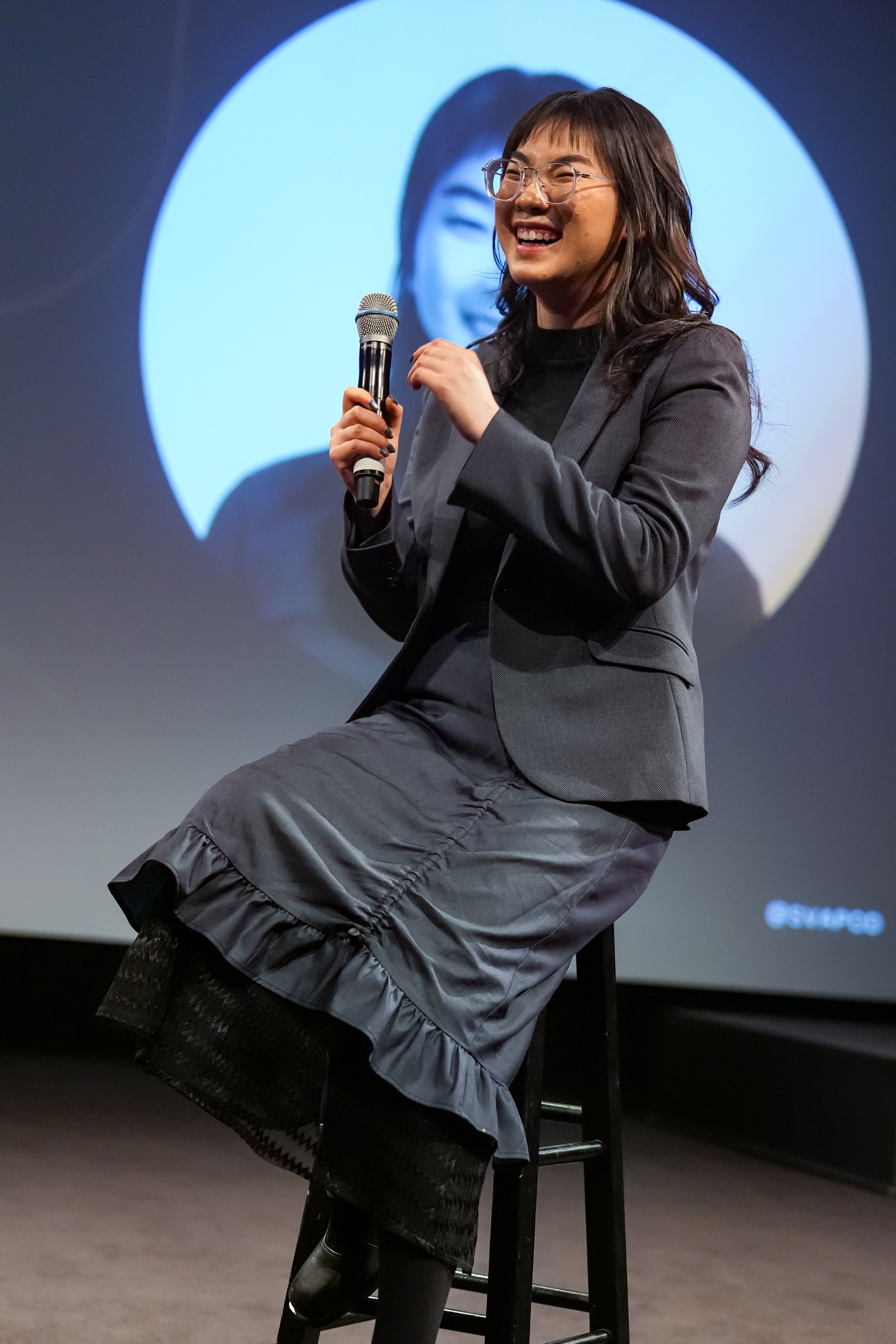
Rida Zeng's thesis, Metaphor as Medicine: Revealing Meaning to Transform Chronic Pain, asks a question millions of people meet every time they walk into a doctor's office: how do you describe a pain that has no words? Today, 1 in 4 adults in the U.S. live with chronic pain, the leading cause of disability worldwide. Yet the clinical communication standard remains the Wong-Baker chart, invented in the 1980s.
"Storytelling gives people a chance to have control;
So much of chronic pain is being out of control."
— Isabel Brett, Art Therapist
Diagnosed with a herniated disc at age eleven after two misdiagnoses, Rida spent two months on bed rest. Her world shrank to two positions: on her back reading, or on her stomach drawing. "Stories and imagination became my only way out of my body," she reflects. Years later, she found this to be the seed of something bigger. People across cultures and conditions instinctively reach for metaphor—stabbing, burning, crushing, frozen—because it's the only language we have for something so unfamiliar. To investigate, Rida drew from cognitive science, philosophy, psychology, cultural history, game studies, and health communication, and interviewed over 40 patients, clinicians, art therapists, and academics across the chronic pain ecosystem.
What emerged was a tension at the heart of pain care: patient agency and clinical legibility have existed in opposition. The more legible pain becomes on a chart, the more it's simplified. The more meaning it carries for the person living with it, the harder it is to act on clinically.
Rida’s thesis argues these don't have to be in tension. Across four interventions spanning analog to digital, individual to systemic, her thesis builds a scaffolding system that uses metaphor as a design material so people can arrive at their own understanding of pain and express how they'd like to be understood.
Painting Discomfort
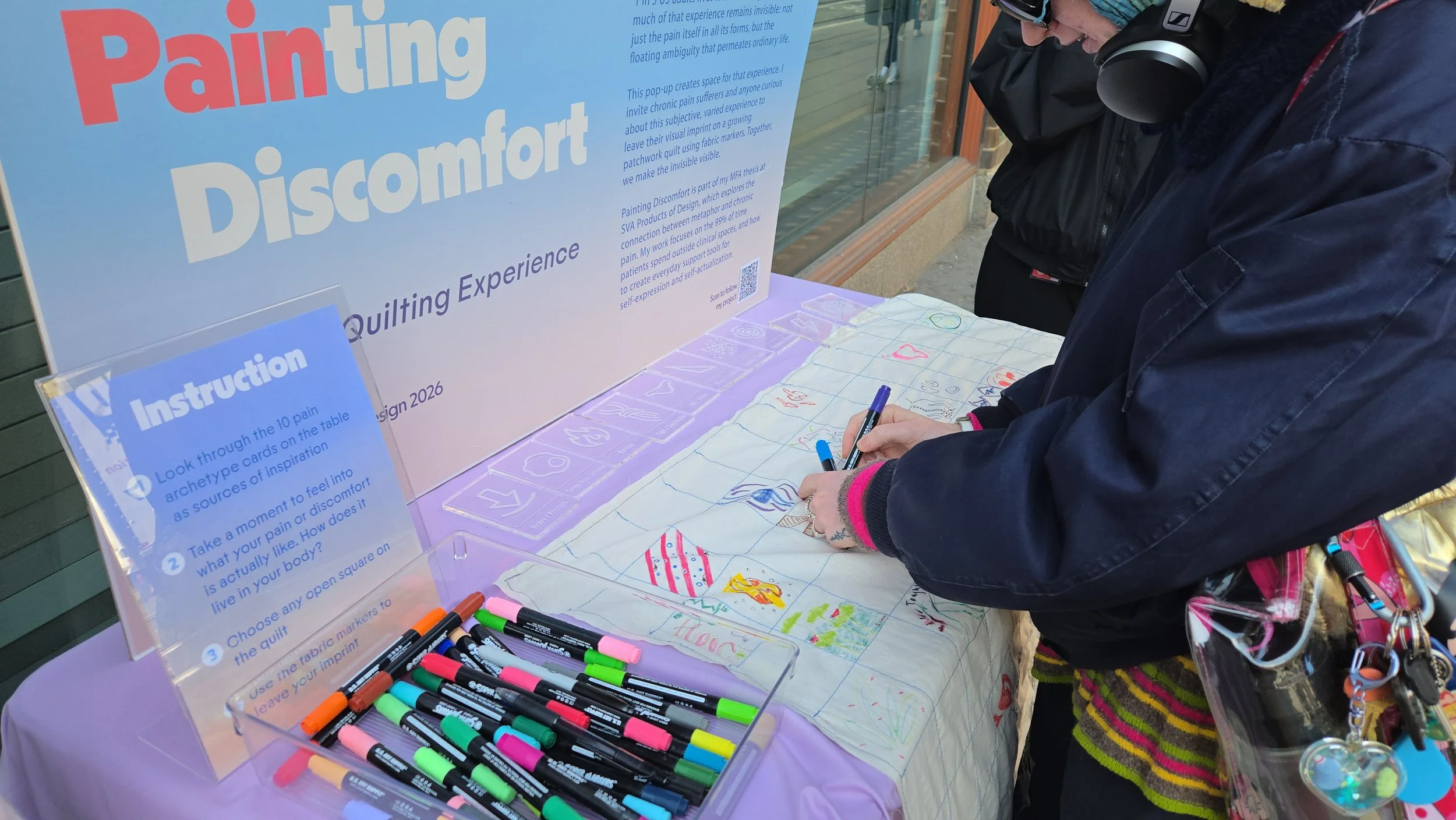
Painting Discomfort is a streetside pop-up that invites strangers living with chronic pain to visualize how their bodies actually feel. Participants use a set of ten Pain Archetype Cards as visual inspiration, sink into their own body, and leave a drawing on a piece of hand-sewn community patchwork quilt.
"Feeling my body is also a kind of knowing, not just analysis.
That deepened understanding of pain feels authentic and even
a bit beautiful. It just feels right."
— Kate, workshop participant
In two hours on the street, 23 strangers contributed. Some had never named their pain to anyone before. The quilt itself is 45 by 45 inches, sized and shaped like a scarf to symbolize protection, warmth, and shared care. The ten archetype cards work on a principle Rida calls “visual transparency”: the more abstract yet legible an image is, the more authentically it inspires original expression. Painting Discomfort is intended to scale as a research surface for studying how the chronic pain community develops shared languages of pain.
Imago
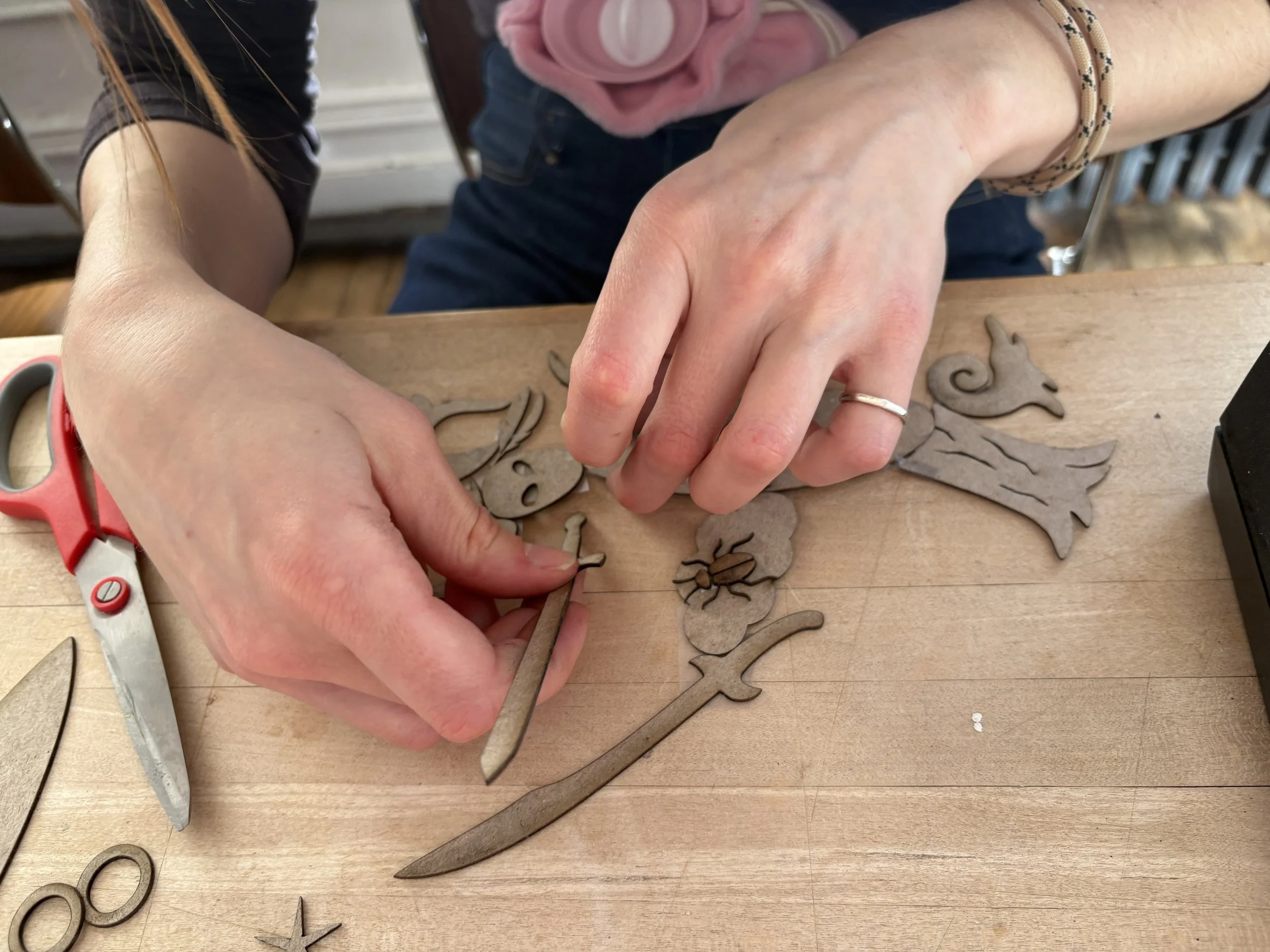
“What goes even deeper than naming the sensation of pain is understanding who we are in relation to it,” Rida explains. Imago is a physical identity-building kit, designed for home use, that invites people to look beyond their history with pain and forge an aspirational identity through the tactile act of making.
"What I liked was how flexible it was. I created an entirely new thing… this felt
almost as good as taking painkillers."
— Coral, workshop participant
Grounded in Joseph Campbell's Hero's Journey and contemporary frameworks from narrative identity theory and Acceptance and Commitment Therapy, Imago provides a set of versatile materials designed to enable the creation of the aspirational self people want to become, holding pain as a meaningful aspect of identity rather than as damage.
Tender
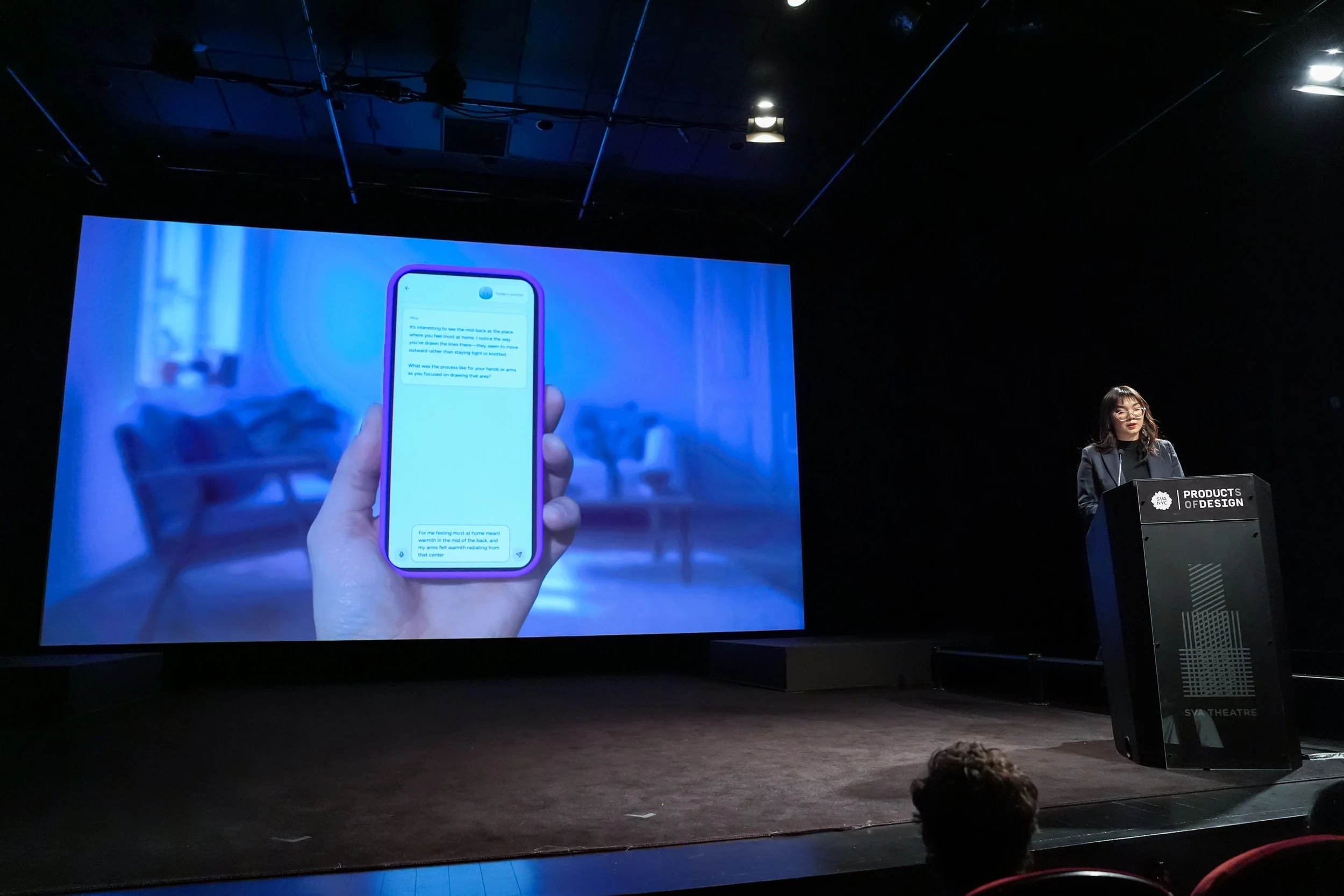
Tender is the digital expansion of Imago and a creative AI companion for everyday meaning-making. Each day, users receive a single prompt and respond however feels right: by drawing, photographing, or narrating. They share the work with Mira, an AI facilitator who asks a few questions to surface the creative decisions behind what they made. Over time, Tender synthesizes these sessions into a personal metaphor system shaped by the users’ creative input.
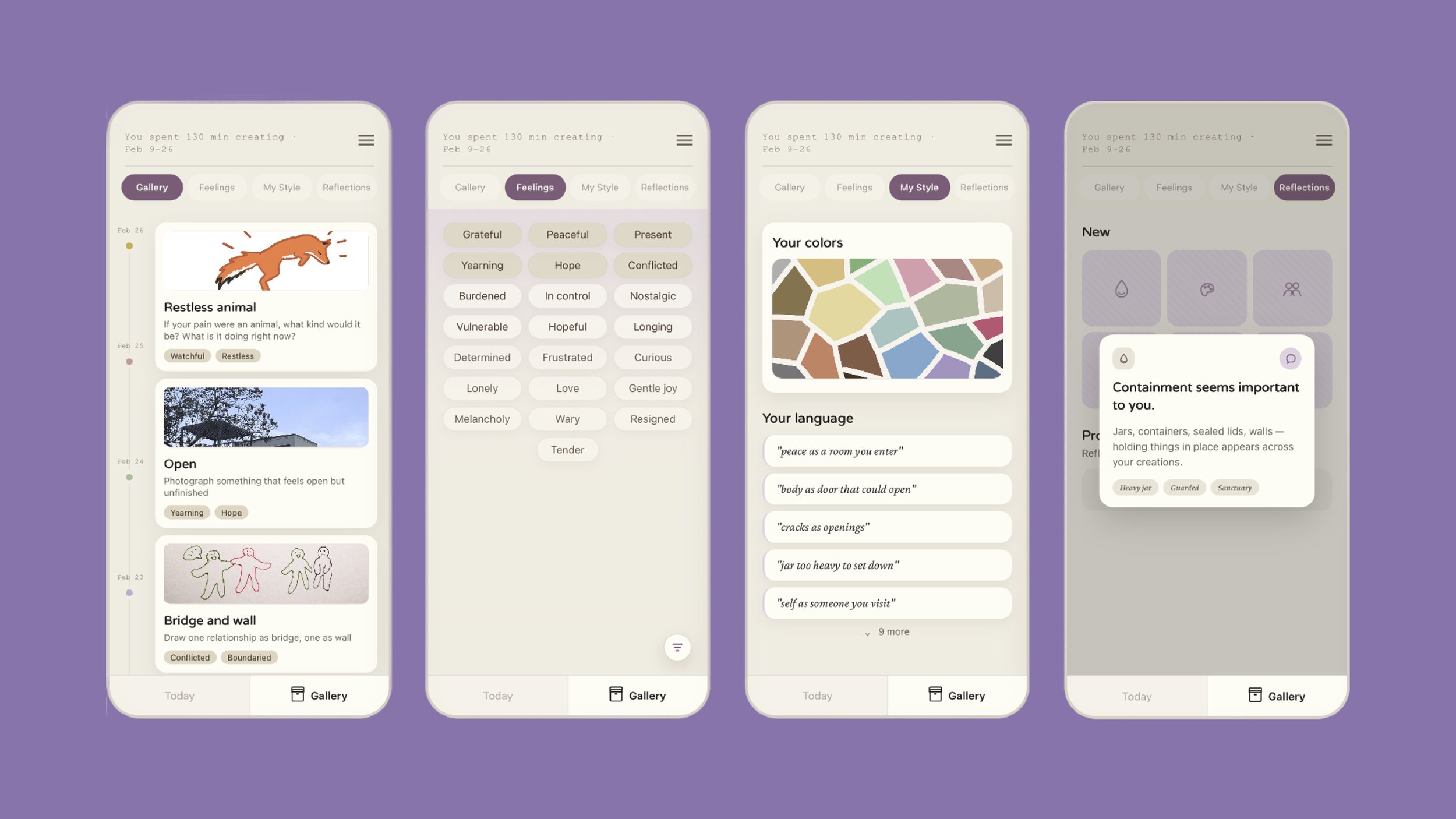
"It gives meaningful prompts and doesn't restrict the way of creating.
Tender feels like a good starting point for people who want to start journaling
but don't know what to write down."
— Chronic pain sufferer
Behind the front end is an architecture of ethical guardrails that operates at two levels: AI configuration and interaction design. Every critical decision is returned to human hands.
Tender brings meaning-making into everyday life, outside the therapist's office. The longer-term vision is for it to become a clinical companion, where therapists guide the experience, patients feel supported between appointments, and clinicians get better informed to build better care.
PainBridge
PainBridge is Tender's medical-side counterpart: a B2B2C platform that surfaces and translates complex pain profiles for both patients and clinicians. Patients log their pain between visits through voice, body chart, and short surveys. The system synthesizes the qualitative and quantitative data into a summary that the clinician can scan in under 30 seconds before the next appointment.

"It would help me start my day or set up my consultation, so I can spend more time on specific things rather than getting the whole story. There's space for PainBridge."
— Director of Medical Informatics, Northwell
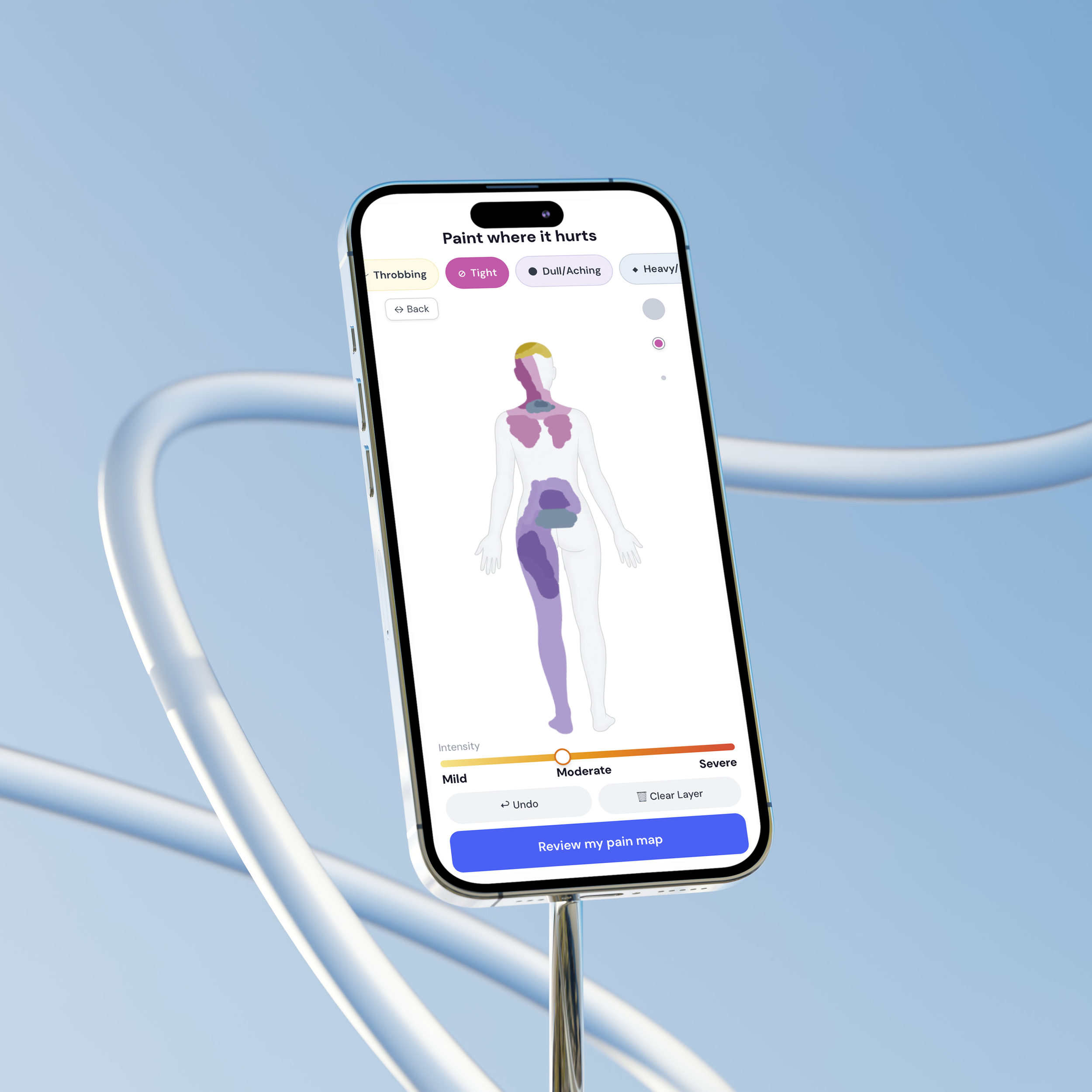
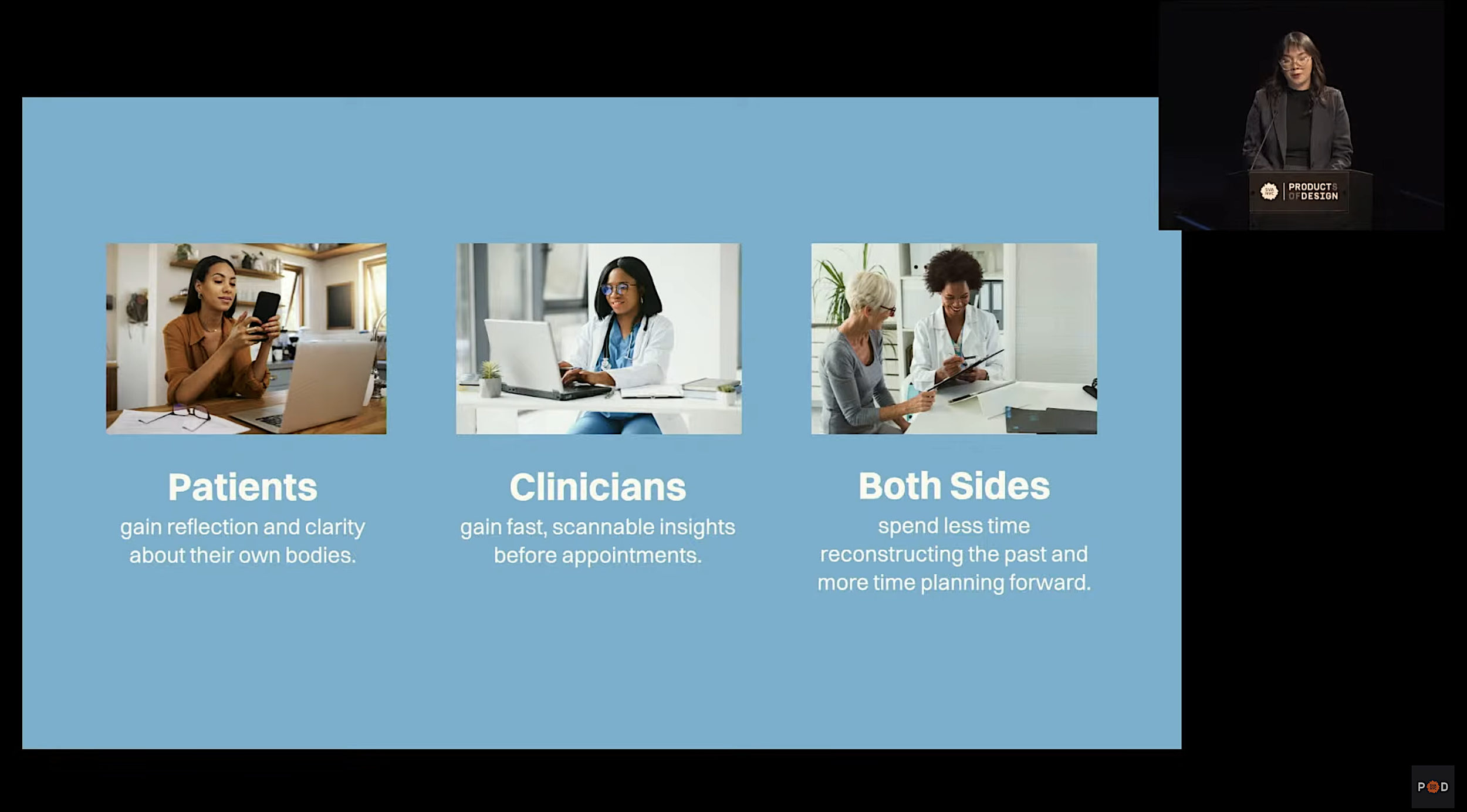
Rida explains that building this platform meant designing for the real constraints of healthcare: privacy, infrastructure, and clinician time. “Patients create meaning while documenting,” she says, “while clinicians walk into the room already knowing what's changed. Both sides spend less time reconstructing the past and more time planning forward.” Historically, patient agency and clinical legibility have been in tension. PainBridge argues they don't have to be.
Across all four interventions, the through-line is the same: pain is a linguistic problem, not just a medical one. And metaphor, built carefully, is medicine.
For a deeper look into Rida's thesis process, research, and future work, explore her posts on Medium.