
Expressing Anxiety (焦虑) in American Contexts
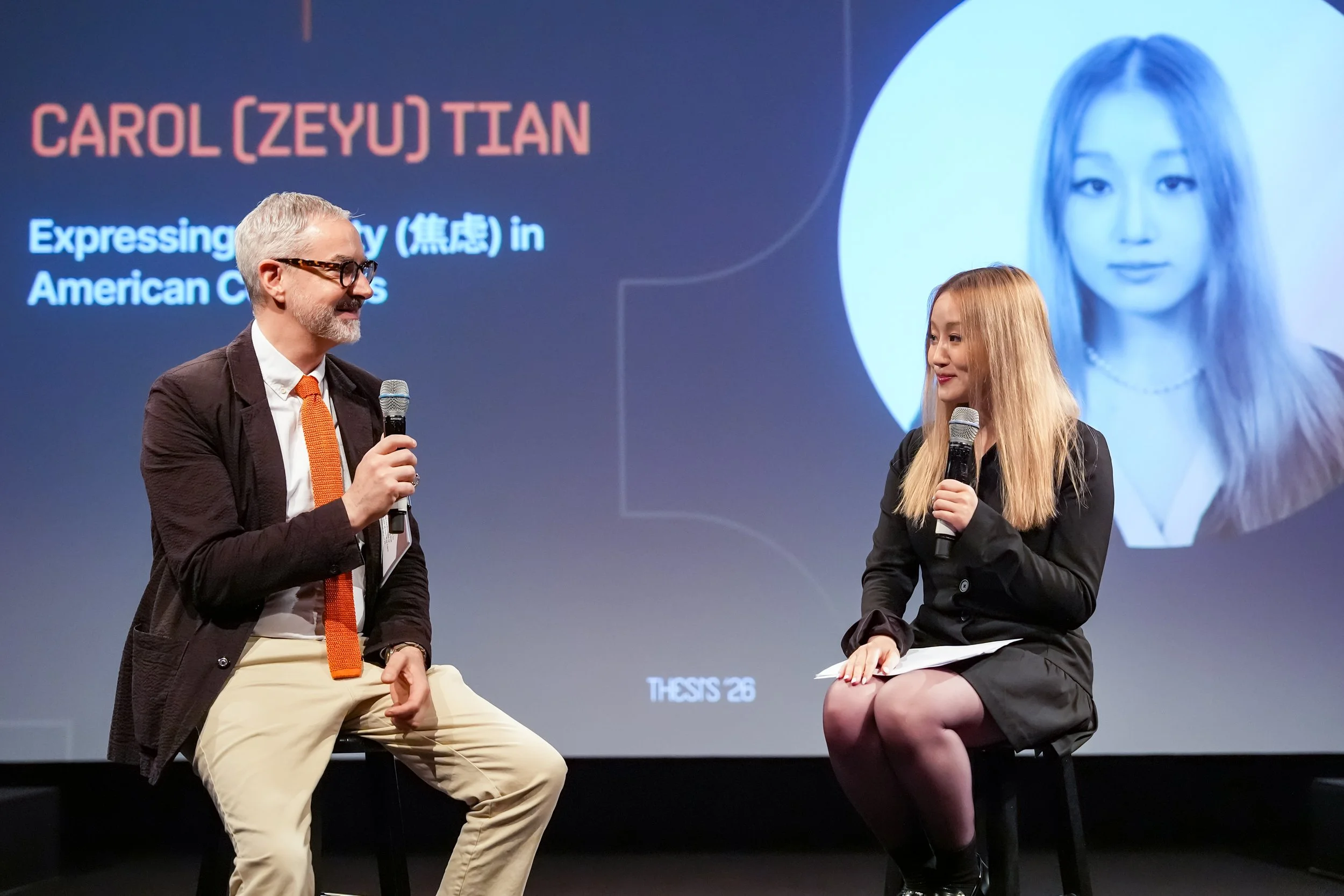
Carol Tian’s thesis, Expressing Anxiety (焦虑) in American Contexts, explores how Asian cultural values shape the way anxiety is experienced, expressed, and supported among young Chinese women living in the United States. While many existing emotional support systems emphasize direct communication, verbal openness, and immediate sharing, Carol’s thesis investigates what emotional support might look like for people who experience anxiety more quietly—through restraint, internalization, or indirect expression.
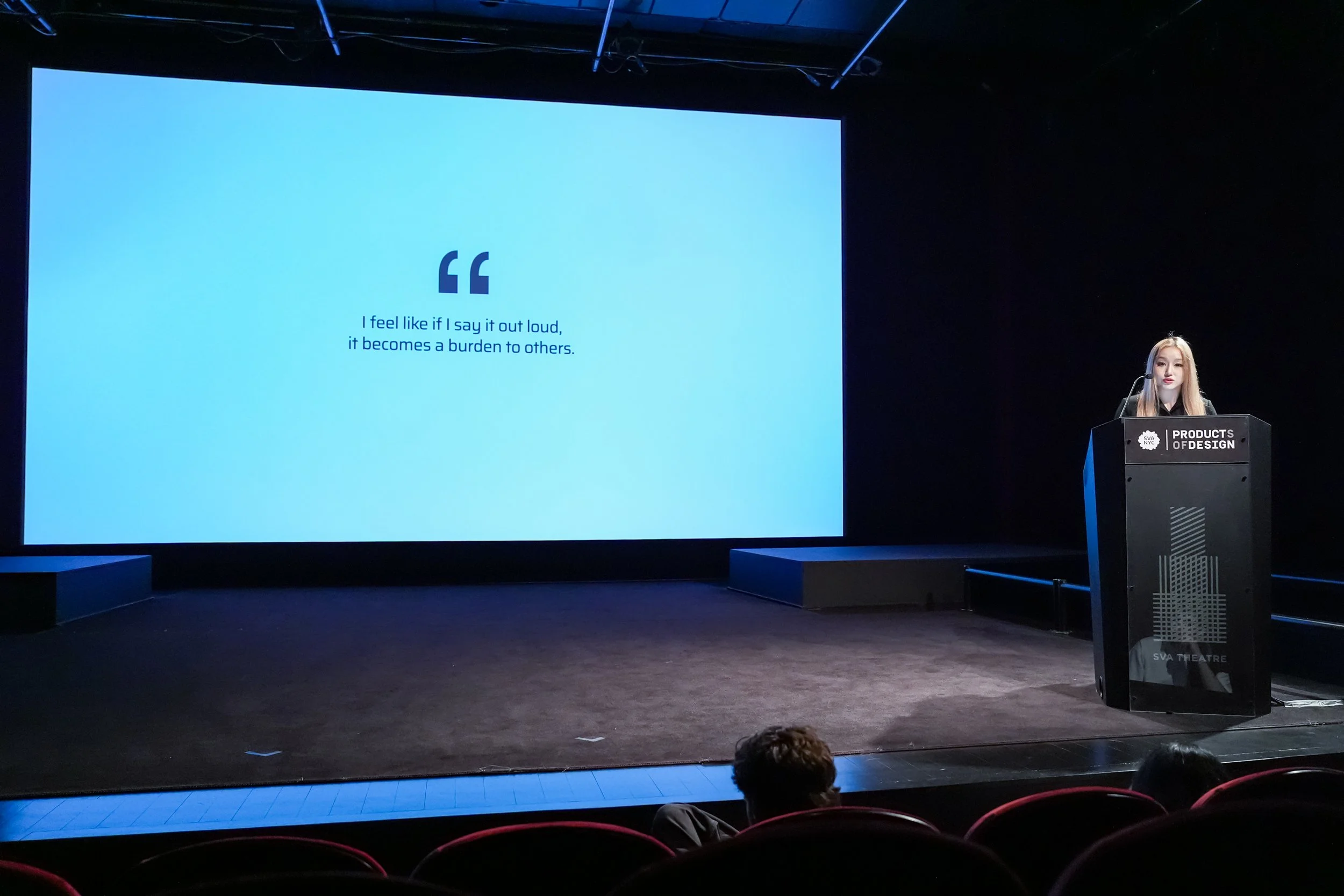
“I feel like if I say it out loud, it becomes a burden to others.”
Through interviews and workshops, Carol found that many participants did not lack emotions or the desire for support, but rather lacked ways of expressing anxiety that felt safe, culturally comfortable, and emotionally sustainable. These insights became the foundation for a series of projects exploring non-verbal expression, delayed communication, ritual-based coping, and collective emotional release.
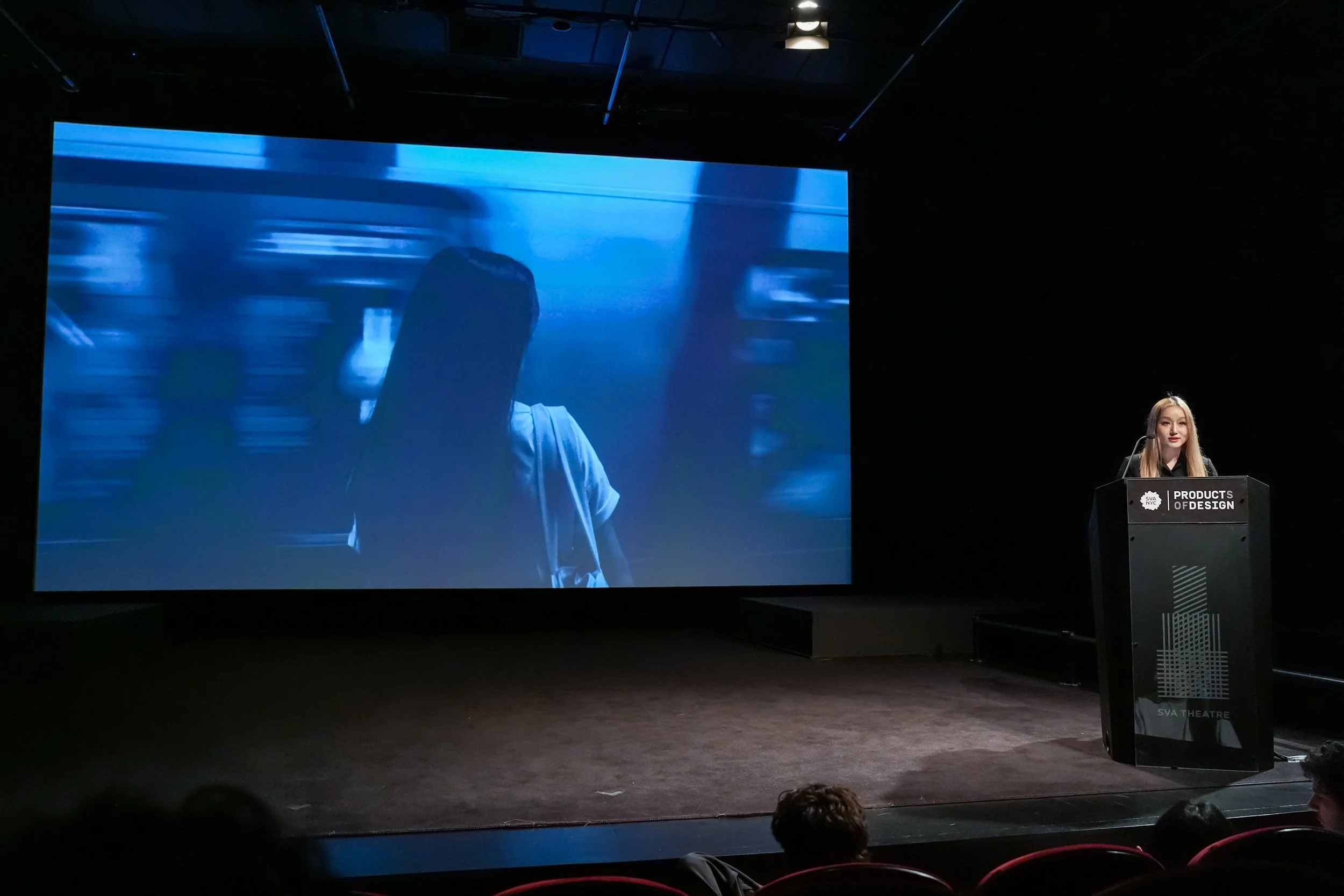
Rather than treating anxiety as something to eliminate, Expressing 焦虑 jiāo lǜ reframes emotional support as something quieter, slower, and more empathetic—creating alternative pathways for emotional expression beyond direct conversation.
HELD: A Non-Verbal Emotional Interaction System
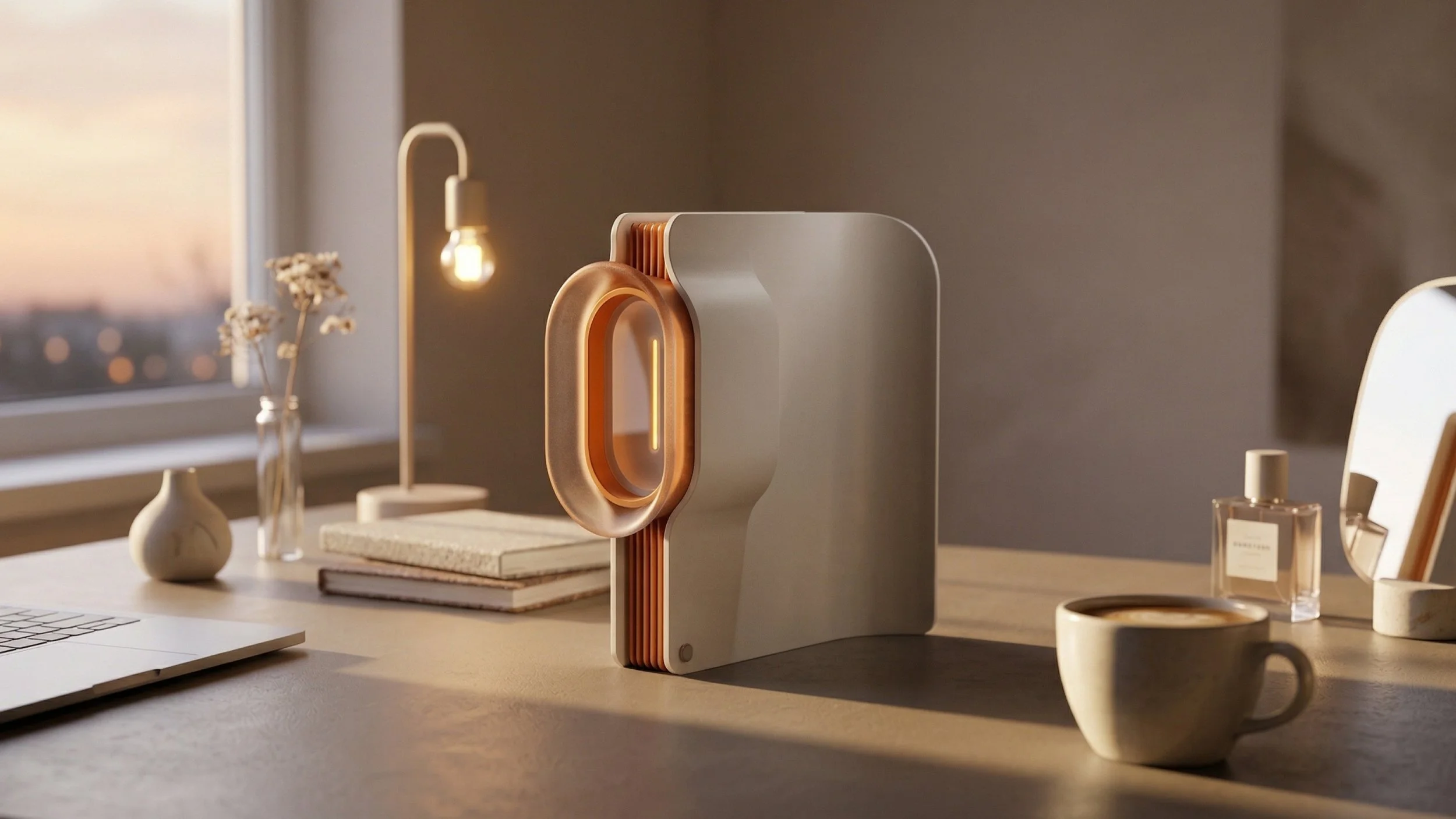
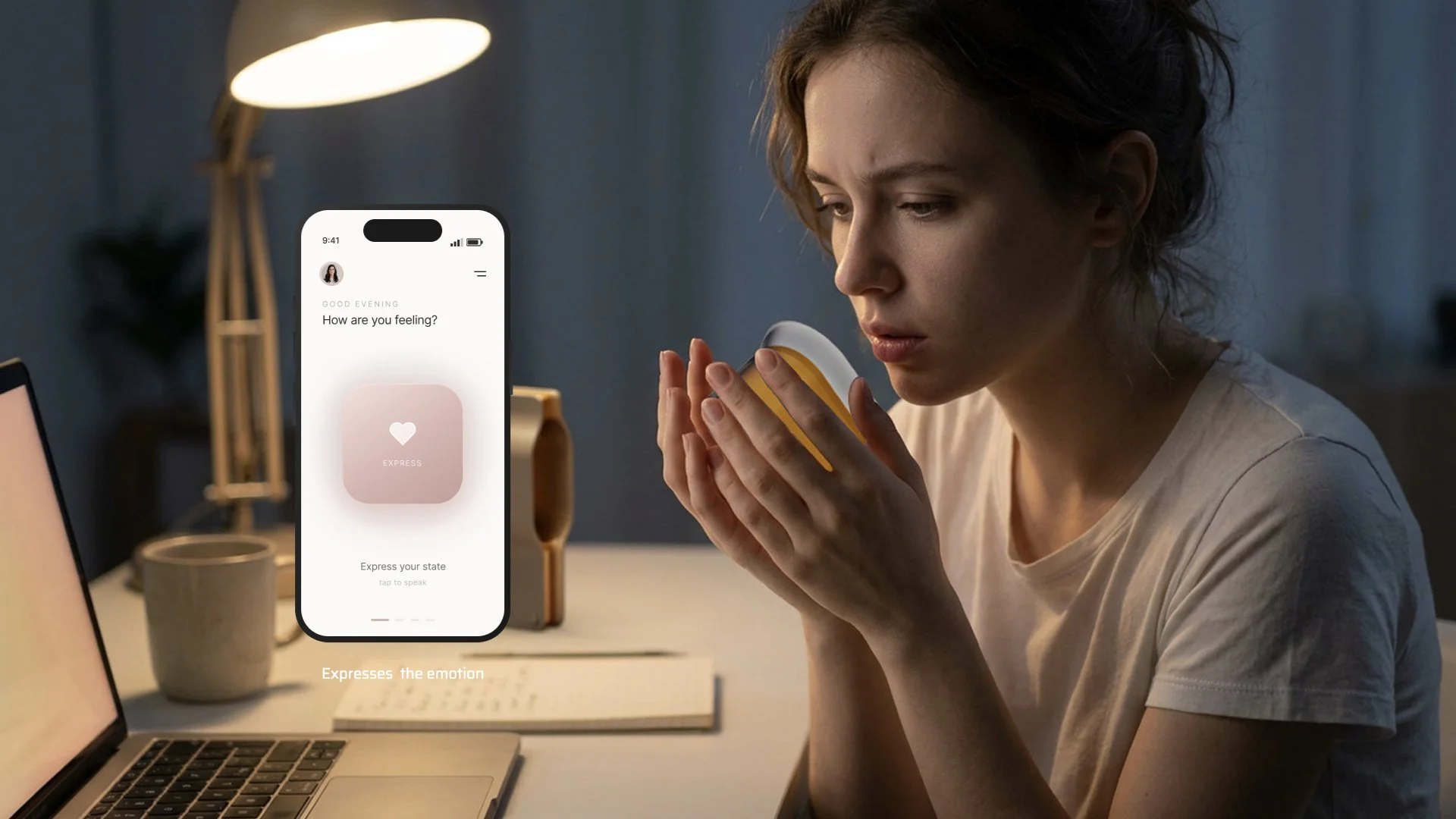
HELD is a sculptural tabletop device and companion app designed to support emotional release without requiring structured language or immediate social interaction. When emotional pressure builds, users can speak freely toward the device through a detachable microphone component. Instead of instantly transmitting emotional signals, the system introduces a buffering period, allowing emotions to settle before any communication occurs.
During this phase, HELD responds through soft lighting and rhythmic feedback, creating a calm environment that supports emotional stabilization and reflection. The companion app extends this experience through lightweight emotional reflection and delayed communication. Emotional signals can be optionally shared with a small, trusted circle only after a period of holding, shifting emotional interaction away from impulsive reaction and toward intentional expression.
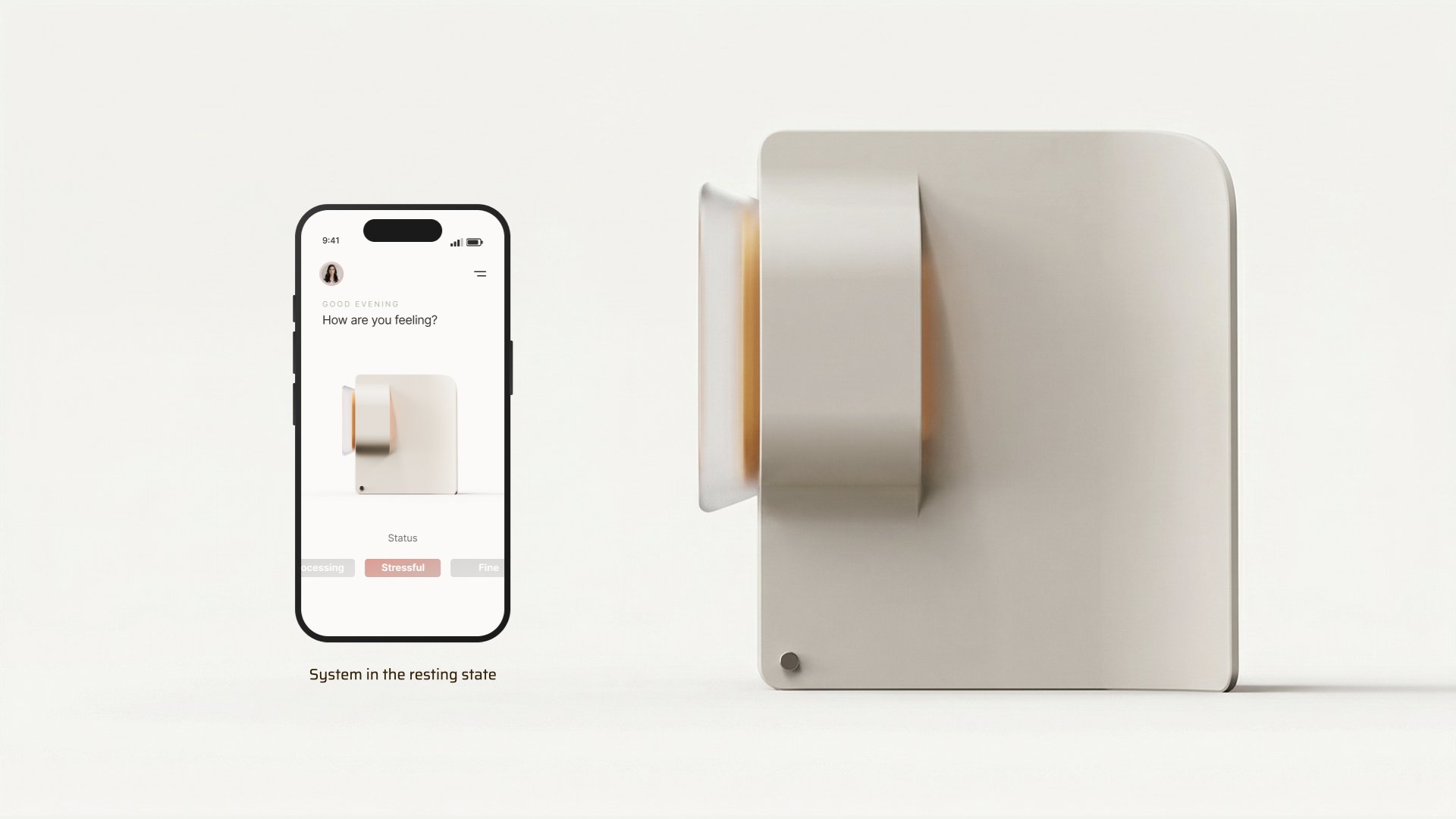
Over time, the HELD companion app builds a concise emotional timeline, helping users recognize emotional patterns and recovery without overwhelming them with excessive tracking or clinical interfaces. Together, the physical device and digital layer create a quieter, lower-pressure model of emotional support centered around pacing, privacy, and emotional safety.
Carol says the project emerged from research insights around emotional restraint, fear of burdening others, and discomfort with direct emotional disclosure. Through HELD, she explores how emotional support systems might feel safer when expression is indirect, delayed, and non-verbal.
CalmKit Club: Ritual as Emotional Support
While HELD focuses on moments of emotional release, CalmKit Club expands emotional support into an ongoing ritual practice. Designed as a monthly sensory care service, CalmKit Club provides personalized kits for people who feel anxious but struggle to regulate or process stress consistently over time.
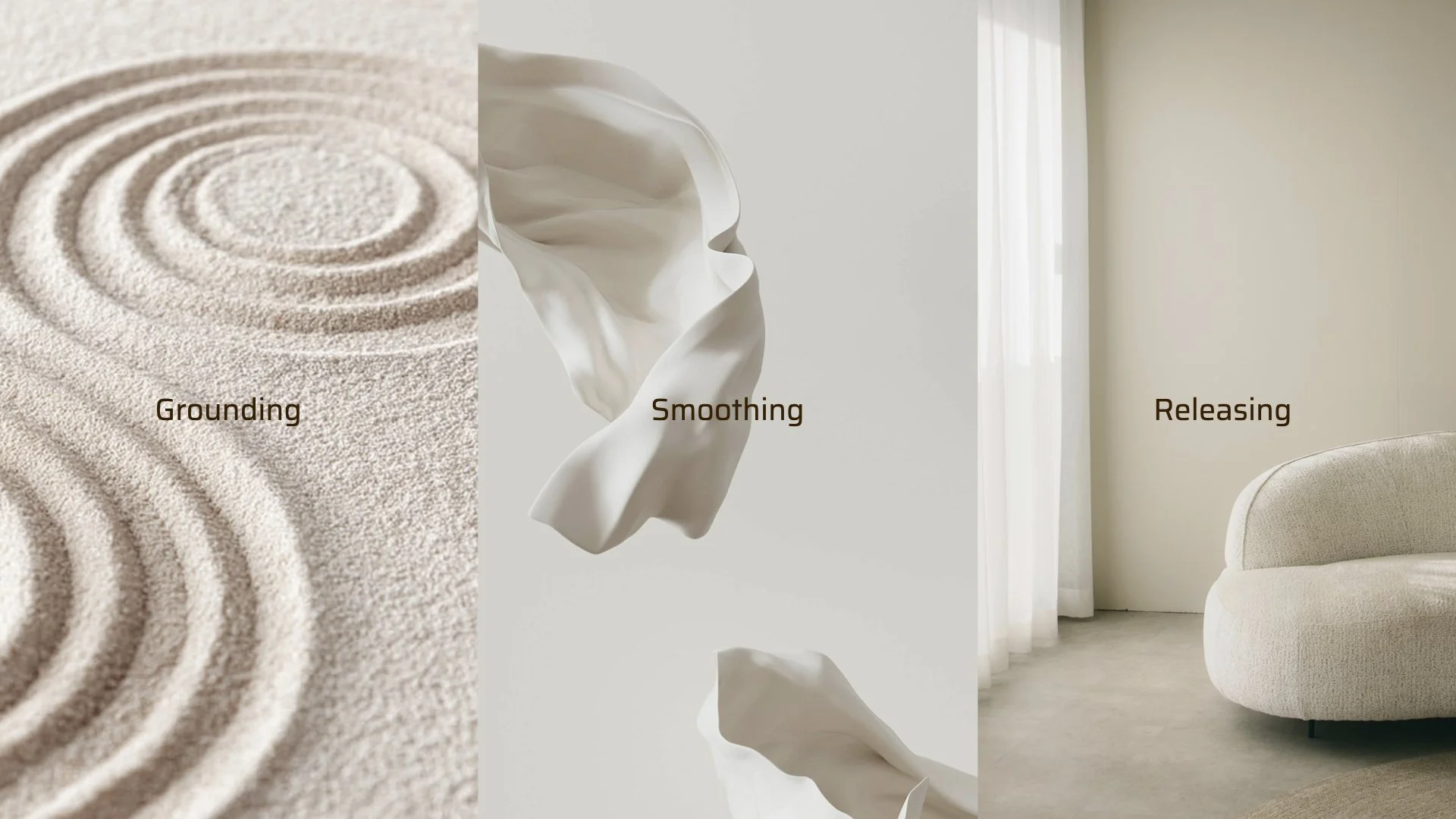
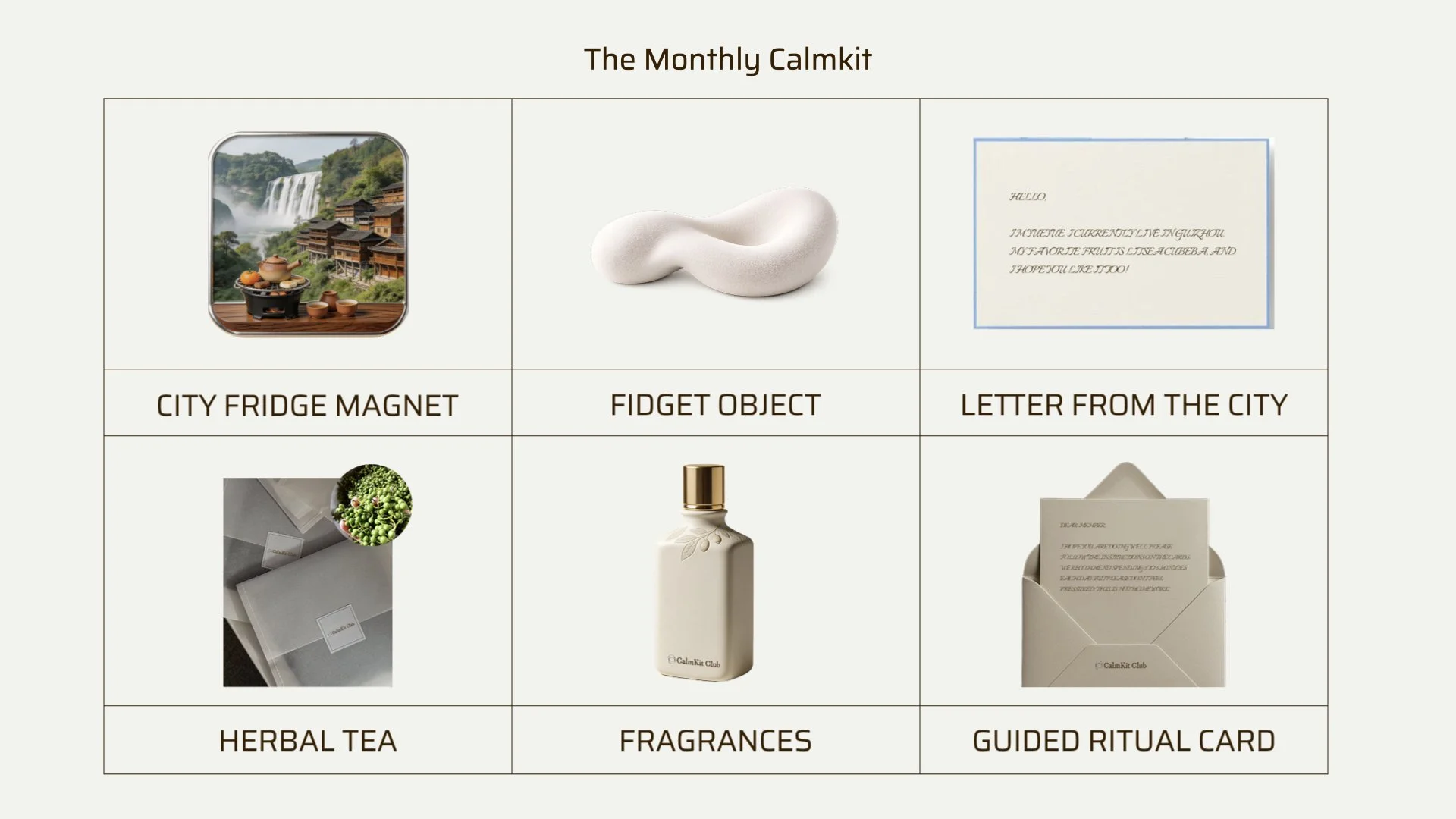
Before receiving a kit, members choose a ritual direction based on their current emotional needs: grounding, soothing, or releasing. Each CalmKit contains sensory objects, fragrances, herbal teas, stress-relief tools, and personal artifacts connected to a specific city. The kits also include a handwritten letter from a girl living in that city, along with an item she personally selected.
By connecting each kit to a city, CalmKit Club creates a quiet sense of connection across distance, allowing users to receive care from someone far away, free from pressure or judgment. A guided ritual card transforms the kit into a repeatable daily practice, encouraging users to build slower and more intentional relationships with emotional care.
The Shatter Party: Collective Emotional Release
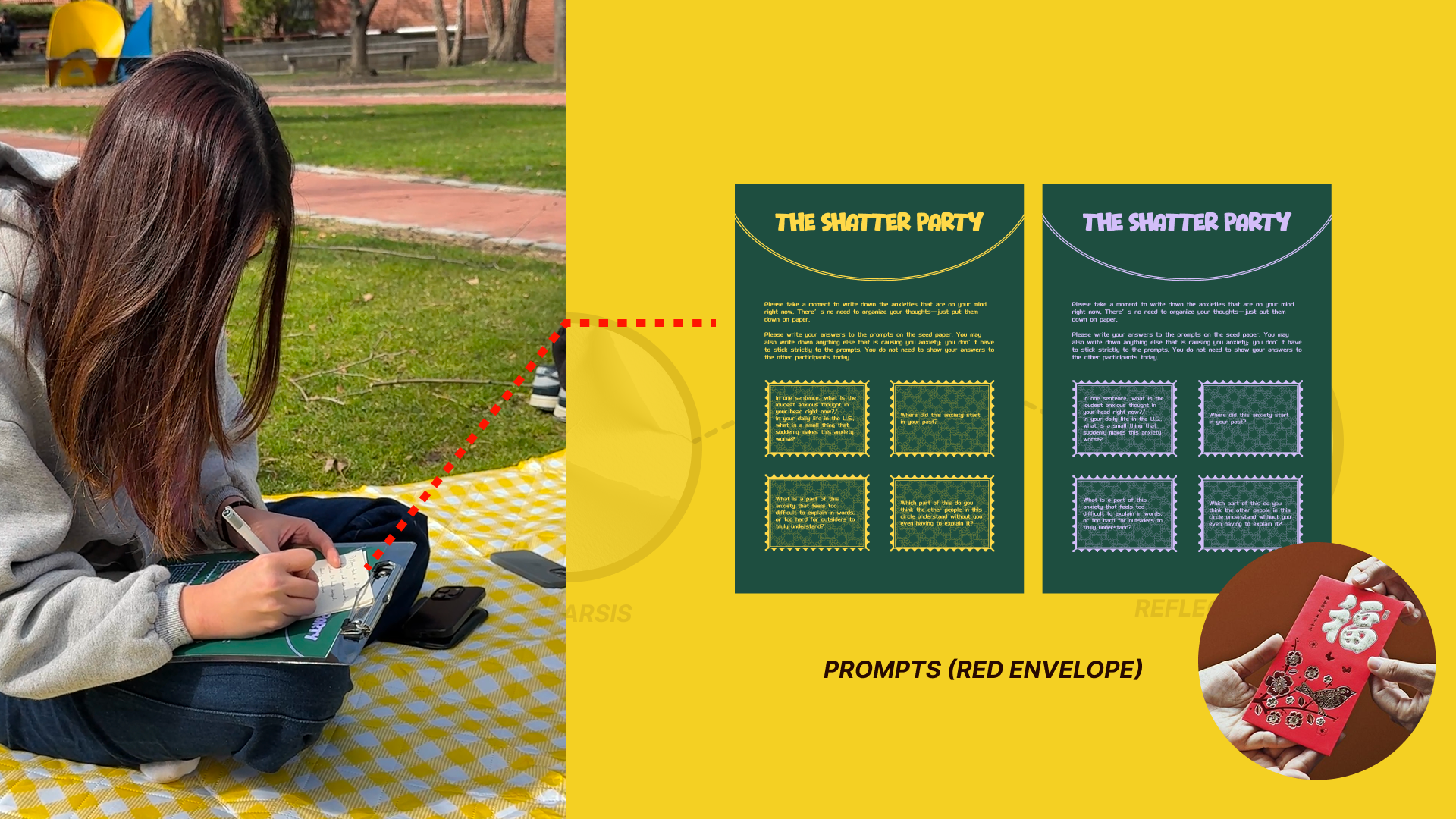
The Shatter Party explores how anxiety can be transformed through physical participation and collective ritual. Rather than suppressing or hiding anxious thoughts, participants are invited to externalize them, destroy them, and celebrate their release together.
During the experience, participants write down their anxieties, cut them into confetti-like fragments, and collectively launch them into the air using custom-designed confetti devices. The event transforms emotional weight into a playful and visible act of release, reframing anxiety not as something shameful or isolating, but as something that can be collectively acknowledged and transformed.
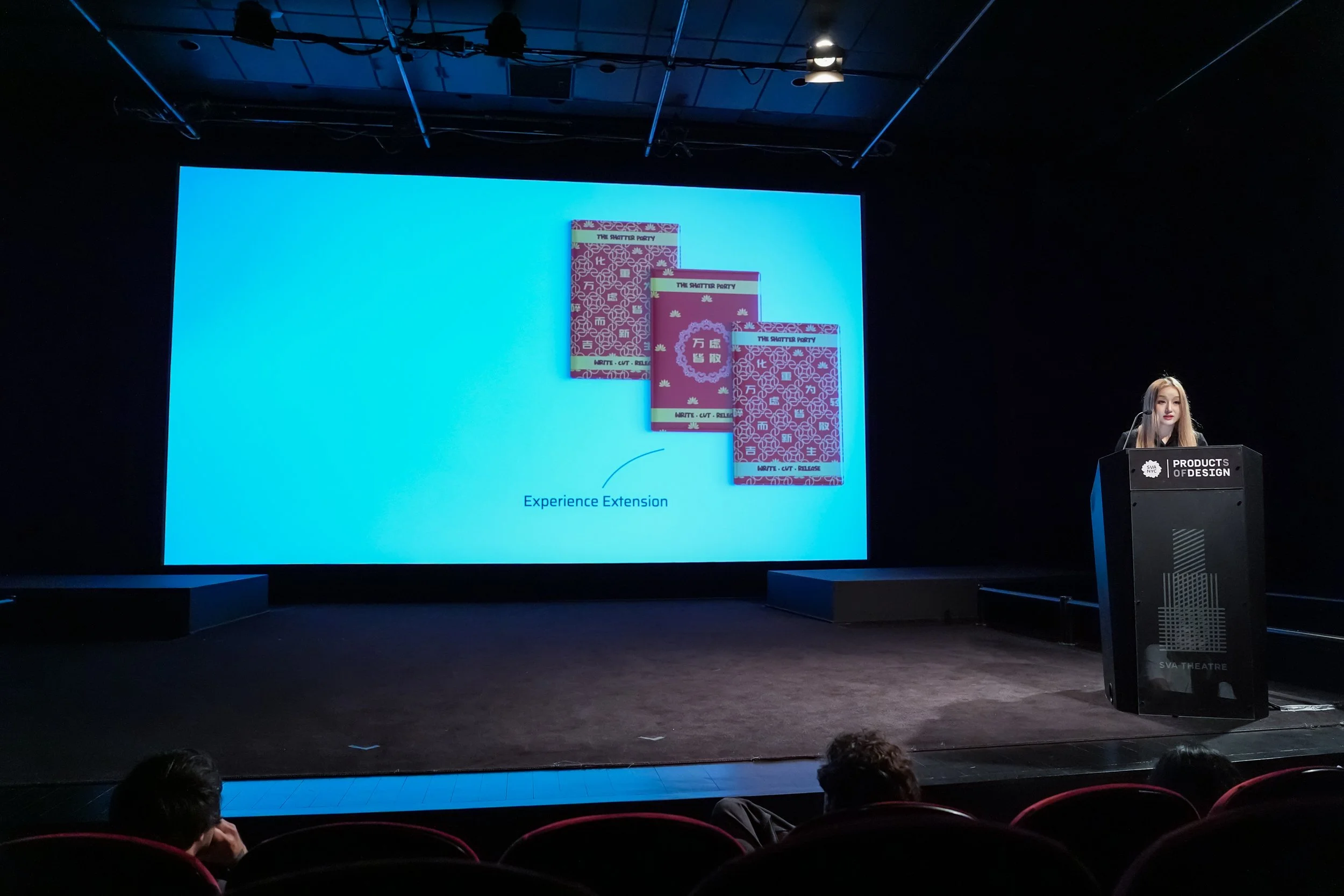
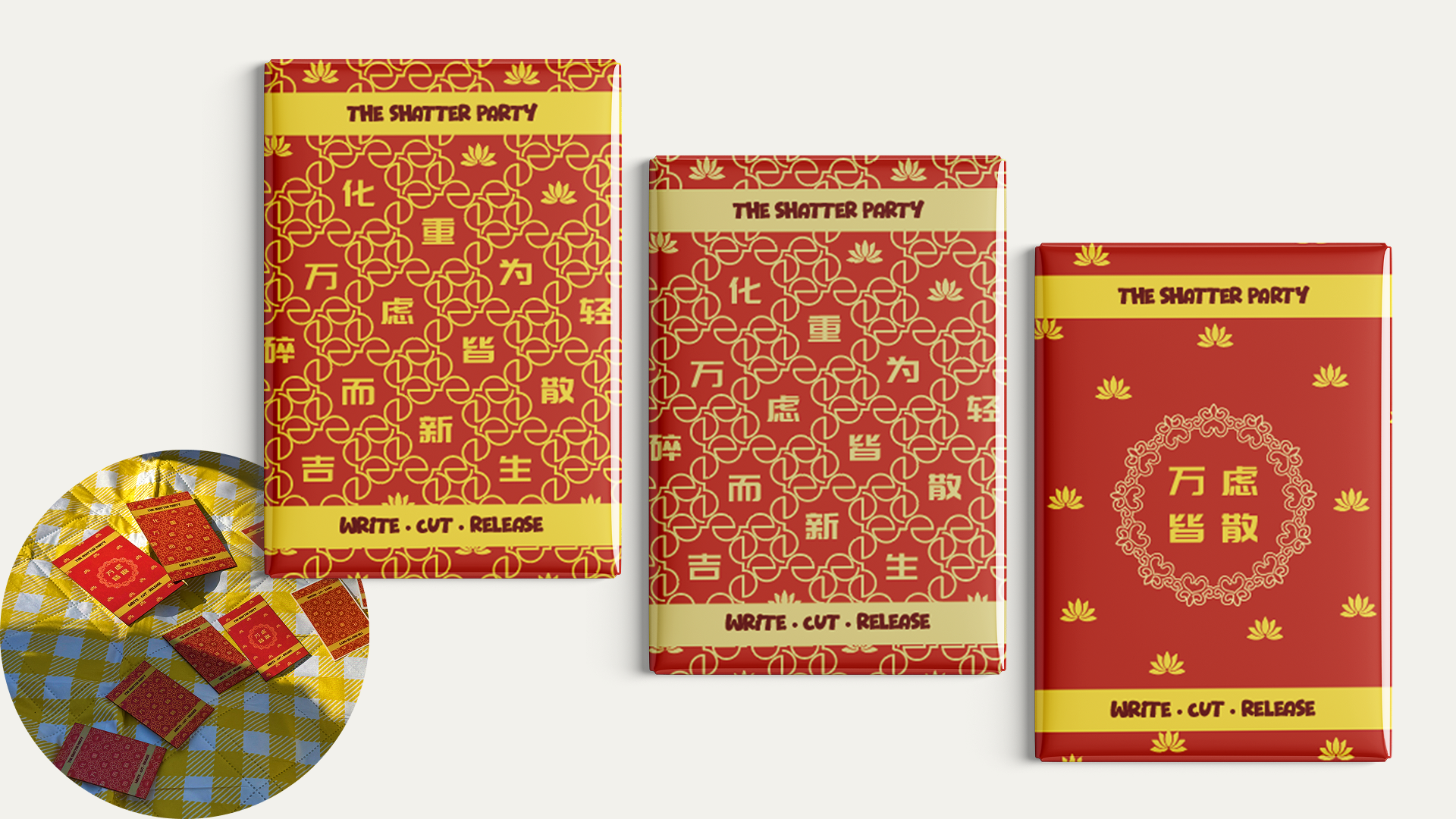
The experience extends beyond the event itself through take-home objects such as refrigerator magnets and stickers, allowing participants to revisit the memory of release in everyday life.
Carol’s thesis investigates how emotional expression might move beyond language and immediacy toward forms that are physical, indirect, ritualized, and shared. Together, these design interventions propose alternative emotional support systems rooted in cultural sensitivity, emotional pacing, and quieter forms of connection.
Learn more about Carol’s thesis process, research, and reflections on Medium.