
Good Vibrations: Centering the Hum of Nature in Everyday Life
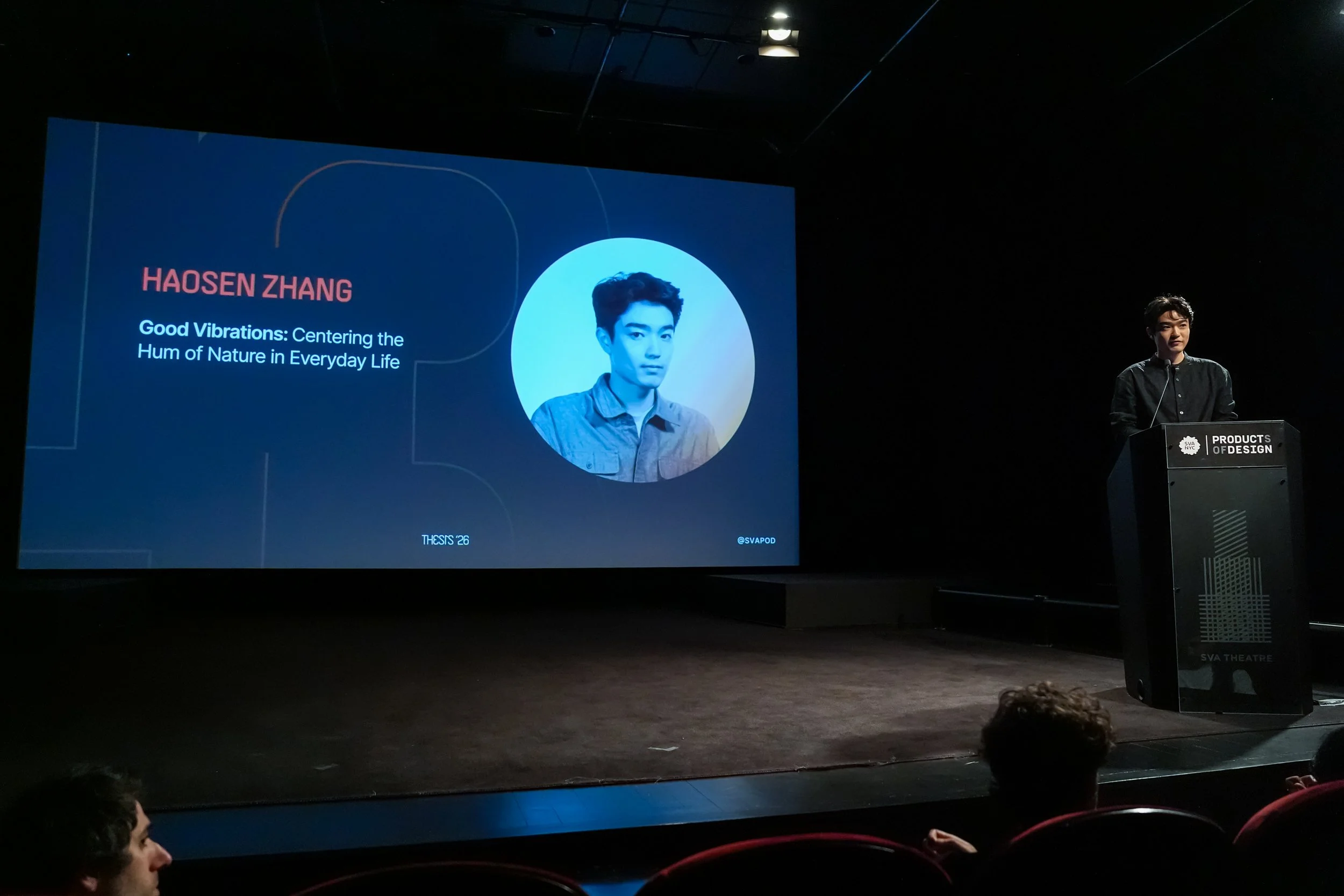
Haosen Zhang's thesis, Good Vibrations: Centering the Hum of Nature in Everyday Life, examines the psychological and physiological effects of losing everyday access to natural sound. As urban development continues to replace green space with dense infrastructure and accelerated routines, the sounds that once shaped daily life—rainfall, wind, insects, moving water—are increasingly absent from contemporary environments. While design disciplines often prioritize the visual and tactile, Haosen’s project focuses on sound as an overlooked component of well-being and asks how natural soundscapes might be reintegrated into everyday life through design.
“Sound is never just background noise. It is an invisible hand, constantly tugging at our emotions and quietly making decisions for us.”
Haosen’s interest in the subject stems from a longstanding sensitivity to sound, shaped in part by childhood memories of spending summers at his grandparents’ house. Those experiences led him to research the relationship between sound and the nervous system. Studies have shown that natural sounds can lower heart rate, blood pressure, and respiratory rate more effectively than silence alone. At the same time, access to nature continues to diminish: more than half of American adults spend five hours or less outdoors each week, and roughly one hundred million people in the United States do not live within a ten-minute walk of a park. This growing disconnect between built environments and sensory regulation became the foundation of his thesis.
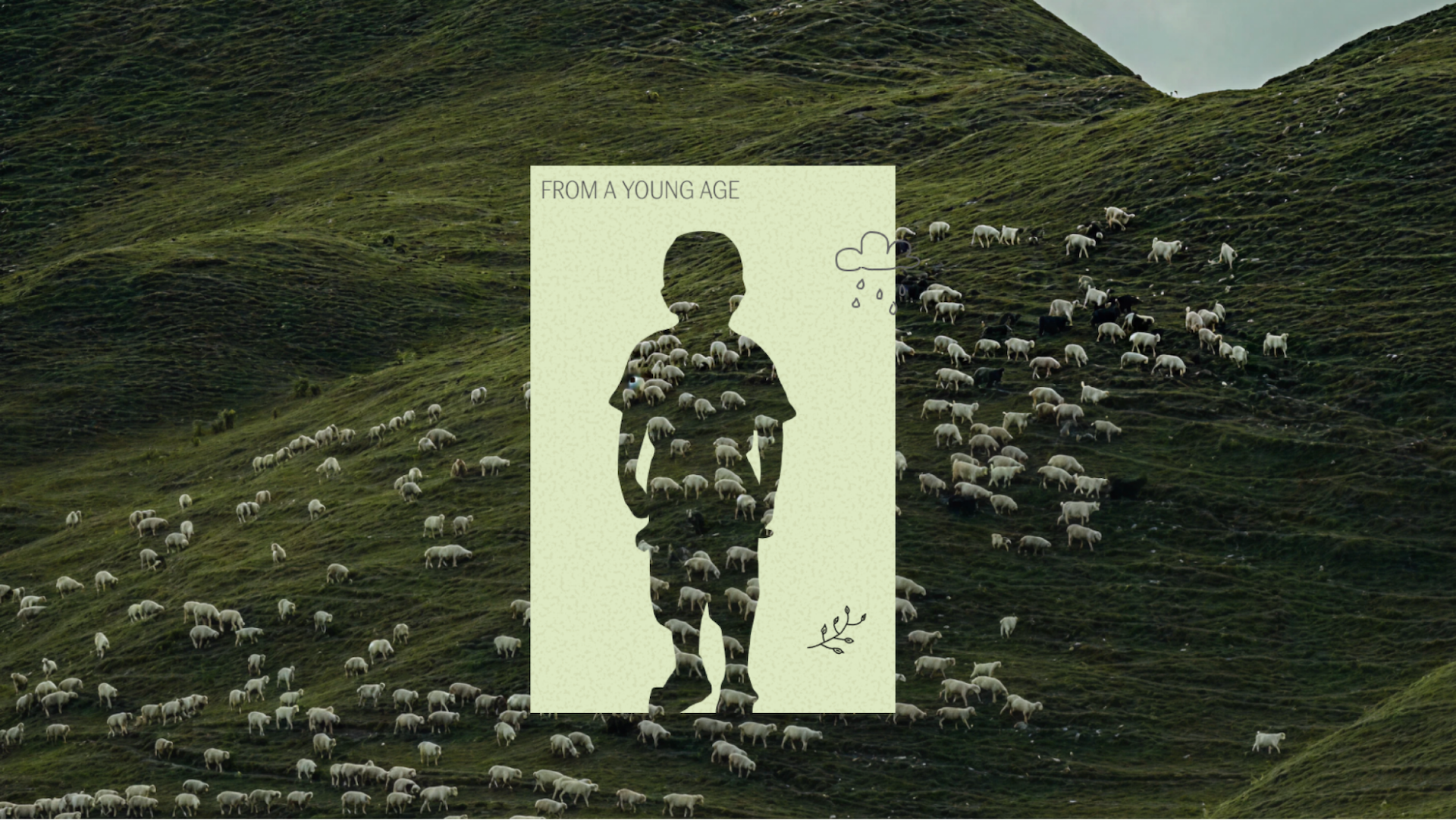
To better understand the effects of natural sound, Haosen developed a workshop titled The Sound Exploration Journey with four participants who identified themselves as highly sensitive to sound. Through a series of listening exercises and discussions, he found that participants responded less to specific tones or frequencies than to qualities of repetition and predictability.
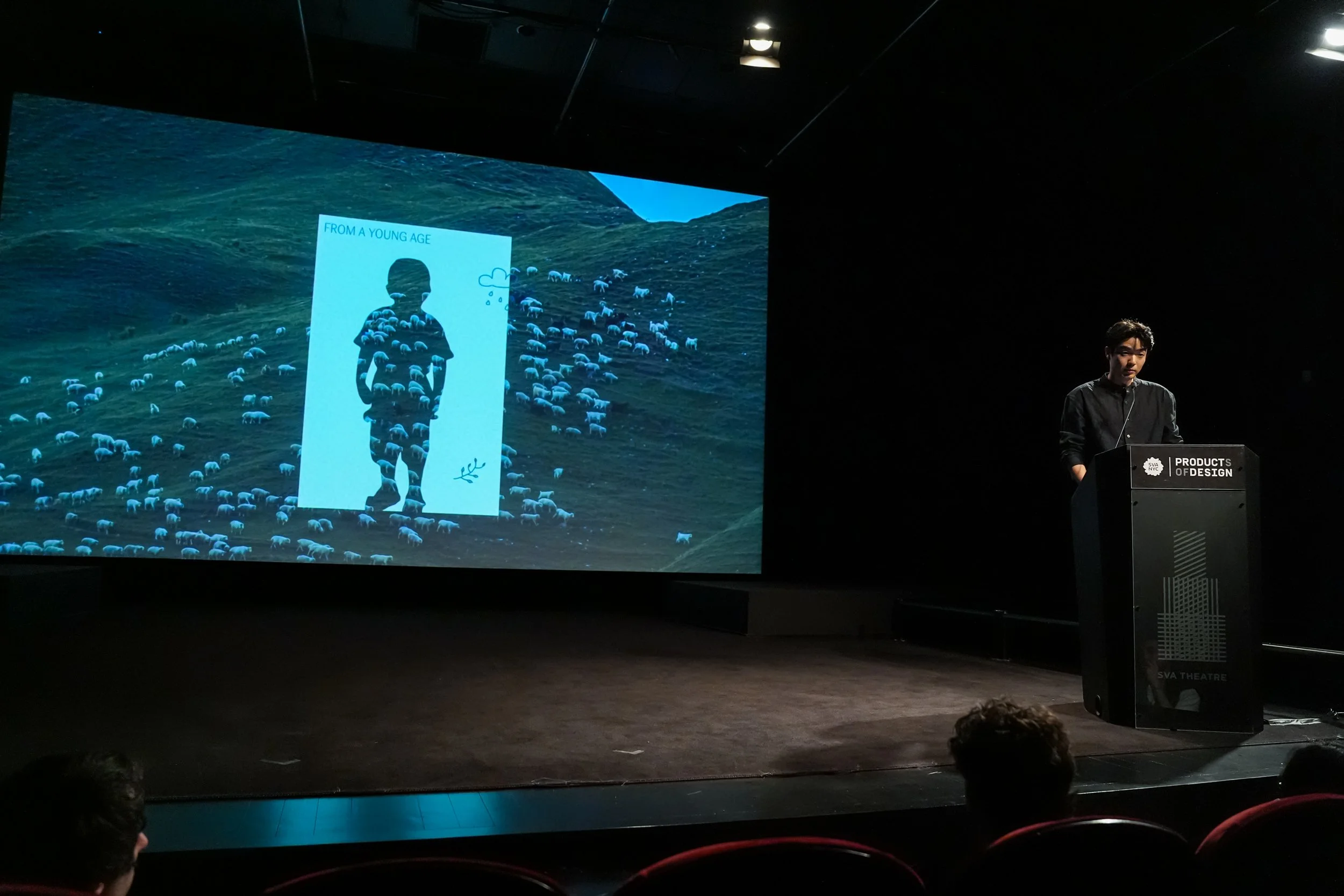
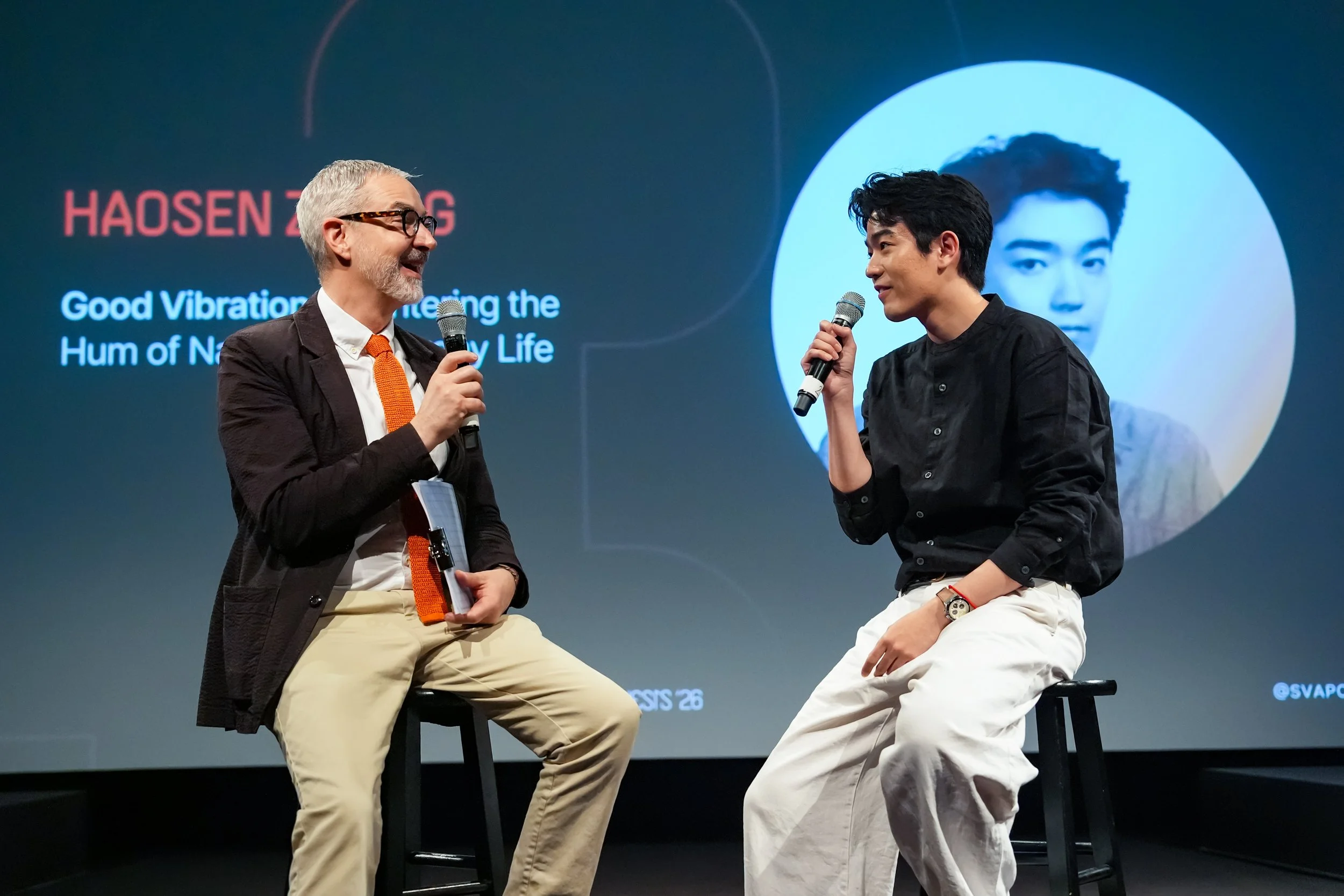
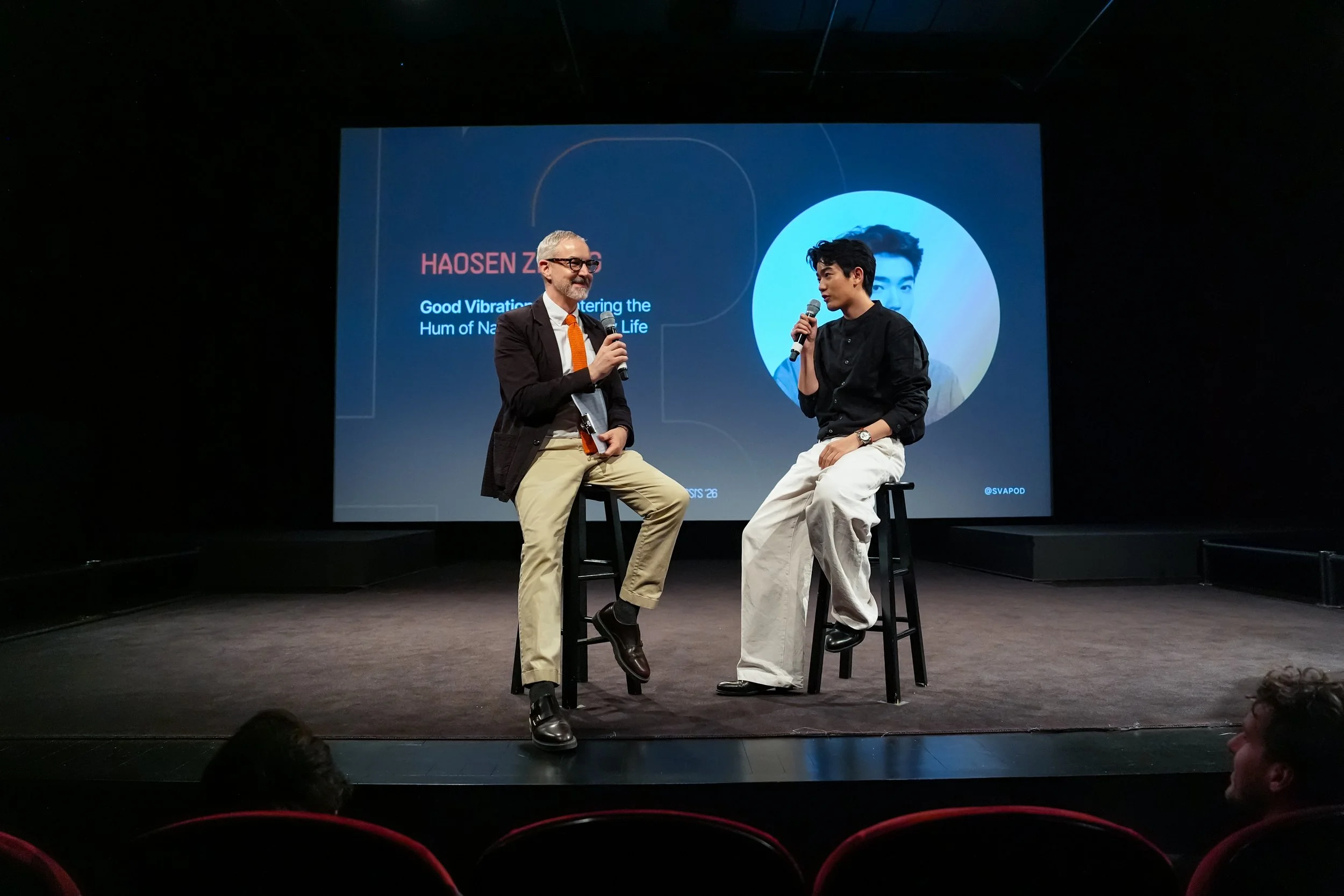

Unlike sudden or irregular urban noise, natural soundscapes tend to follow recognizable rhythmic patterns. Ocean waves, rainfall, and wind create continuous sonic environments that signal stability rather than interruption. Haosen connected these responses to evolutionary psychology: human nervous systems remain highly attuned to detecting potential threats, and predictable environmental sounds may communicate safety at a subconscious level.
Auricle
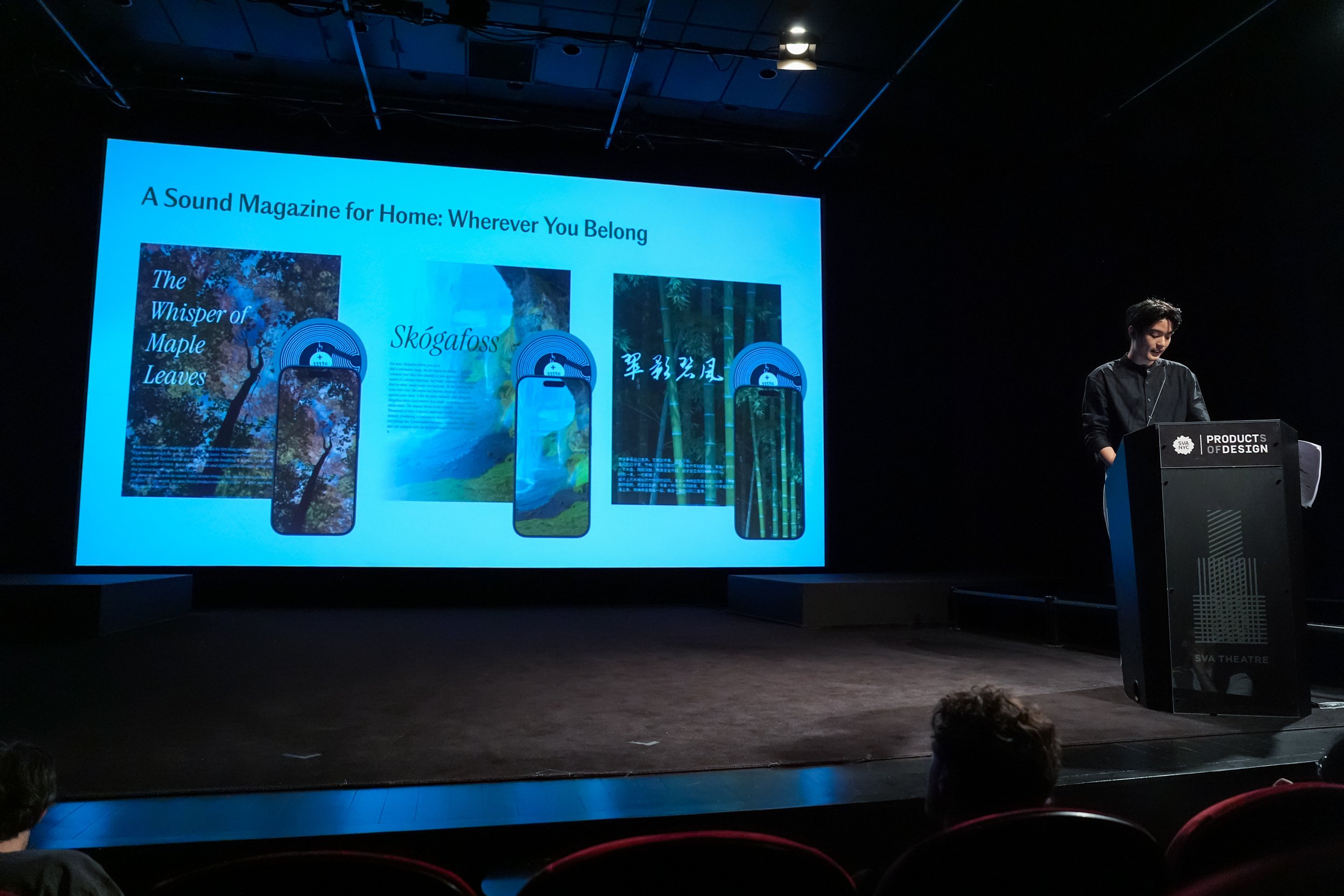
This research informed Auricle, a subscription-based sound platform that distributes natural soundscapes through both a printed publication and a mobile application. Embedded audio technology allows users to activate recordings directly through the pages of a physical magazine, while the companion app provides access to an expanded sound library.
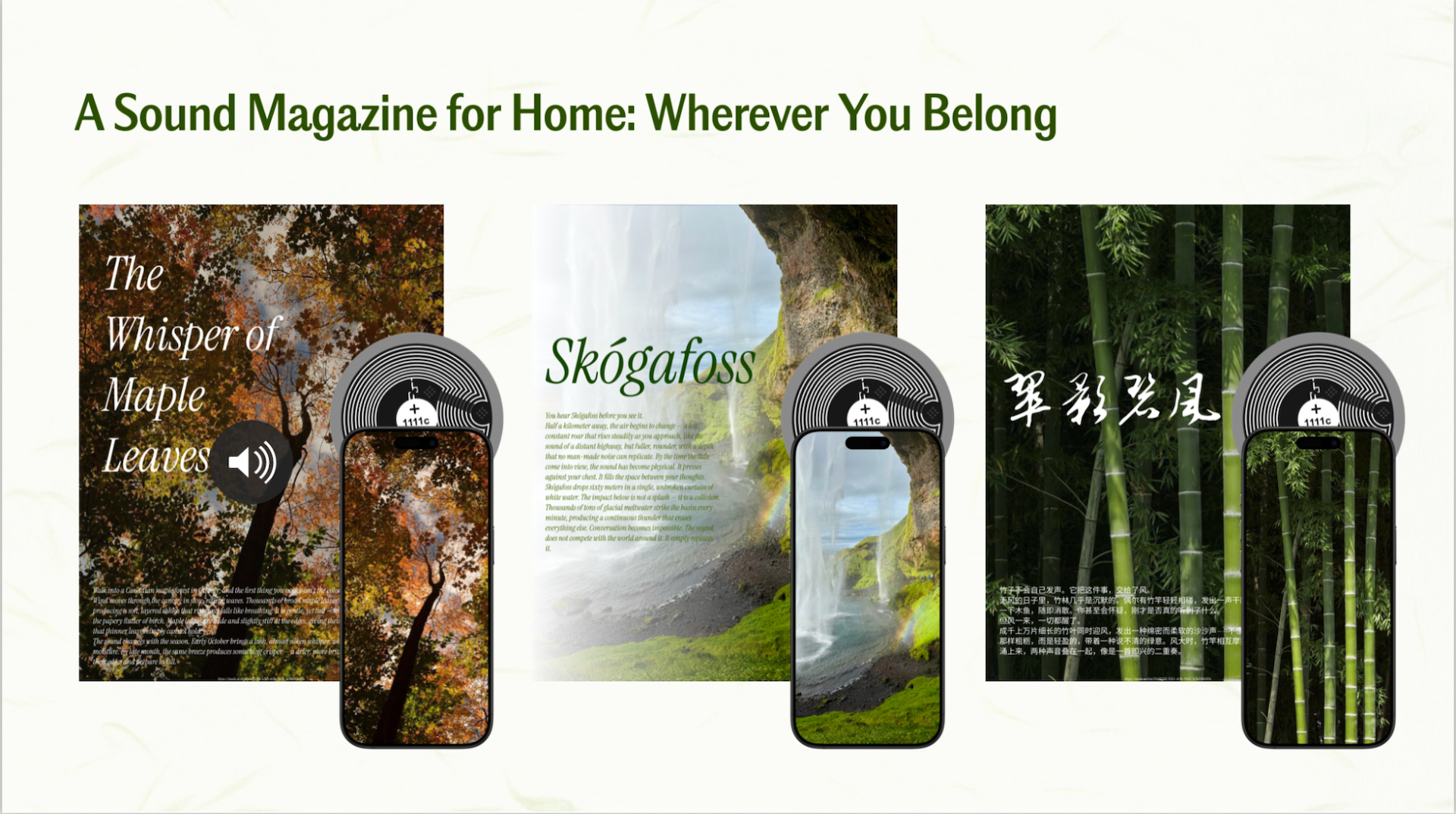
Each soundscape is tailored to the geographic region where the user grew up, drawing from recordings associated with specific climates and environments. A user from Iceland, for example, would receive different ambient sound profiles than someone raised in China or Canada. Haosen collaborated with sound researchers during development to evaluate the consistency and stability of the recordings and their potential calming effects.
Ziran House
As the project evolved, Haosen became increasingly interested in active engagement with sound rather than passive listening alone. Research surrounding music therapy and sensory participation suggests that interacting with sound can produce stronger emotional and physiological effects than listening in isolation.
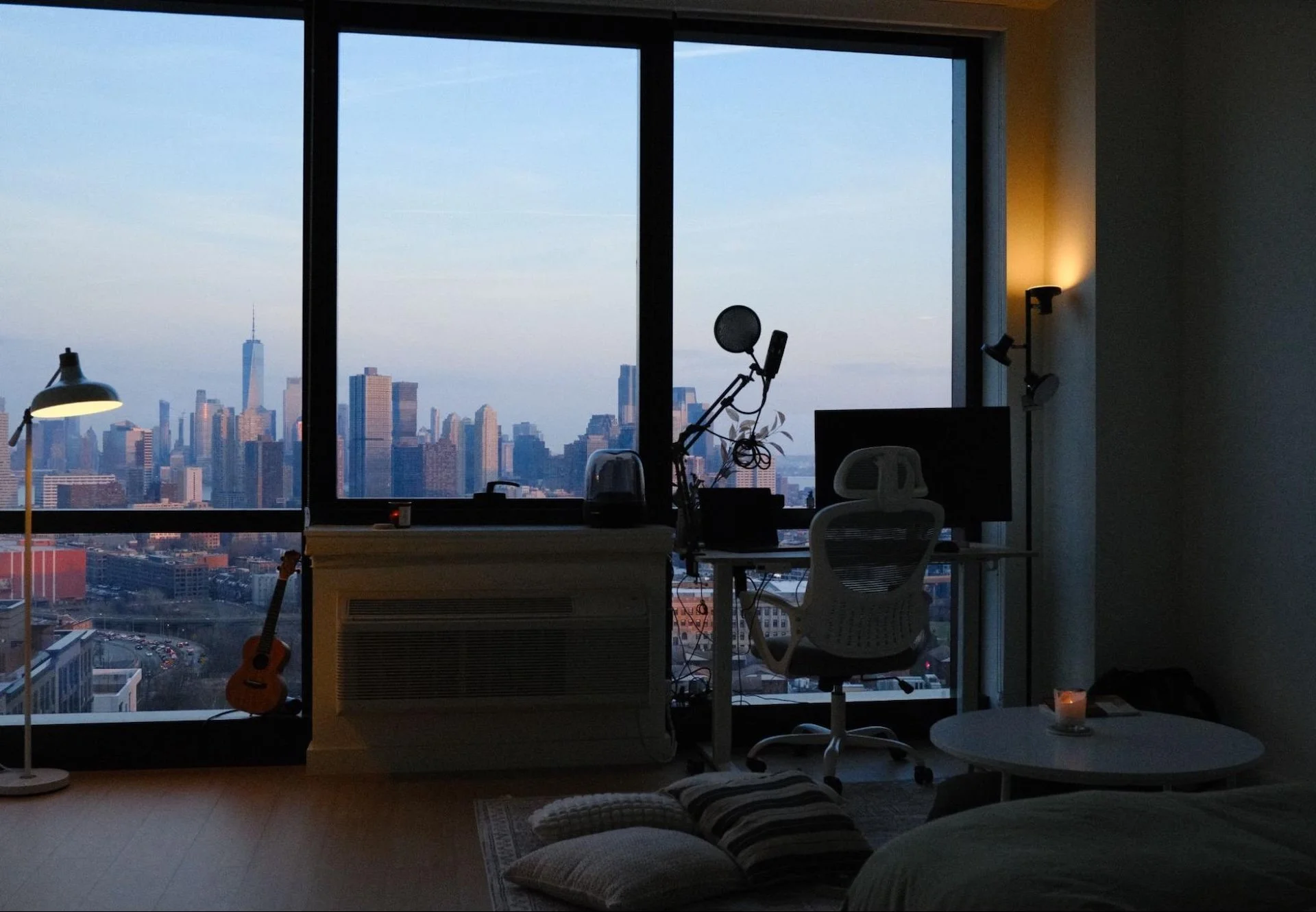
This line of inquiry led to Ziran House, an interactive system that transforms ordinary household activities into responsive natural sound environments. The title references the Chinese word ziran, often translated as “nature,” but more closely associated with ideas of naturalness and lived coexistence with the environment.
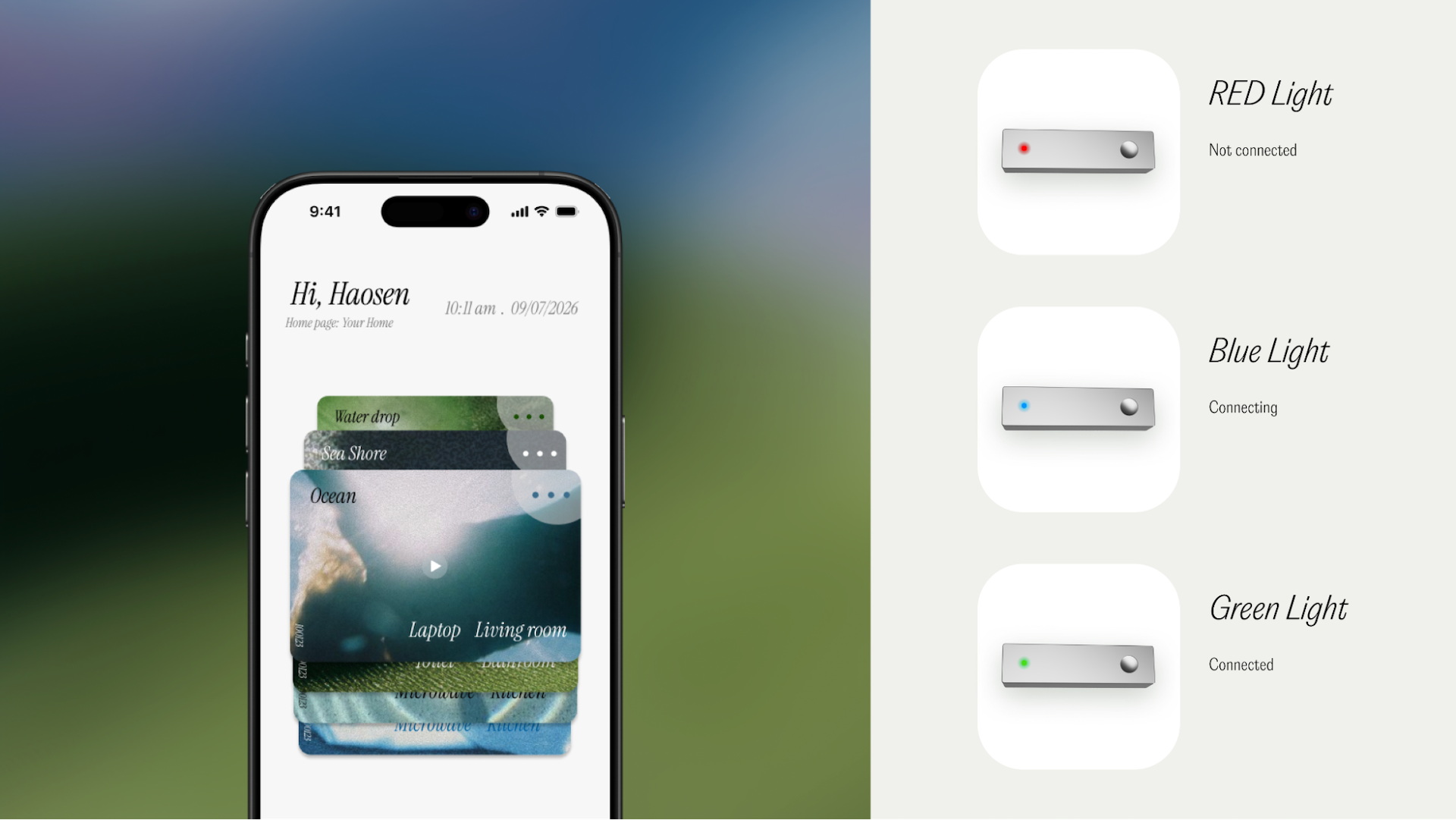
Using motion and vibration sensors connected to an application interface, the system maps environmental sounds onto domestic actions. Typing on a keyboard might trigger the sound of rustling leaves, while vacuuming activates layered recordings of wind moving through trees. Rather than reproducing nature as background ambiance, the project attempts to reintroduce sensory reciprocity between movement, sound, and environment.
Psithurism: Engaging with Nature Through Floral Practice
During conversations with subject-matter experts, Haosen became interested in the idea that listening to nature often produces a desire for greater physical proximity to it. One participant, Ailsa, described the experience succinctly:
“Sometimes I listen to nature sounds at home; it makes me want to be in nature more.”
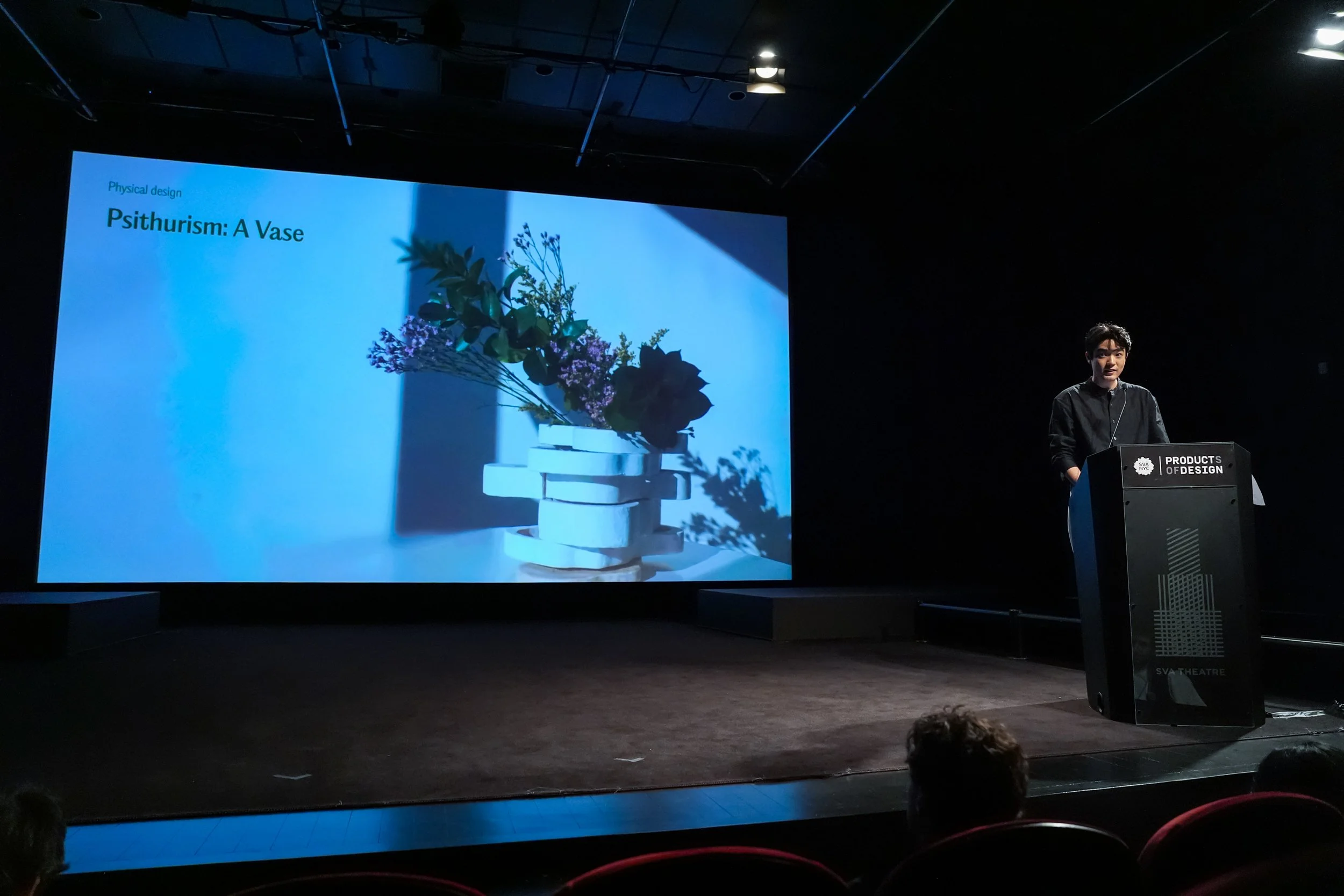
This observation informed Psithurism, the final component of Haosen’s thesis. Named after the sound of wind moving through leaves, the project is a sculptural vase designed to generate sound through living materials rather than recorded playback.
The object combines foam, custom joints, salvaged mechanical components, and 3D-printed elements to create a vibrating base capable of gently moving real branches placed inside the vessel. As the branches shift and brush against one another, they produce subtle natural sounds directly within the domestic environment.

Different plant materials generate distinct sonic textures, allowing the vase to function as a customizable acoustic instrument. Unlike conventional sound devices that replay environmental recordings, Psithurism produces live sound through physical interaction with organic matter.
Across Auricle, Ziran House, and Psithurism, Haosen explores different strategies for reconnecting people with the sensory conditions of natural environments. Each project approaches sound not simply as ambiance, but as a material capable of shaping emotional states, spatial experience, and perceptions of belonging. After interacting with one of the prototypes, another participant, Danqi, described the experience by saying, “I felt like I became a squirrel. Like I became part of nature.”
Rather than treating nature as something external to be simulated or consumed, Haosen’s thesis proposes forms of interaction that position people as active participants within broader ecological systems.
Connect with Haosen on LinkedIn.