
Holding On Differently: Reimagining Heirlooms in an Ephemeral World
Lauren Palazzi’s thesis, Holding On Differently: Reimagining Heirlooms in an Ephemeral World, examines how inheritance is changing and what that means for the objects and stories people leave behind. Rather than treating heirlooms as rare or especially valuable possessions, the project looks at the broader systems that shape how meaning is preserved, transferred, or lost across generations. It asks what happens when the cultural habits that once sustained heirlooms no longer fit the way people live now.
“We don’t just use things. We project identity on to them. They become anchors for memory.”
Lauren’s research moves beyond the object itself and toward the system of inheritance. She examined design research on inheritance and material culture, cultural research on progress and consumption, and psychological research on how everyday objects carry meaning. She also spoke with experts across design, conservation, technology, and organizing, each of whom offered a different and sometimes contradictory perspective on what an heirloom is and what it should do. Together, these perspectives helped reveal inheritance not as a fixed tradition, but as a shifting system shaped by changing social and spatial conditions.
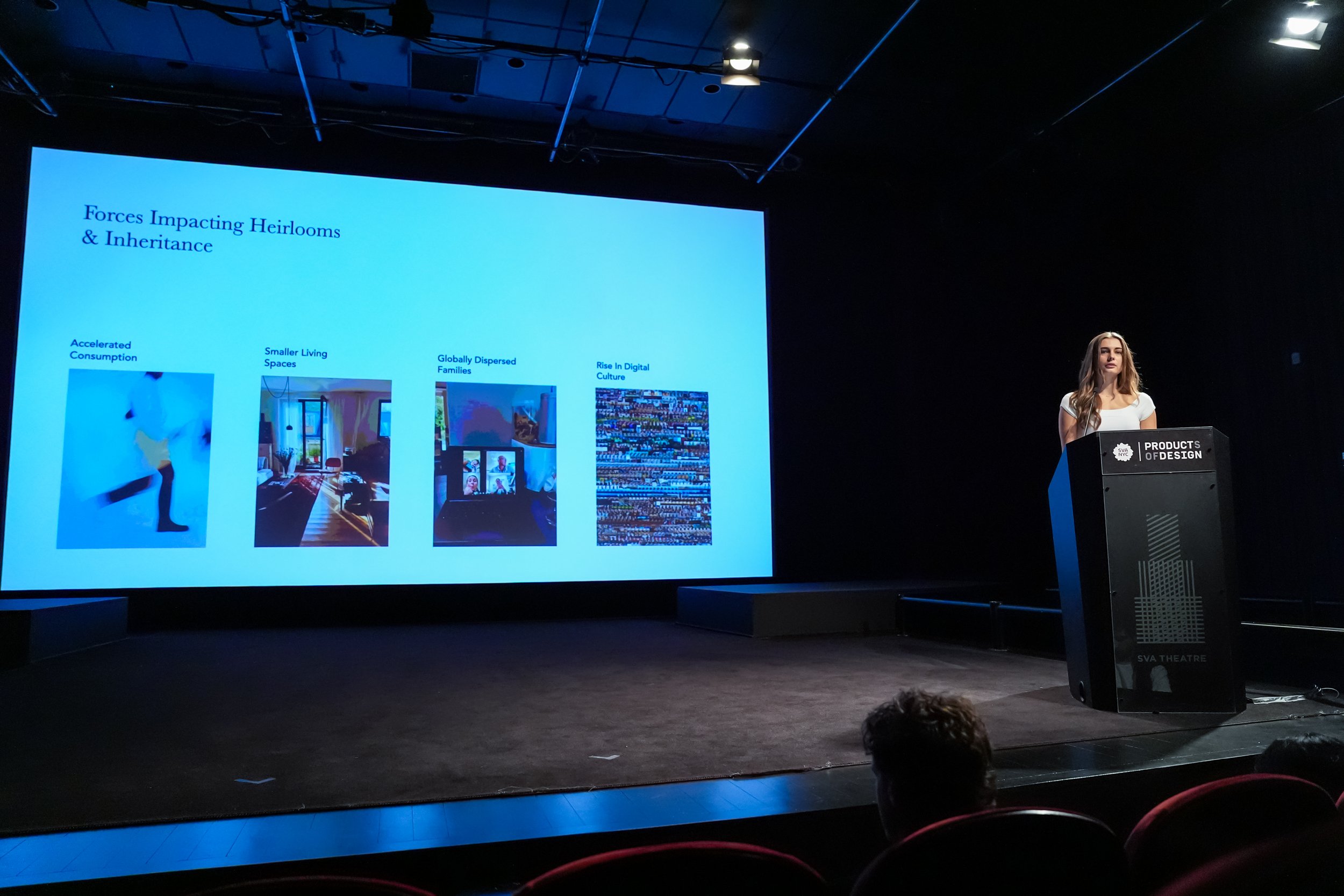
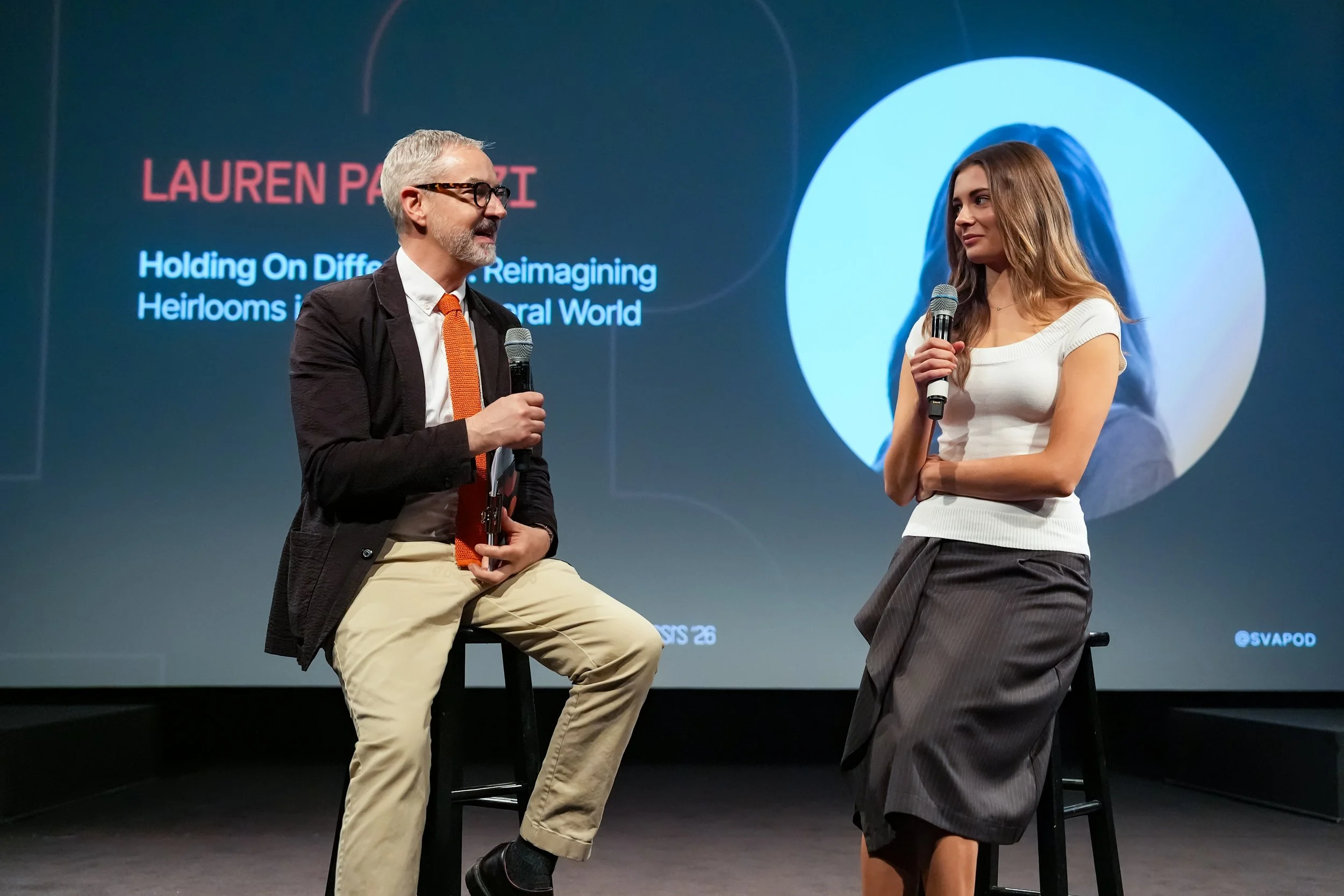
That shift matters because the conditions that once supported heirloom traditions are no longer the same. Families are more geographically dispersed, living spaces are smaller, consumption is faster, and much of everyday life now exists in digital form. At the same time, older generations often feel pressure to preserve objects that hold personal or family history, while younger generations may struggle to absorb belongings that do not fit the realities of their lives. In that gap, meaning can become difficult to carry forward.
In response, Lauren developed three design frameworks that each address a different moment in the life of an heirloom: before inheritance happens, beyond the family, and within the digital world.
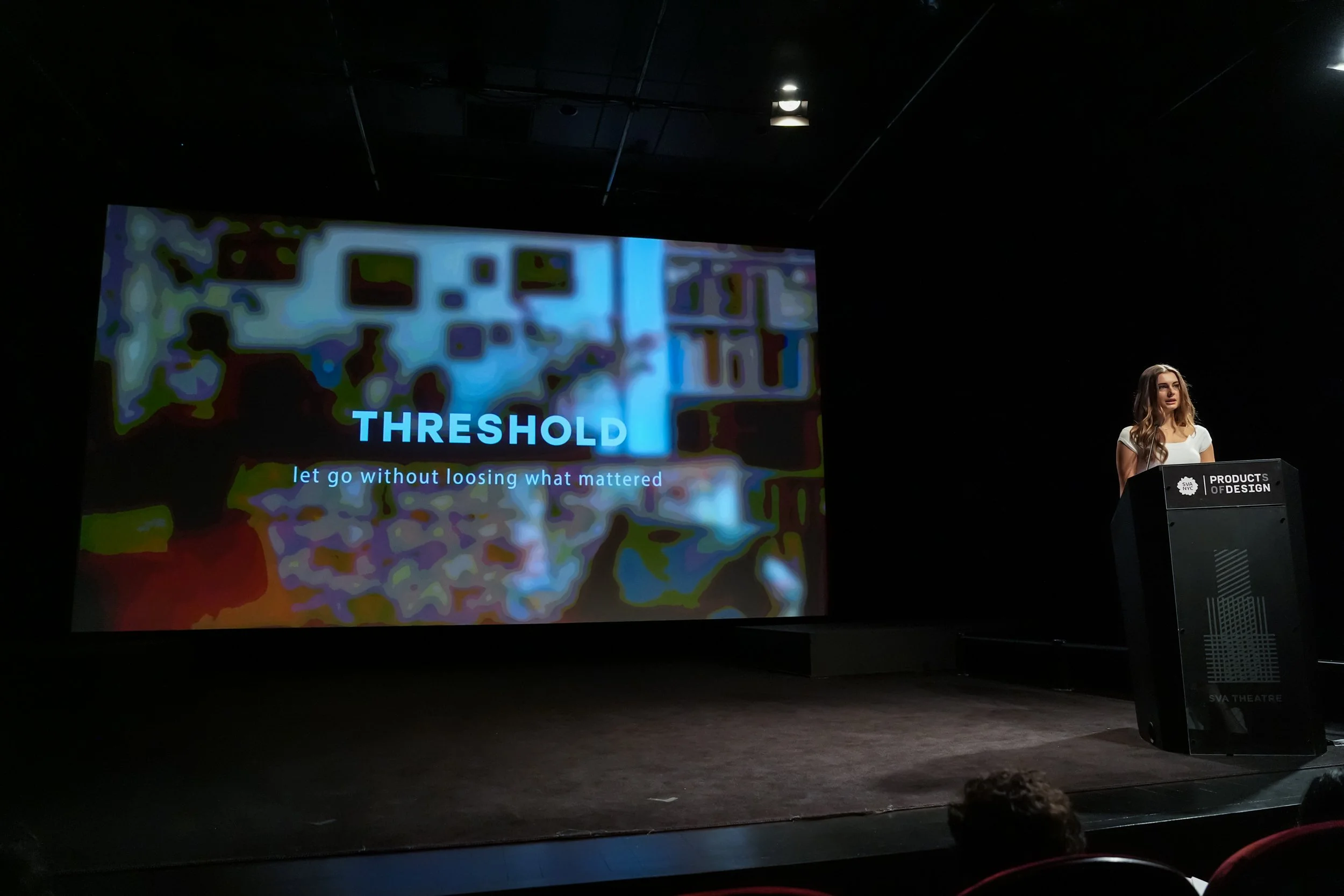
Threshold
Threshold explores what inheritance might look like if families were able to sort through possessions before they were forced to make decisions under pressure. Rather than waiting until a loss or move makes everything urgent, the service creates space for conversation while everyone is still present.
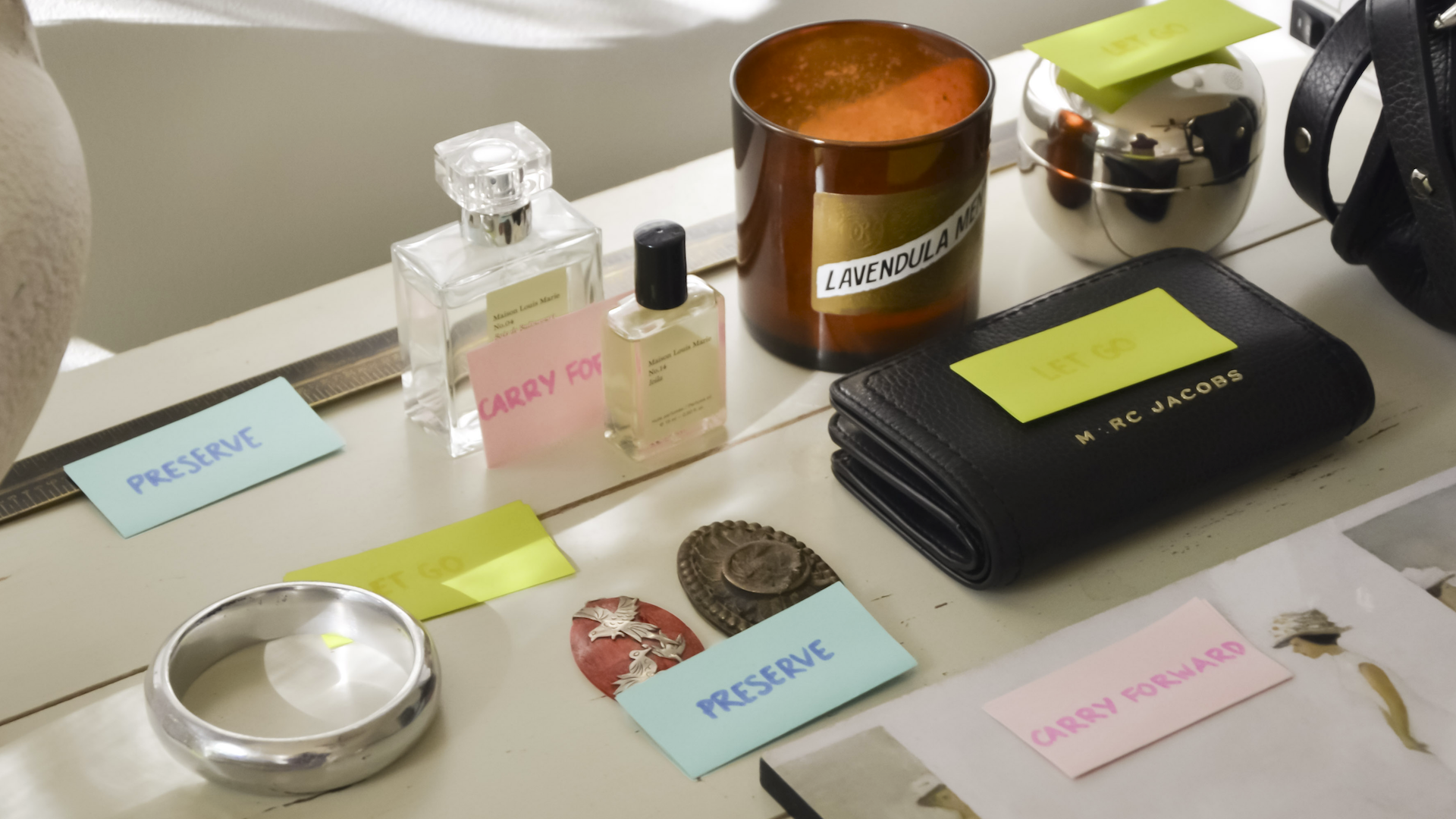
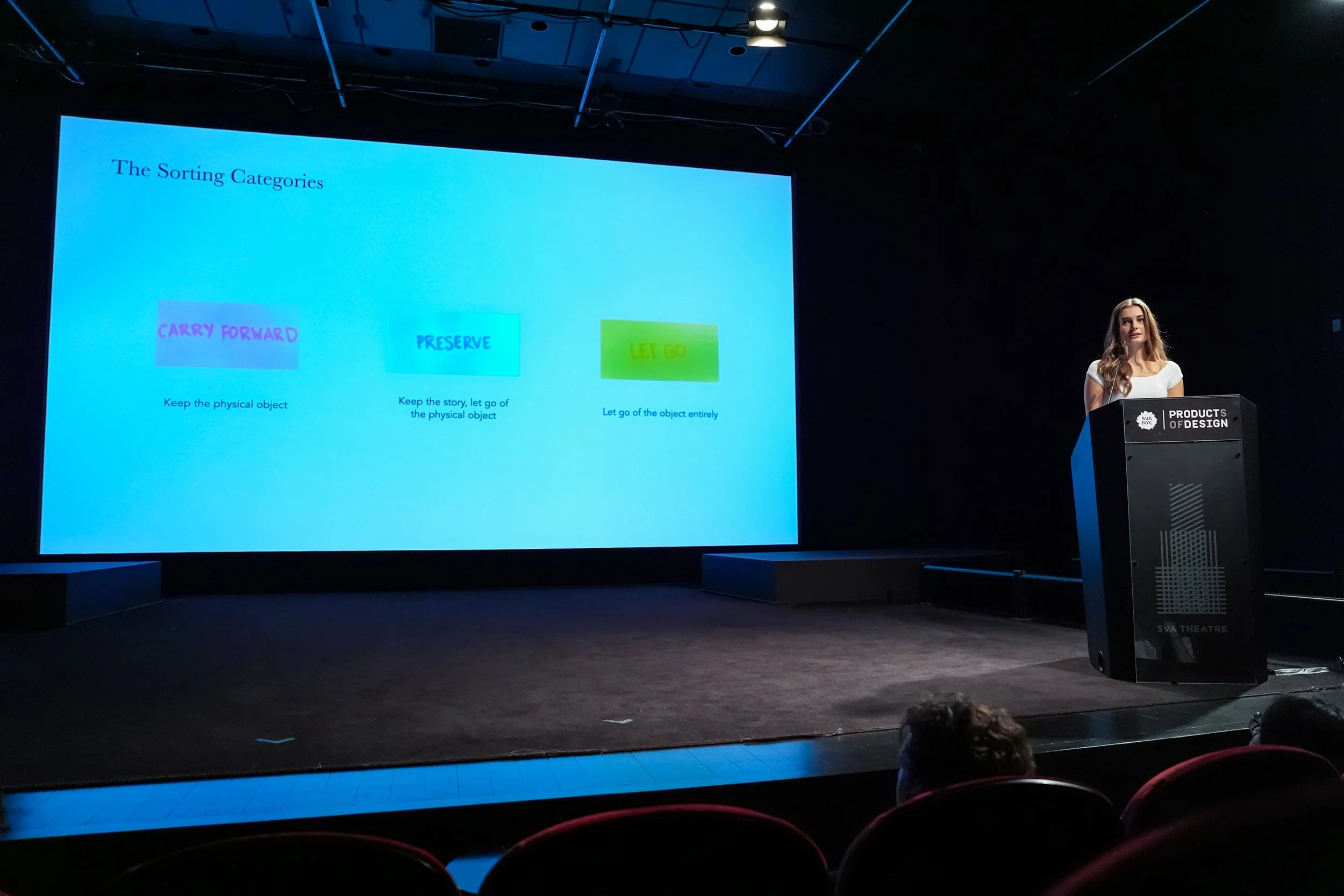
The process begins with a guided conversation with a facilitator, who works with the family to understand their needs, goals, and dynamics. From there, the family moves through the home together and sorts objects into three categories: items to carry forward, items to preserve, and items to let go. Carry Forward includes things that will continue to live in someone’s daily life. Preserve captures items whose physical form may not last, but whose stories should. Let Go allows families to part with objects responsibly, without the uncertainty that often surrounds inheritance.
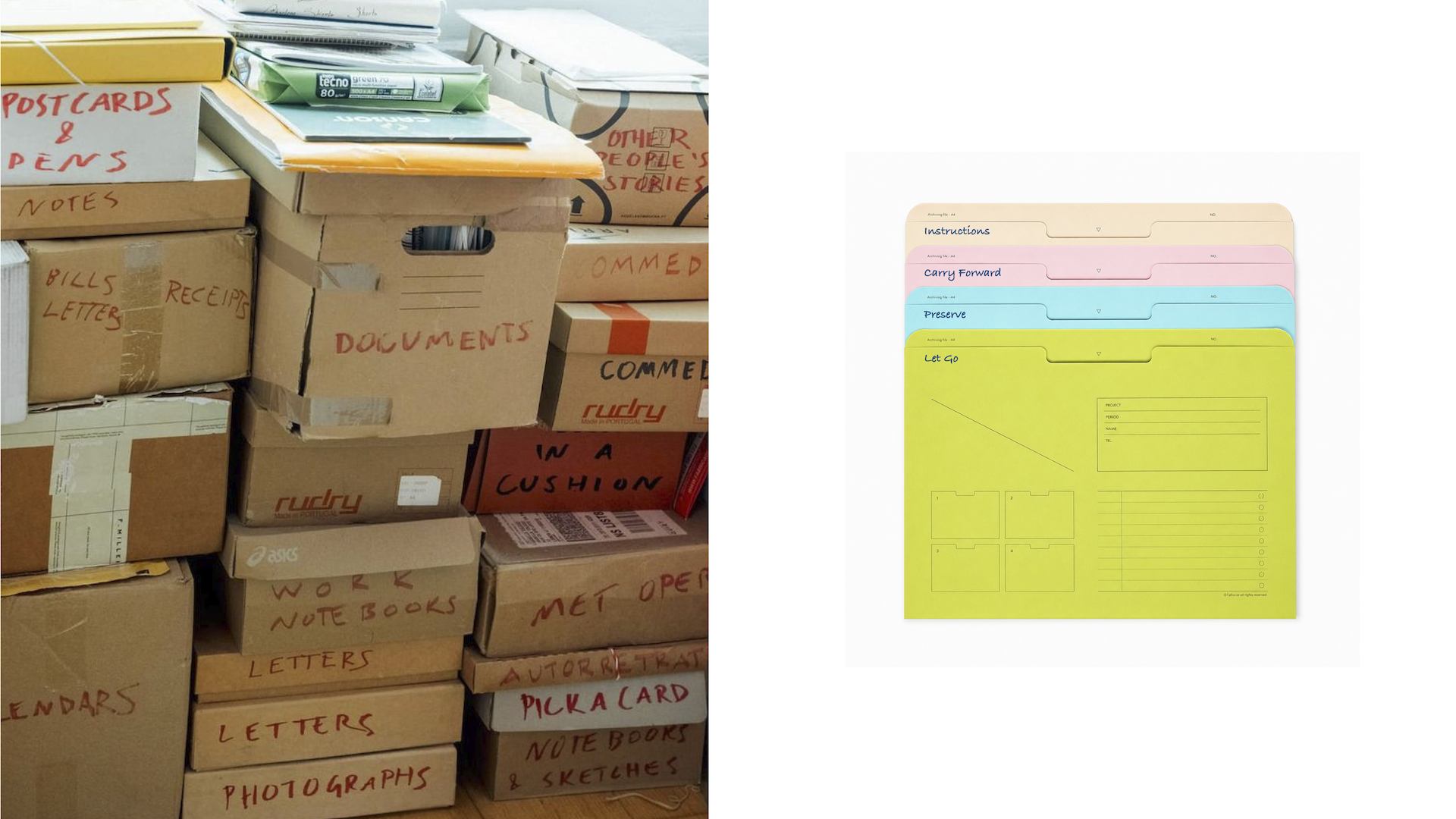
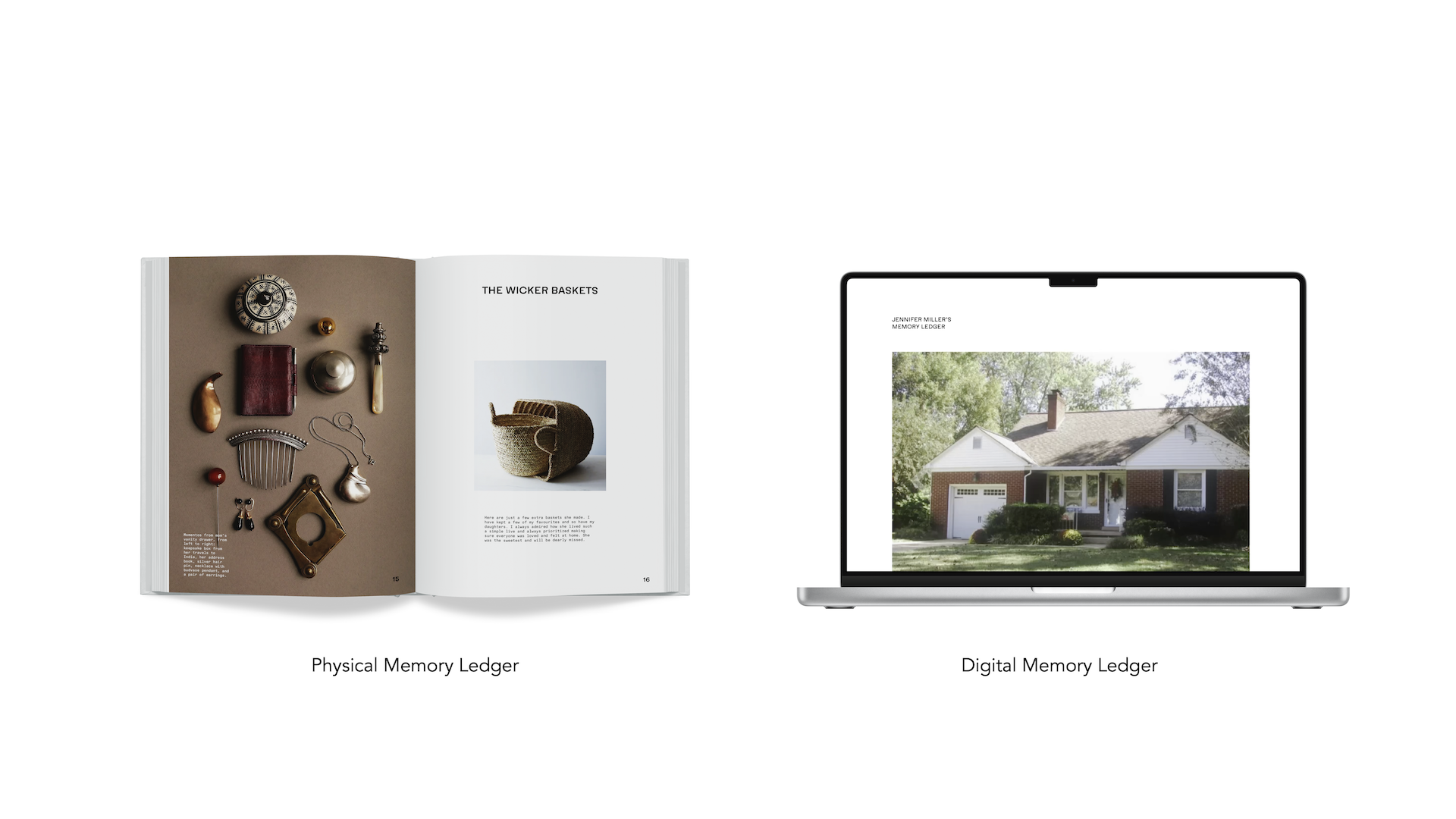
For preserved items, Threshold creates a Memory Ledger: a physical or digital archive that records the object, its story, and the voice of the family behind it. The result is not just a system for sorting possessions, but a way of documenting memory before it becomes difficult to access.
Heirloom Library
Heirloom Library asks what inheritance might become if it moved beyond the family entirely. Through her research, Lauren found that many people do not want their belongings simply discarded or donated. They want them to continue being valued, even if no one in the family is able to keep them.
Heirloom Library reimagines inheritance as circulation rather than ownership. Using the familiar logic of a library, the project creates an in-between space where objects can be let go of without guilt and given the chance to continue their stories in new hands. The system invites people to contribute objects alongside their stories, cataloging each one so it can be encountered as both a material marker and a carrier of memory.
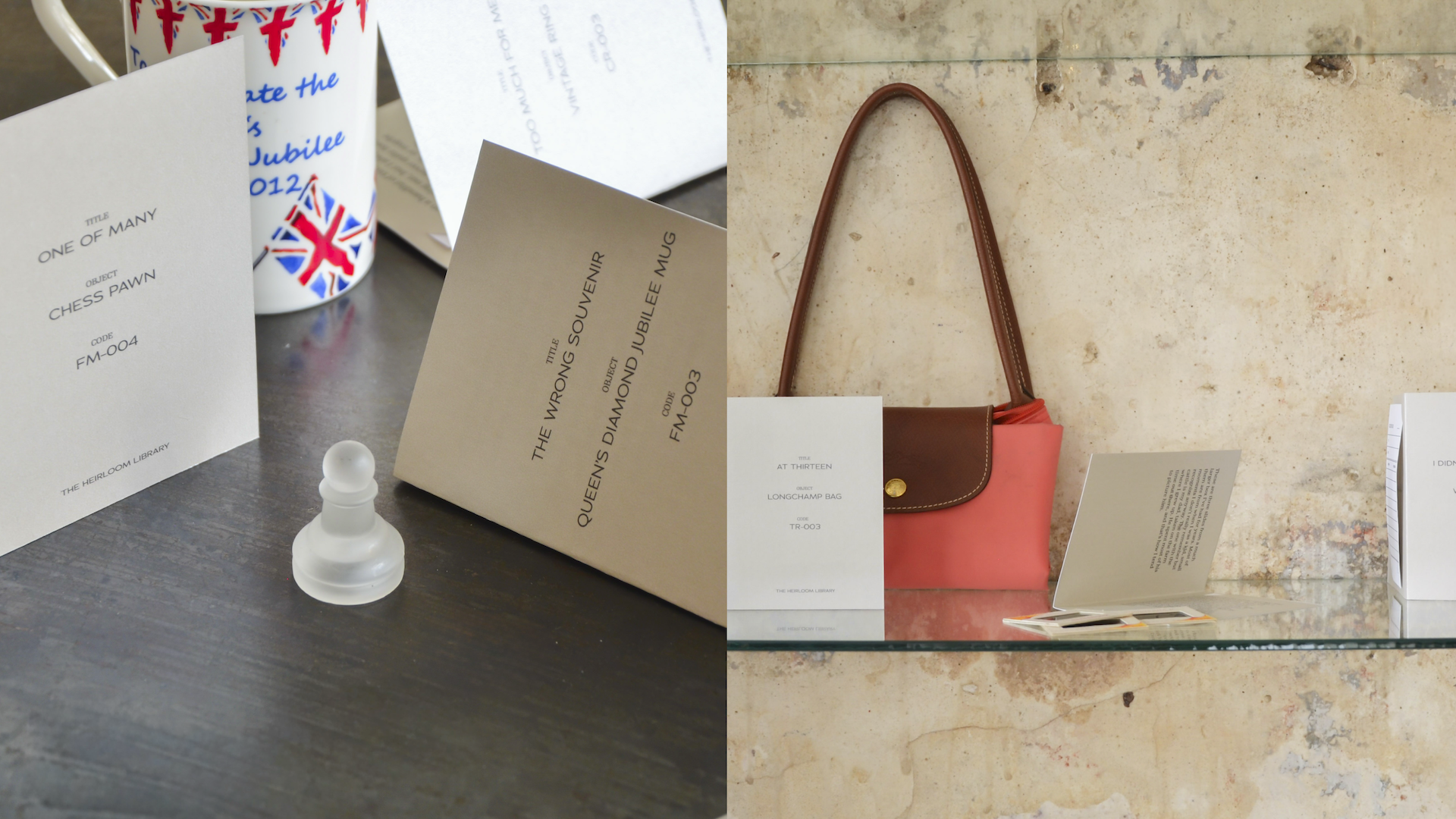
To bring the concept to life, Lauren collected and cataloged objects from New York City residents and presented them in a temporary storefront in Williamsburg. The space encouraged visitors to engage with the collection slowly and attentively, treating the objects less like possessions and more like stories in circulation. Some items were eventually checked out, suggesting that meaning can survive even when an object leaves its original context.
Collect & Curate
Collect & Curate turns to the digital world and asks how memory might be shaped when so much of life is already stored online. Photos, voice notes, videos, and messages now accumulate continuously, creating a kind of digital archive that is rich in volume but often difficult to navigate. When everything is preserved, it can become harder to identify what actually matters.
Lauren’s response is a digital platform that brings the logic of scrapbooks and shoeboxes into a contemporary format. Users can create customizable memory boxes with colors, text, and stickers that reflect the character of a particular moment or person. Inside each box, they can gather different kinds of media and layer them with context, giving the collection more emotional depth than a single image or file could provide.
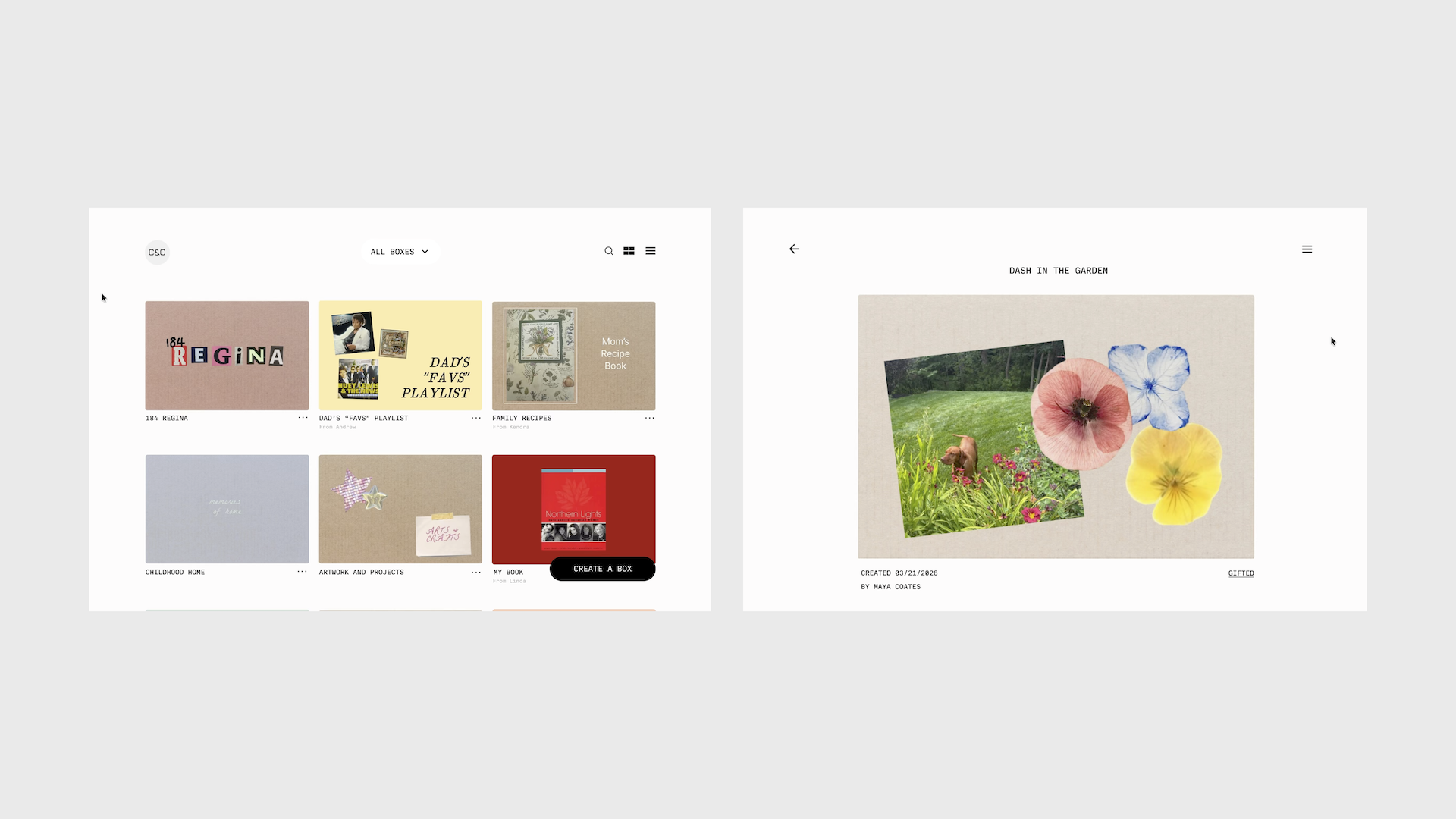
The platform also makes curation something that can be shared. Completed boxes can be sent to others as gifts, scheduled for future moments, or saved for milestone occasions. In this way, Collect & Curate treats digital memory not as passive storage, but as something intentionally shaped and passed along.
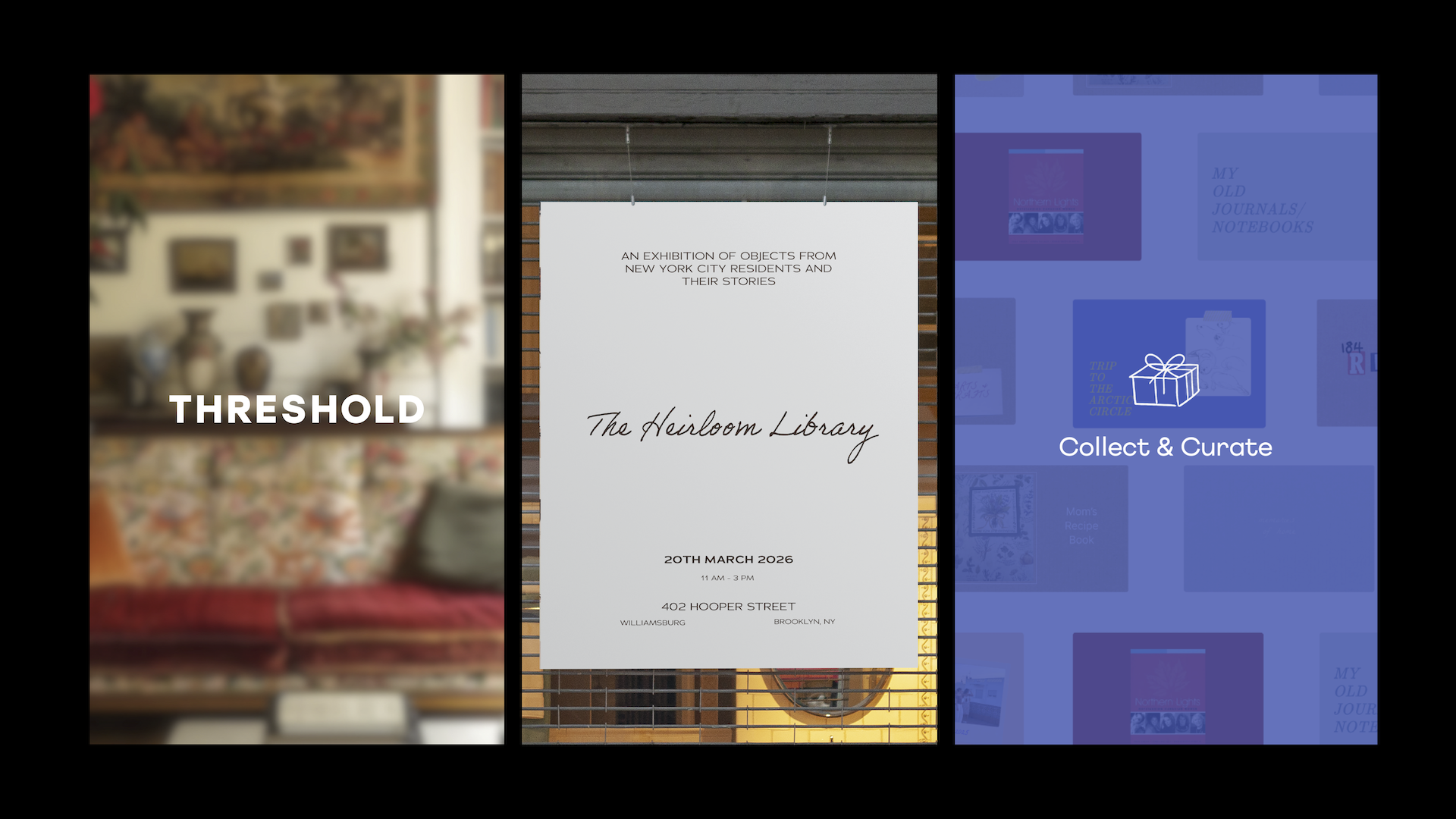
Together, the three projects in Lauren’s thesis respond to different moments in how people relate to the things they leave behind. Threshold opens the conversation within families before it is too late. Heirloom Library expands inheritance beyond the bloodline. Collect & Curate asks whether digital memory can be transformed into something worth passing on.
Learn more about Lauren’s work at laurenpalazzi.com.