
Sharing Waves: When Digital Nomads Meet Local Communities in Puerto Escondido, Mexico
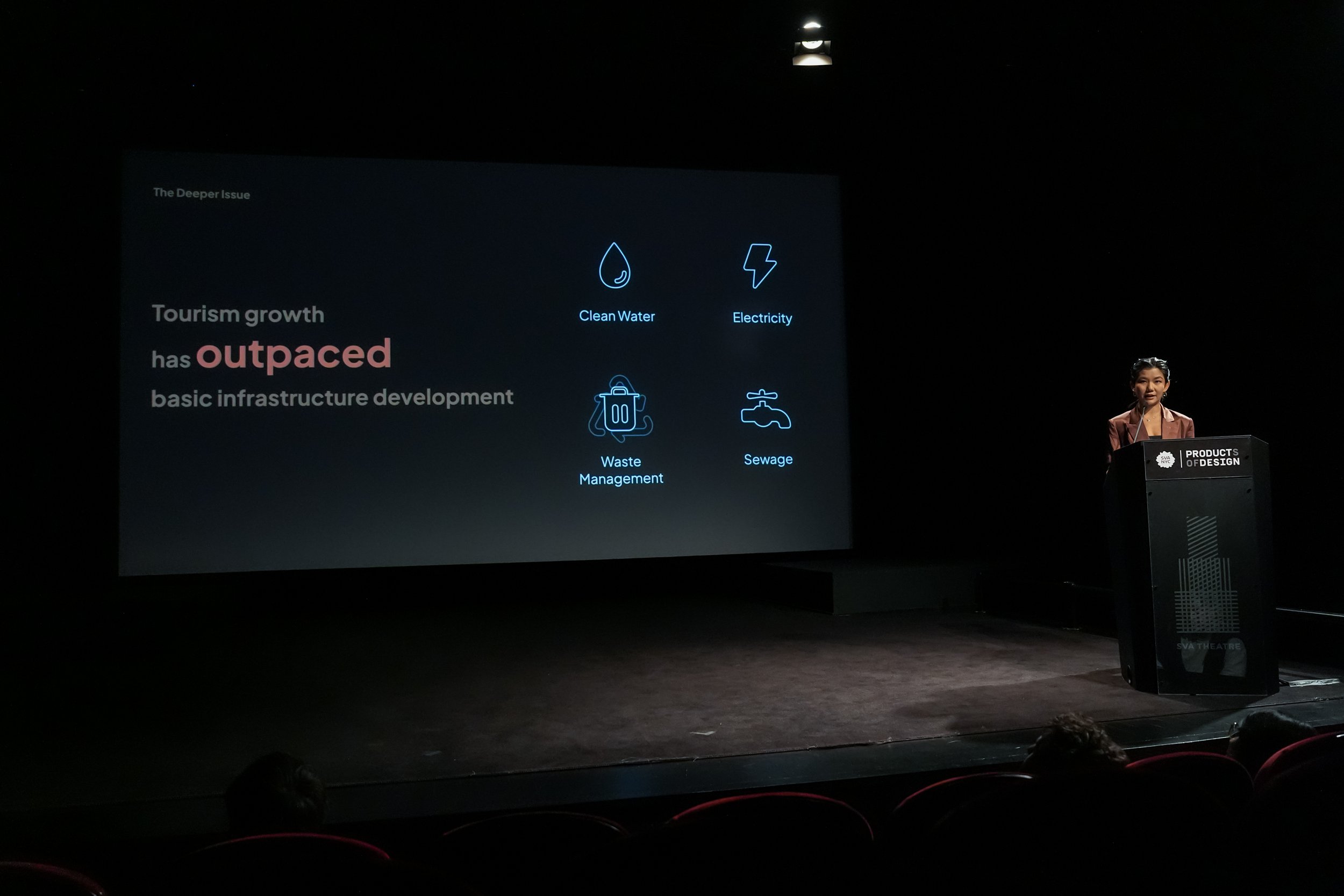
Sige Zheng's thesis, Sharing Waves: When Digital Nomads Meet Local Communities in Puerto Escondido, Mexico, investigates how the rapid growth of digital nomadism affects community life and local infrastructure in Puerto Escondido. As a designer, surfer, and traveler, Sige has witnessed the surge in remote work and digital nomadism following COVID-19. Digital nomads arrive in Puerto Escondido and fall in love with the place. But love without responsibility has a cost—tourism growth has outpaced local infrastructure development. While grassroots organizations continue to support the community, many newcomers remain parallel to these efforts. This thesis asks: how might design create a meaningful bridge between those who are passing through and the communities and places they encounter—at the beginning, during, and beyond their journey?
“Change and growth are inevitable.
But what’s amazing is the community has galvanized together to protect our home.”
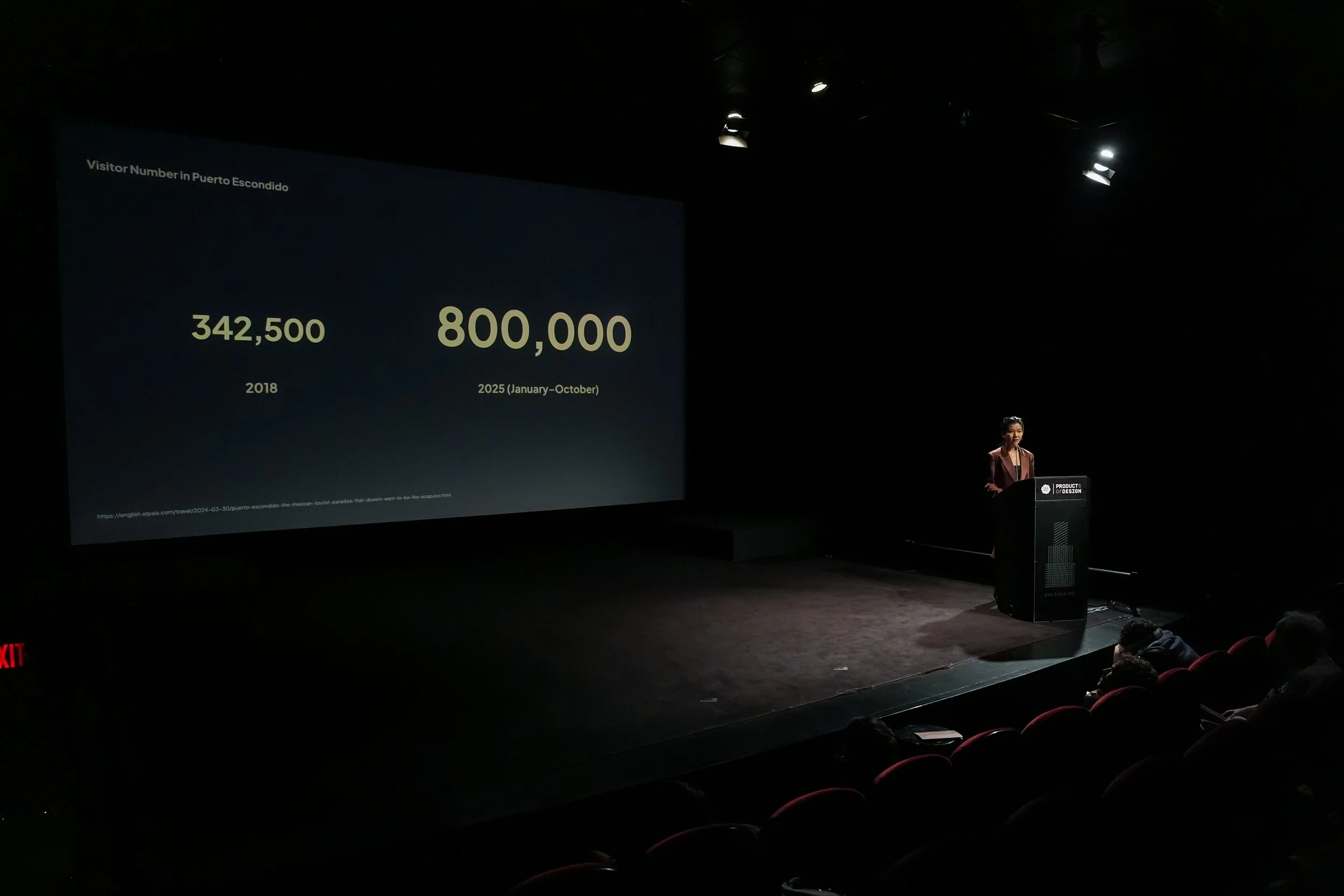
Puerto Escondido, a once quiet fishing village in Oaxaca, Mexico, is now a globally known surf town and a popular destination for digital nomads. In just 7 years, visitors nearly tripled in this town of 47,000 residents (342,500 in 2018 vs. over 800,000 in the first 10 months of 2025). You can't design for a community while being away from it. To understand the impact of the rapid growth of digital nomads, Sige conducted 2-weeks of field research in Puerto Escondido, interviewing local and transient residents, running co-creation workshops, and conducting secondary research and subject-matter expert interviews outside Puerto Escondido. She discovered grassroots initiatives and tequio as the local way to address the infrastructure, environmental, and social challenges local communities face. Sige's work proposes a series of design interventions that move beyond the "social bubble" of digital nomadism to foster deep-rooted responsibility and mutual aid while embedding her solutions in existing social and cultural structures and digital nomads' desire for community belonging.
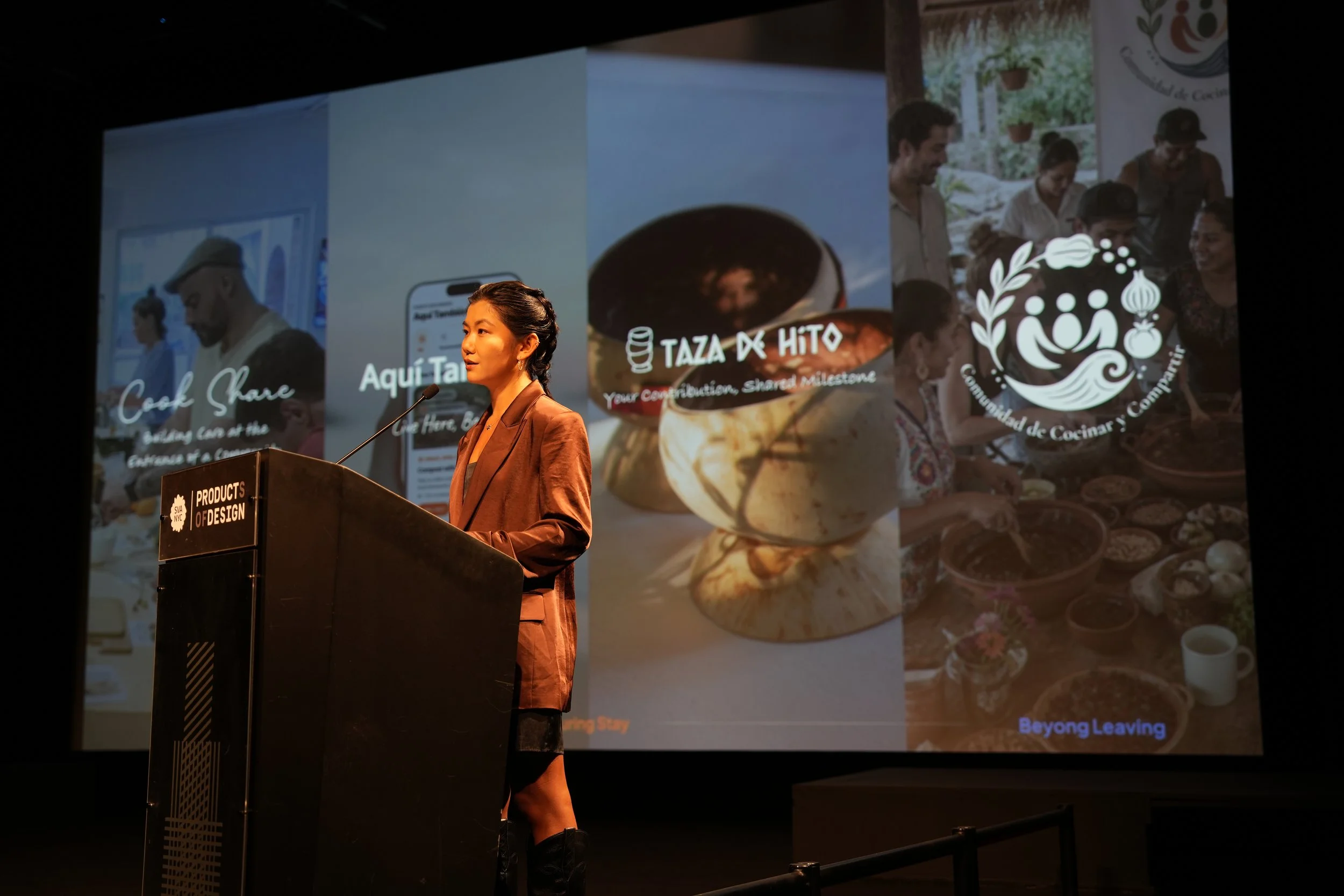
Cook Share: A Co-living Space Orientation: Building Care at the Entrance of a Community
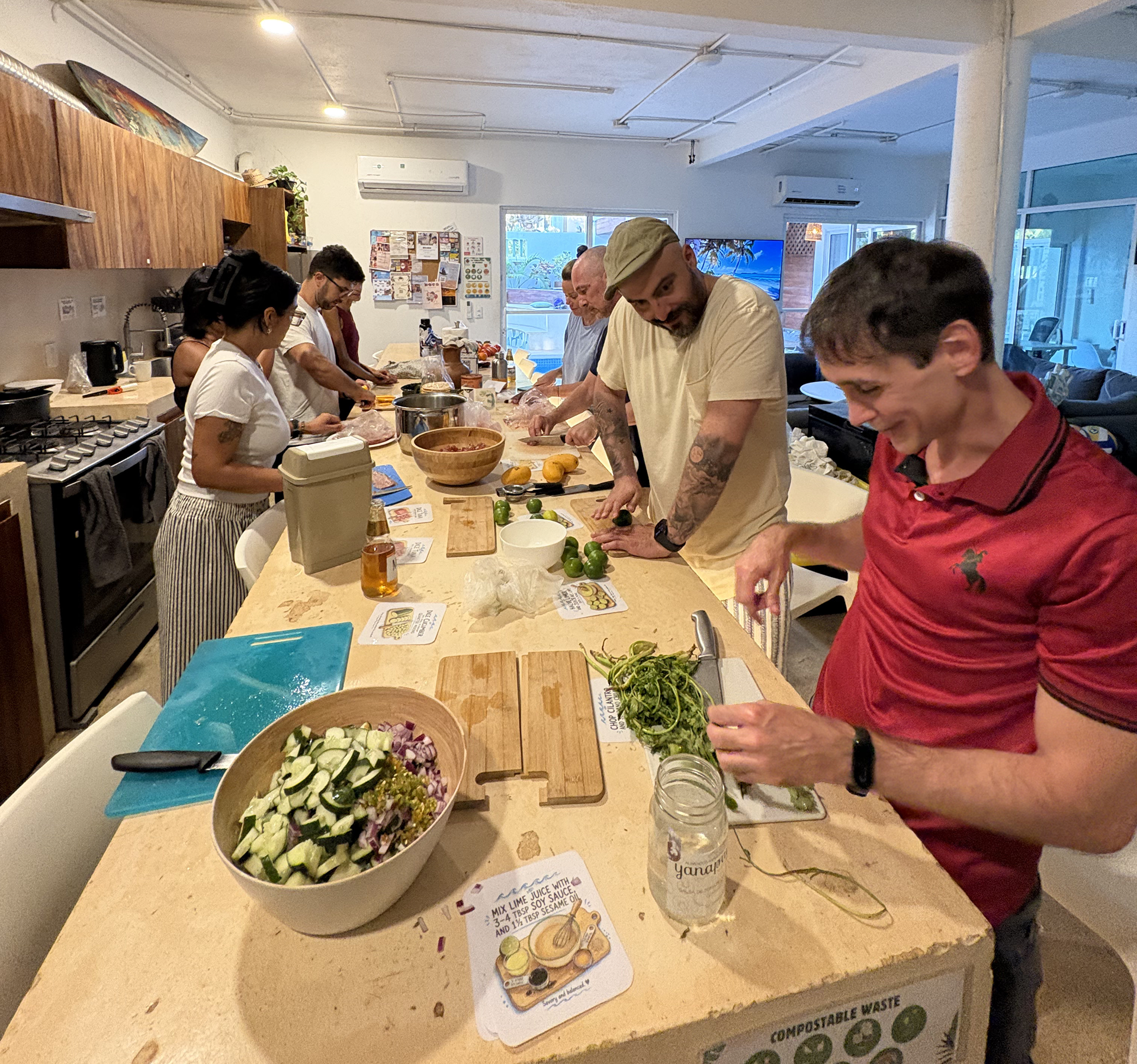
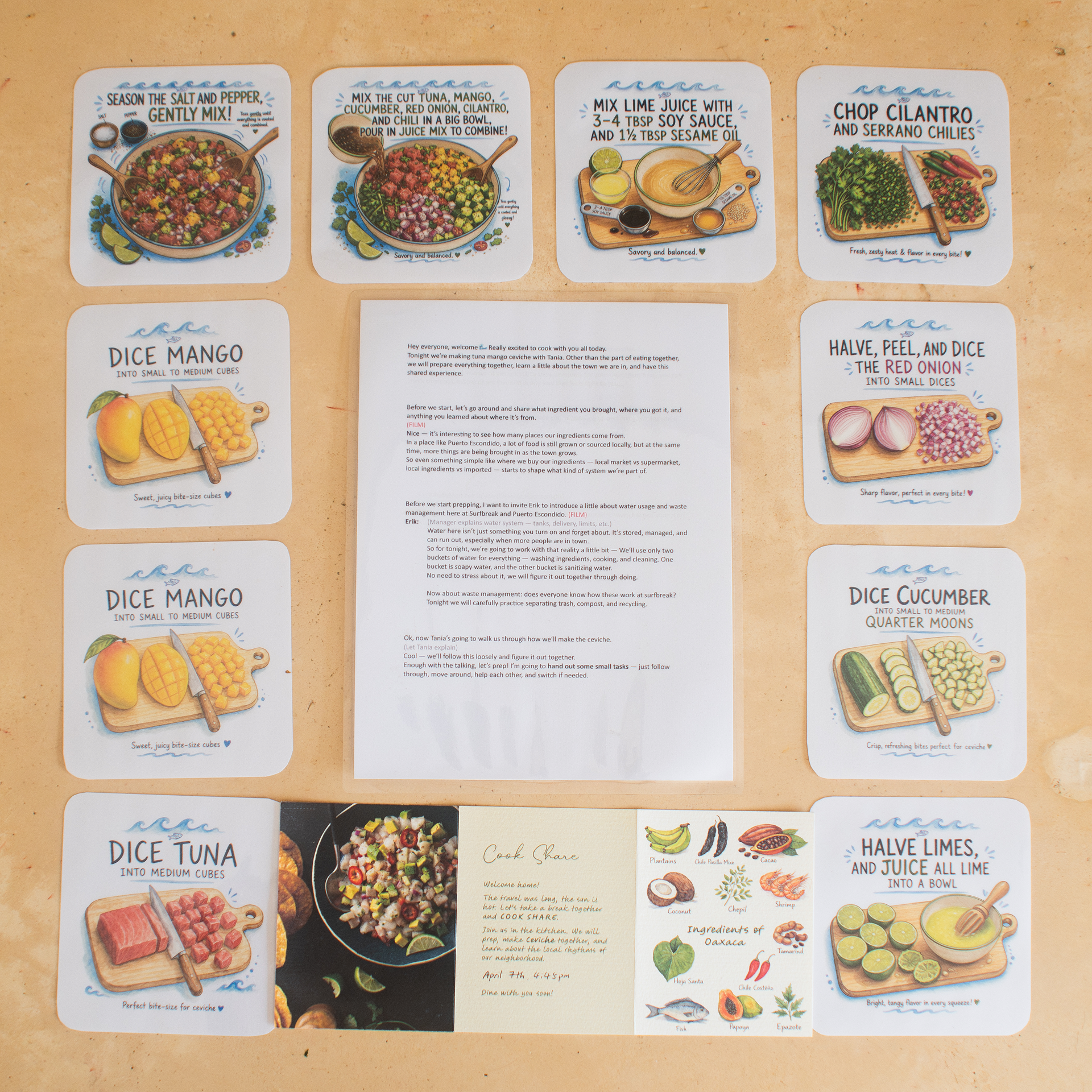
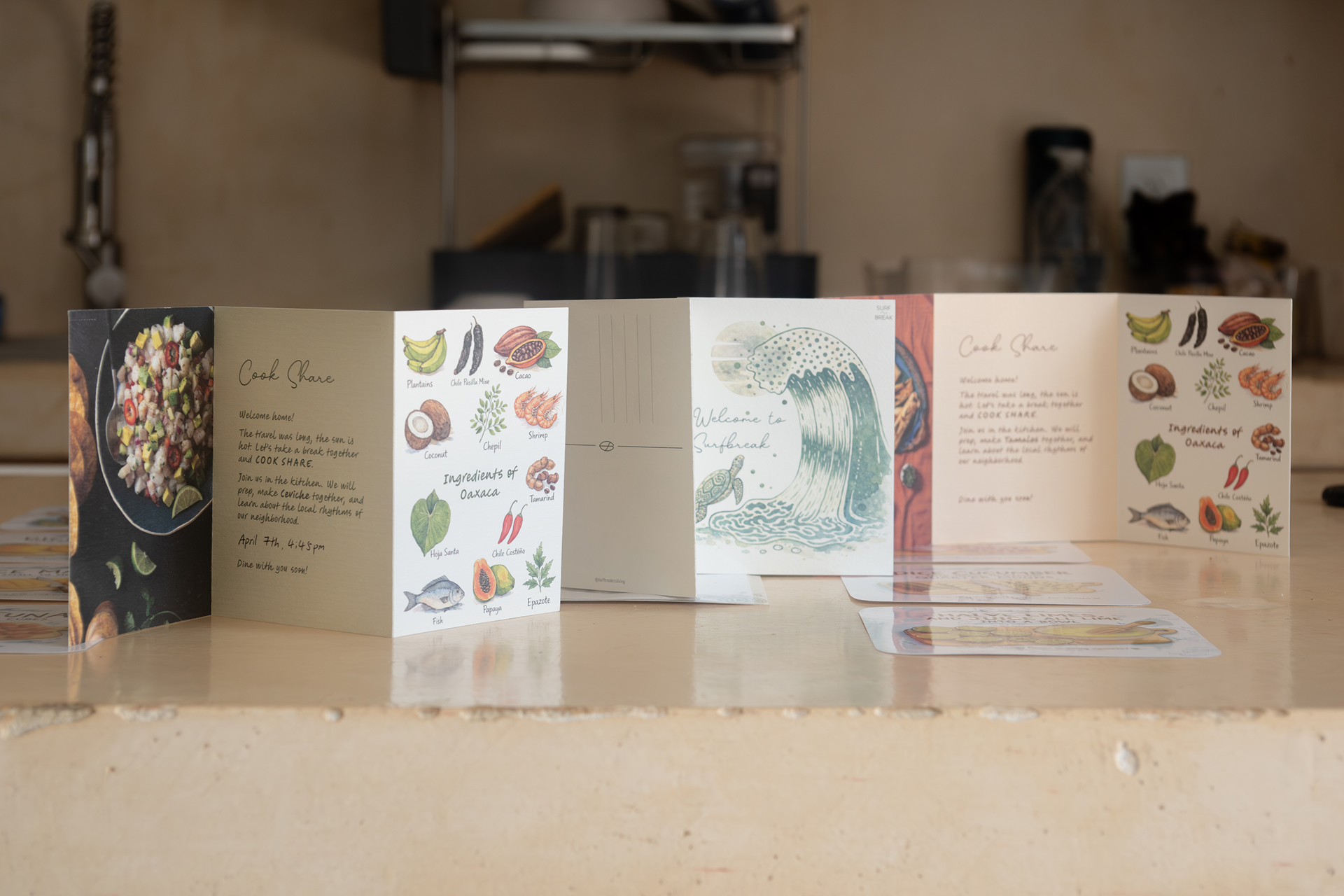
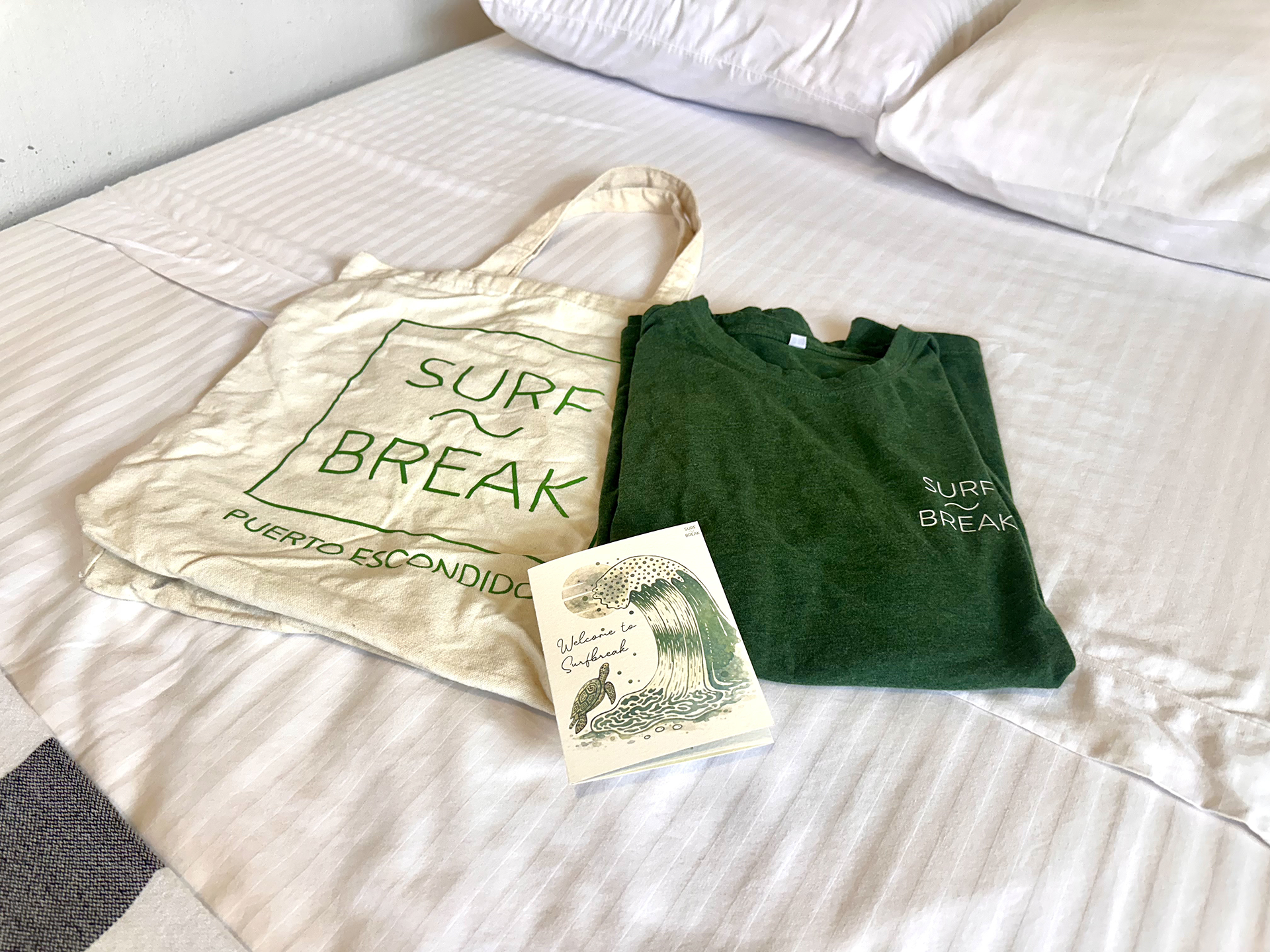
Cook Share is an orientation experience designed for co-living spaces in Puerto Escondido that transforms the arrival into a ritual of learning and shared responsibility. Instead of a standard check-in, new residents are invited to a communal meal where they cook together, take on specific tasks, and undergo a few challenges.
“To change a group's behavior, address them at the beginning.”
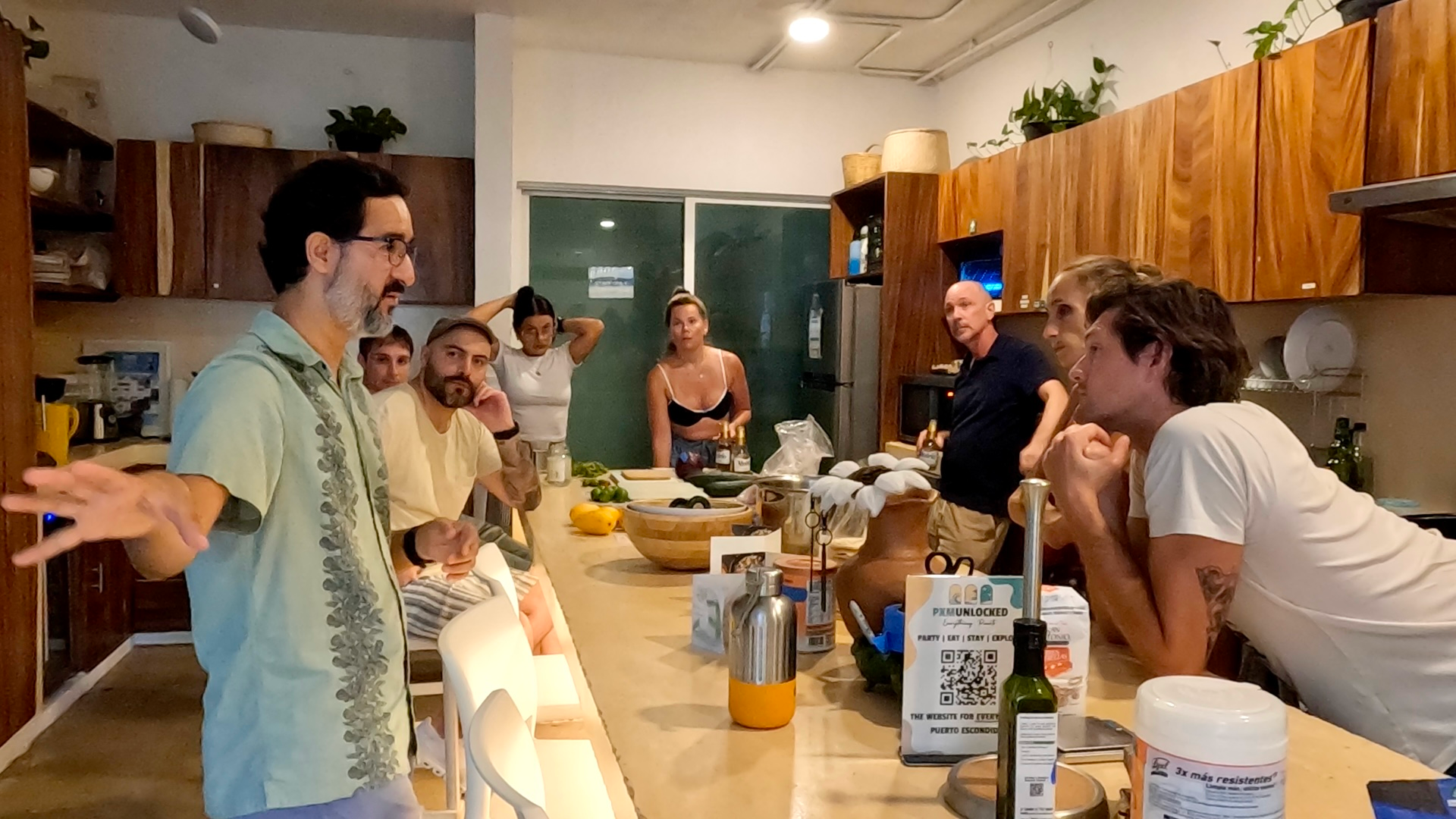
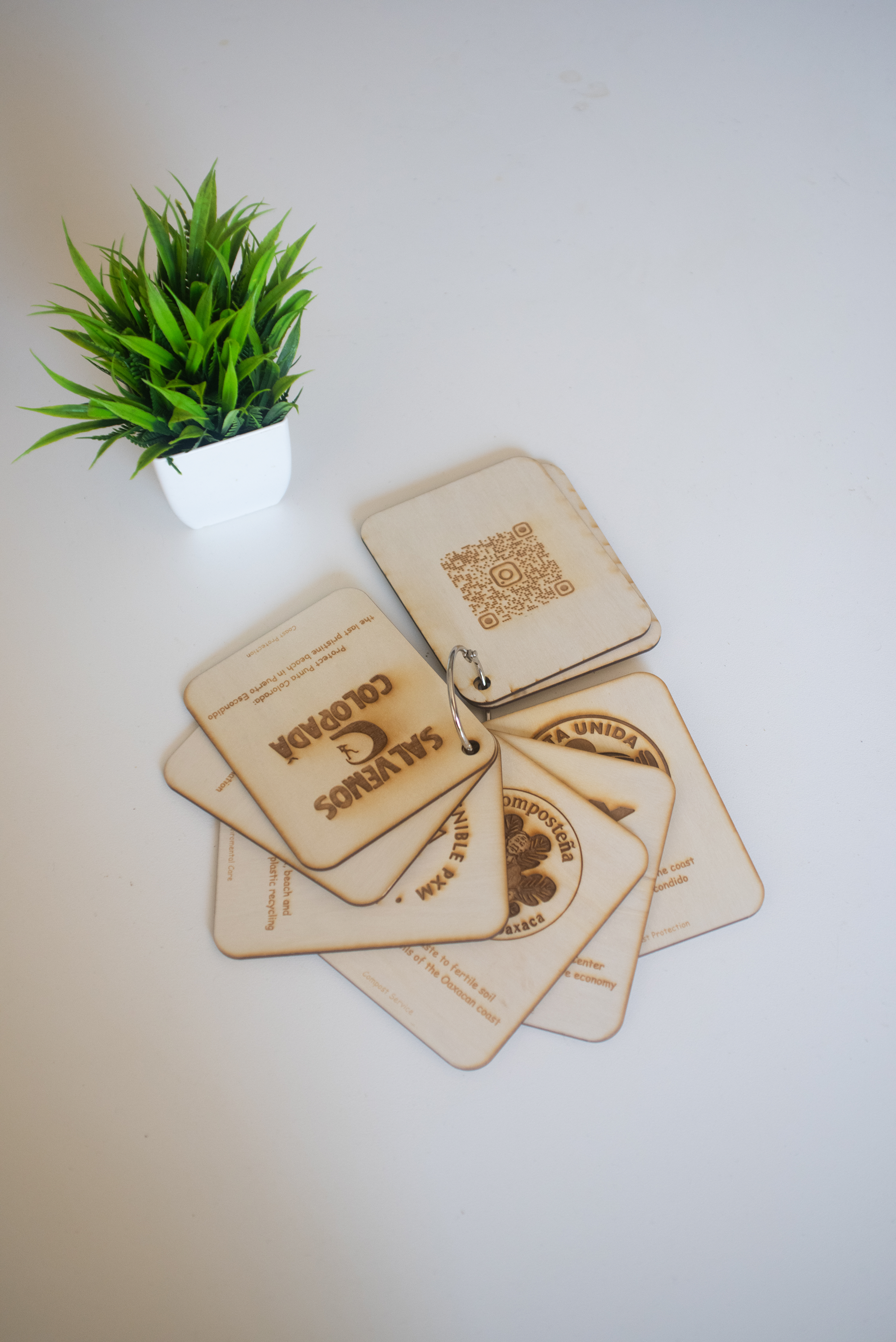
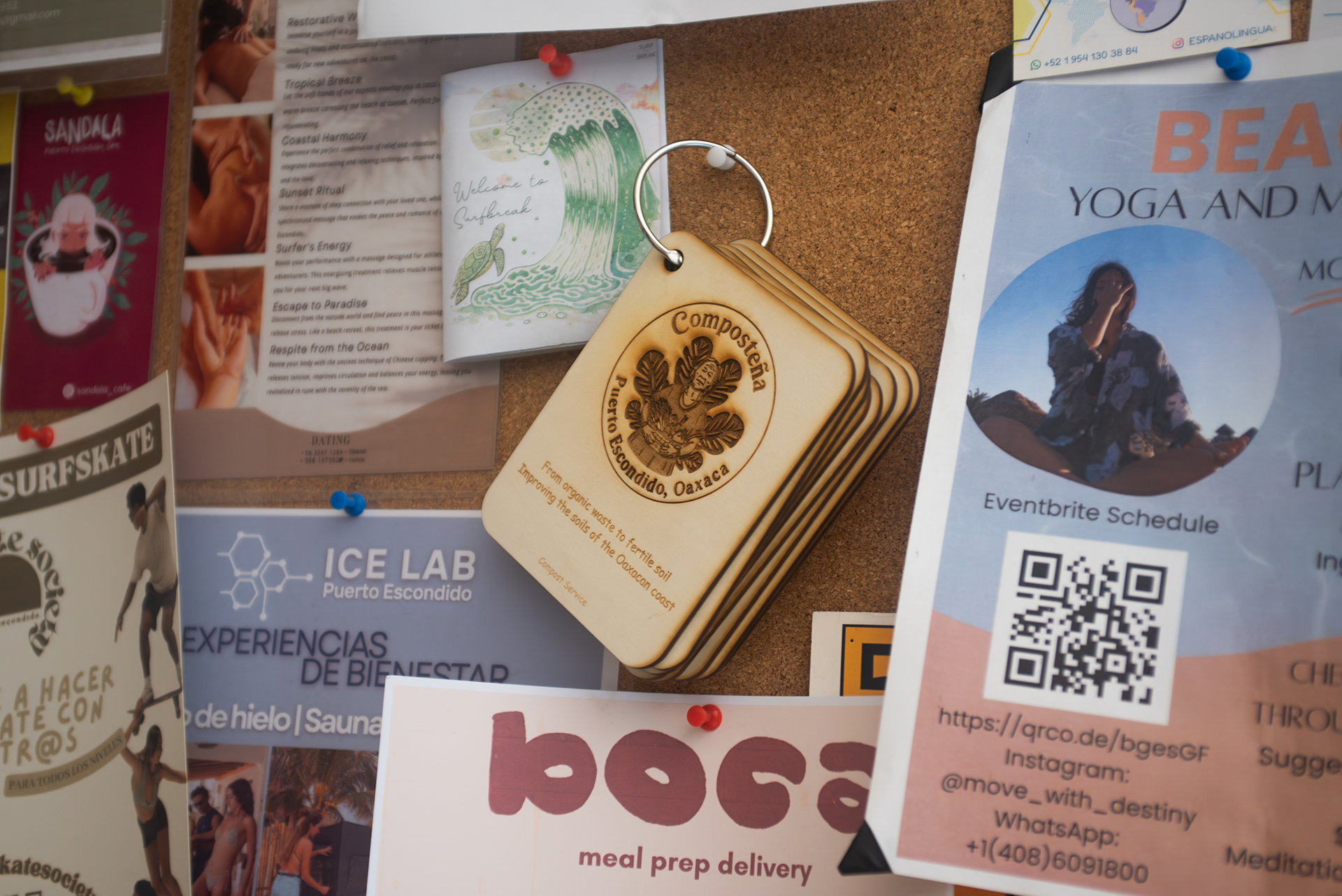
Before Cook Share starts, digital nomads are asked to buy one ingredient from a local market and learn about its origin. Once Cook Share begins, they share the story with the group, which is guided by the co-living space manager and naturally shifts to topics such as eco-agriculture, water scarcity, and the co-living space's waste management systems. During the session, digital nomads take on a serious challenge: prepare the meal using only a single bucket of water for all cooking and cleaning, a physical exercise that immediately raises awareness of local water scarcity. Throughout prepping, cooking, and cleaning, they are also asked to practice composting, recycling, and minimizing trash in line with the co-living space's practices. This experience concludes with an introduction to the Book of Communities, a guide to 8 local organizations working on environmental and social issues.
Communal cooking asks people to slow down, adapt to a shared rhythm, and let go of expectations around speed and control. “Co-living spaces already build community through shared experiences, making them a natural entry point to shape behavior early,” Sige explains. Through Cook Share, food becomes a shared practice of unlearning; newcomers begin to embrace the community around them, understand local challenges, and take on responsibility, all through an experience that is informative, joyful, and shared.
Aquí También: From Traction to Action
“Tequio is a traditional form of mandatory community labor in indigenous Oaxaca contexts that strengthens communal bonds, manages territory, and carries out collective projects.”
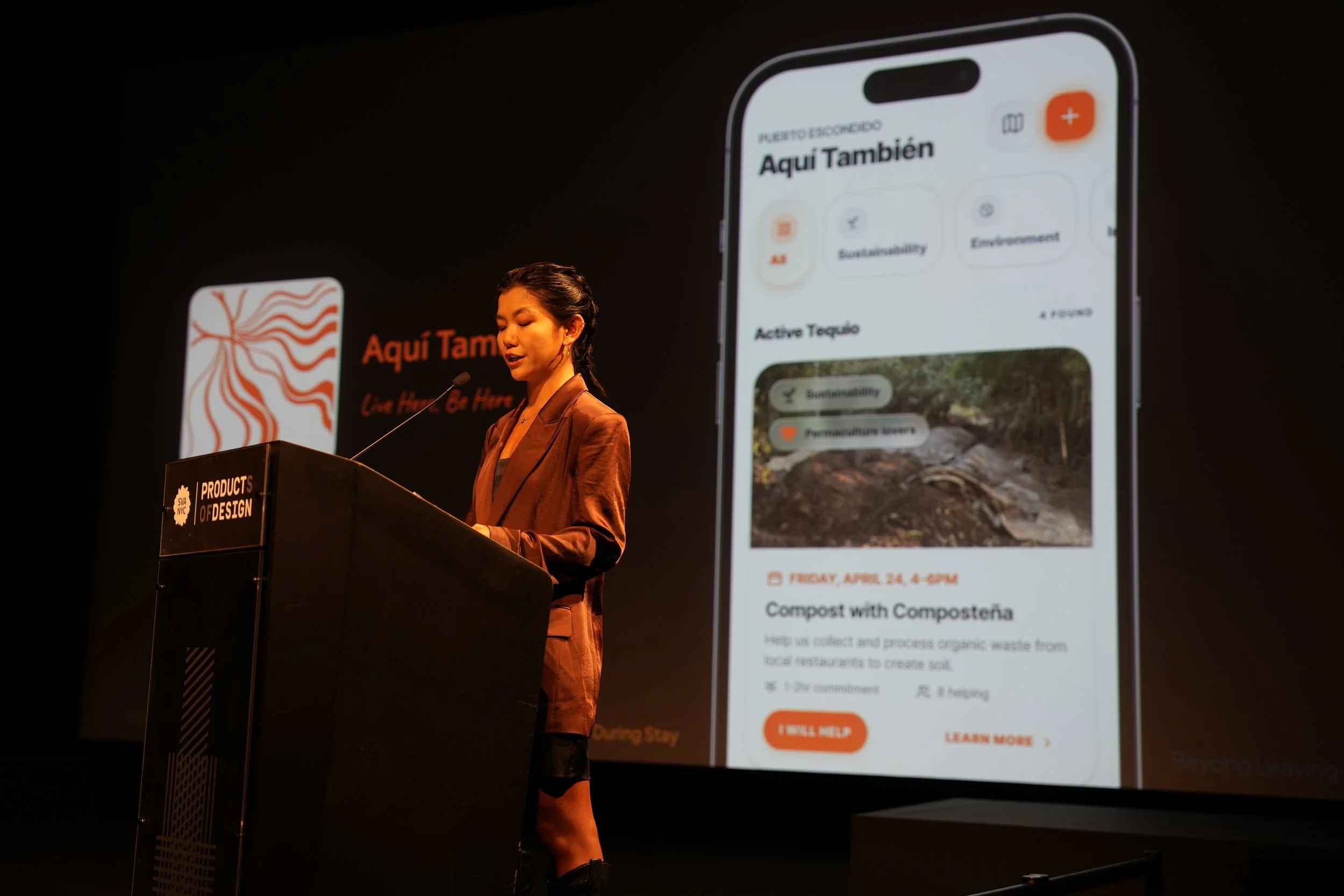
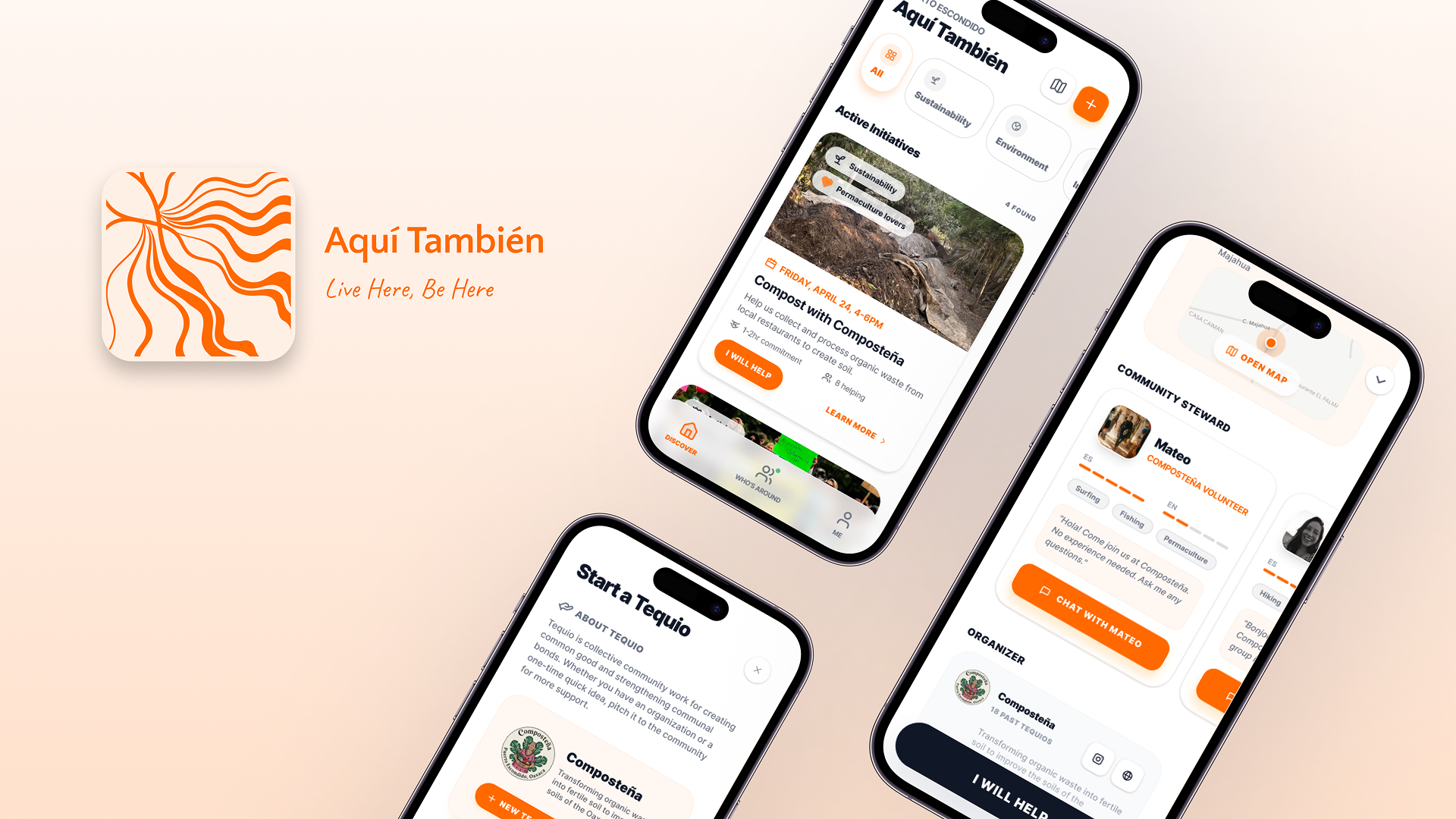
In Oaxacan culture, tequio is a traditional practice of community gathering and labor for the common good. Crisis moments often trigger immediate collective action, such as the March 2026 La Punta fire, in which over 500 residents, firefighters, and digital nomads helped. However, many year-round local initiatives remain unseen by the transient population. Aquí También is a mobile app rooted in local culture and designed to bridge this gap by making community participation visible and accessible.
“The biggest challenge for me to give back to the community
is not knowing what I can help with or how.”
The app allows digital nomads to browse upcoming tequio events, see who else is attending, and connect with community stewards to lower the barrier to entry. They can also connect with people in the same physical space in the Nearby feature to build mutual accountability. For tequio organizers, the platform uses AI to convert Instagram posts or stories into structured listings, ensuring the process is minimal and fits into their existing practice while broadening its reach to cross language barriers.
Aquí También transforms the spirit of tequio into an actionable practice, enabling digital nomads to engage in local initiatives, better understand the local urban landscape, and contribute meaningfully during their stay.
Taza de Hito: Small Contributions, Big Milestones
Taza de Hito (Milestone Cup) addresses the financial needs of local initiatives by utilizing cash-only businesses as donation hubs. In Puerto Escondido’s cash-heavy economy, travelers often struggle with a shortage of small change. When paying for a 210-meal with a 500-peso bill at restaurants, it creates small but repeated moments of tension. Taza de Hito transforms that "insignificant" change into a meaningful contribution toward local causes.
“Every day we are fighting. We need the help of everyone.”
When customers donate, they receive a personal cup and colored wooden chips based on the amount donated. They use these chips to decorate the cup into colorful Oaxacan art with patterns inspired by Zapotec textile design. Over time, as they return and donate more, their cup grows.
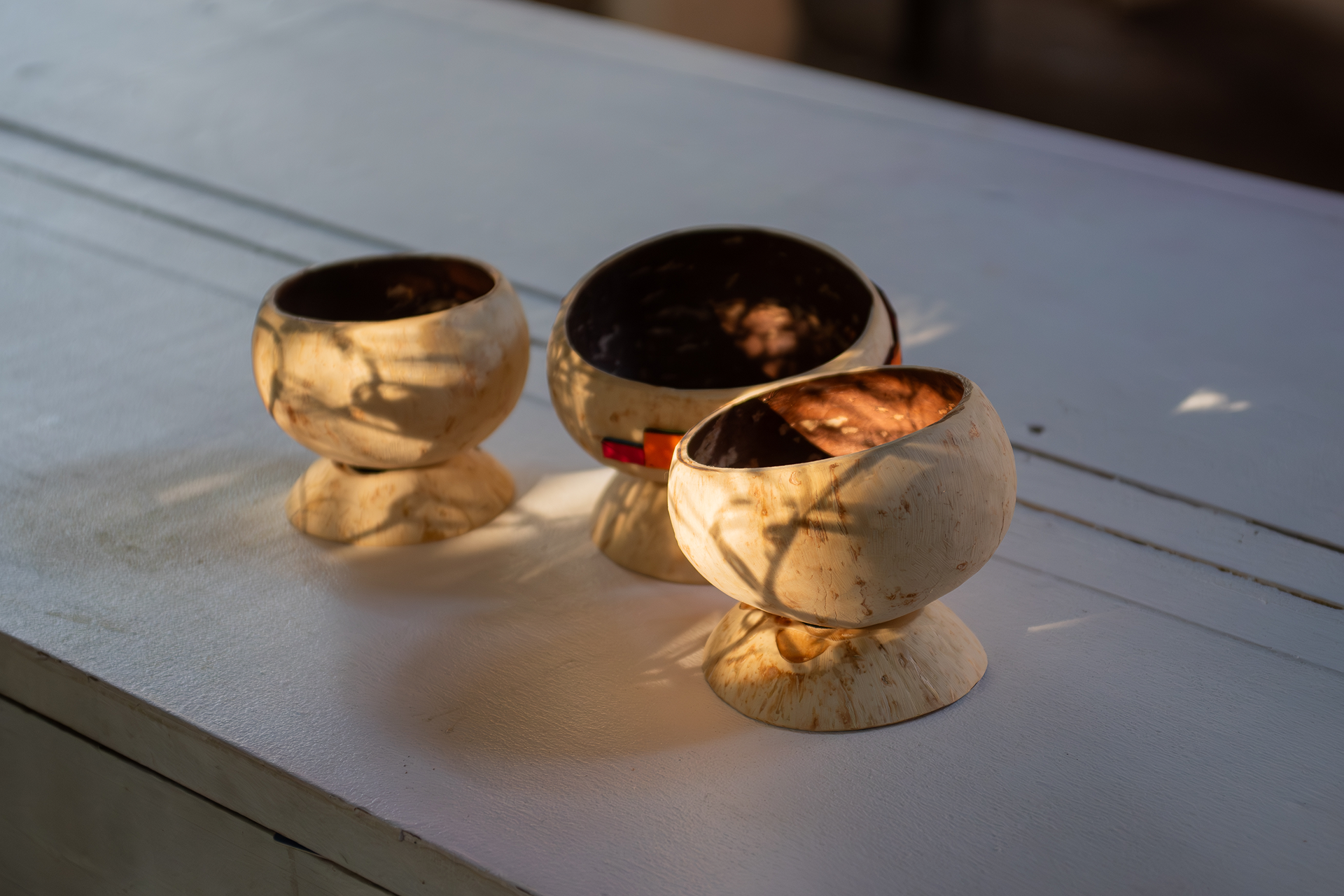
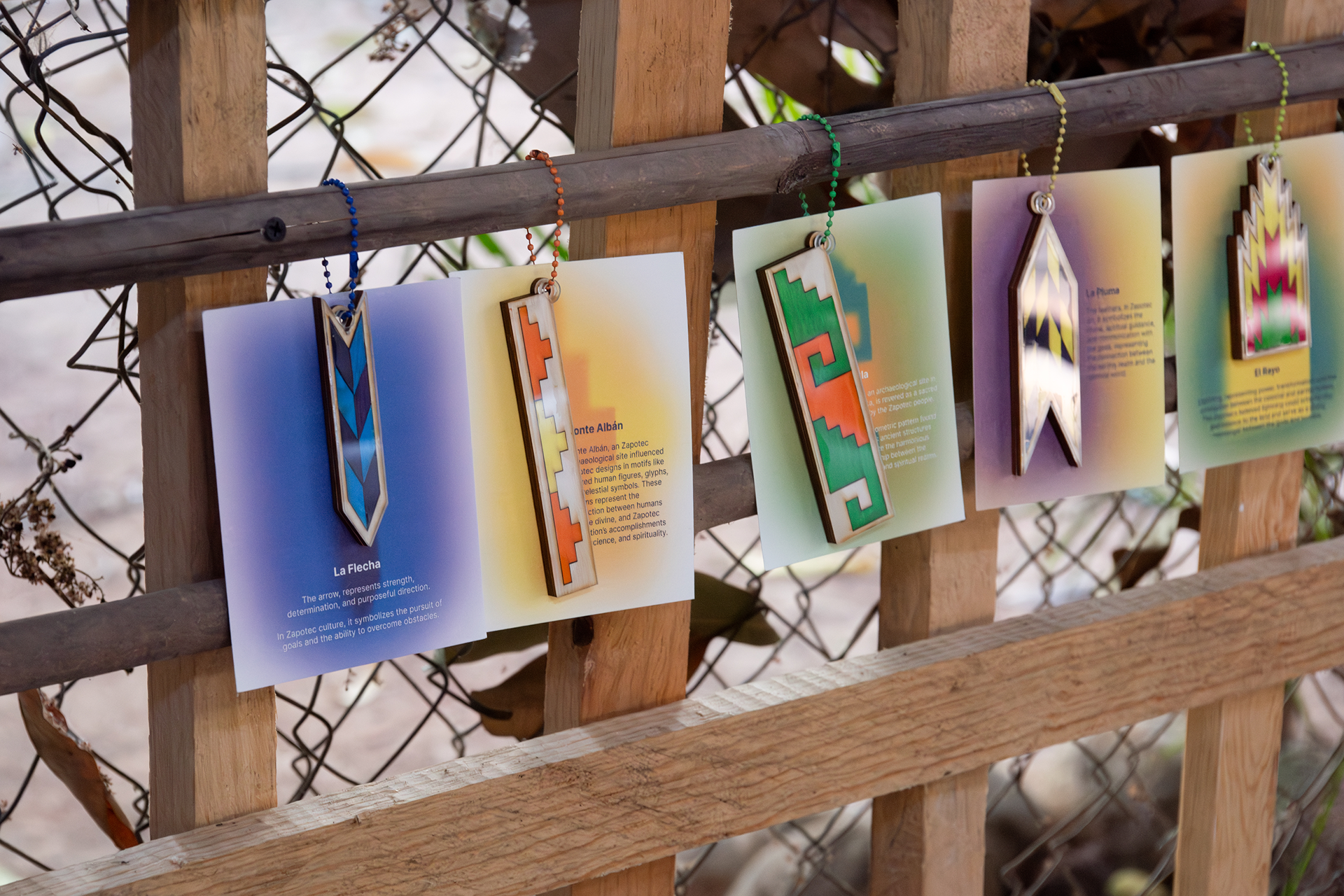
These cups are displayed on shelves in the restaurants; together, they form a community artifact of contributions. The experience is grounded in local culture, and the cups are made from discarded coconut shells at local coconut stands. Taza de Hito transforms donation from a transactional moment into an ongoing relationship, making it visible and personal.
Comunidad de Cocinar y Compartir: Community Building and Contribution Beyond Nomad’s Stay
While the above designs focus on the beginning of a digital nomad’s journey and during their stay, eventually, most nomads leave. And when they do, their impact leaves with them. How might digital nomads’ impact be passed forward to future nomads and the local communities?
“Changes happen when a mix of minds meet and initiate programs that address
local challenges.”
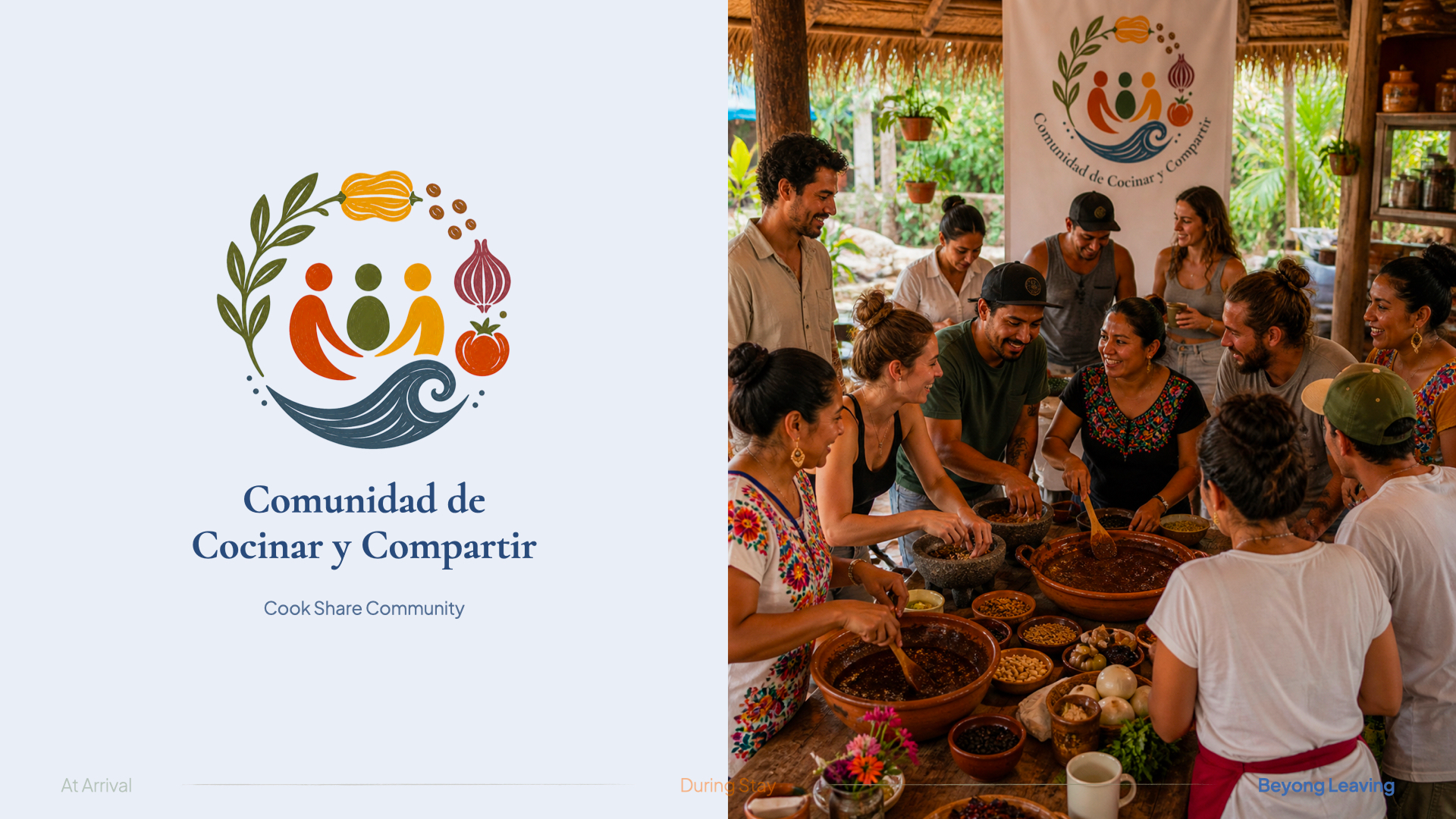
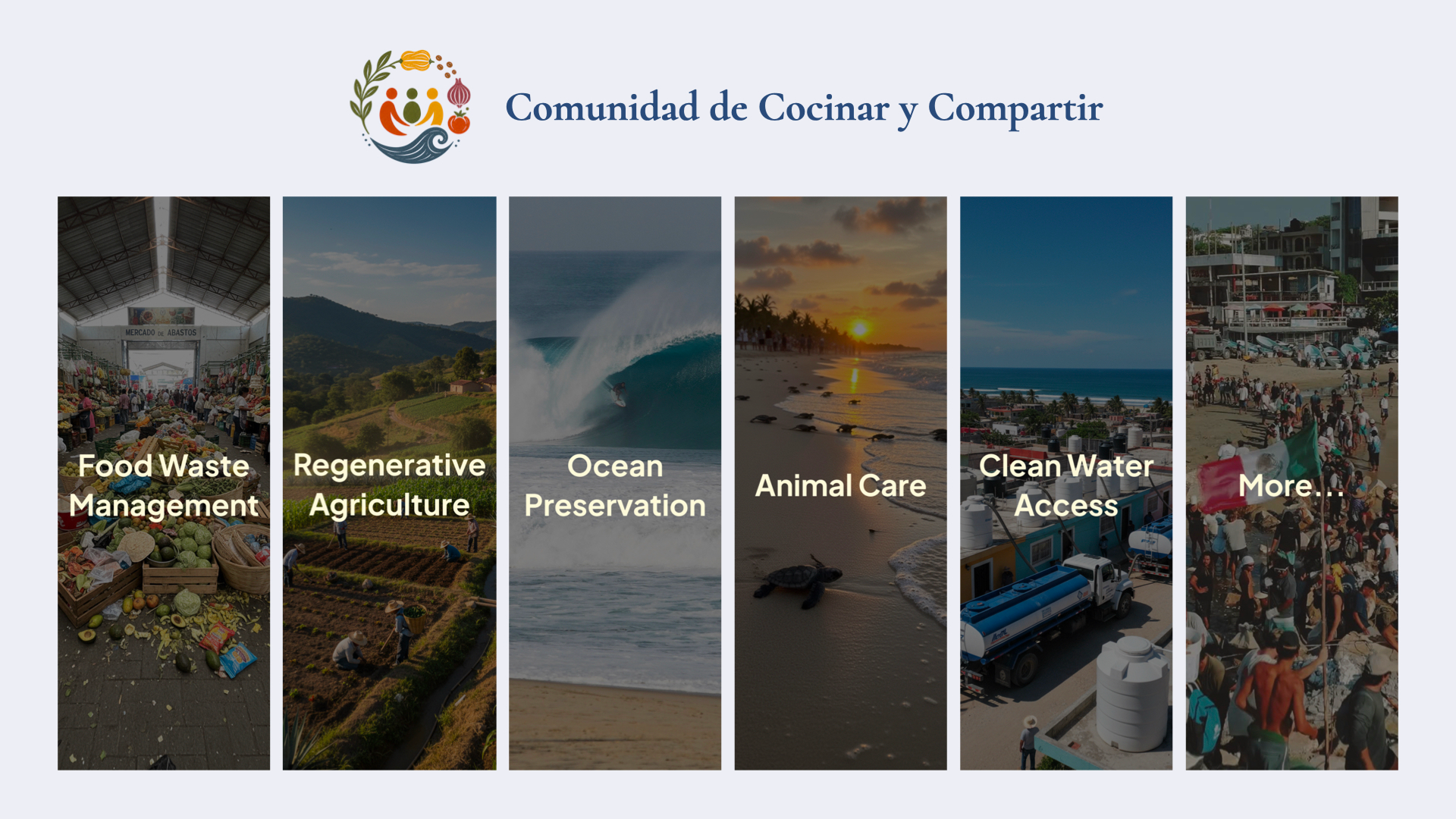
Comunidad de Cocinar y Compartir (Cook Share Kitchen) is a service that’s transformed from the Cook Share orientation experience. By facilitating structured cooking sessions that bring together digital nomads and local initiative organizers to discuss topics such as ocean preservation or regenerative agriculture, this service uses food and shared labor as catalysts, creating a natural space for knowledge exchange and relationship-building. As local residents value fresh perspectives and outside minds, these sessions allow for the formation of lasting communities centered around shared causes. A digital nomad may leave, but the community they help build will remain and continue to grow with every new person who arrives.
Take a look at Sige’s work in more detail and follow her on Medium.