
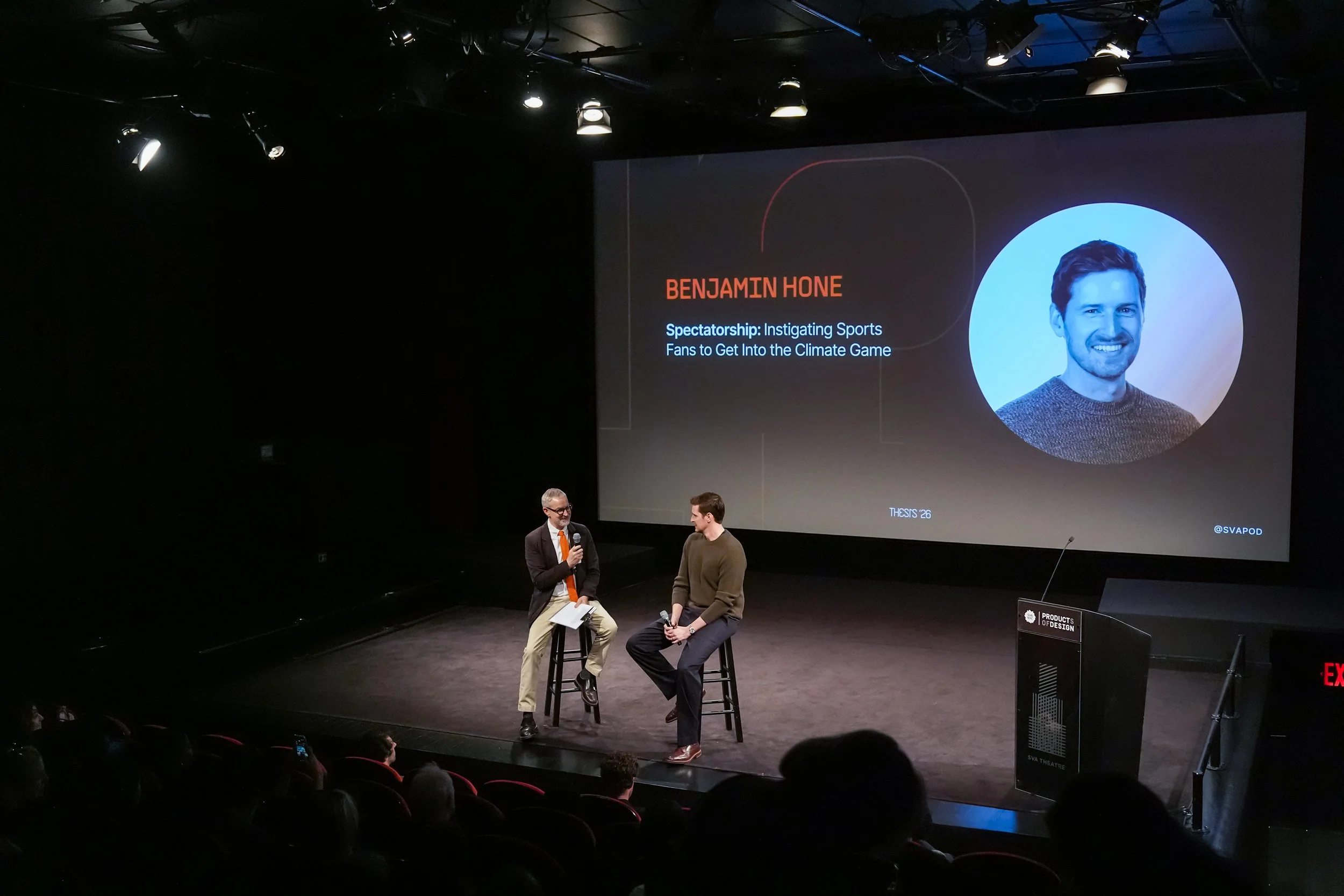
Spectatorship: Instigating Sports Fans to Get Into the Climate Game
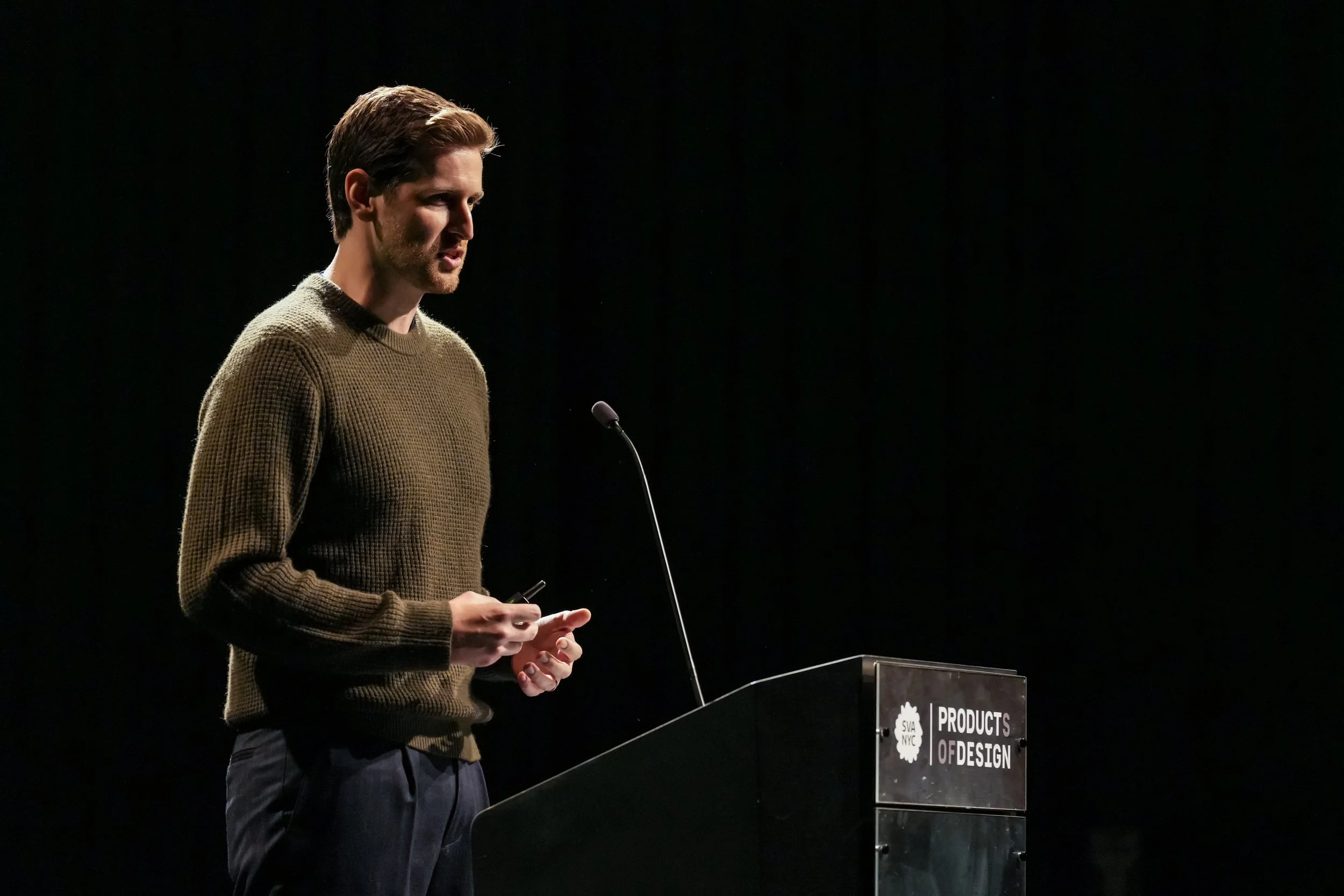
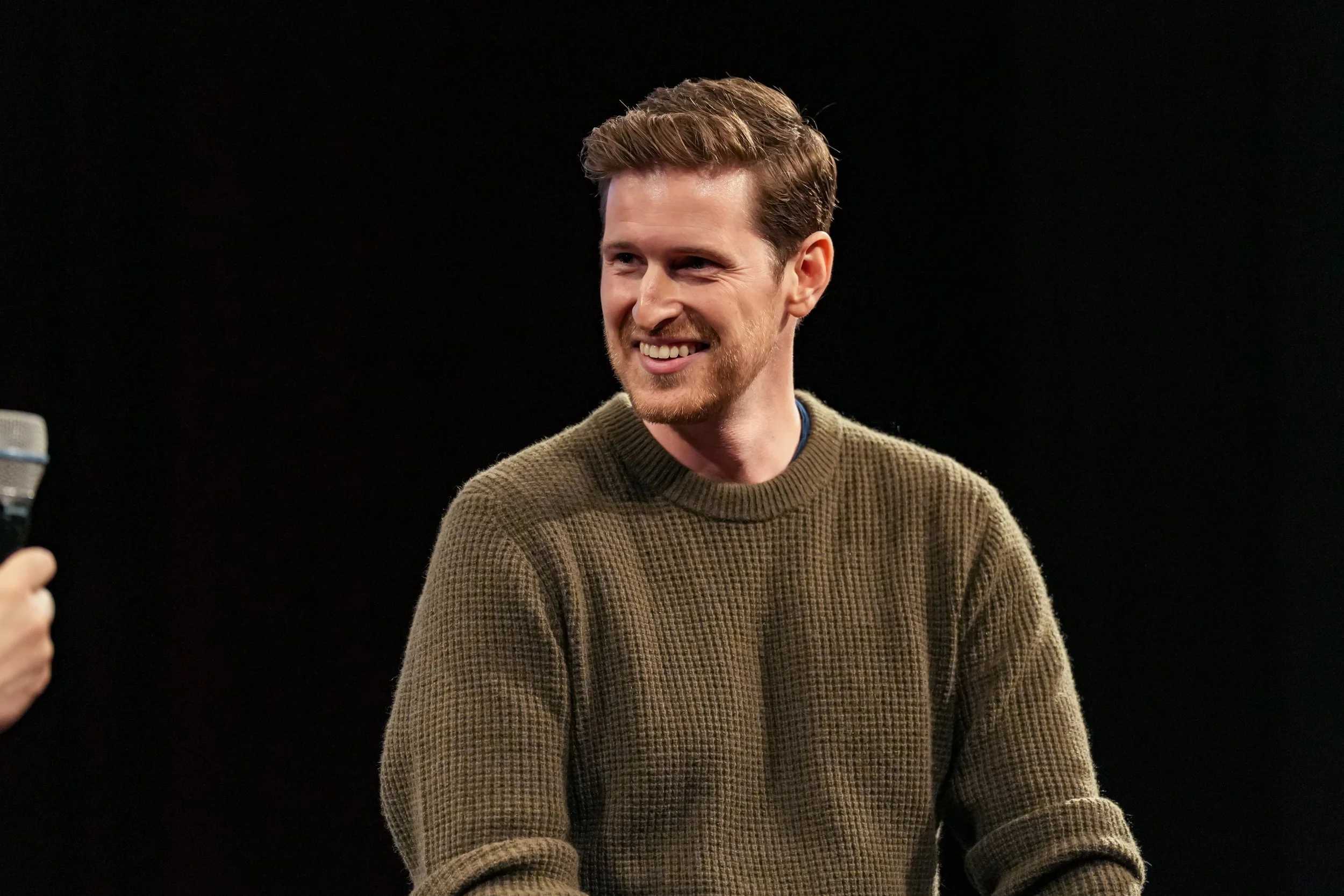
Benjamin Hone's thesis, Spectatorship: Instigating Sports Fans to Get Into the Climate Game, explores the identity, rituals, and embodied movements of fandom to develop design interventions that encourage sports fans to take regenerative climate action. Like many things people love, sports are being impacted by the climate crisis. Fans often turn to sports as an escape from political instability, environmental anxiety, and other global challenges. Yet the rituals surrounding fandom can also intensify the very conditions from which people seek relief.
“The existing passion and competitive nature of fandom represent a powerful and overlooked opportunity for generating widely adopted climate mitigation and adaptation habits. “
In his thesis, Benjamin argues that the existing passion, loyalty, and competitive nature of fandom represent a powerful and overlooked opportunity for generating widely adopted climate mitigation and adaptation habits. Sport is not a sideshow to the climate crisis; it is a rehearsal space for how people organize identity, loyalty, and collective behavior under pressure.
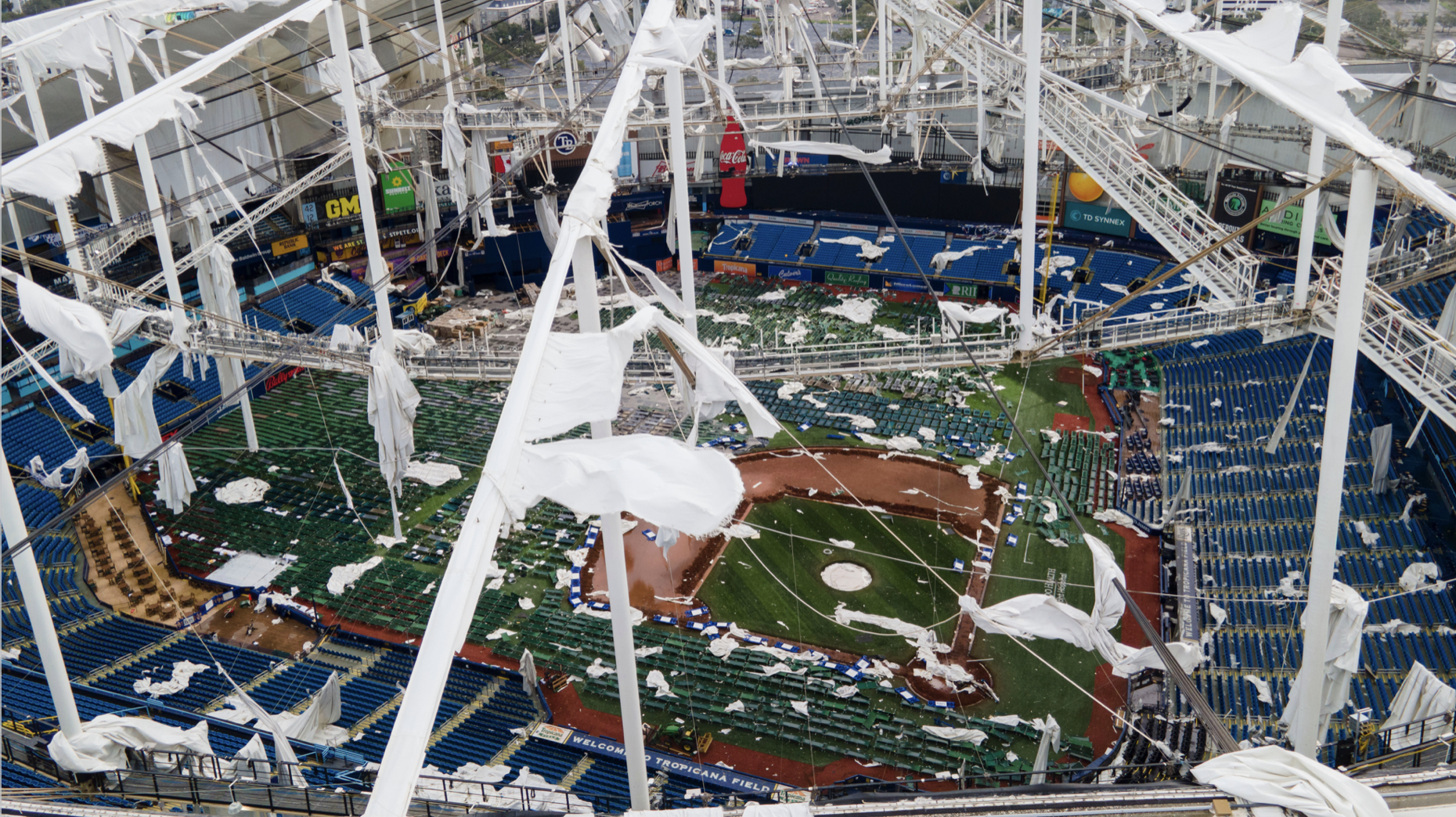
Through design, Benjamin explores how these existing structures of fandom might become tools for climate action—not by removing the joy of sport, but by ensuring that joy is not powered by systems that undermine a shared future.
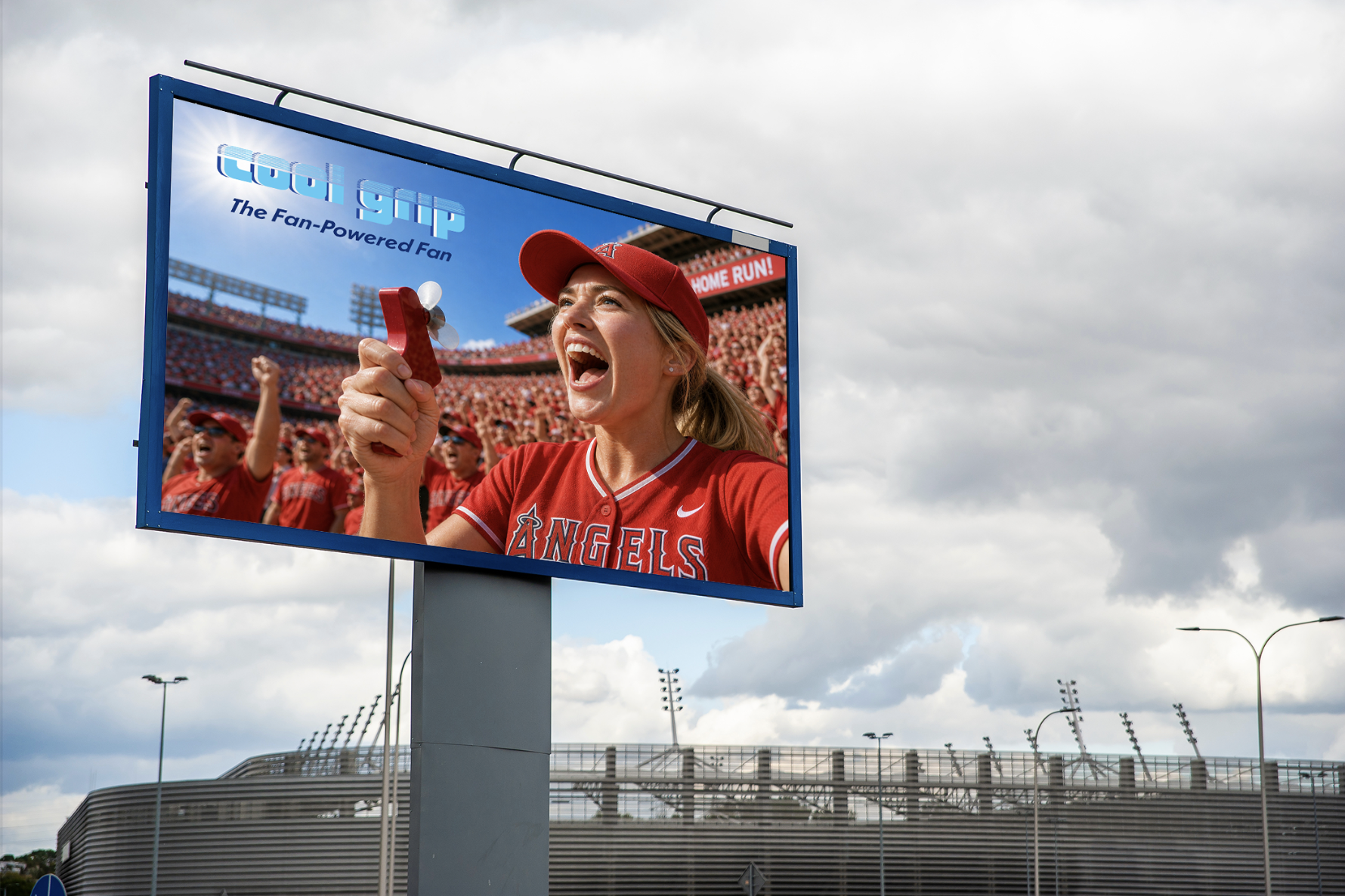
Cool Grip: The Fan-Powered Fan
The clenched fist is one of the most recognizable gestures of fandom: a physical expression of excitement and collective energy.
Cool Grip transforms this familiar movement into a tool for climate adaptation. With the possibility of extreme heat events becoming more frequent, fans may increasingly need ways to adapt to rising temperatures. Cool Grip channels the kinetic energy generated by the clenched fist to rotate fan blades, keeping users cool in the heat of the moment—no battery required.
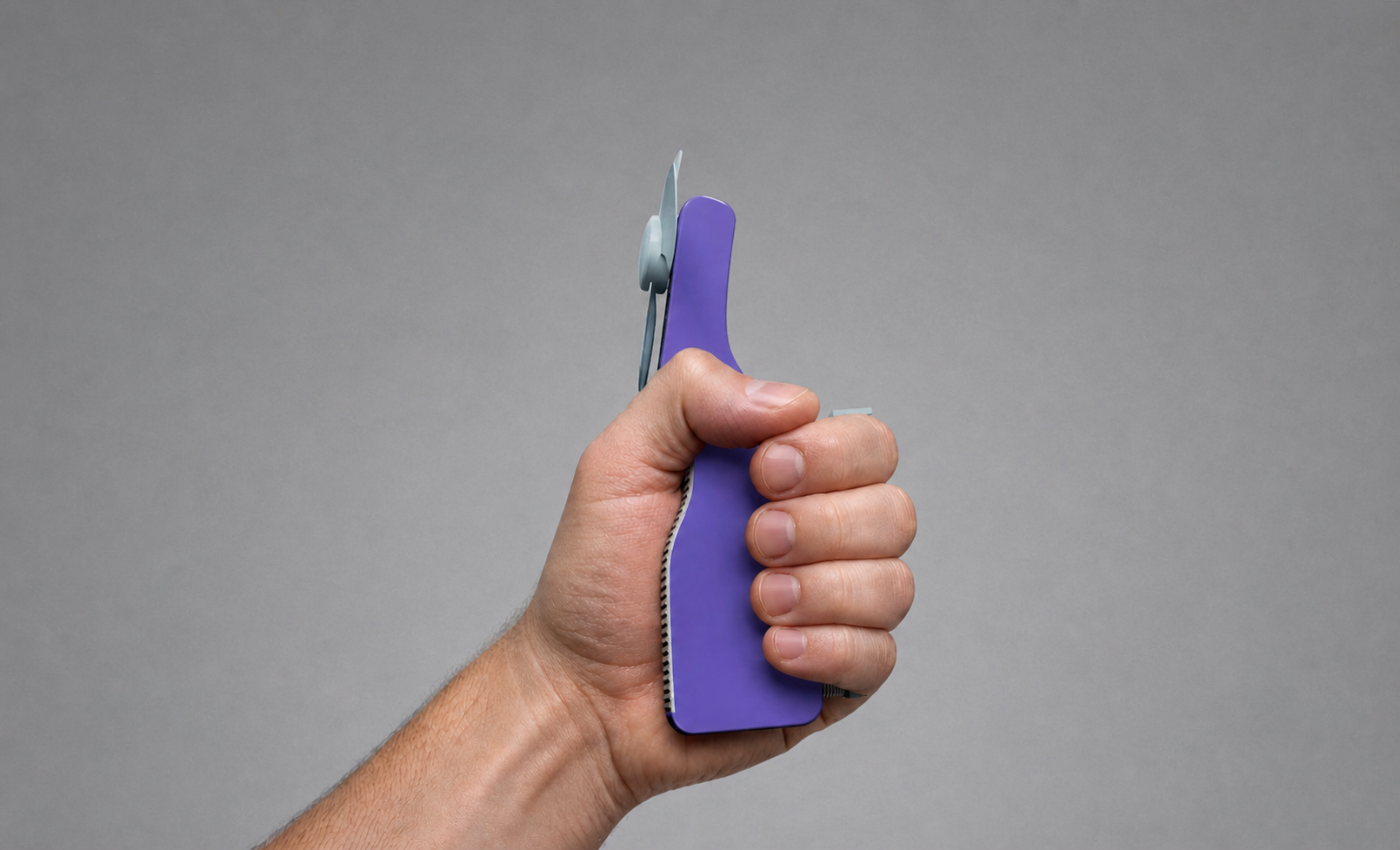
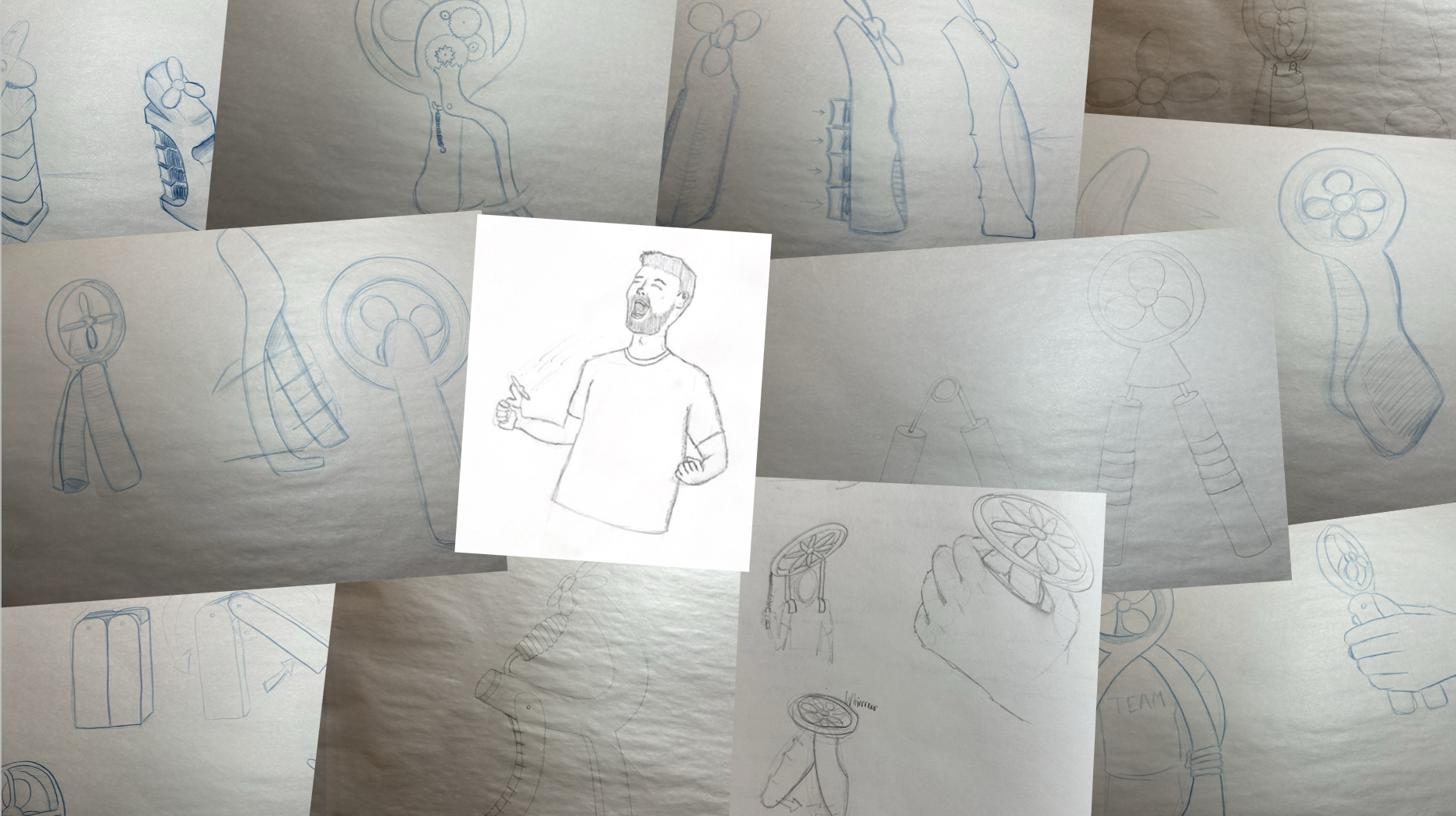
Taking inspiration from grip-strengthening tools, Benjamin explored different form factors before prototyping with cardboard, foam, and metal wire. The final ergonomic design fits comfortably in the hand and comes in a variety of team colors.
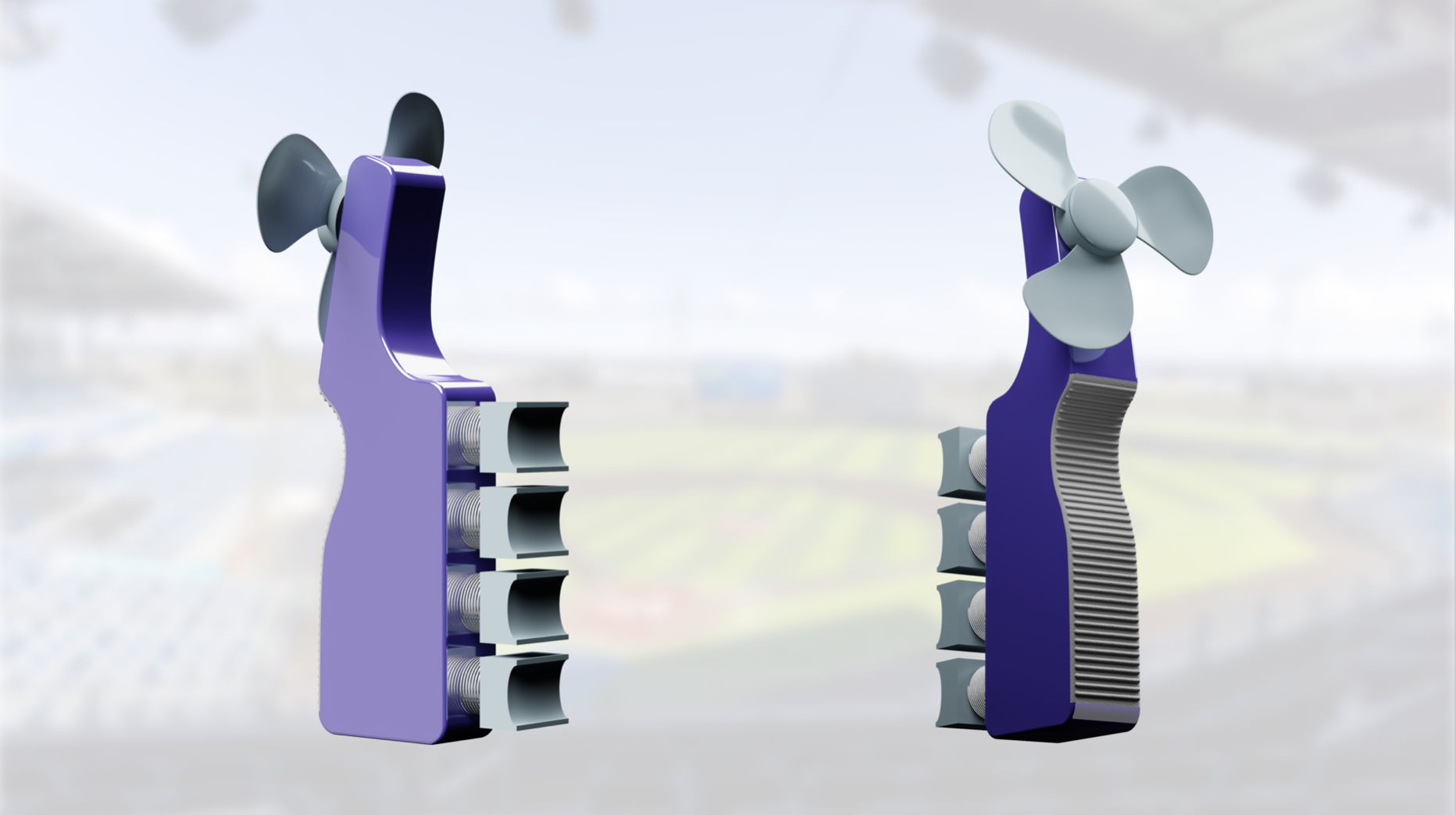
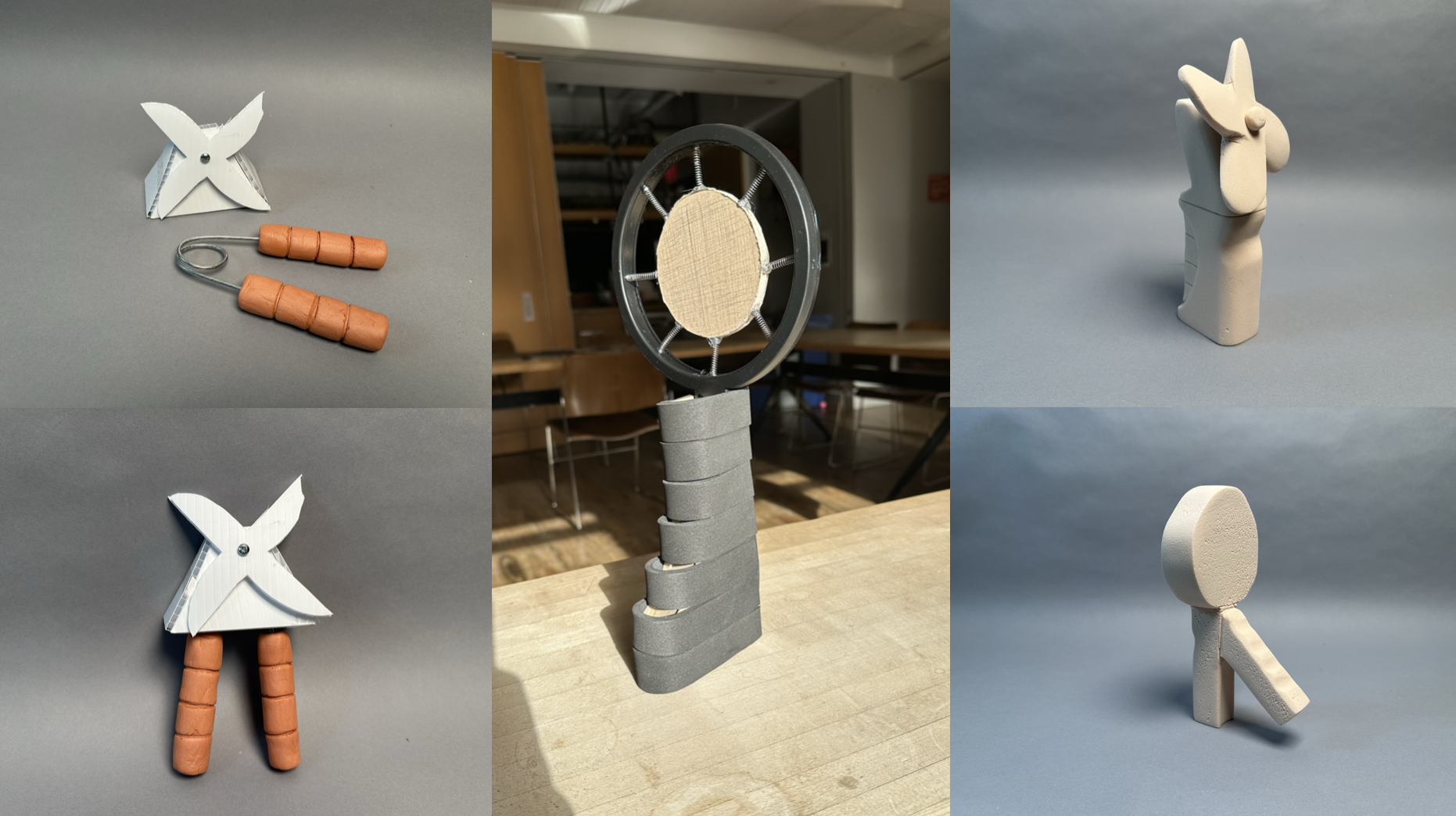
Cool Grip reimagines a familiar symbol of fandom as a functional climate tool: a fan-powered fan.
Coin Golf
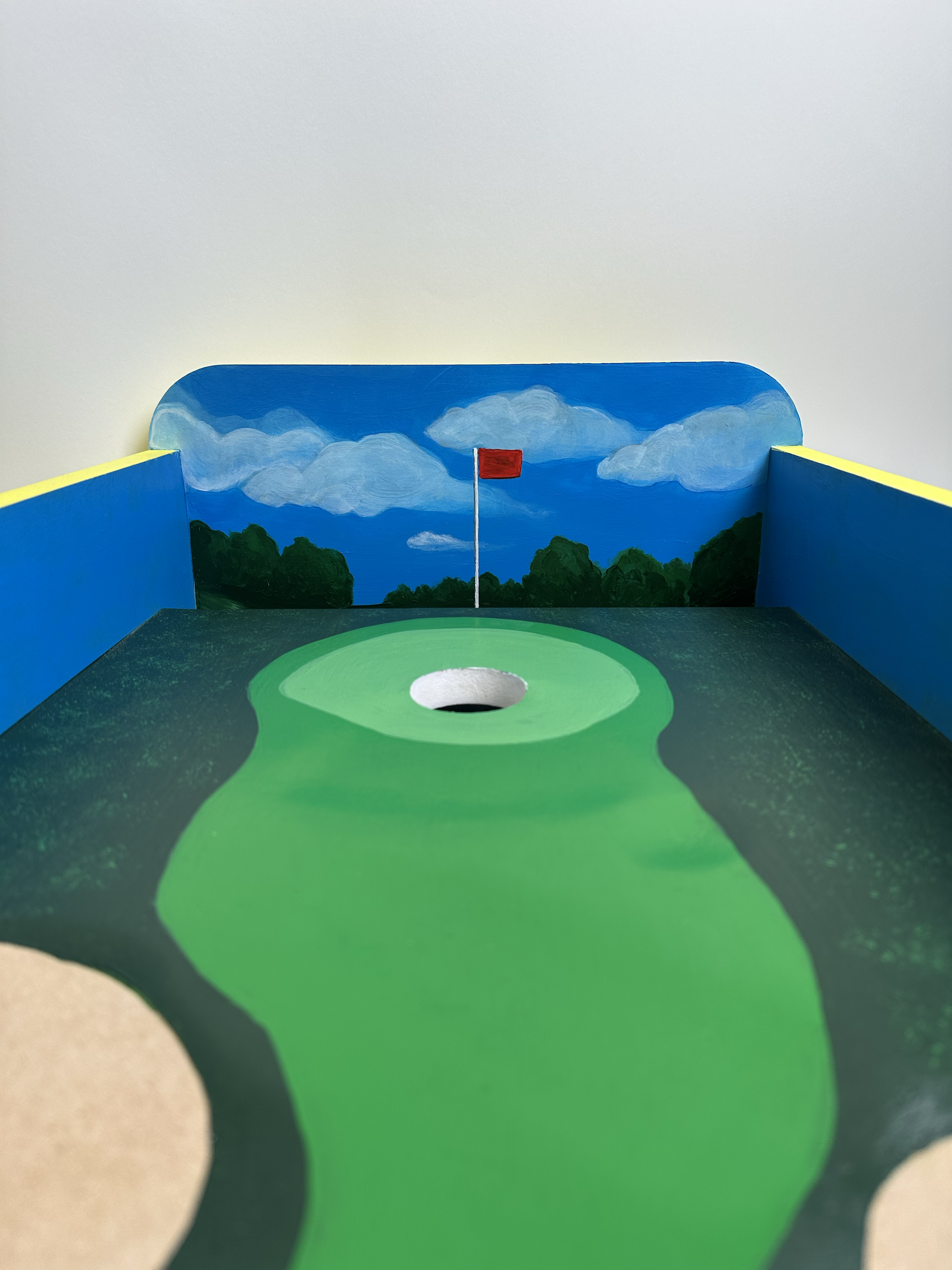
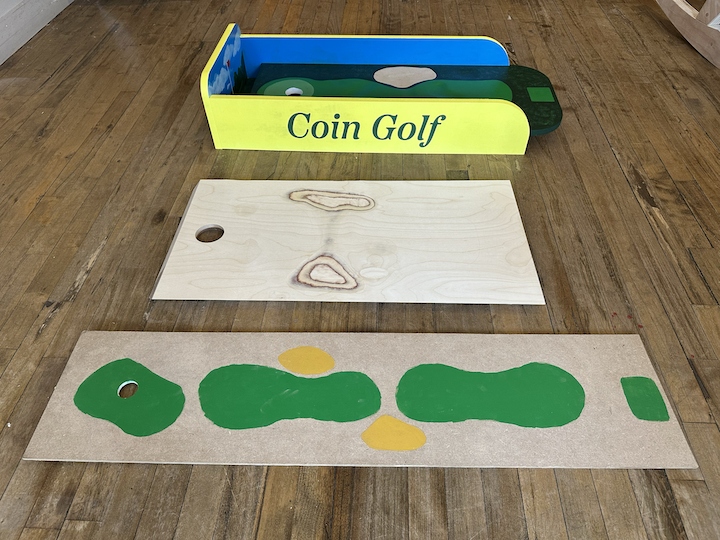
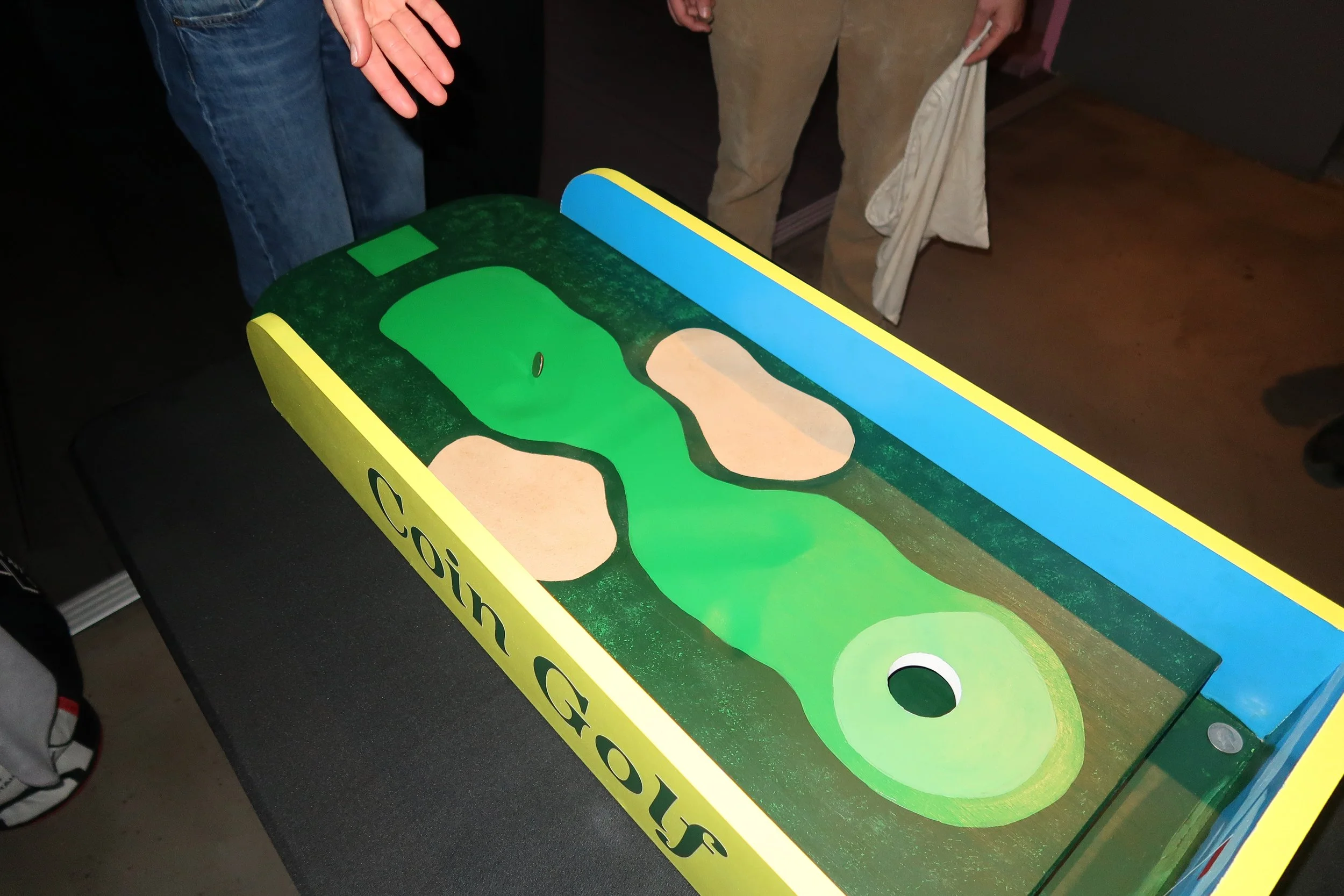
Fans don't just watch games at the stadium, they watch at their local sports bar, too. To explore how environmental action could be integrated into sports culture, Benjamin developed Coin Golf, a tabletop game designed to gamify charitable giving.
The rules are simple: players roll a quarter down a miniature fairway and attempt to land it in a hole. Benjamin staged the game at Five Iron Golf in Herald Square in Manhattan, where participants raised funds for Monarchs in the Rough, an environmental nonprofit that works with golf courses to create pollinator habitats in unused areas.
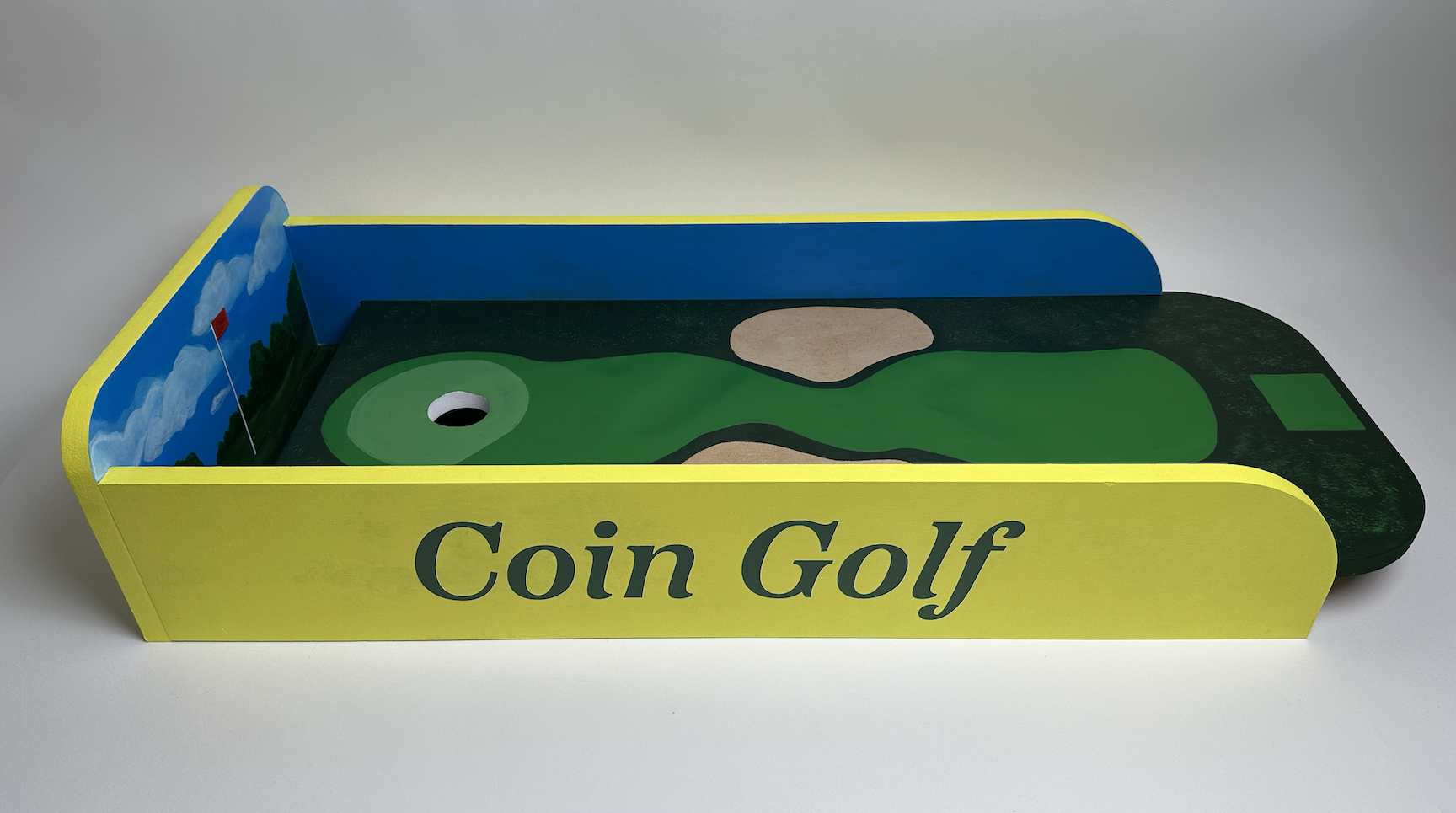
By aligning the cause, the context, and the competitive spirit of the activity, Benjamin created an approachable installation that encouraged people to donate in a setting where they might not have otherwise considered giving. Coin Golf demonstrates how familiar sports rituals can become entry points for environmental participation.
Compost Clash
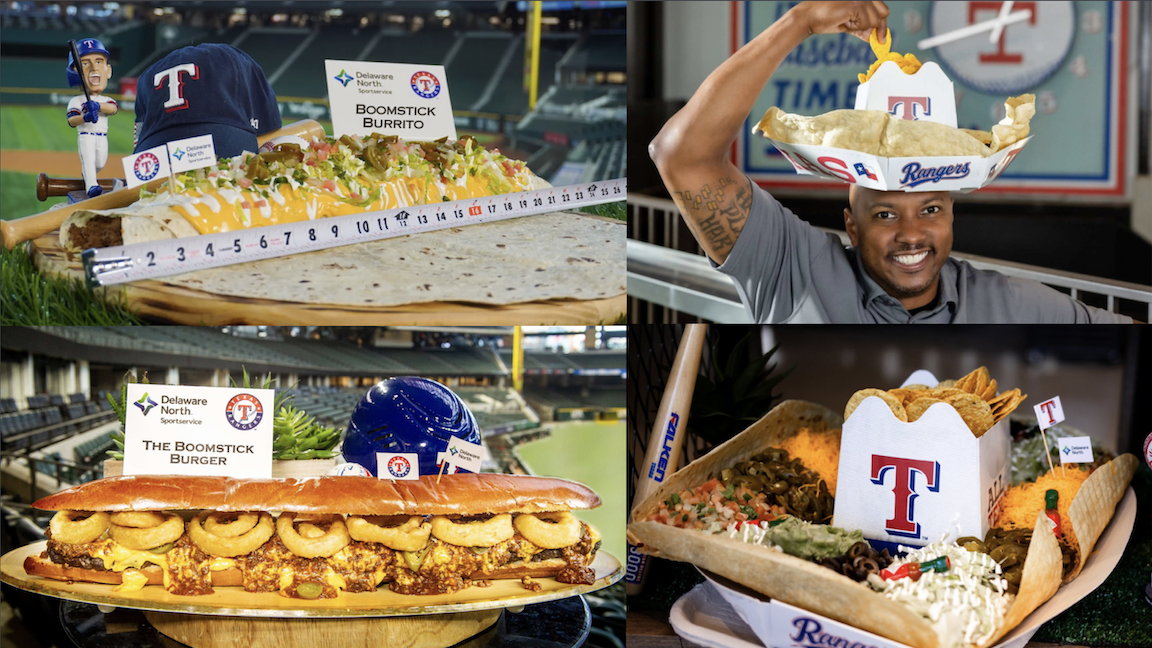
Sports venues generate enormous amounts of waste. From oversized novelty food items to single-use packaging, stadium culture often reflects a larger issue of consumption and disposal. For example, Globe Life Field, home of the Texas Rangers, offers oversized menu items such as the 23-inch Boomstick Burrito, the 24-inch Boomstick Burger, and the Rally Nacho Sombrero. On game days, sports fans can collectively generate up to 40 tons of solid waste at stadiums. When food waste enters landfills, it produces methane, a powerful greenhouse gas that contributes to global warming.
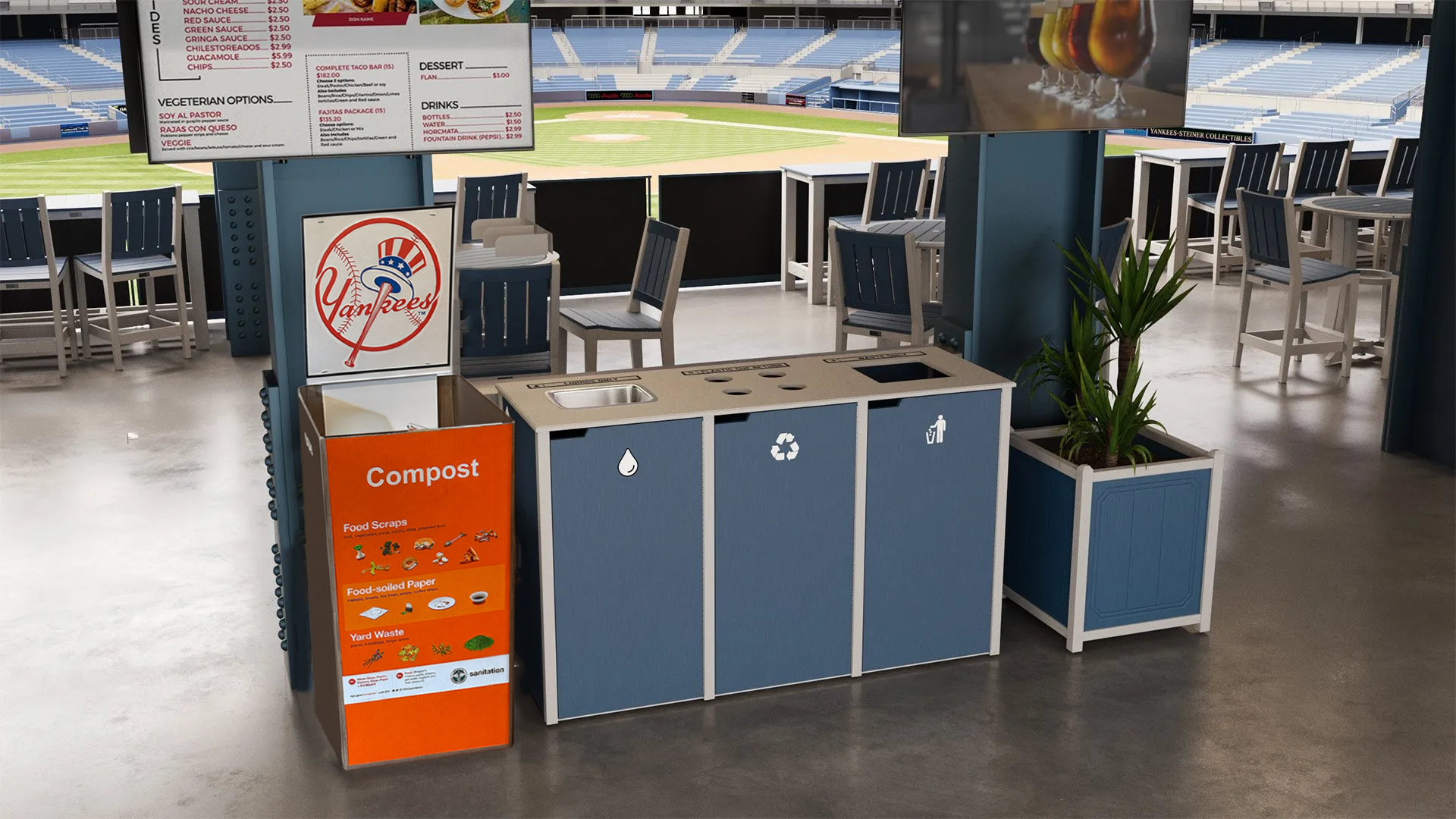
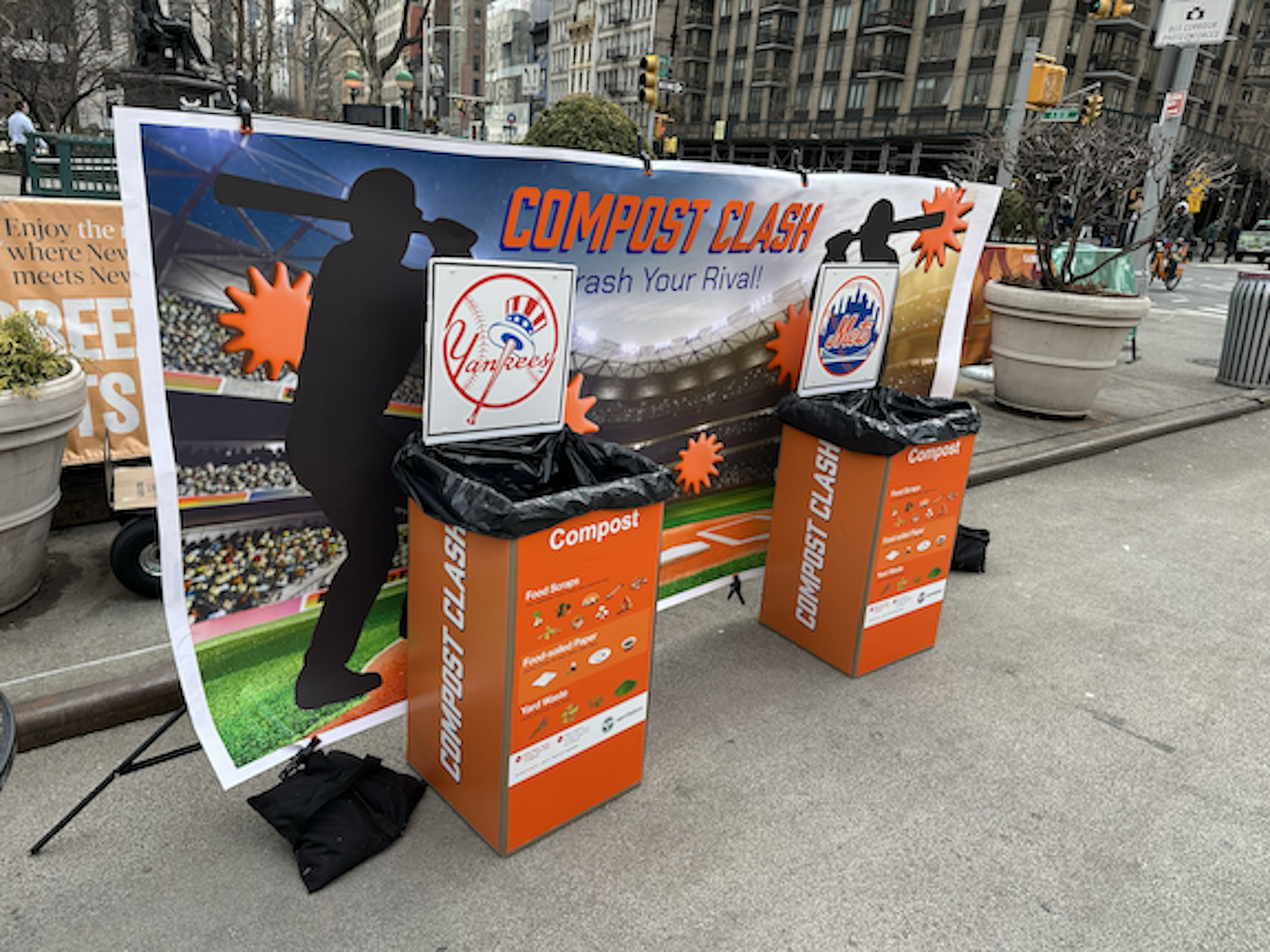
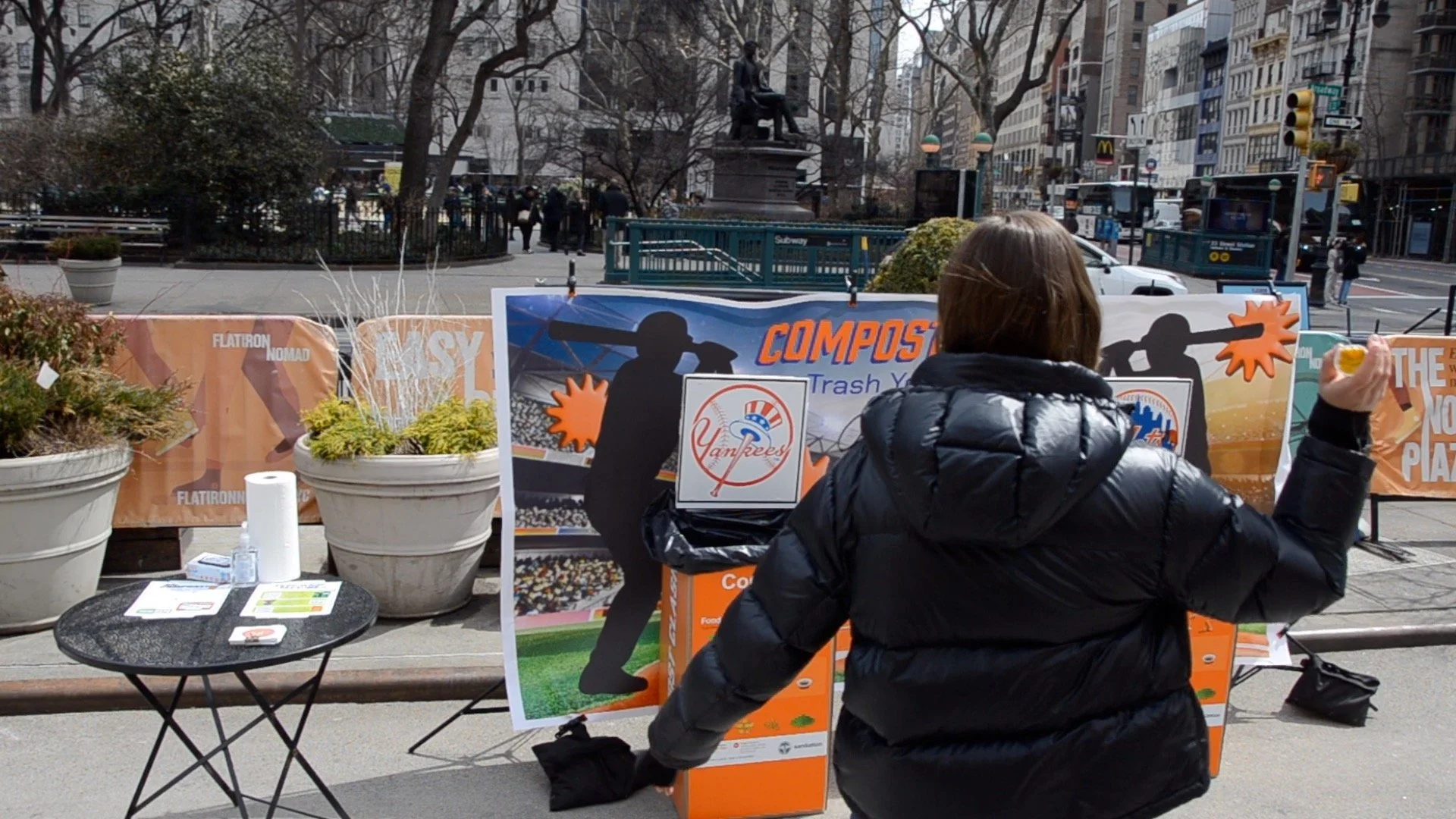
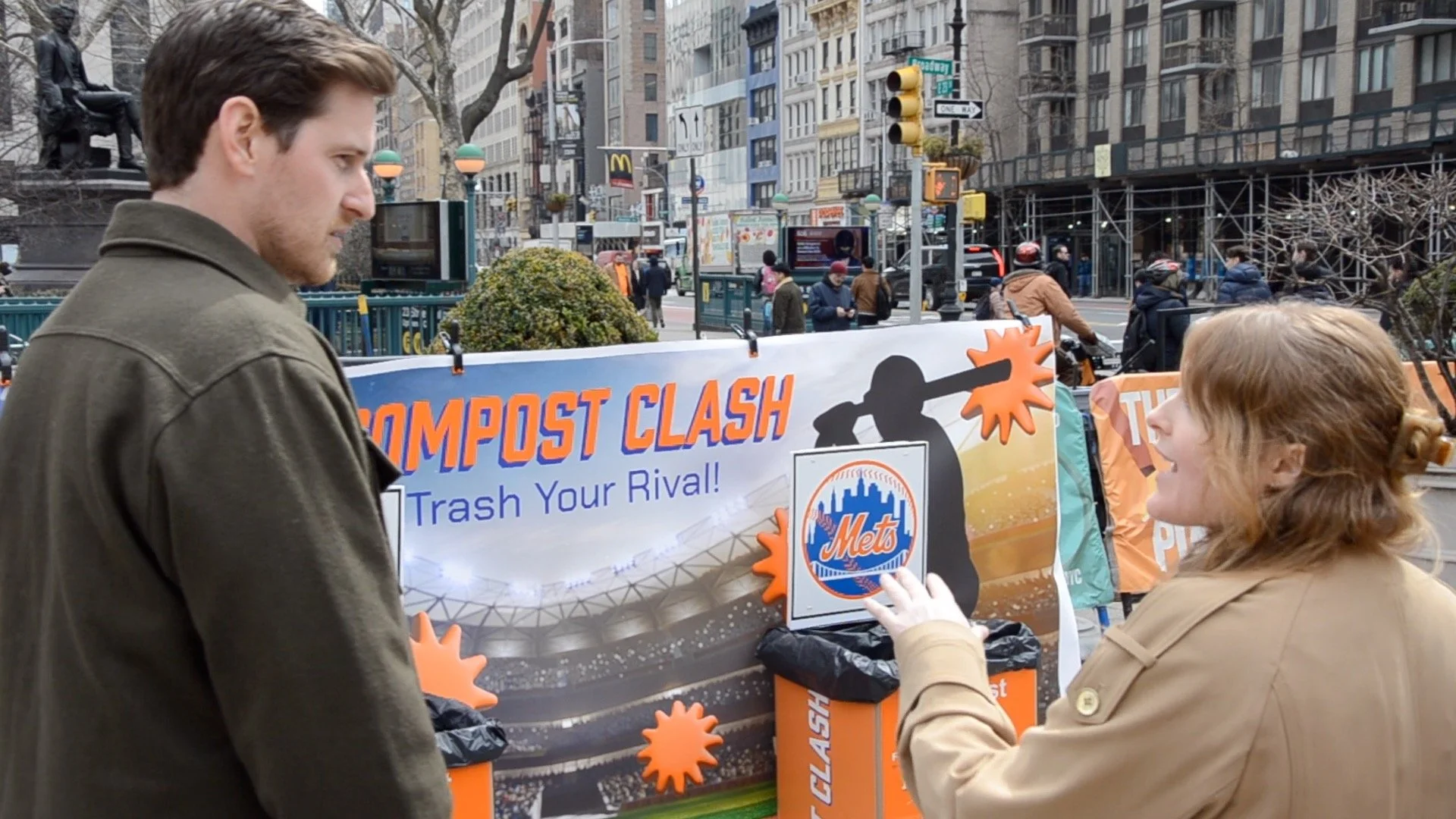
Rather than appealing only to fans' sense of responsibility, Benjamin explored another approach: redirecting competitive energy toward sustainable behavior. Compost Clash encourages responsible waste practices by allowing fans to "trash" their rivals. During Major League Baseball's Opening Day in Madison Square Park, participants were invited to throw their organic waste at the team they liked the least. A ketchup-covered team logo acts as a subtle invitation to join the playful competition.
“Instead of appealing to their altruism, could I redirect their passion towards an act of food waste reduction?”
Participants received team stickers along with information about starting composting practices at home. Designed for future stadium implementation, Compost Clash would include a swappable acrylic backboard that could adapt to the visiting team's logo.
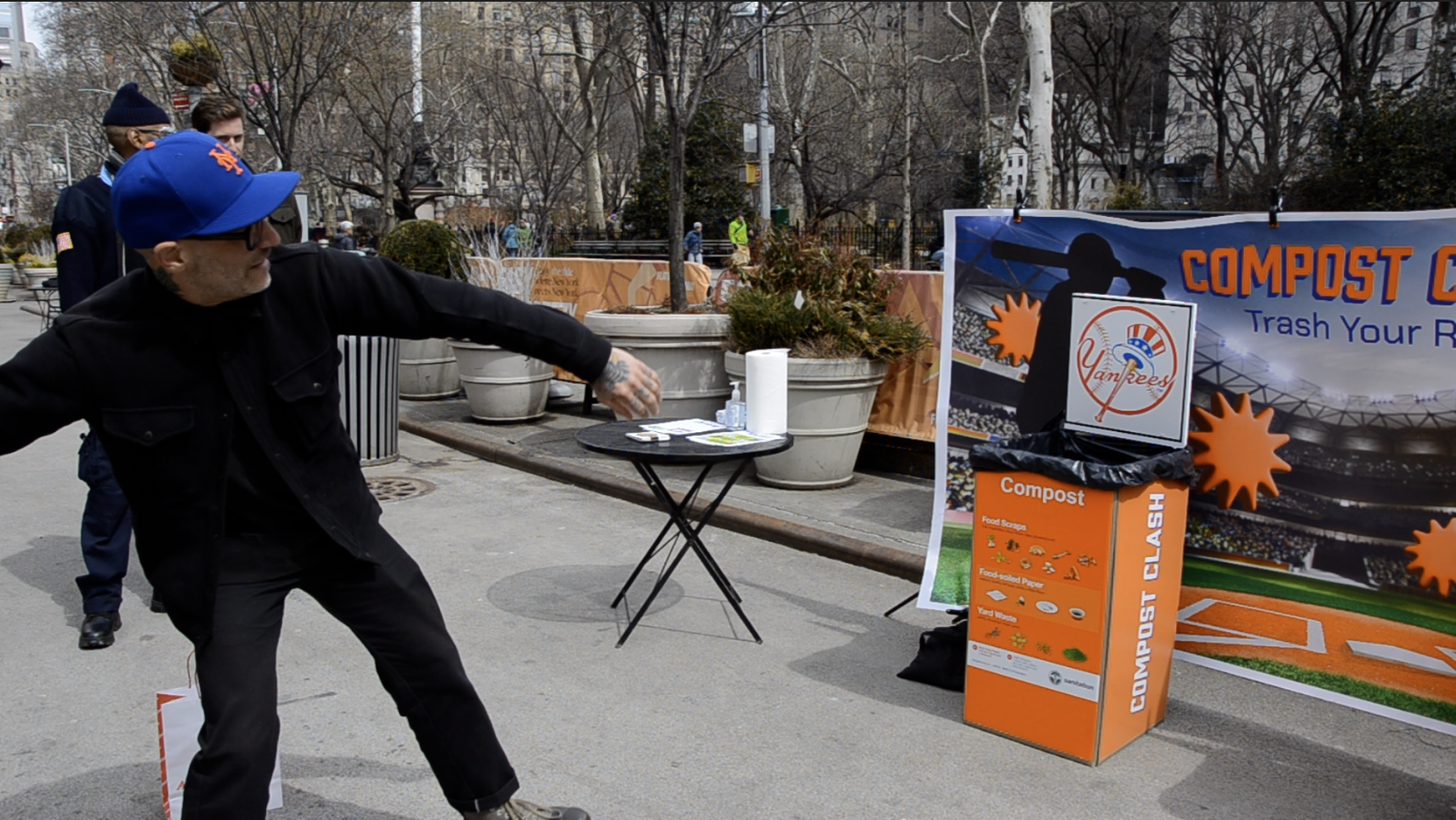
Participants left the event enthusiastic. As one participant said, "In the building where I live, I'm going to speak to my neighbors and see if it's possible to implement something like that." Compost Clash transforms a familiar sports impulse—rivalry—into an opportunity for environmental engagement.
Fan Forum
The final project in Benjamin’s thesis examines the relationship between sports fandom, collective power, and institutional accountability. Following a favorite team has become increasingly expensive, with the annual cost of being a dedicated sports fan reaching thousands of dollars. Meanwhile, much of that revenue continues to benefit billionaire team owners whose individual consumption often carries a far larger environmental footprint than that of the average fan.
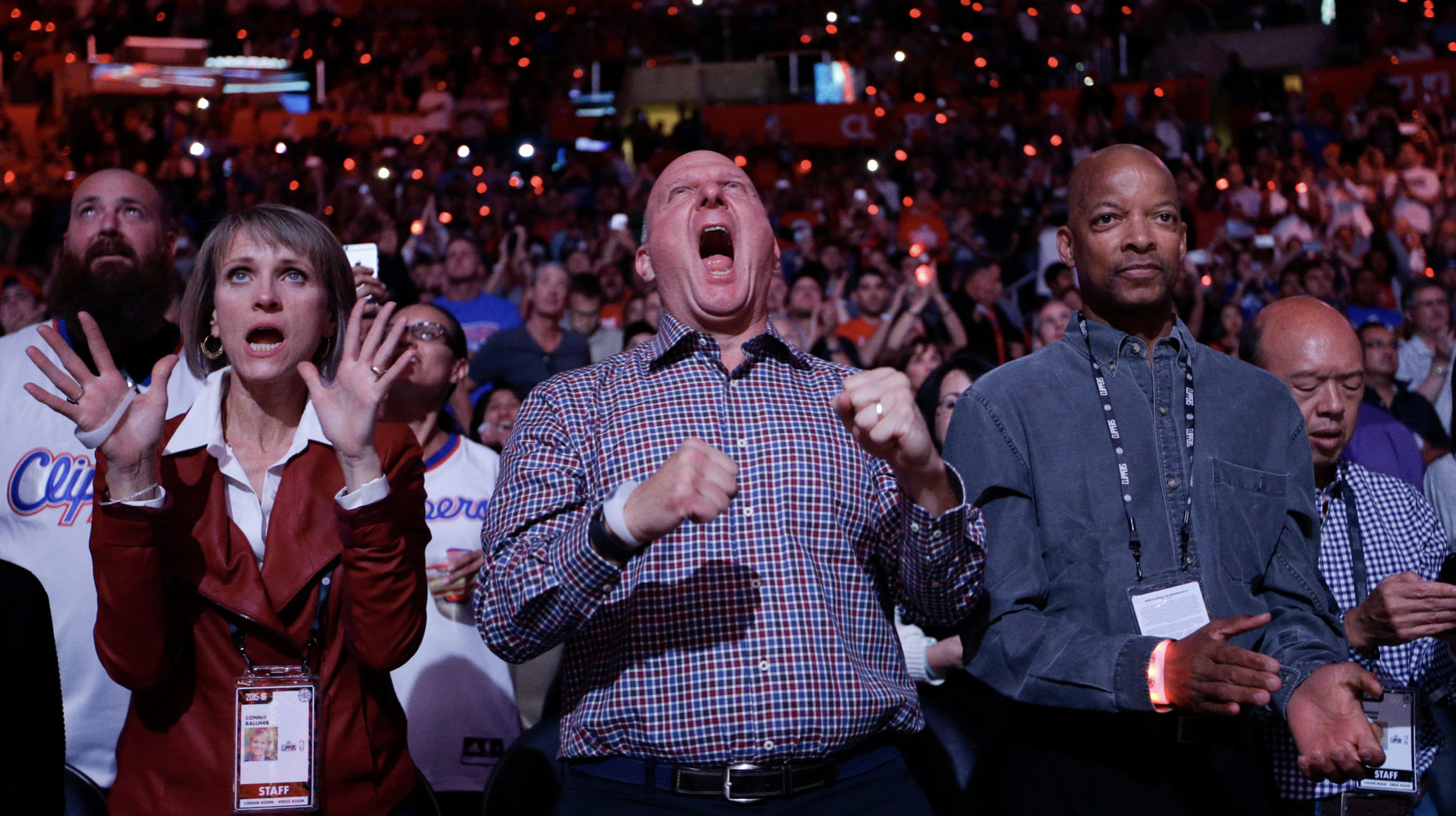
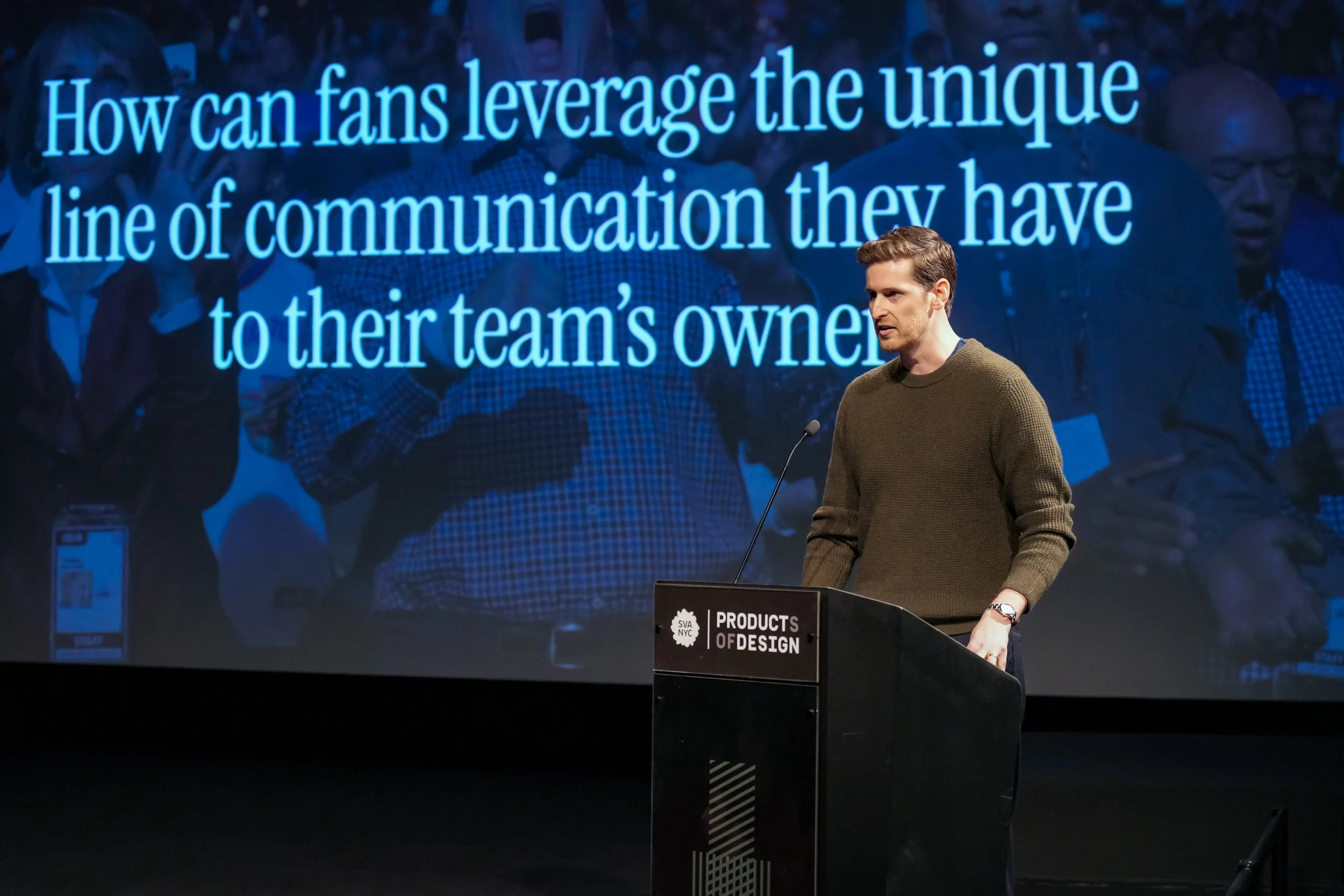
Benjamin asks: how might fans leverage the unique relationship they have with their teams to advocate for meaningful change? "Don't get me wrong," Benjamin explains, "there are plenty of spaces for fans to discuss and debate, but none of them include mechanisms to organize toward improving the fan experience."
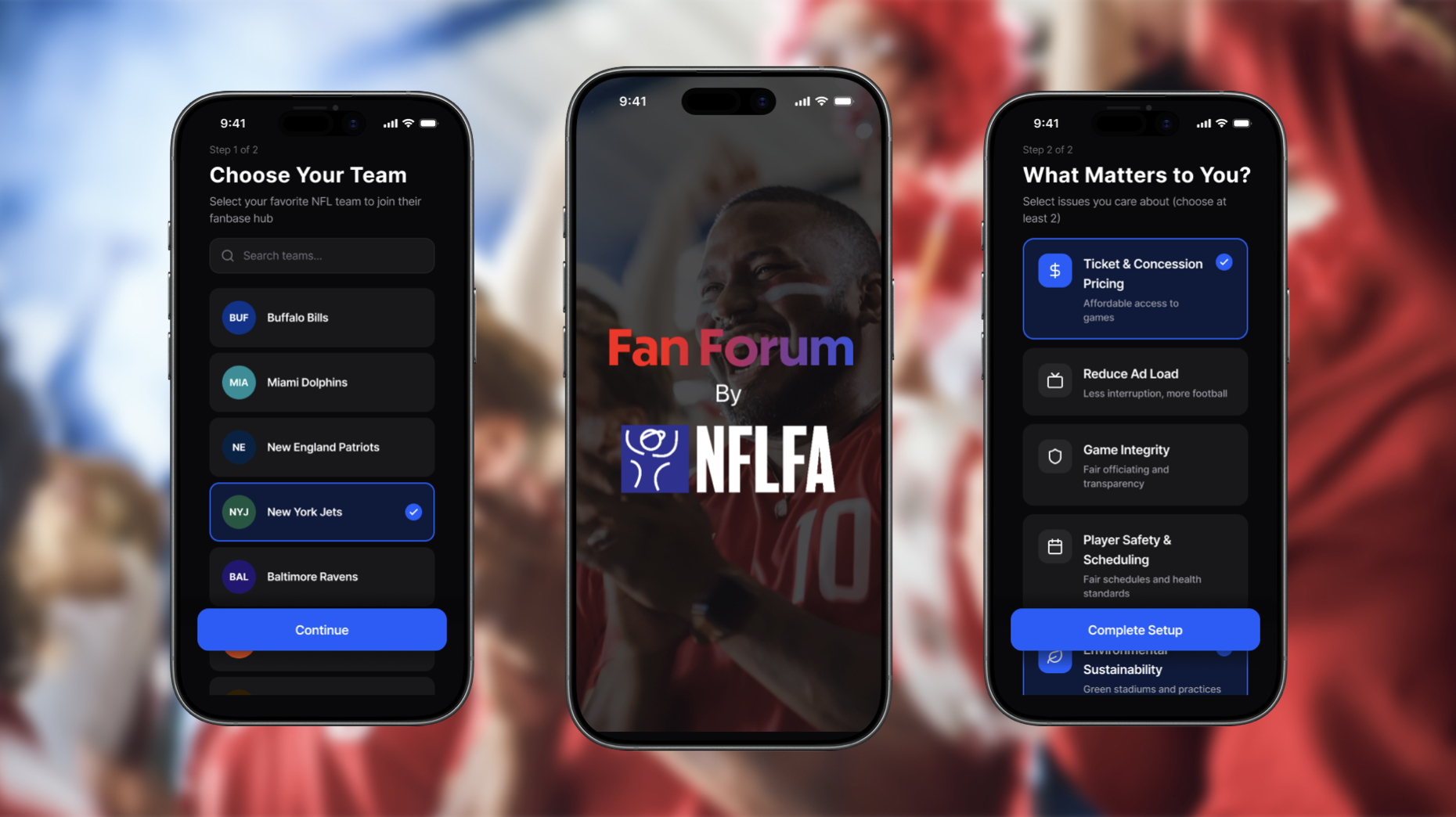
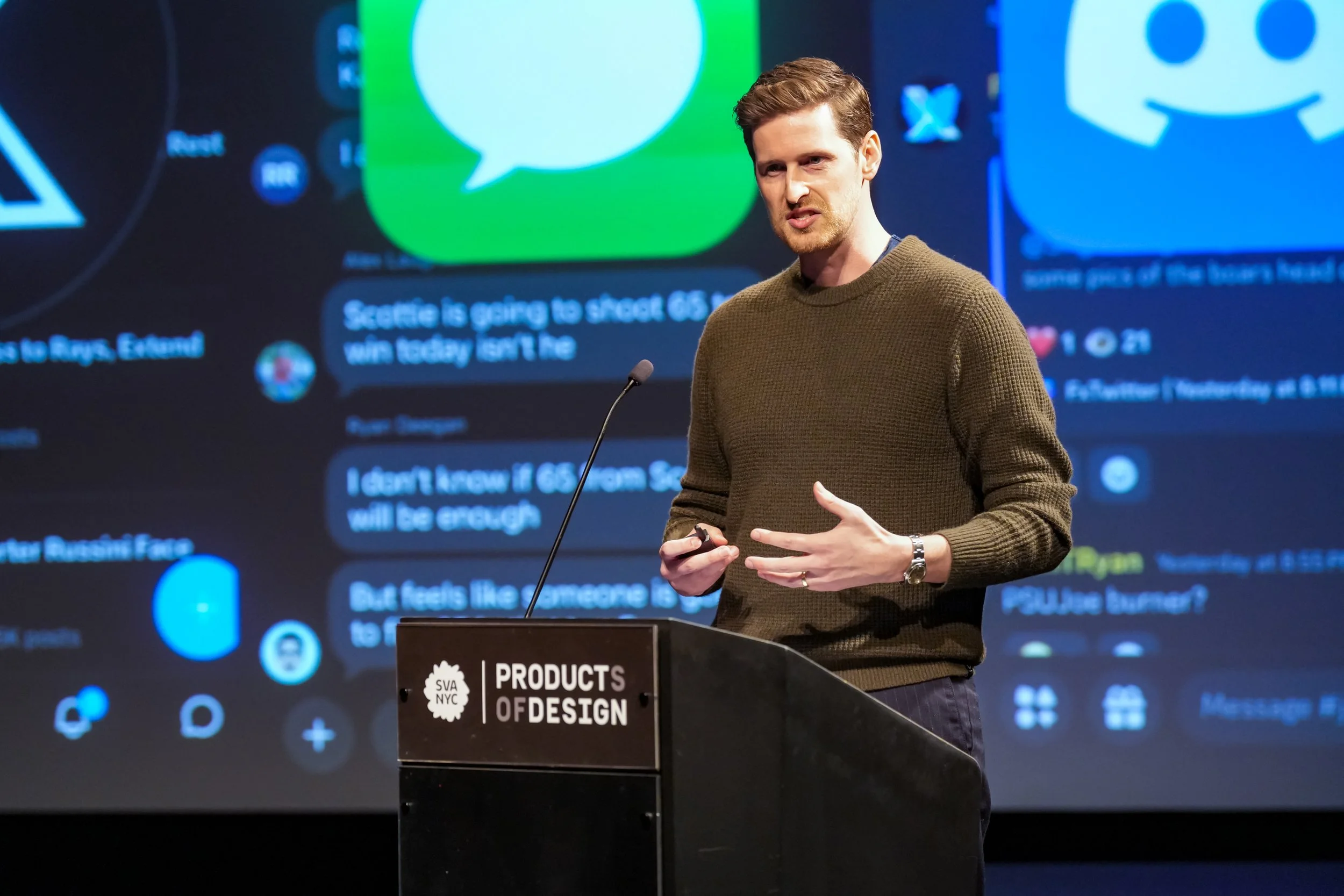
Fan Forum is a platform designed to help supporters advocate for issues such as responsible ticket pricing, shorter advertising breaks, and composting options at stadiums. Users begin by identifying their team allegiance and selecting the issues that matter most to them.
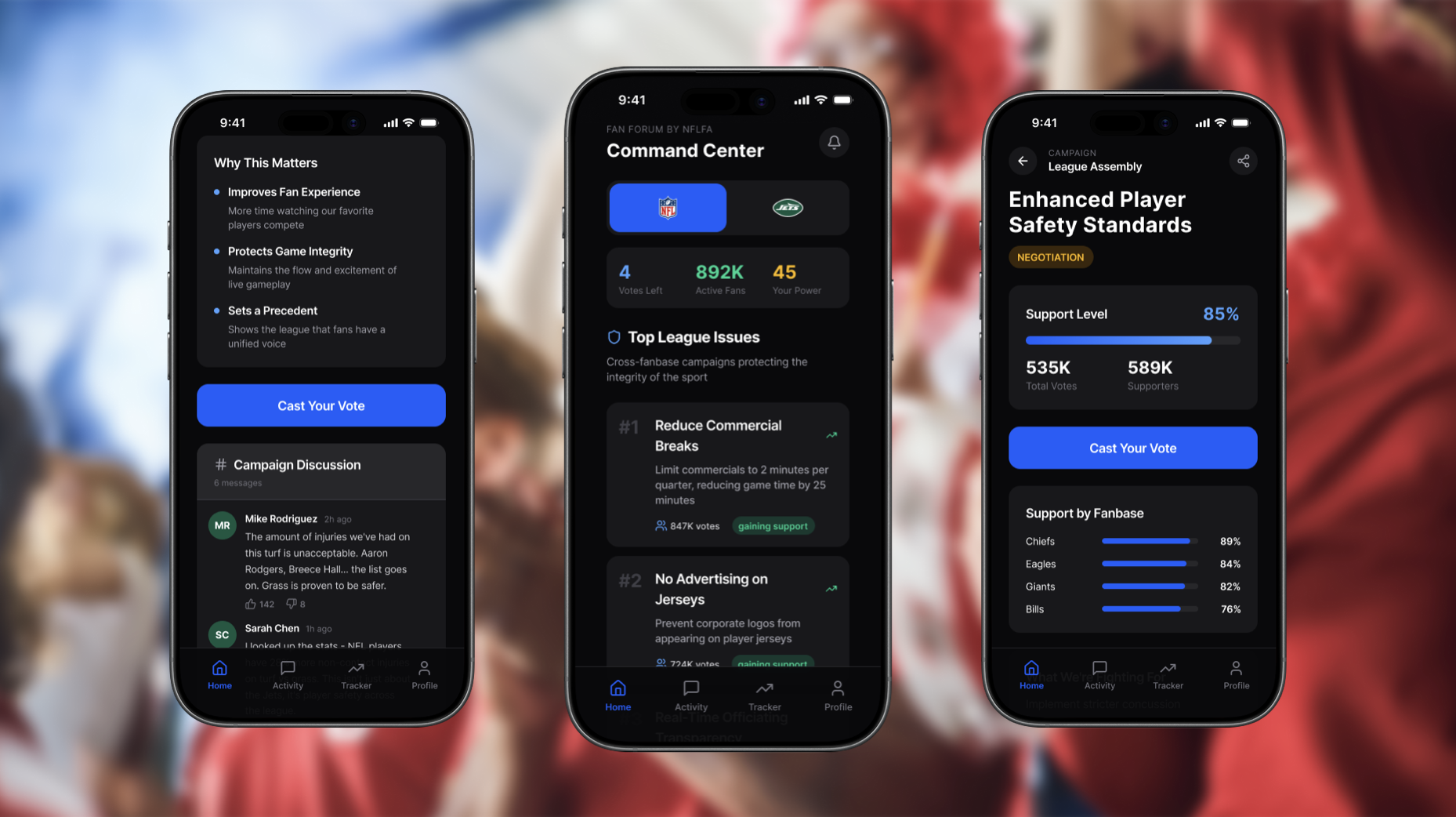
In the command center of the app, users can browse emerging issues, join discussions, and build consensus with other fans. By displaying levels of support across different fan communities, the platform encourages collective participation and transforms fandom into a rehearsal space for broader civic engagement.
Across all four products, Benjamin explores how the emotional structures of sports—loyalty, competition, ritual, and belonging—can become pathways toward climate action. "Throughout my thesis exploration, I tested methods to get people to do things they don't necessarily want to do." Benjamin hopes sports fans can recognize their collective agency and their role within a larger ecological system. Benjamin asserts, "My goal was not to strip sport of its joy, but to ensure that joy isn't powered by systems that undermine our shared future."
You can learn more about Benjamin’s work at benjaminhonedesign.com.