
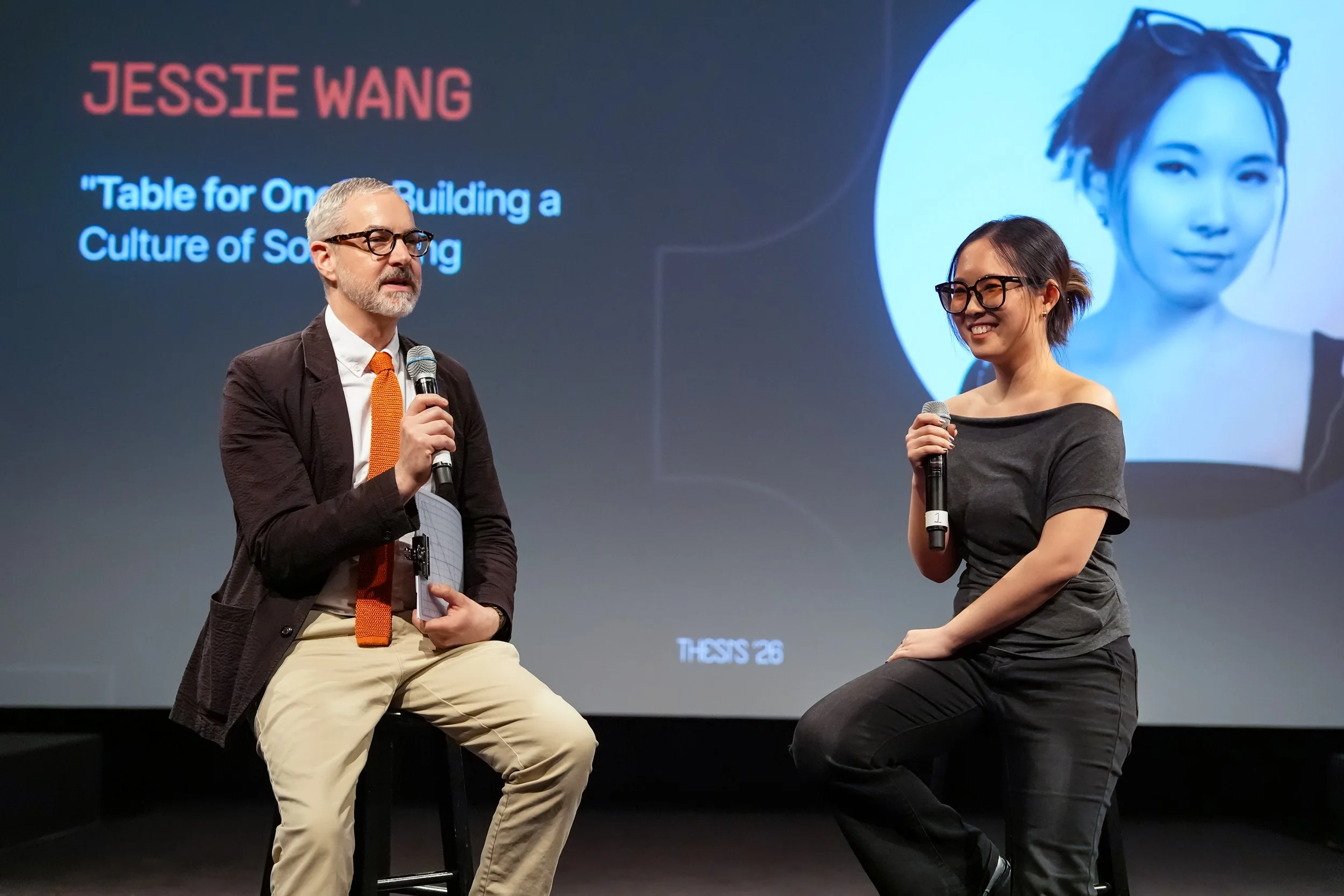
“Table for One”? Building a Culture of Solo Dining
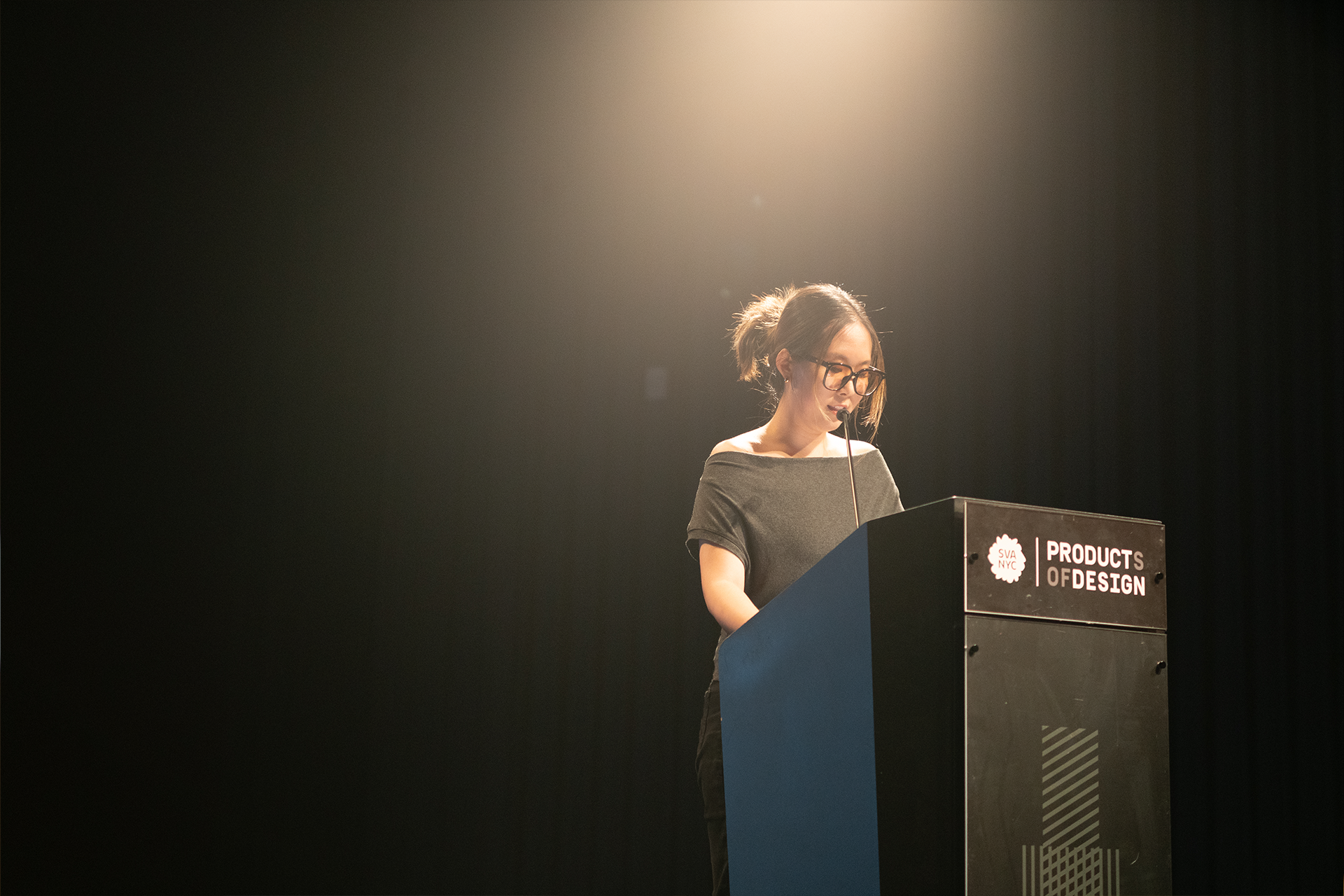
Jessie Wang’s thesis, “Table for One”? Building a Culture of Solo Dining, explores how hospitality design can support the growing culture of solo dining through spatial systems, service design, and emotional experience. As an interior designer, product designer, and restaurant designer, Jessie has long been interested in how space shapes emotion and behavior. Over the past few years, she noticed a quiet but powerful cultural shift: more people were dining alone, not because they had to, but because they wanted to. Yet despite this shift, most restaurants, dining systems, and hospitality experiences are still designed around groups. Dining alone often feels like an afterthought.
“Solo dining is my reward and my escape, and since I live with roommates, it’s a moment I get real personal space.”
—Cindy Zhang
As OpenTable CEO Debby Soo explains:
“After the pandemic, remote work has driven people to dine out as a break from home. But beyond that, there’s a deeper shift, a broader movement toward self-love, self-care, and genuinely enjoying one’s own company.”
This cultural shift became the starting point for Jessie’s thesis. As more people embrace independence in everyday life, solo dining is evolving from a social discomfort into a new form of urban experience and personal ritual.
The Rise of Solo Dining
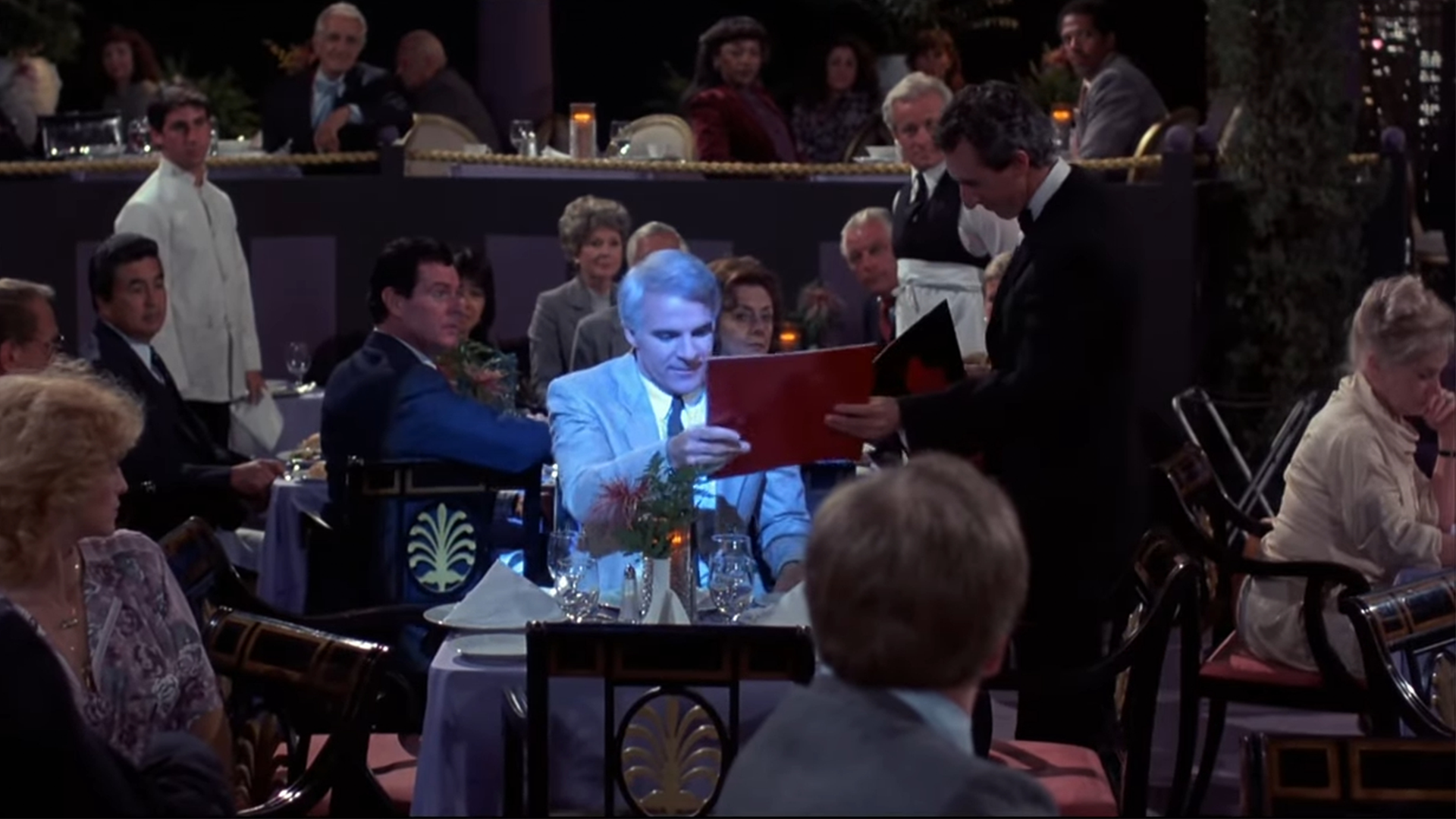
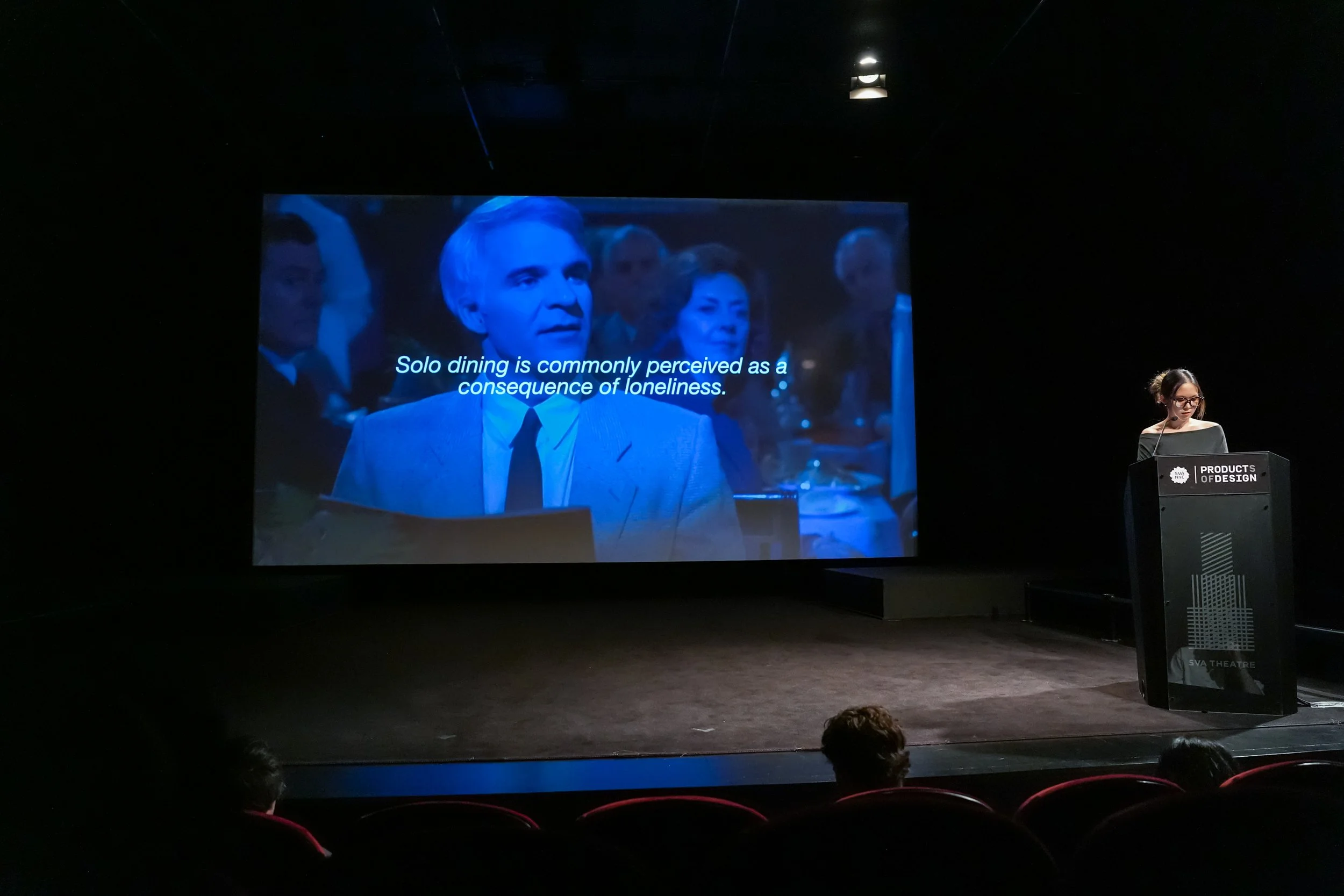
Going to the gym alone, shopping alone, or traveling alone has become normalized. But dining alone still carries emotional tension for many people. Historically, solo dining was often portrayed as awkward or even sad. In films like The Lonely Guy from the 1980s, eating alone symbolized social failure. But today, the reality is changing rapidly.
According to OpenTable, solo dining reservations in the United States increased by 29% over the last two years. More people are intentionally seeking moments of independence, reflection, and self-care through dining alone. For many urban residents, especially in cities like New York, solo dining has become a response to modern life: small apartments and shared living situations; remote work and flexible schedules; emotional exhaustion from hyper-social environments; a growing desire to enjoy one’s own company.
Through interviews, Jessie discovered that solo dining often represents freedom rather than isolation. Cindy Zhang described it as: “Solo dining is my reward and my escape, and since I live with roommates, it’s a moment I get real personal space.” Alex Shi shared: “Eating alone makes me feel free. I can order whatever I want and don’t need to care about anyone else.” Andrew Fix explained: “Solo dining is my one slow hour to reset, a break from work, responsibilities, and everyone else, where I put my phone away and just breathe and self-reflect.”
Researching the Solo Dining Experience
To better understand the emotional and spatial challenges surrounding solo dining, Jessie created a research tool in the format of a restaurant menu. Participants completed the menu during real solo dining experiences across New York City.
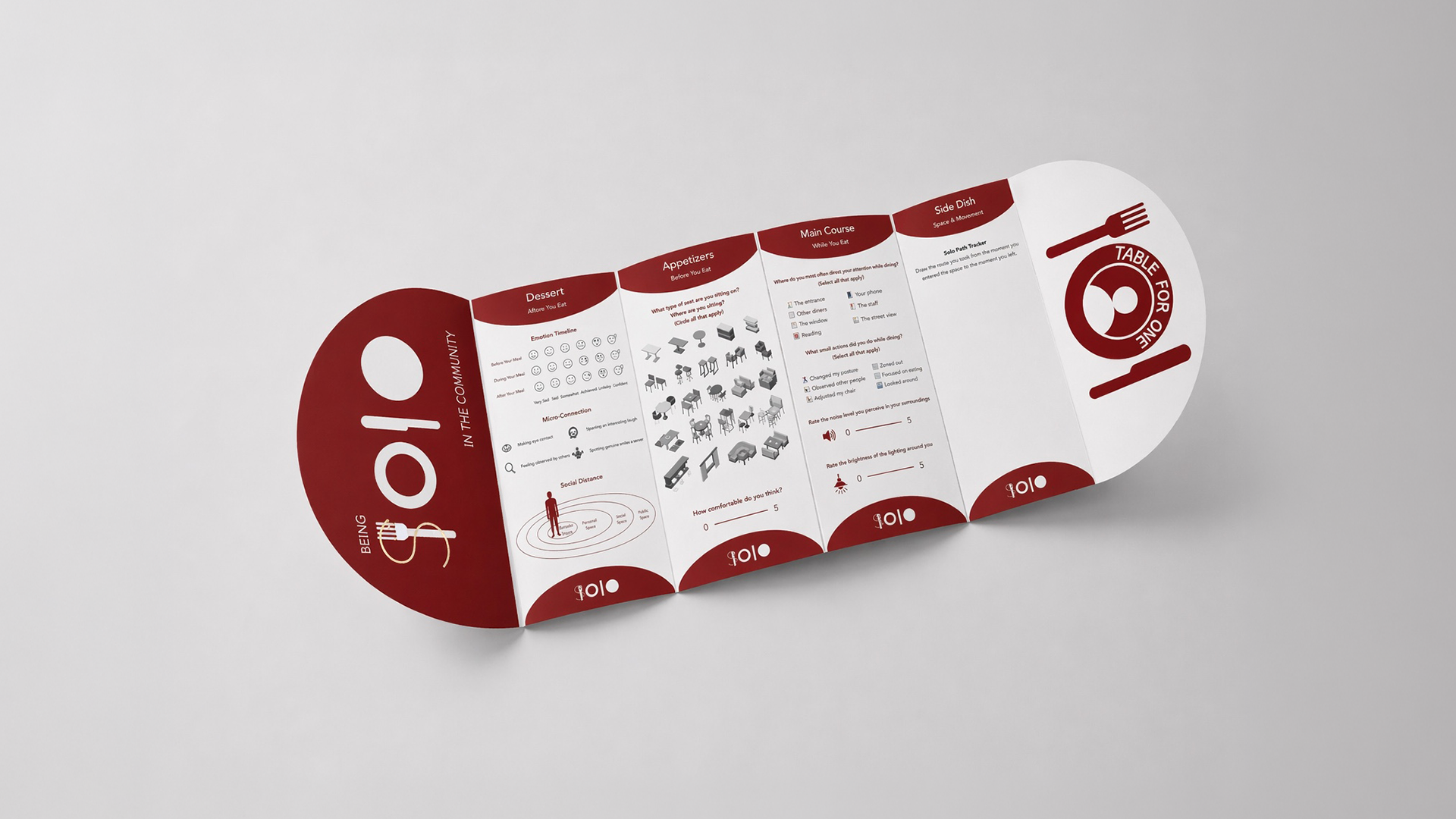
The findings revealed consistent patterns: menus are often designed for sharing; portions and pricing favor groups; solo diners hesitate to try unfamiliar restaurants; many repeat the same “safe” dining choices; and restaurants prioritize large parties during peak hours.
At the same time, restaurant staff revealed another perspective: while solo diners are appreciated, they are often less profitable than large groups. During an interview with Prep Cook and Bartender Virgil Warren, he explained:
“Solo diners are great for us during the day, they stay, they order consistently, and they come back. But at night, when every seat matters, bigger parties naturally get priority. It’s that constant tension in hospitality: we genuinely love solo diners, but 1 person can’t compete with a table for 8.”
Through interviews and field research, Jessie began to notice the same pattern repeatedly: people were not uncomfortable with being alone; they were uncomfortable with how public spaces responded to that. Most hospitality environments were still built around groups, making solo diners feel secondary even as solo dining became more common.
Introducing Solo Dining+
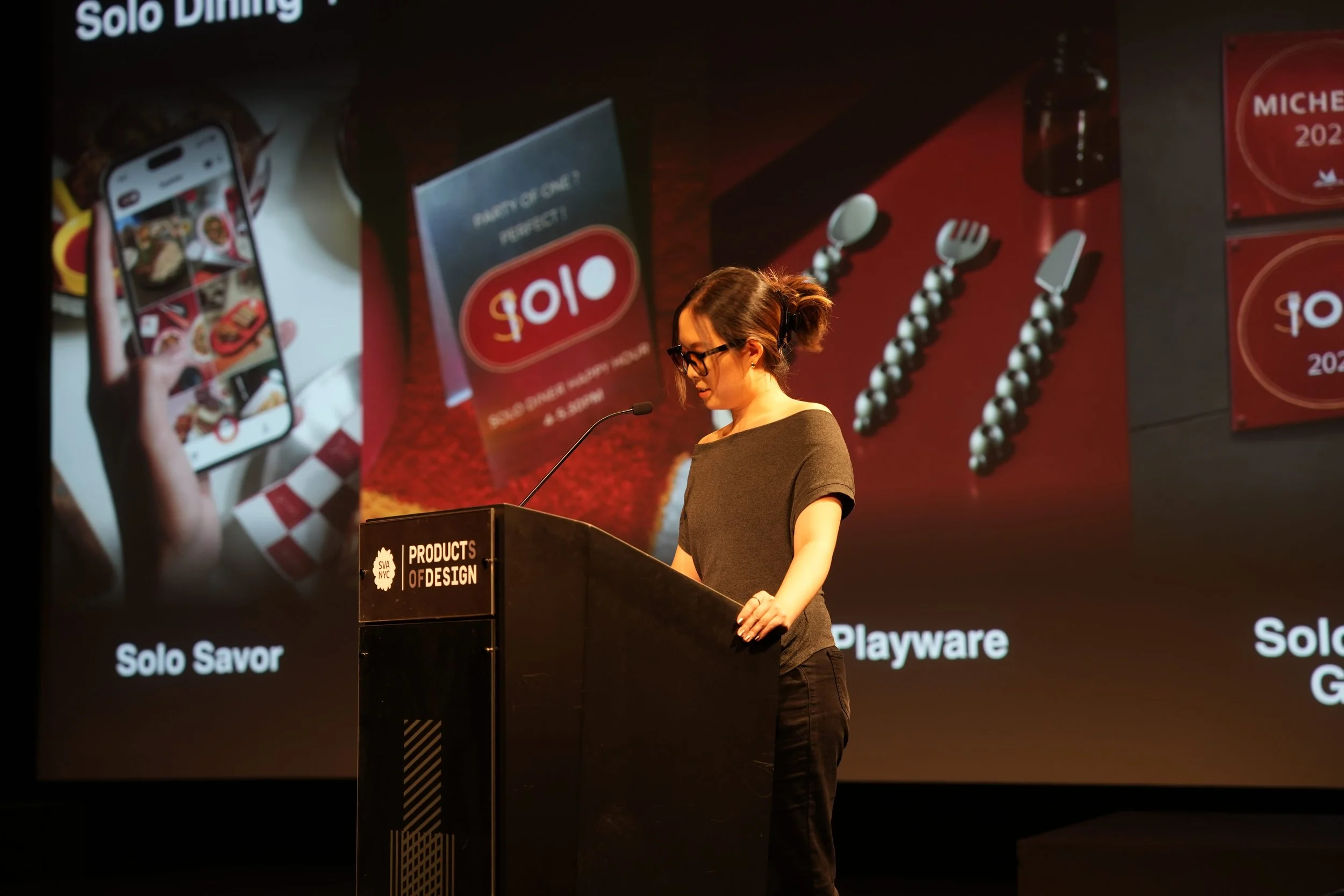
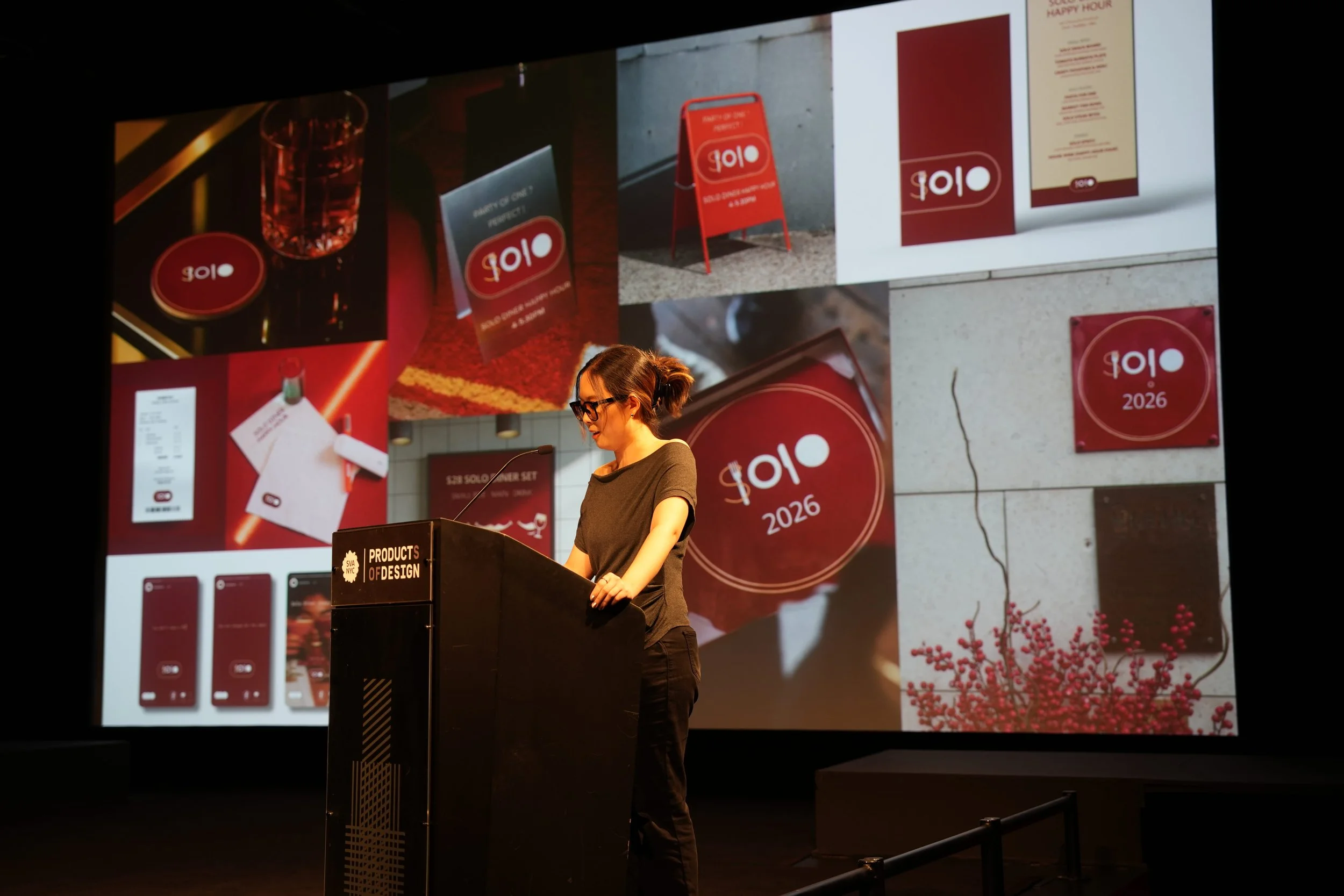
In response, Jessie created Solo Dining+ — a speculative hospitality ecosystem designed to support, structure, and scale solo dining as both a cultural movement and a business opportunity. The system consists of four interconnected components: the SoloSavor App, Solo Diner Happy Hour, Playware Modular Silverware, and the Solo Diner Guide. Together, these components explore how solo dining could feel more intentional, social, and emotionally comfortable within everyday city life.
SoloSavor: A Platform for Independent Diners
SoloSavor is a platform designed to help solo diners discover restaurants that genuinely support independent dining experiences.
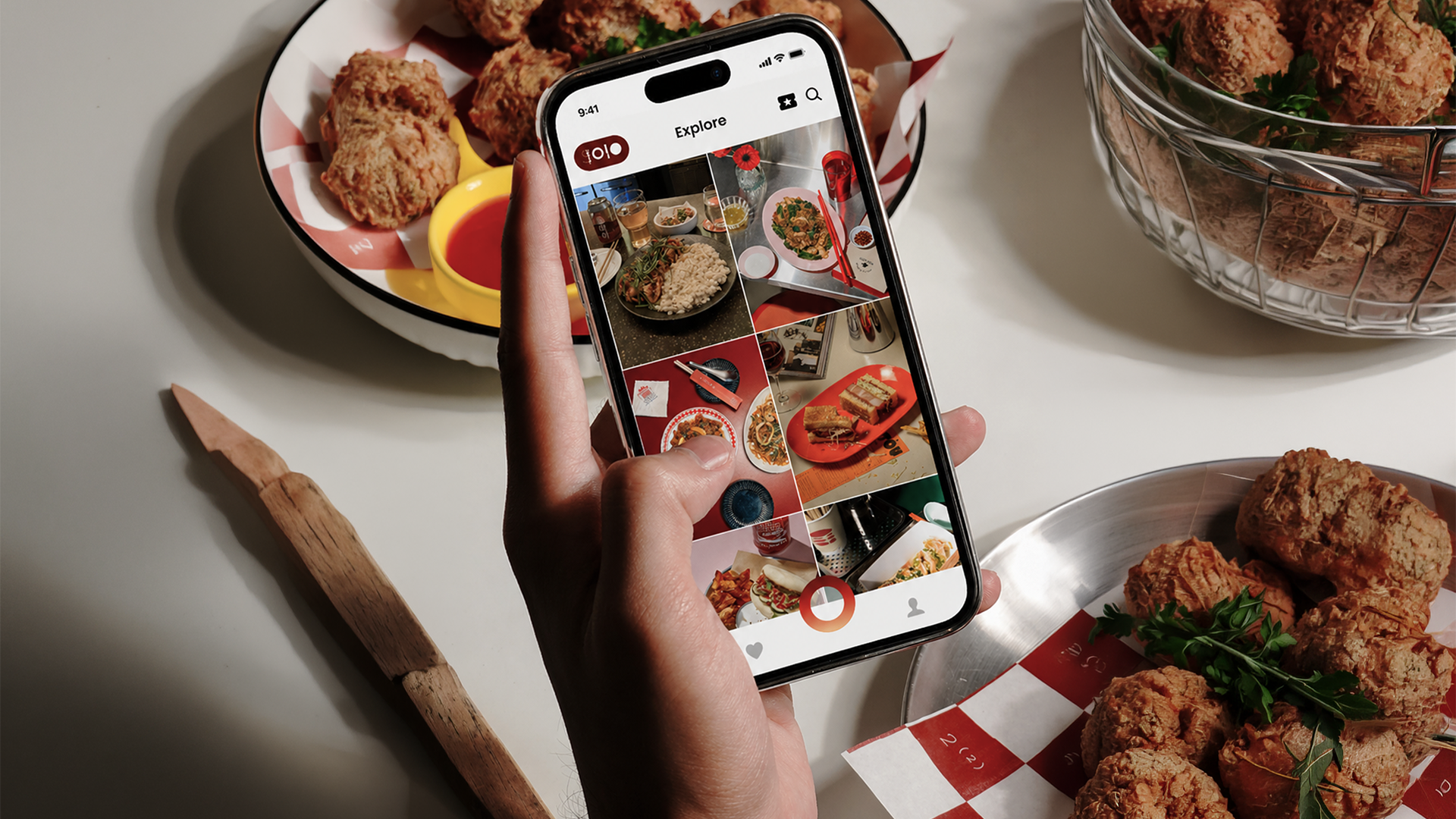
The app includes an AI companion called TableTalk, where users can share: where they are dining; what they are eating; how they are feeling. Instead of functioning like traditional restaurant reviews, the interaction becomes reflective and emotional. The AI encourages users to slow down, engage with their surroundings, and become more present during the meal.
At the end of the experience, users can choose to share reflections with other solo diners, creating quiet connections between people who may never actually meet.
Solo Diner Happy Hour: Reimagining Off-Peak Hospitality
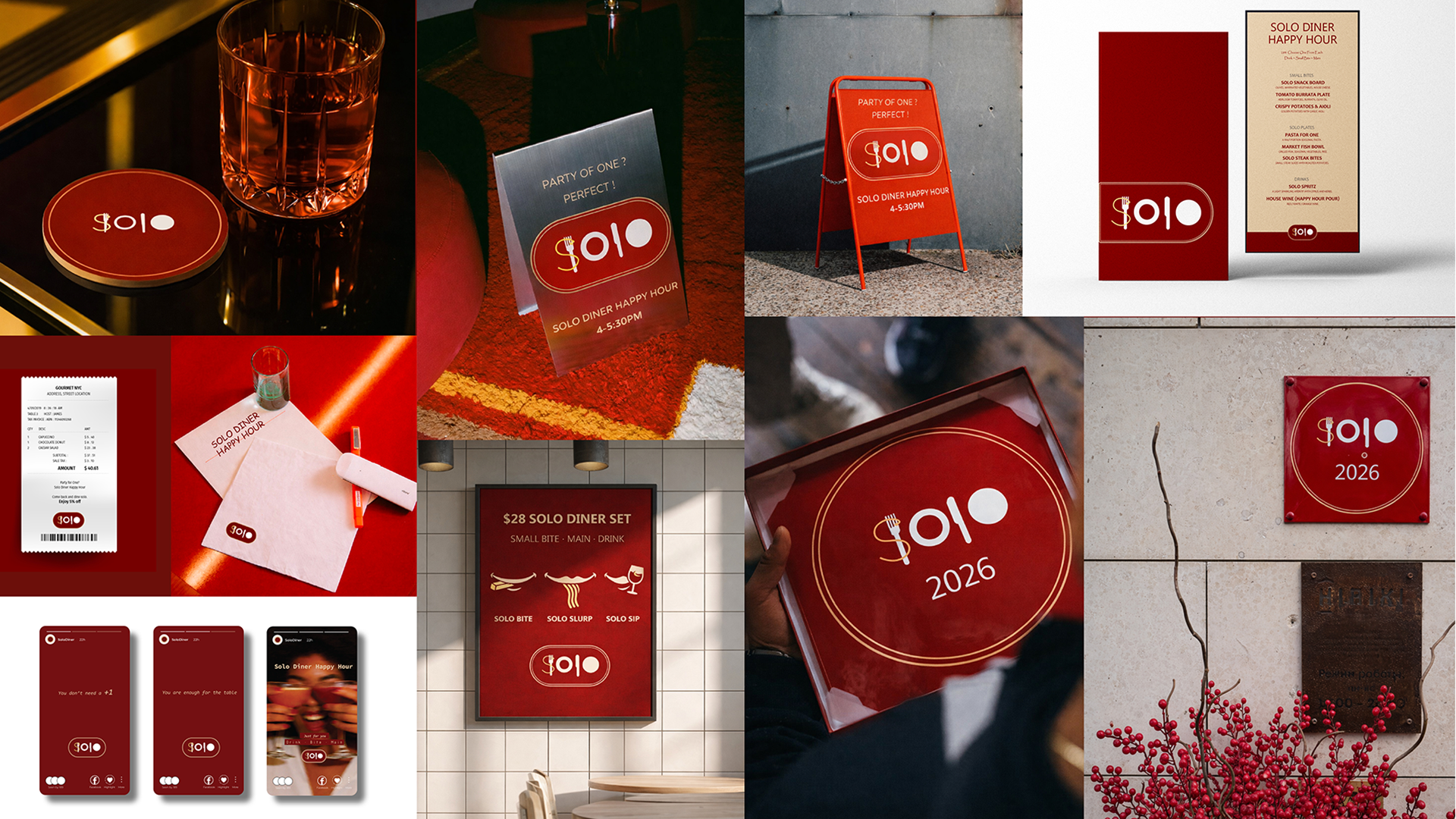
To explore how restaurants could actively support solo diners while also improving business performance, Jessie developed Solo Diner Happy Hour in collaboration with a New York restaurant concept.
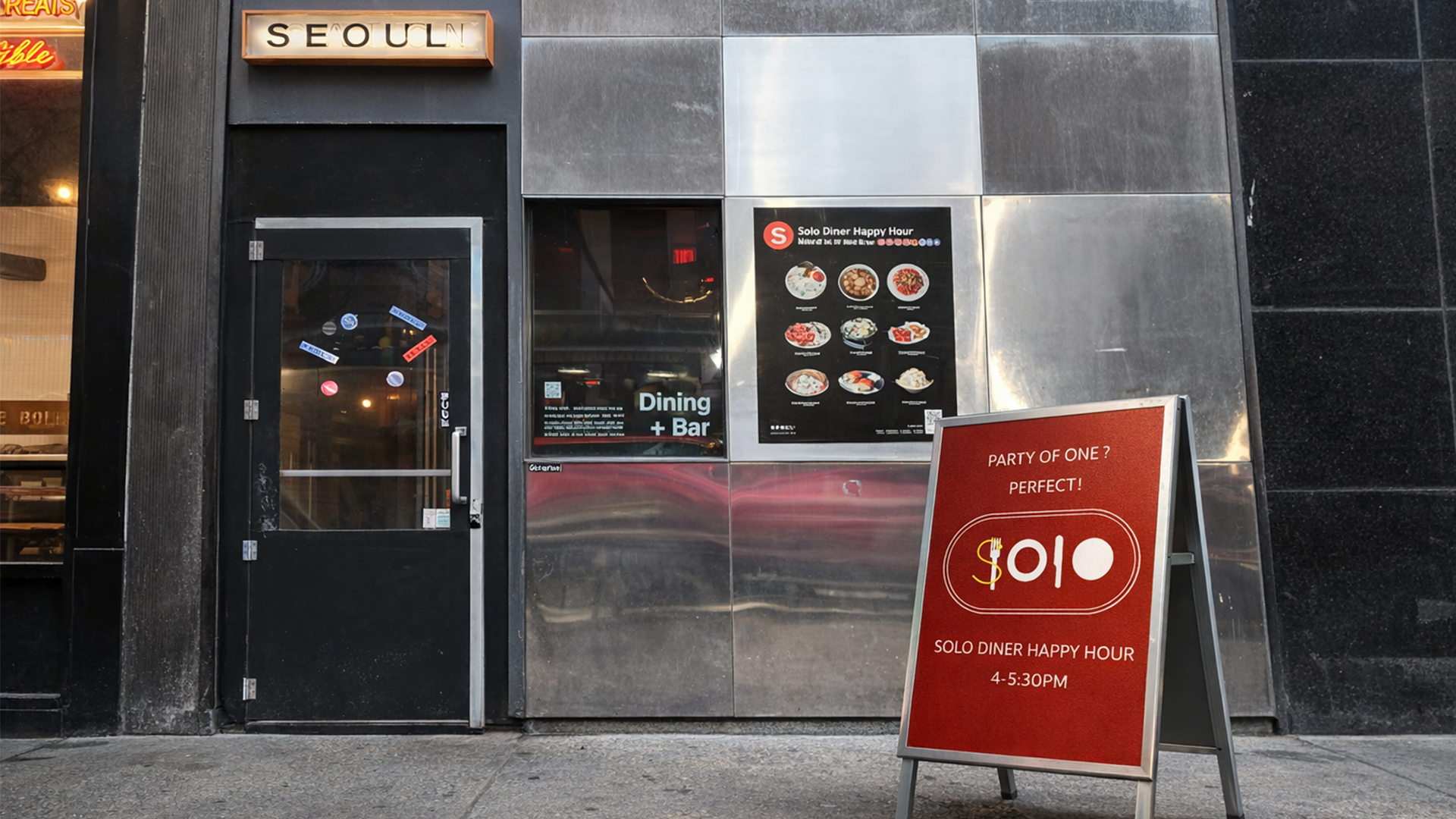
Rather than simply offering discounts, the experience reframes off-peak dining hours as intentional moments for independent enjoyment. The menu allows diners to build personalized meals by selecting: one drink; one small bite; one main dish.
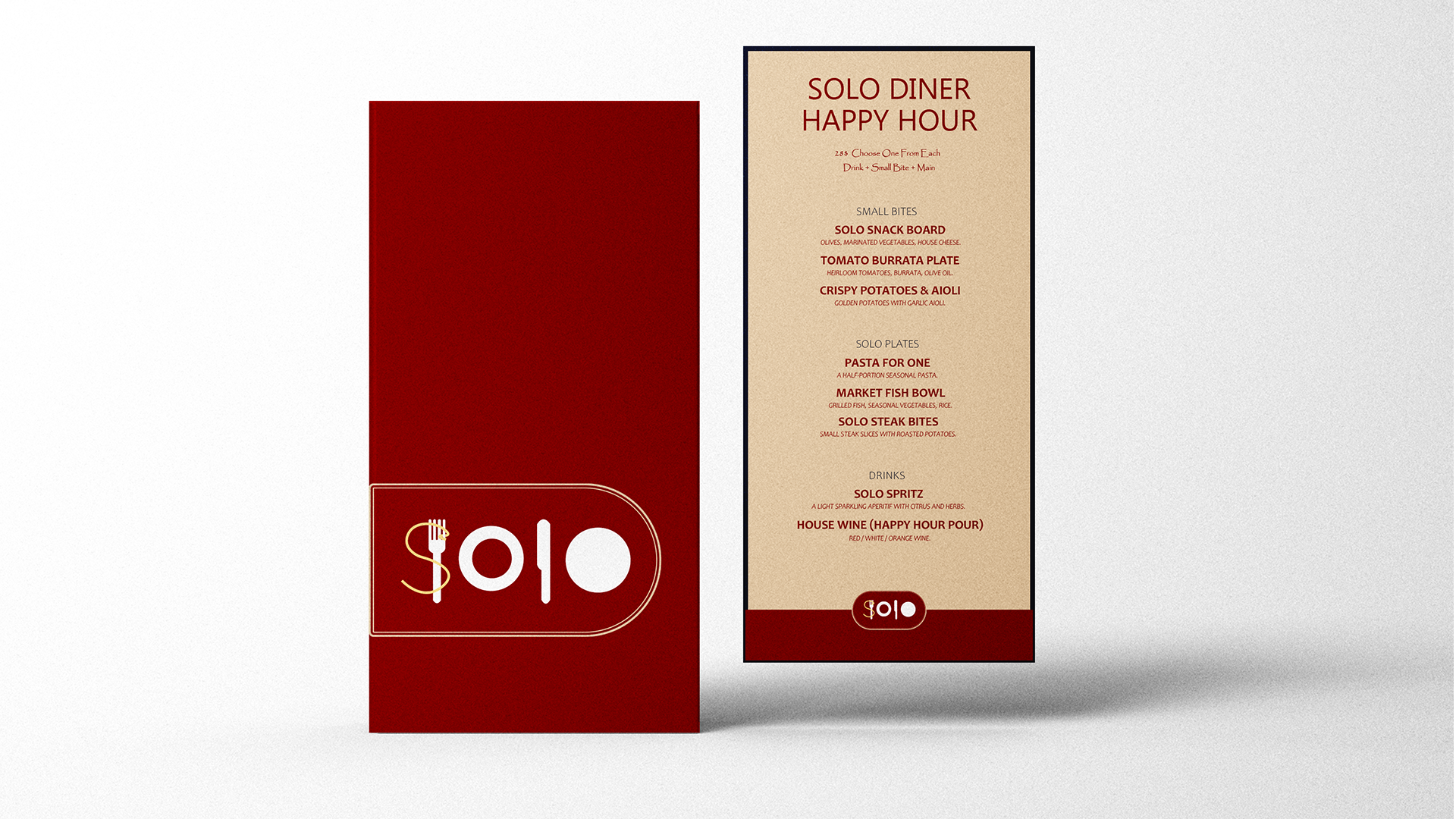
Beyond food, the experience includes optional activities such as drawing, reading, and reflective prompts. At the end of the meal, diners receive fortune-cookie-style messages written by previous solo diners and are invited to leave messages for future guests. The experience creates small moments of connection between strangers without forcing conversation or interaction.
Playware: Turning Waiting into Interaction
One of the most overlooked moments in solo dining is waiting.
Waiting for food often leads people to retreat into their phones. Jessie began wondering: Why is cutlery only designed to deliver food?
What if dining tools could also create engagement, play, and sensory interaction?
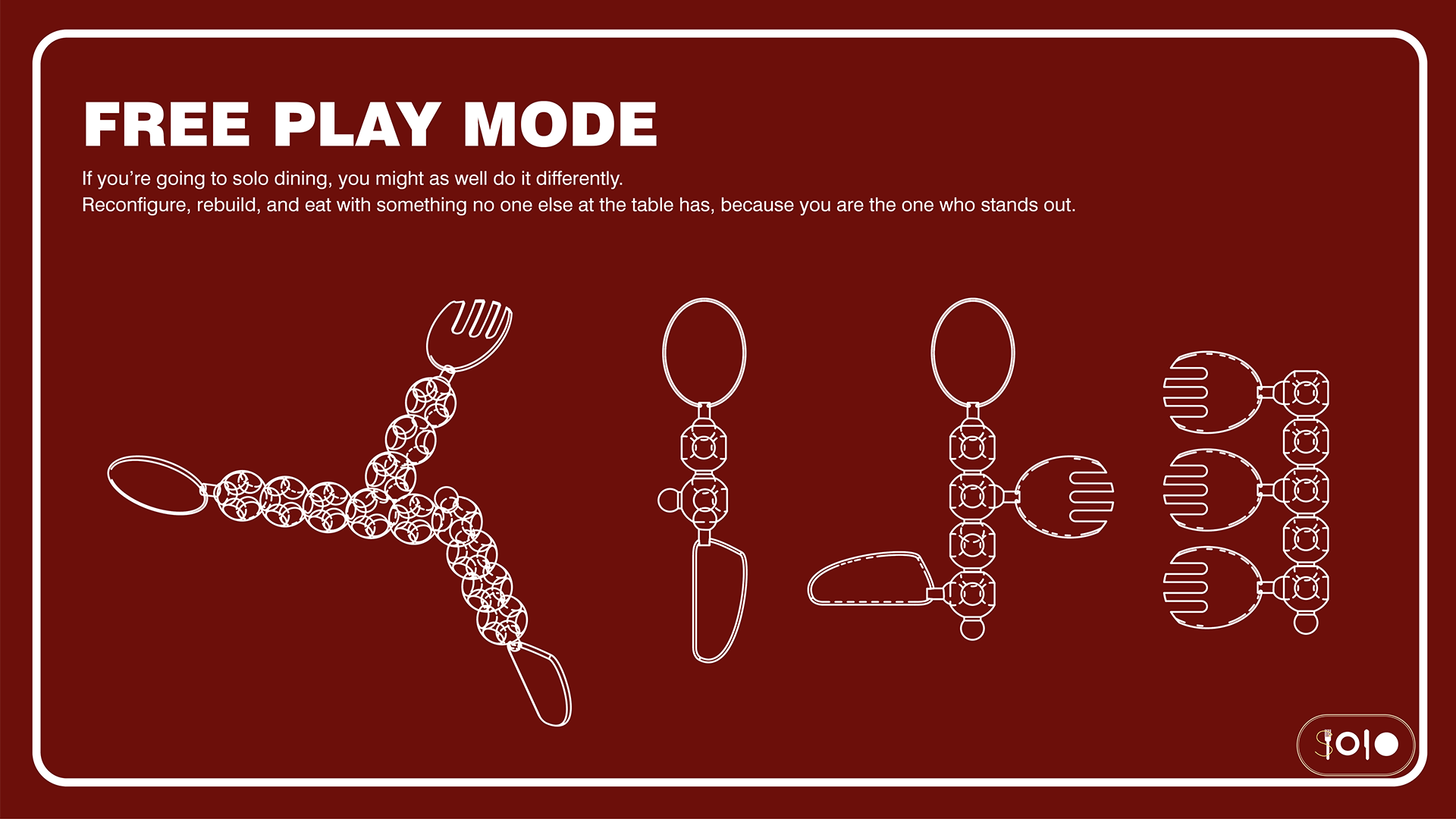
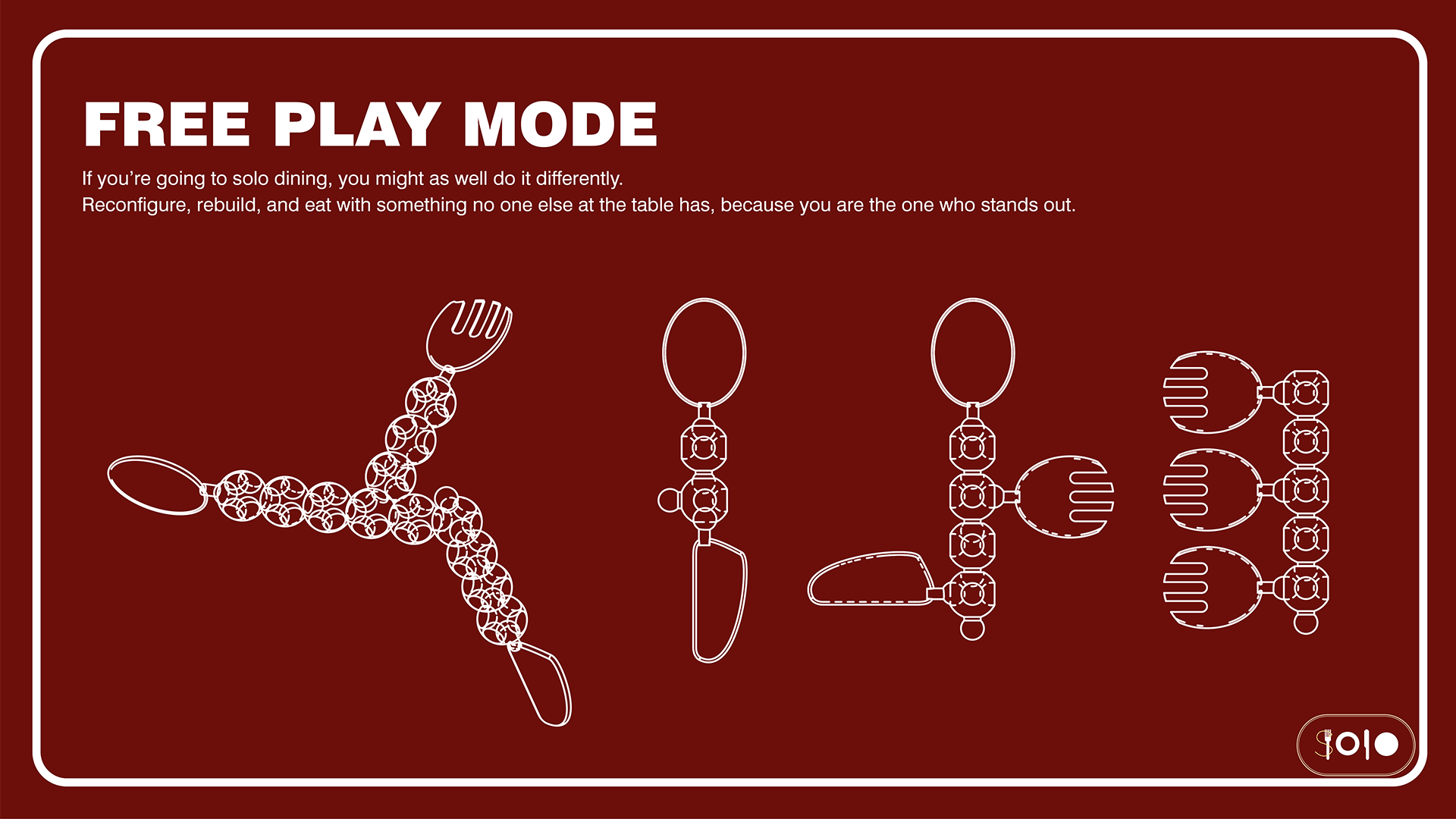
These questions led to the creation of Playware, a modular silverware system that diners can rotate, assemble, and manipulate while waiting for their meal.

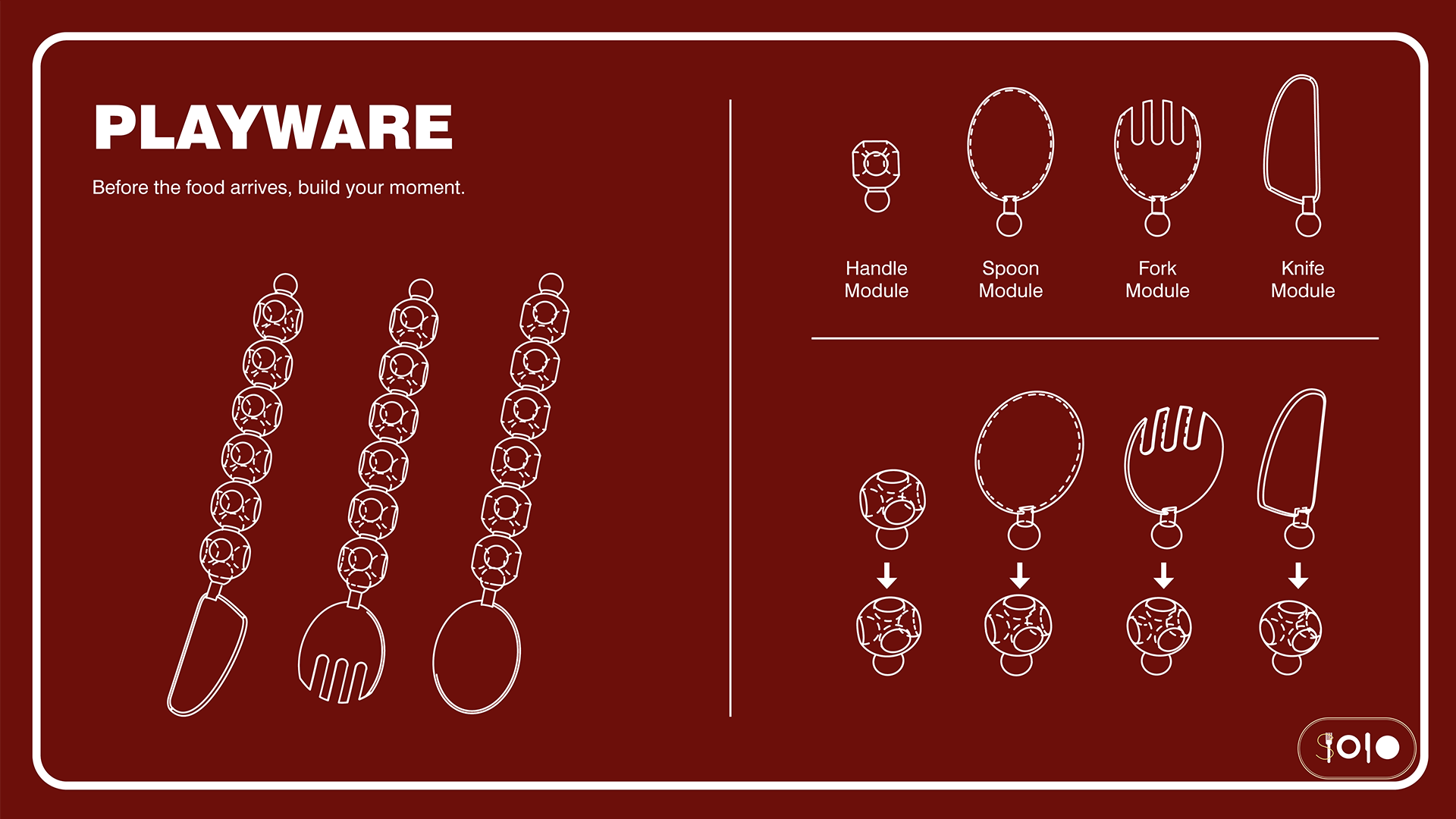
Instead of immediately reaching for a phone, diners can physically interact with the objects while waiting for food. The experience turns an awkward pause into something playful and tactile. The system also includes playful utility functions. For example, diners can reassemble the utensils into a temporary “BRB” table marker when stepping away from the table. Jessie began thinking about cutlery less as something purely functional and more as something that could shape how people feel at the table.


The Solo Diner Guide: A New Hospitality Standard
Inspired by systems like the Michelin Guide, Jessie developed The Solo Diner Guide — a platform that evaluates restaurants based on how well they support solo diners.
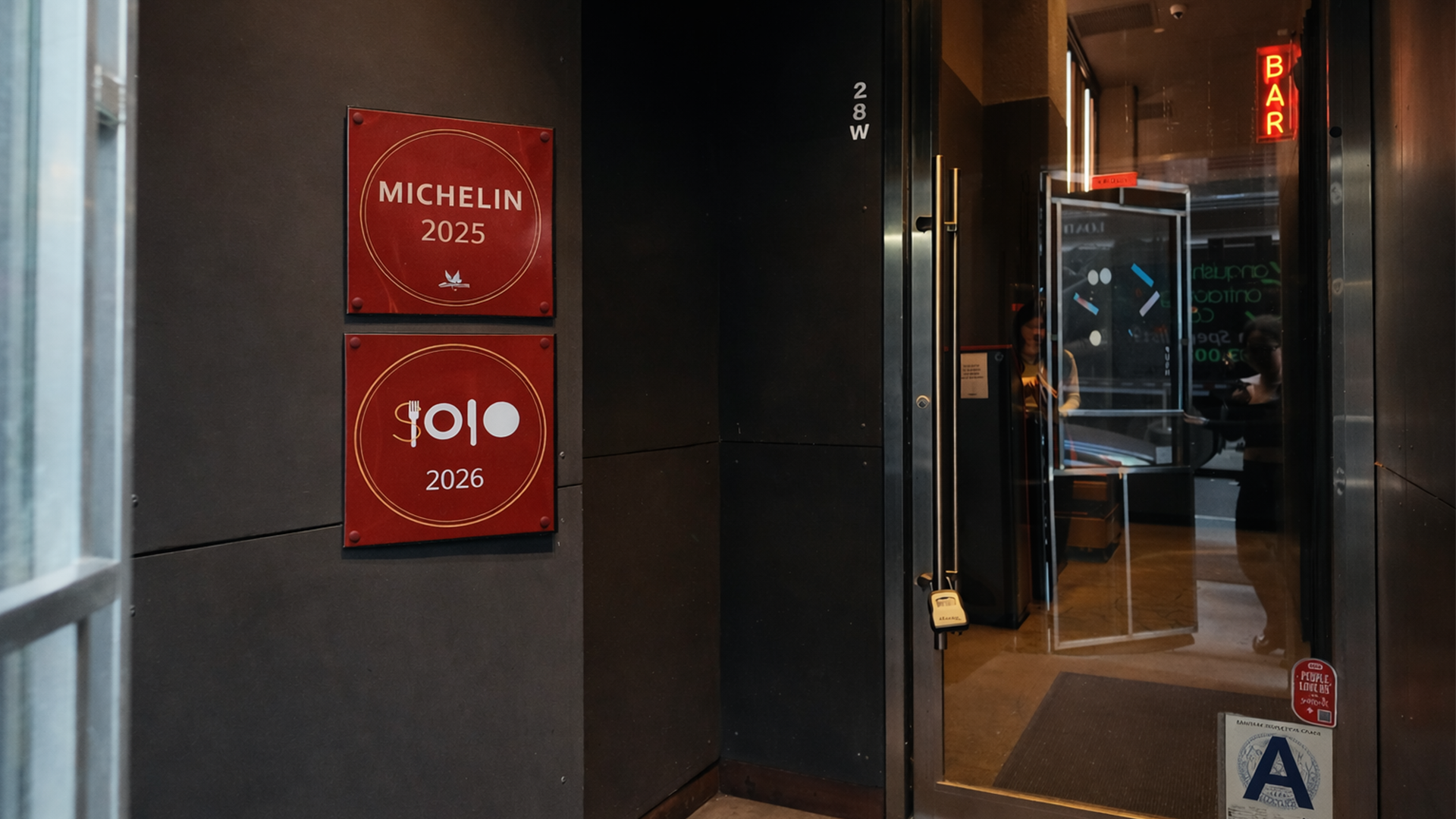
Rather than focusing solely on culinary excellence, the guide considers: spatial comfort; seating privacy; pacing; ambient atmosphere; menu adaptability; emotional ease for solo guests.
The guide also introduces annual awards such as:
Best Solo Seating Experience
Best Solo Menu Design
Best Ambient Experience
The guide imagines a future where restaurants are recognized not only for food, but also for how thoughtfully they support people dining alone.
Beyond Dining
During her thesis presentation, Jessie described solo dining as “a form of independence that still allows people to feel connected to the city around them.”
As cities become denser and daily life becomes increasingly individualized, more people are looking for experiences that offer solitude without complete isolation.
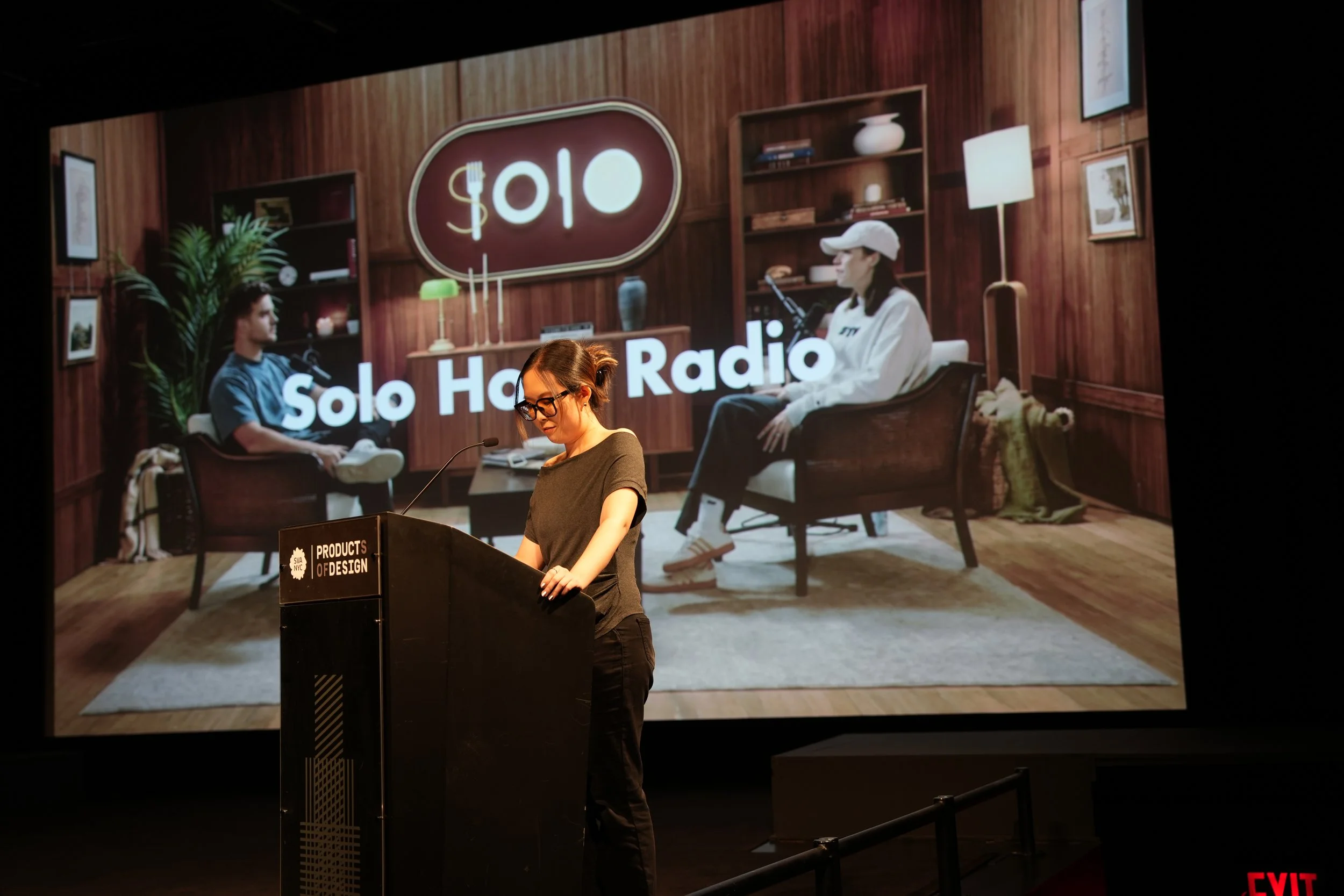
That thinking eventually led to Solo Hour Radio, a podcast platform within the Solo Dining+ ecosystem focused on conversations around routines, relationships, work, and navigating urban life alone—expanding solo dining beyond the restaurant table and into a broader cultural dialogue about modern independence.
What began as a dining system evolved into a broader cultural movement. A solo diner in New York should feel the same sense of comfort in Tokyo, Paris, or anywhere else in the world. For Jessie, solo dining is less about being alone and more about learning how to enjoy your own company in public. What once felt socially uncomfortable is slowly becoming part of everyday urban life.
“Table for One?” was recently featured at the 2026 NYCxDESIGN Student Showcase during New York Design Week. Read more about the event here. For a deeper look into Jessie Wang’s thesis process, design work, and ongoing projects, please visit jessiewangstudio.com.